
Hepatitis B Blood Tests Explained: Antigens, Antibodies & Results
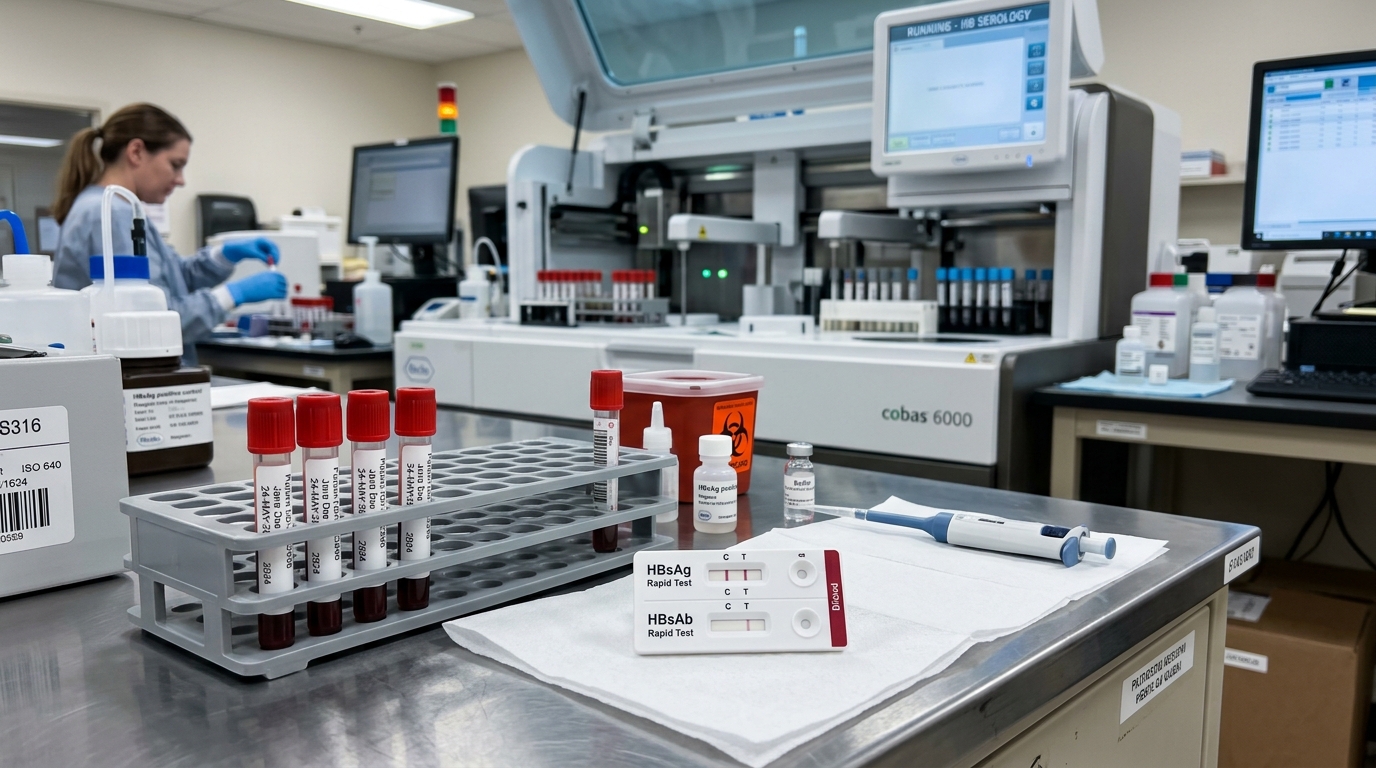
Hepatitis B remains a significant global health concern and a mandatory component of pre-employment, residency visa, and pre-marital medical screening across the United Arab Emirates. Individuals seeking comprehensive confidential STD testing options in Dubai frequently encounter Hepatitis B markers as part of multi-pathogen evaluations, such as the Total 35 STD infections panel or the expanded Comprehensive 76 Mega STD panel. Understanding each individual serological marker prevents clinical misinterpretation and guides appropriate medical management.
The Triple-Marker Serological Panel: Core Definitions
A standard initial Hepatitis B panel evaluates three primary biological markers in venous blood:
- Hepatitis B Surface Antigen (HBsAg): A protein on the outer envelope of HBV. Its presence indicates active infection—either acute or chronic. If HBsAg persists in blood for more than 6 months, the individual is classified as having chronic Hepatitis B.
- Hepatitis B Surface Antibody (anti-HBs or HBsAb): The neutralizing antibody produced by the host immune system in response to HBsAg. Its presence indicates immunity and protection against HBV, resulting either from successful vaccination or recovery from past natural infection. A titer ≥ 10 mIU/mL is clinically protective.
- Total Hepatitis B Core Antibody (anti-HBc): An antibody directed against the internal viral nucleocapsid core protein. Crucially, anti-HBc appears only in individuals who have experienced natural infection. It is NEVER produced by the Hepatitis B vaccine, serving as the definitive discriminator between vaccine-induced immunity and natural past exposure.
Diagnostic Interpretation Matrix: Decoding Clinical Scenarios
Clinical laboratories report combinations of these markers to establish patient status:
| HBsAg | Anti-HBs | Total Anti-HBc | IgM Anti-HBc | Clinical Interpretation |
|---|---|---|---|---|
| Negative | Negative | Negative | Negative | Susceptible (Not Immune): Never infected; candidate for vaccination. |
| Negative | Positive (≥10) | Negative | Negative | Immune via Vaccination: Successfully protected by recombinant vaccine. |
| Negative | Positive | Positive | Negative | Immune via Natural Infection: Past resolved HBV; lifelong natural immunity. |
| Positive | Negative | Positive | Positive | Acute Infection: Recent transmission within past 6 months; highly contagious. |
| Positive | Negative | Positive | Negative | Chronic Infection: Persistent infection > 6 months; requires viral load monitoring. |
| Negative | Negative | Positive | Negative | Isolated Core Antibody: Resolving past infection, occult HBV, or false positive. |
Advanced Virology: HBeAg and Quantitative HBV DNA PCR
When an individual tests positive for HBsAg, specialized secondary assays are ordered to assess viral infectivity and liver replication:
- Hepatitis B “e” Antigen (HBeAg): An accessory secretory protein indicating active, high-rate viral replication in hepatocytes. Patients with positive HBeAg have high circulating viral loads and high transmission risk.
- Anti-HBe Antibodies: Seroconversion from HBeAg to anti-HBe signifies entry into an inactive carrier state or lower replication phase.
- Quantitative HBV DNA PCR: Real-time molecular PCR measures the exact number of international units ($IU/mL$) of viral genetic material in blood. Viral load testing guides decisions to initiate antiviral therapy (e.g., tenofovir or entecavir) in accordance with international hepatology guidelines.
Peer-Reviewed Clinical References & Scientific Sources
- Centers for Disease Control and Prevention (CDC). Interpretation of Hepatitis B Serologic Test Results. CDC Viral Hepatitis Clinical Guidance, 2023.
- World Health Organization (WHO). Guidelines for the Prevention, Diagnosis and Treatment of Chronic Hepatitis B Infection. Geneva: WHO Guidelines, 2024.
- European Association for the Study of the Liver (EASL). EASL 2017 Clinical Practice Guidelines on the Management of Hepatitis B Virus Infection. Journal of Hepatology, 2017; 67(2): 370-398.