
What Does Rotavirus & Adenovirus Combo Rapid Testing Detect—and What Can It Miss?
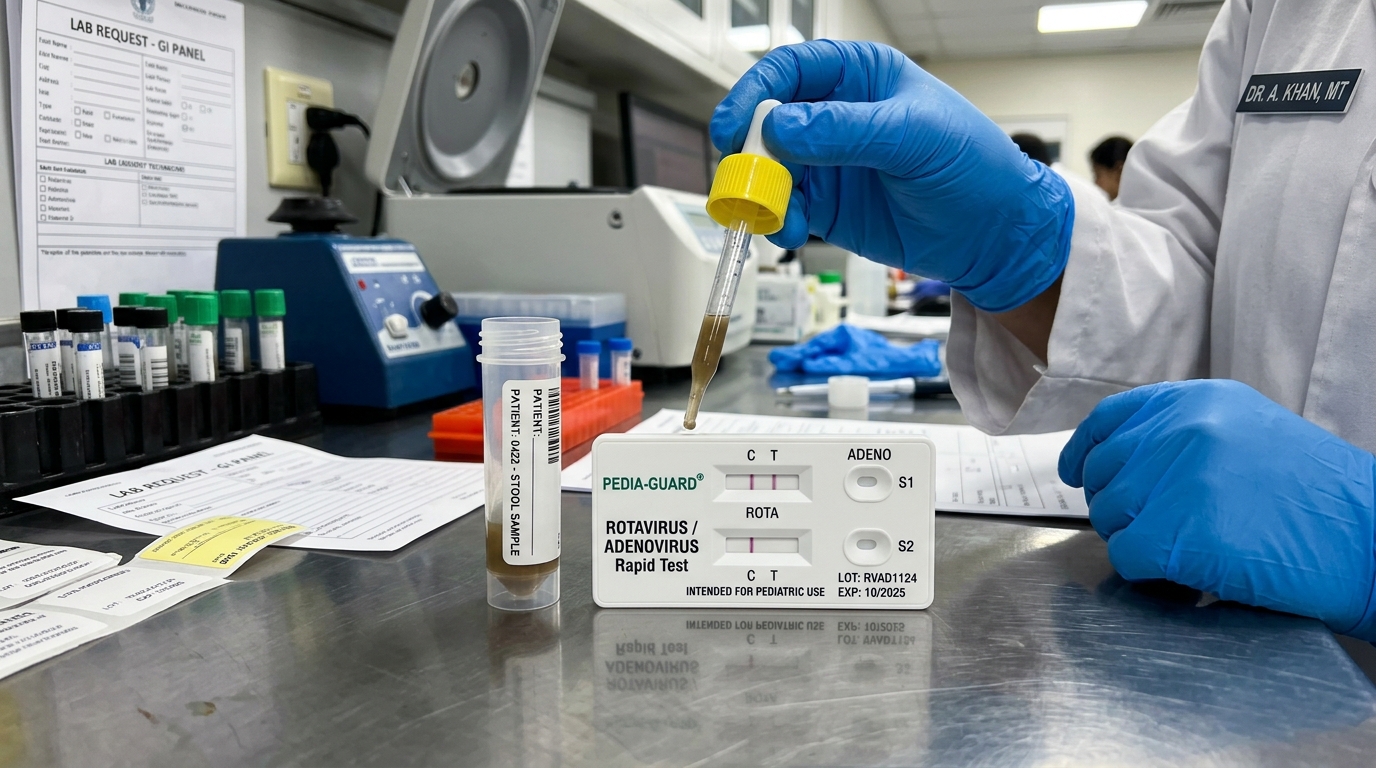
In pediatric emergency departments, ambulatory daycare centers, and family clinics across the UAE, acute watery diarrhea accompanied by fever and vomiting requires rapid clinical triage. Because symptoms of viral gastroenteritis closely resemble invasive bacterial enteritis (like Salmonella or Campylobacter), medical providers must rapidly confirm viral etiology before considering antibiotics. Clinical facilities procuring accredited gastrointestinal rapid diagnostic kits rely on dual rotavirus-adenovirus cassettes as frontline point-of-care tools, while chronic, non-infectious gastrointestinal distress is frequently differentiated using an expanded chronic food intolerance 286 panel.
Target Protein Antigens: VP6 and Enteric Hexon
The dual-cassette device incorporates two independent test strips within a single plastic housing:
- Rotavirus Channel (Target: VP6 Protein): Rotavirus possesses a triple-layered icosahedral capsid. The intermediate capsid shell is composed of the highly conserved VP6 protein, which defines Group A rotaviruses responsible for > 95% of human clinical infections. Monoclonal antibodies bind VP6 with extreme avidity.
- Adenovirus Channel (Target: Enteric Hexon Protein): While respiratory adenoviruses target the pharynx and conjunctiva, acute gastrointestinal disease is caused specifically by Enteric Adenovirus Serotypes 40 and 41 (Subgenus F). The assay utilizes monoclonal antibodies targeting structural hexon epitopes specific to these gastrointestinal strains.
Analytical Sensitivity and Specificity Matrix
Performance benchmarks against electron microscopy and RT-PCR from clinical validation studies:
| Assay Target | Clinical Sensitivity | Clinical Specificity | Analytical Gold Standard Reference |
|---|---|---|---|
| Rotavirus Group A (VP6) | 96.2% – 99.1% | 98.5% – 99.8% | Reverse Transcription PCR (RT-PCR) / ELISA |
| Enteric Adenovirus (Serotypes 40/41) | 88.5% – 94.0% | 97.8% – 99.5% | Real-Time PCR / Electron Microscopy |
What Combo Rapid Testing Can Miss: Diagnostic Caveats
Healthcare providers should be aware of key analytical boundaries:
1. Other Major Enteric Viruses (Norovirus & Astrovirus)
A negative rotavirus/adenovirus test does not rule out viral gastroenteritis. Norovirus (Genogroups I and II) is the leading cause of epidemic foodborne viral gastroenteritis in adults and children worldwide. If both channels are negative in an acute outbreak, norovirus or sapovirus must be considered.
2. Non-Enteric Adenovirus Shedding
If a child has a concurrent respiratory adenovirus infection (e.g., serotypes 1, 2, or 5) and swallows respiratory mucus, trace non-enteric adenovirus hexon proteins can occasionally pass into feces, leading to weak cross-reactive false positives on non-specific antibody strips.
3. Inappropriate Specimen Timing
Viral shedding in stool peaks sharply between days 3 and 5 of diarrhea. Collecting stool after day 8 may yield a false-negative result due to declining fecal viral titers, even if post-infectious osmotic diarrhea persists due to temporary lactase deficiency.
Peer-Reviewed Clinical References & Scientific Sources
- World Health Organization (WHO). Rotavirus Surveillance Guidelines and Global Disease Burden. Geneva: WHO Immunization Guidelines, 2023.
- Shane, A. L., et al. Infectious Diseases Society of America (IDSA) Clinical Practice Guidelines for the Diagnosis and Management of Infectious Diarrhea. Clinical Infectious Diseases, 2017; 65(12): e45-e80.
- Wilhelmi, I., et al. Evaluation of Rapid Immunochromatographic Tests for Detection of Rotavirus and Adenovirus in Fecal Specimens. Journal of Clinical Microbiology, 2002; 40(11): 4084-4087.