
Upper Respiratory Pathogens Multiplex PCR Indications: When Syndromic Panels Are Needed
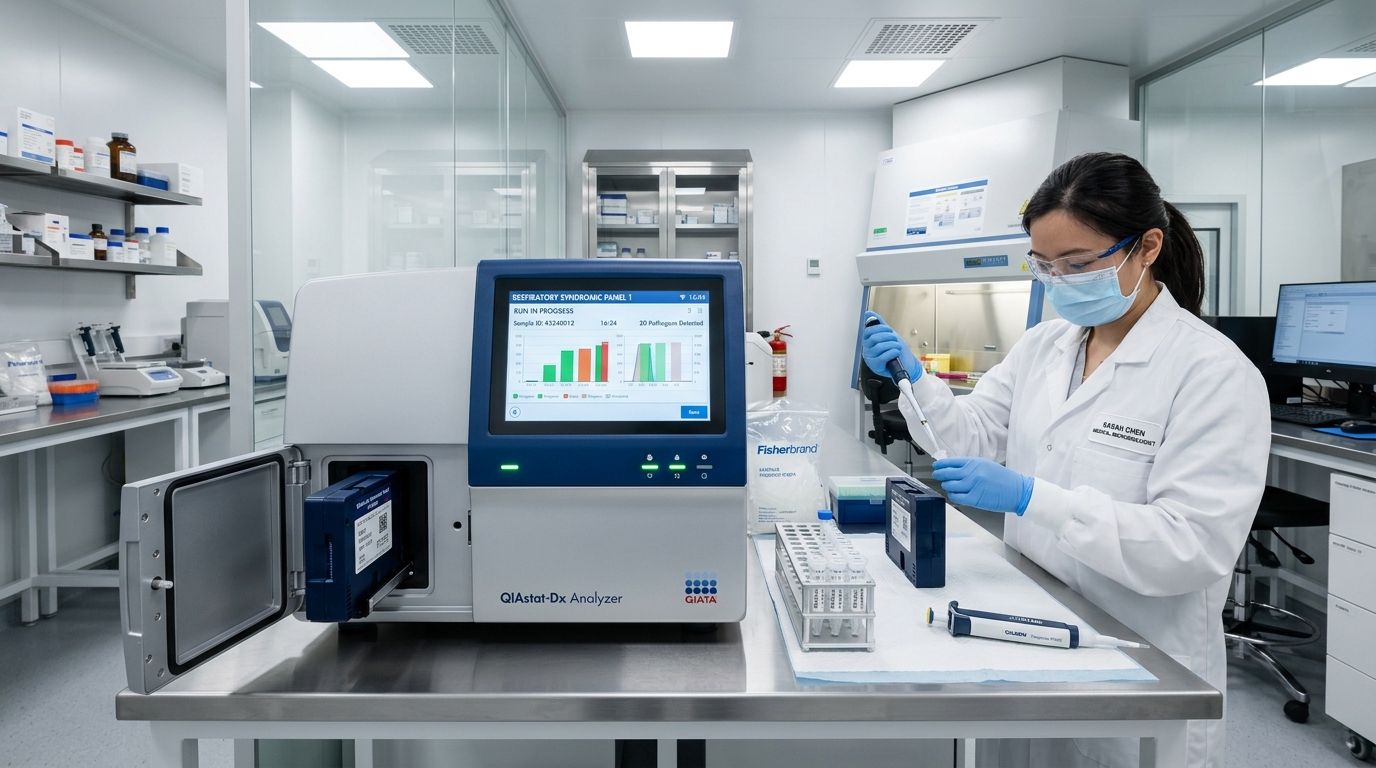
In modern clinical practice across Dubai and the UAE, healthcare providers encounter complex respiratory presentations where symptoms of influenza, COVID-19, respiratory syncytial virus, parainfluenza, and human metapneumovirus overlap entirely. While point-of-care rapid antigen tests serve as excellent frontline triage in uncomplicated outpatients, complex patients demand comprehensive molecular coverage. Evaluating high-resolution upper respiratory multiplex PCR panel diagnostics enables clinicians to immediately detect co-infections, initiate targeted antivirals, and optimize infection control isolation protocols.
What Is Syndromic Multiplex PCR Testing?
Syndromic testing represents a diagnostic paradigm shift from traditional single-pathogen hypotheses to comprehensive syndrome-based identification:
- Broad Multi-Target Spectrum: Rather than ordering individual tests sequentially for Influenza, then RSV, then Adenovirus, a single closed cartridge amplifies nucleic acid sequences across 20+ viral sub-lineages and atypical bacterial pathogens simultaneously.
- Ultra-High Analytical Sensitivity & Specificity: RT-PCR targets conserved genetic loci with sensitivity approaching 98% to 100%, detecting low copy-number shedding even during early or waning phases of infection.
- Rapid Automated Sample-to-Answer Workflow: Modern syndromic platforms integrate automated magnetic bead cell lysis, nucleic acid extraction, microfluidic multiplex amplification, and melt-curve analysis in an enclosed system, eliminating specimen contamination risks.
Comprehensive Pathogen Spectrum Detected by Modern Multiplex Panels
Syndromic upper respiratory panels typically encompass three major categories of micro-organisms:
| Pathogen Classification | Specific Targets Included in Multiplex Panel | Primary Clinical Manifestations | Direct Therapeutic / Management Impact |
|---|---|---|---|
| Major Respiratory Viruses | Influenza A (H1, H3, H1N1-pdm09), Influenza B, SARS-CoV-2, RSV (A & B) | High fever, severe myalgia, bronchiolitis, acute hypoxemia | Immediate antiviral therapy (Oseltamivir, Paxlovid), monoclonal antibodies, cohort isolation |
| Common Endemic Viruses | Adenovirus, Human Metapneumovirus (hMPV), Parainfluenza (Types 1–4), Rhinovirus/Enterovirus, Seasonal Coronaviruses (NL63, 229E, OC43, HKU1) | Croup, exacerbation of asthma/COPD, wheezing, bronchiolitis in infants | Avoidance of antibacterial agents, bronchodilator therapy, respiratory support |
| Atypical Respiratory Bacteria | Mycoplasma pneumoniae, Chlamydia pneumoniae, Bordetella pertussis, Bordetella parapertussis | “Walking pneumonia”, intractable paroxysmal whooping cough, persistent dry cough | Targeted macrolide (azithromycin) or fluoroquinolone therapy; public health contact tracing |
Evidence-Based Clinical Indications for Ordering Multiplex PCR
Because multiplex PCR panels carry higher testing costs than basic antigen cassettes, clinical guidelines establish clear indications for their utilization:
1. Immunocompromised Host with Respiratory Symptoms
Patients undergoing active chemotherapy, solid organ or hematopoietic stem cell transplant recipients, individuals with advanced HIV infection, and patients on biologic immunosuppressive therapies. In this vulnerable population, respiratory viruses (such as parainfluenza and adenovirus) can rapidly progress to fatal necrotizing pneumonia.
2. Severe Acute Respiratory Illness (SARI) & Hospital Admission
Patients presenting to the emergency department or intensive care unit (ICU) with acute hypoxemic respiratory failure, hemodynamic instability, or bilateral pulmonary infiltrates. Identifying viral etiology prevents prolonged empirical broad-spectrum antibiotic toxicity and guides de-escalation.
3. Inpatient Infection Control & Bed Cohorting
Rapid detection of highly contagious viral strains (such as Influenza, RSV, and Pertussis) is mandatory in hospital settings to enforce negative-pressure droplet isolation, preventing catastrophic nosocomial hospital outbreaks among neighboring vulnerable inpatients.
4. Pediatric Patients with Severe Croup or Bronchiolitis
Infants and young children presenting with respiratory distress, grunting, or severe subcostal retractions where differentiating RSV from Metapneumovirus or Parainfluenza guides pediatric ICU monitoring and oxygenation management.
5. Failure to Respond to Initial Outpatient Therapy
Outpatients who fail to improve after 5 to 7 days of conservative management or whose rapid antigen tests returned negative despite persistent worsening clinical fevers and productive cough.
Comparison: Multiplex PCR vs. Rapid Antigen Point-of-Care Tests
Selecting between molecular syndromic panels and frontline respiratory rapid diagnostic test kits depends directly on patient acuity and care setting:
| Evaluation Parameter | Multiplex RT-PCR Syndromic Panel | Point-of-Care Rapid Antigen Cassettes |
|---|---|---|
| Number of Targets | 15 to 25 simultaneous pathogens | 1 to 3 targets (typically Covid + Flu A/B) |
| Analytical Sensitivity | 98% to 100% (amplifies minimal genetic copies) | 80% to 92% (dependent on high viral antigen load) |
| Turnaround Time | 45 minutes to 2 hours | 10 to 15 minutes |
| Infrastructure Required | Molecular laboratory instrument, calibrated cartridges | Zero instrumentation; visual strip reading anywhere |
| Cost per Test | Moderate to High | Very Low & Highly Accessible |
| Ideal Setting | Hospitals, ICUs, oncology clinics, complex outpatients | Urgent care centers, outpatient polyclinics, school health, home |
Interpreting Complex Multiplex PCR Results: Co-Infections & Shedding
Interpreting a positive syndromic report requires astute clinical synthesis:
- Viral-Viral Co-Infections (5% to 15% of cases): It is common for pediatric panels to detect both Rhinovirus and RSV simultaneously. Clinical management focuses on the primary driver of airway obstruction.
- Prolonged Nucleic Acid Shedding: Rhinovirus and Adenovirus genetic material can persist in respiratory mucosa for 3 to 6 weeks post-clinical resolution. Physicians must correlate positive PCR findings with current physical exam signs to avoid misattributing new symptoms to resolved past infections.
- Bacterial Colonization vs. True Infection: Detection of atypical bacteria like Mycoplasma pneumoniae in an asymptomatic patient may represent transient carriage, whereas high-titer detection in an acutely febrile patient with lobar consolidation confirms acute community-acquired pneumonia.
Frequently Asked Questions (FAQs)
When should a doctor order an upper respiratory multiplex PCR panel?
A multiplex PCR panel should be ordered for hospitalized patients with acute respiratory infection, immunocompromised patients, individuals in intensive care, pediatric cases with severe bronchiolitis, and patients with unexplained severe respiratory deterioration.
Can multiplex PCR distinguish between viral and bacterial infections?
Yes. The panel explicitly targets both major viral genomes (such as Influenza, RSV, SARS-CoV-2) and specific atypical bacterial DNA (including Mycoplasma pneumoniae, Chlamydia pneumoniae, and Bordetella pertussis), providing unambiguous pathogen identification.
Is a negative rapid test enough to rule out respiratory infection?
While rapid antigen tests offer high specificity (>98%), their sensitivity during early or waning viral loads ranges between 80% and 90%. If clinical suspicion remains high in a critically ill or high-risk patient, molecular multiplex PCR is recommended to rule out infection conclusively.
Scientific References & Clinical Guidelines
- Infectious Diseases Society of America (IDSA). Clinical Practice Guideline by the Infectious Diseases Society of America: 2018 Update on Diagnosis, Treatment, Chemoprophylaxis, and Institutional Outbreak Management of Seasonal Influenza. Clin Infect Dis. 2019;68(6):e1-e47.
- Journal of Clinical Microbiology. Clinical and Diagnostic Impact of Syndromic Multiplex Molecular Panels for Acute Respiratory Infections. J Clin Microbiol. 2019;57(4):e01861-18.
- European Respiratory Journal. European Respiratory Society Guidelines on the Management of Community-Acquired Pneumonia in Immunocompromised Patients. Eur Respir J. 2021;58(4):2100084.