
COVID Flu Combo Rapid Test Indications: Clinical Triage, Differential Diagnosis & Antiviral Timing in Outpatient Clinics
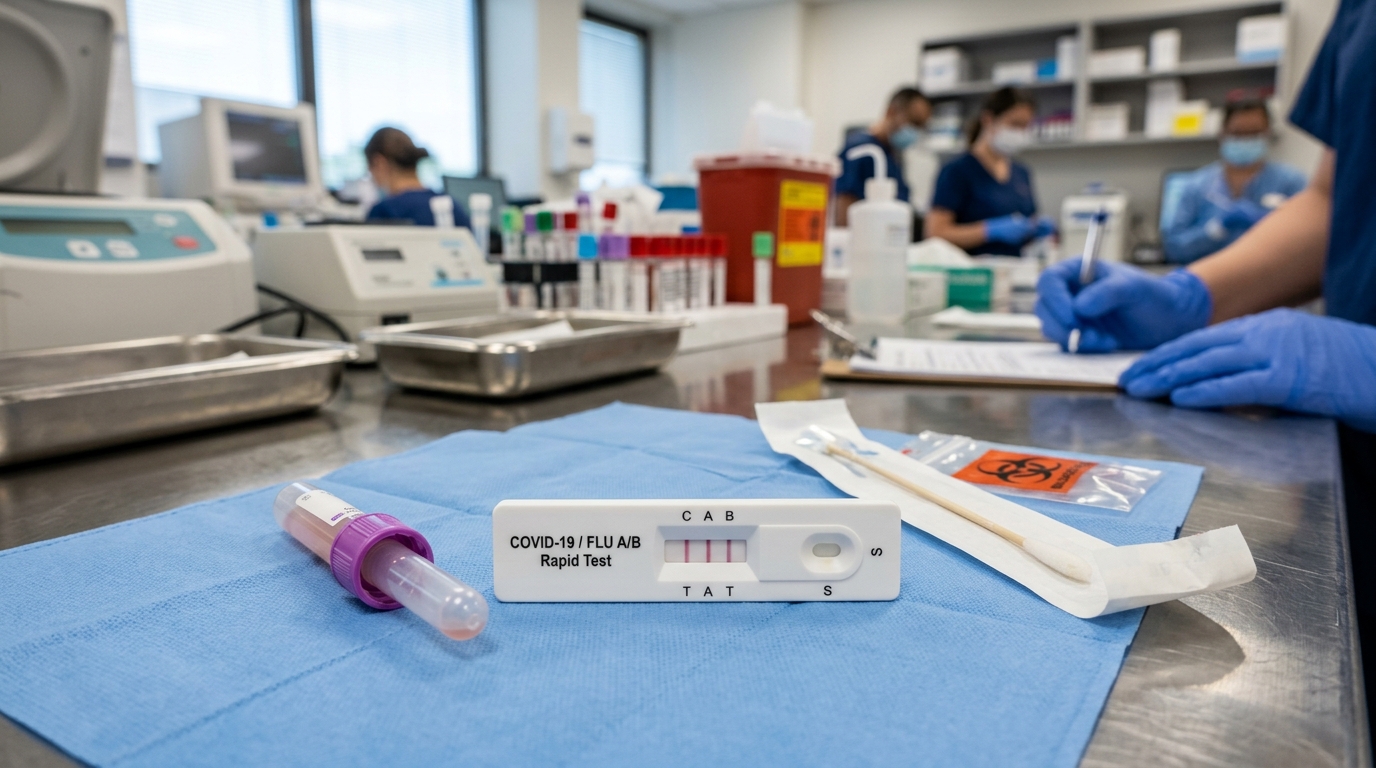
In metropolitan healthcare environments across Dubai, Abu Dhabi, and Sharjah, seasonal respiratory surges present significant clinical triage challenges. Primary care physicians facing symptomatic patients must rapidly distinguish between viral etiologies to avoid inappropriate antibiotic prescription. Implementing high-sensitivity professional respiratory rapid test kits in UAE provides emergency rooms and outpatient facilities with immediate, multiplexed diagnostic precision from a single nasal swab.
Clinical Symptoms and Overlap: Why Symptom Diagnosis Fails
Relying on clinical examination alone to differentiate COVID-19 from seasonal influenza is fundamentally unreliable due to extensive overlap in viral pathophysiology:
- Identical Constitutional Manifestations: High fever (>38.5°C), severe rigors, pervasive arthralgia, and incapacitating myalgia occur identically in both infections.
- Upper & Lower Respiratory Symptoms: Pharyngitis, rhinorrhea, persistent dry cough, chest congestion, and dyspnea provide no discriminating statistical power.
- Atypical Presentations in Vulnerable Patients: Geriatric and immunocompromised individuals may present solely with altered mental status, lethargy, or unexplained falls without typical respiratory hallmarks.
Priority Indications for Multiplexed Antigen Testing
The primary clinical indications for deploying rapid COVID-19/Influenza A+B combo antigen cassettes include:
| Clinical Indication | Target Patient Population | Diagnostic Rationale | Therapeutic Impact |
|---|---|---|---|
| High-Risk Comorbidity Triage | Patients aged >65, diabetics, cardiovascular or COPD patients | Immediate identification of pathogen before acute deterioration | Directs prompt initiation of antiviral therapy within 48 to 120 hours |
| Emergency Department Triage | Patients presenting to ED with acute febrile respiratory illness | Prevents nosocomial cross-transmission in shared waiting areas | Guides immediate cohorting and isolation bed allocation |
| Antimicrobial Stewardship | Uncomplicated pediatric and adult outpatients | Confirms viral etiology to eliminate unnecessary empiric antibiotics | Reduces selection pressure for antibiotic-resistant bacteria |
| Institutional Outbreak Control | Nursing homes, residential centers, schools, corporate offices | Rapid screening of clusters to establish primary causative agent | Informs public health reporting and targeted ring-prophylaxis |
Critical Antiviral Therapeutic Windows
The most compelling clinical justification for rapid combo testing is the narrow therapeutic window required for oral antiviral efficacy. Once viral replication peaks, antiviral benefits diminish drastically:
- Influenza Antivirals (Oseltamivir / Baloxavir Marboxil): Must be initiated within 48 hours of symptom onset. Delayed administration beyond this timeframe yields minimal clinical benefit in reducing illness duration or hospitalization rates.
- COVID-19 Antivirals (Paxlovid / Remdesivir): Indicated for mild-to-moderate disease in patients at high risk of progression, requiring initiation within 5 days (120 hours) of symptom onset to achieve up to 88% reduction in hospitalization.
Mechanics of the Dual-Target Lateral Flow Strip
Modern combination lateral flow cassettes feature sophisticated dual-lane or multi-line chromatographic architecture designed to detect conserved viral nucleoproteins:
- Extraction Chemistry: The nasopharyngeal or anterior nasal swab is agitated in a specialized extraction buffer containing mild detergents that disrupt viral envelopes, releasing internal nucleocapsid proteins without denaturing antibody epitopes.
- Capillary Chromatography: Sample fluid is applied to the sample well, migrating laterally via capillary action across nitrocellulose membranes coated with colloidal gold-conjugated monoclonal antibodies.
- Differential Line Resolution: Independent test lines contain immobilized monoclonal capture antibodies specific to SARS-CoV-2 nucleocapsid, Influenza A nucleoprotein, and Influenza B nucleoprotein, preventing cross-reactivity.
- Simultaneous Procedural Control: A universal control line (C) captures gold conjugates, confirming adequate volume, flow velocity, and reagent integrity.
Performance Characteristics: Sensitivity vs. Molecular RT-PCR
Understanding analytical sensitivity enables clinicians to interpret negative rapid results appropriately:
| Diagnostic Metric | Rapid Antigen Combo Cassette | Laboratory Multiplex RT-PCR |
|---|---|---|
| Analytical Sensitivity | 85% to 92% (High viral loads, Ct <30) | >98% (Detects trace viral RNA, Ct >35) |
| Analytical Specificity | >99.2% (Extremely low false positives) | >99.8% |
| Time to Result | 15 Minutes | 2 to 6 Hours (Centralized lab dependent) |
| Clinical Role | Rapid decision-making, acute bedside triage | Confirmatory testing, resolving negative symptomatic cases |
Protocol for Handling Negative Rapid Results in High-Risk Patients
In accordance with UAE clinical guidelines, when a symptomatic patient belonging to a vulnerable risk group tests negative on a rapid combo antigen strip:
- Serial Retesting: Perform a second rapid test 24 to 48 hours later if viral load was initially below detection threshold.
- Molecular Confirmation: Collect a nasopharyngeal specimen for formal multiplex respiratory RT-PCR panel to detect low-level viral shedding, RSV, or human metapneumovirus.
- Symptomatic Isolation: Instruct the patient to observe droplet precautions pending confirmatory molecular results.
Pre-Analytical Precision: Swab Sampling SOP & Extraction Mechanics
Diagnostic accuracy in lateral flow antigen testing is inextricably linked to pre-analytical rigor. Because viral nucleoproteins reside predominantly within infected respiratory epithelial cells rather than watery nasal secretions, executing a standardized specimen collection protocol is mandatory:
- Proper Swab Insertion Depth: For anterior nasal sampling, insert the sterile flocked swab 2 to 3 cm into the nostril until mild resistance is met. For nasopharyngeal collection, insert horizontally along the floor of the nasal cavity until contact with the posterior nasopharyngeal wall is achieved.
- Adequate Epithelial Cell Harvesting: Firmly rotate the swab against the nasal mucosal wall at least 5 complete rotations (lasting approximately 10 to 15 seconds) per nostril, repeating the identical procedure with the same swab in the contralateral nostril.
- Thorough Extraction Buffer Elution: Immerse the swab head completely into the extraction buffer tube. Vigorously plunge and rotate the swab against the flexible tube walls at least 10 times, allowing the detergent buffer to lyse lipid envelopes and release encapsulated nucleocapsid antigens into suspension.
- Controlled Dropper Inversion: Squeeze the sides of the extraction tube firmly as the swab is withdrawn to extract residual liquid volume. Secure the dropper nozzle tightly and deliver exactly 3 to 4 vertical drops into the sample cassette well. Avoid holding the dropper at an angle to prevent variable droplet volume.
Pediatric vs. Geriatric Triage Considerations in UAE Healthcare
Outpatient primary care clinics in Dubai and Abu Dhabi encounter distinct clinical challenges when stratifying respiratory patients across age demographics:
- Pediatric Populations (Infants & School-Age Children): Young children shed high concentrations of viral particles for longer durations (up to 10 to 14 days), resulting in high analytical sensitivity on rapid antigen cassettes. However, young pediatric patients frequently present with prominent gastrointestinal symptoms (vomiting, abdominal pain, diarrhea) alongside fever, often mimicking acute gastroenteritis rather than standard viral pneumonia. Point-of-care rapid testing provides instant clarity, preventing hospital admission for suspected appendicitis or severe enteritis.
- Geriatric & Immunocompromised Demographics: Elderly patients frequently present with blunted thermoregulatory responses, demonstrating little or no fever despite severe lower respiratory tract involvement. In this population, acute confusion, falls, exacerbation of underlying heart failure, or unexplained hyperglycemia may be the sole presenting manifestation. Rapid combo testing enables immediate initiation of antiviral agents within the first 48 hours, significantly lowering the risk of secondary bacterial superinfections (e.g., Streptococcus pneumoniae or Staphylococcus aureus pneumonia).
Frequently Asked Questions (FAQ)
Can the combo test distinguish between Influenza A and Influenza B?
Yes. Multiplex rapid cassettes feature distinct test bands specifically targeted to Influenza A and Influenza B nucleoproteins, allowing clinicians to tailor antiviral and epidemiological reporting accurately.
What should be done if both COVID-19 and Flu lines appear positive?
Coinfection with SARS-CoV-2 and Influenza A or B (“Flurona”) can occur, particularly during peak winter respiratory seasons. In such clinical scenarios, clinicians evaluate the primary severity and manage therapeutic interactions between Paxlovid and Oseltamivir under specialist consultation.
Can a rapid combo test be performed on saliva instead of nasal swabs?
Most validated combo cassettes are calibrated specifically for nasal or nasopharyngeal swabs, where nucleocapsid concentrations are highest. Using saliva on nasal-designated test strips significantly reduces sensitivity and invalidates manufacturer claims.
Scientific References & Authoritative Clinical Guidelines
- World Health Organization (WHO). Antigen-Detection in the Diagnosis of SARS-CoV-2 and Influenza Infections Using Rapid Immunoassays. WHO Guidelines, 2023.
- Centers for Disease Control and Prevention (CDC). Rapid Diagnostic Testing for Influenza and SARS-CoV-2: Guidance for Clinicians. MMWR Recommendations, 2024.
- Department of Health Abu Dhabi (DOH). Clinical Management Guidelines for Acute Viral Respiratory Infections and Outpatient Antiviral Protocols. UAE Health Regulations, 2024.