
Gram-Positive Blood Culture Pathogens Multiplex PCR Indications: Rapid Sepsis Diagnosis, MRSA/VRE Resistance Markers & Stewardship
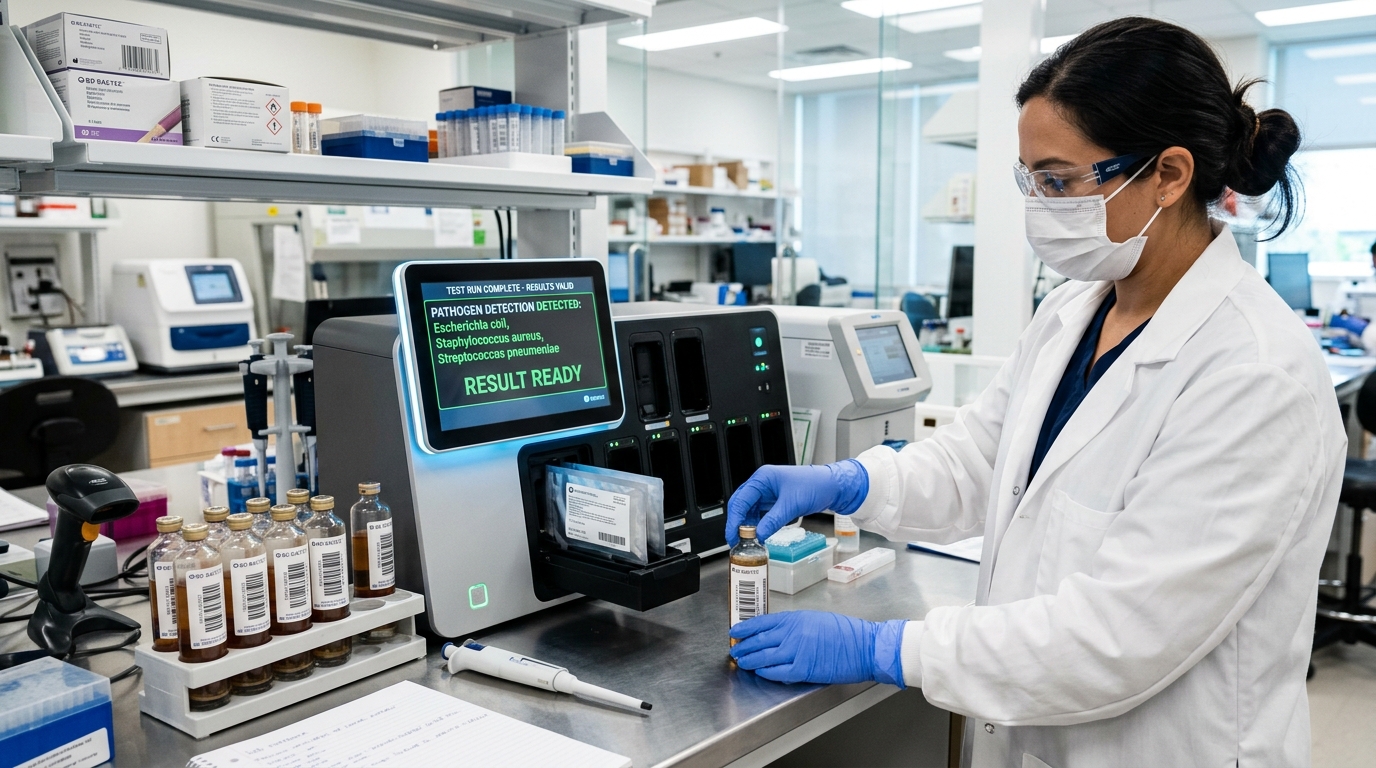
In tertiary care hospitals and specialized intensive care units across Dubai, Abu Dhabi, and the UAE, bloodstream infections represent critical medical emergencies where every hour of delayed targeted antimicrobial therapy escalates patient mortality. Integrating automated molecular panels such as advanced blood culture positive panels in UAE empowers clinical microbiologists and infectious disease specialists to transition from broad-spectrum empiric toxicity to pathogen-directed therapy within hours of initial culture bottle signaling.
Pathophysiological Urgency: Sepsis and S. aureus Bacteremia
Gram-positive cocci account for approximately 50% to 60% of all bloodstream infections in hospitalized patients. The diagnostic dilemma hinges on distinguishing true life-threatening bacteremia (e.g., Staphylococcus aureus, Enterococcus faecalis, Streptococcus pneumoniae) from benign skin contaminants (e.g., coagulase-negative Staphylococci like Staphylococcus epidermidis).
Conventional microbiology workflows entail Gram staining followed by subculturing onto solid agar media, colony maturation (24 hours), and automated biochemical or MALDI-TOF profiling (another 24 hours). During this 48-hour diagnostic blind spot, patients routinely receive empiric broad-spectrum vancomycin, risking acute kidney injury and accelerating antimicrobial resistance.
Indications for Direct-from-Bottle Multiplex PCR Testing
Multiplex PCR testing is strictly indicated upon the signaling of an automated blood culture bottle showing Gram-positive organisms on Gram stain:
- Signal-Positive Blood Culture Bottles: As soon as an automated incubator (e.g., BD BACTEC, bioMérieux BacT/ALERT) flags positive and microscopy confirms Gram-positive cocci in clusters, pairs, or chains.
- Critical ICU Septic Shock Patients: Unstable hemodynamic patients in septic shock where identifying the specific pathogen and resistance determinants dictates vasopressor and targeted antibiotic survival strategies.
- Neutropenic Fever and Oncology Wards: Immunocompromised cancer patients at elevated risk of catastrophic enterococcal or streptococcal bloodstream invasion.
- Prosthetic Device and Endocarditis Suspicions: Rapid confirmation of Staphylococcus aureus or Enterococcus species in patients with artificial heart valves or vascular grafts.
- Antimicrobial De-Escalation Protocols: Hospitals executing rigorous stewardship mandates to rapidly discontinue empiric glycopeptides (vancomycin) or daptomycin upon ruling out MRSA or VRE.
Multiplex PCR Diagnostic Spectrum: Pathogens & Resistance Genes
Comprehensive Gram-positive blood culture panels target a wide array of clinically significant bacteria and their genetic resistance determinants:
| Bacterial Group / Species | Clinical Pathogenicity | Associated Resistance Genes | Therapeutic Implication |
|---|---|---|---|
| Staphylococcus aureus | High-virulence bacteremia, endocarditis, osteomyelitis | mecA / mecC (PBP2a / Methicillin resistance) | If mecA negative: immediate de-escalation to Cefazolin or Nafcillin |
| Staphylococcus epidermidis & CoNS | Frequent skin contaminant or line-associated biofilm | mecA (Methicillin resistance) | Guides catheter salvage vs. line removal; prevents unnecessary vancomycin |
| Enterococcus faecium | Nosocomial bacteremia; multidrug resistance | vanA / vanB (Vancomycin resistance – VRE) | Immediate switch to Linezolid or Daptomycin; infection control contact isolation |
| Enterococcus faecalis | Urosepsis, endocarditis; usually ampicillin-susceptible | vanA / vanB (Rare compared to E. faecium) | Enables high-dose Ampicillin therapy; avoids vancomycin toxicity |
| Streptococcus pneumoniae | Pneumococcal sepsis, meningitis | Intrinsic penicillin tolerance markers | Informs Ceftriaxone monotherapy vs. combination therapy |
| Streptococcus agalactiae (GBS) & pyogenes (GAS) | Neonatal sepsis, severe necrotizing soft-tissue sepsis | Erythromycin/Clindamycin resistance markers | Confirms high susceptibility to Penicillin G / Ampicillin |
| Listeria monocytogenes | Maternal-fetal sepsis, meningitis in immunocompromised | Intrinsic cephalosporin resistance | Mandates urgent addition of Ampicillin / Gentamicin regimen |
Clinical Decision Impact: Hours to Targeted Therapy
The comparative timeline illustrates why multiplex PCR is transforming hospital infectious disease care:
| Diagnostic Milestone | Conventional Microbiology Workflow | Multiplex PCR Molecular Workflow | Time Saved |
|---|---|---|---|
| Pathogen Identification | 24 to 48 Hours post-bottle signaling | 1 to 2 Hours post-bottle signaling | 23 to 46 Hours faster |
| MRSA vs. MSSA Differentiation | 48 to 72 Hours (Phenotypic AST) | 1 to 2 Hours (mecA/mecC detection) | 47 to 70 Hours faster |
| VRE Confirmation | 48 to 72 Hours | 1 to 2 Hours (vanA/vanB detection) | Up to 3 Days faster |
| Antimicrobial Optimization | Day 3 of hospitalization | Day 1 of hospitalization | Reduces ICU stay by average 2.1 days |
Antimicrobial Stewardship Synergy in UAE Hospitals
Deploying multiplex PCR panels without dedicated antimicrobial stewardship committee intervention blunts their clinical utility. Leading healthcare systems in the UAE follow an integrated communication bundle:
- Automated Laboratory Alert: The molecular diagnostic analyzer automatically transmits results to the electronic medical record (Epic / Cerner / Malaffi).
- Clinical Pharmacist Intervention: An infectious disease clinical pharmacist immediately receives a real-time page upon detection of mecA or vanA.
- Rapid Antibiotic Switching: If MSSA is identified (S. aureus positive, mecA negative), the pharmacist prompts the attending physician to de-escalate vancomycin to cefazolin within 60 minutes, improving bacteremia survival rates by 35%.
- Infection Control Notification: Immediate hospital epidemiology notification for VRE cases ensures rapid contact precaution implementation, preventing nosocomial ward transmission.
Frequently Asked Questions (FAQ)
Can multiplex PCR be performed directly on unincubated whole blood?
No. Blood culture multiplex PCR panels are specifically designed and cleared for testing positive blood culture broth once bacterial titers have grown to approximately 10^7 to 10^8 CFU/mL. Testing directly from non-incubated whole blood requires specialized high-volume DNA extraction platforms.
What does it mean if mecA is detected but the species is S. epidermidis?
This indicates methicillin-resistant coagulase-negative Staphylococci (MR-CoNS). In patients with peripheral blood cultures without prosthetic hardware, this frequently represents skin colonization. Clinicians evaluate repeat blood cultures to avoid unnecessary vancomycin courses for benign contaminants.
Does multiplex PCR eliminate the need for conventional culture and AST?
No. Molecular testing is a rapid adjunct, not a complete replacement. Conventional subculturing is still mandatory to determine minimum inhibitory concentrations (MICs), detect rare resistance mechanisms not included in the PCR primers, and perform epidemiological whole-genome sequencing.
Scientific References & Authoritative Clinical Guidelines
- Clinical Infectious Diseases (CID). Clinical Outcomes and Cost-Effectiveness of Rapid Multiplex PCR for Bloodstream Infections: Infectious Diseases Society of America (IDSA), 2023.
- Journal of Clinical Microbiology (JCM). Evaluation of Multiplex Molecular Panels for Direct Identification and Antimicrobial Resistance Profiling of Positive Blood Cultures. ASM Press, 2024.
- Department of Health Abu Dhabi (DOH). Antimicrobial Stewardship Program Guidelines and Diagnostic Microbiology Standards. UAE Health Regulations, 2024.