
Free Testosterone Fertility Testing Meaning: Bioavailable Androgens, SHBG Dynamics & Male Reproductive Health
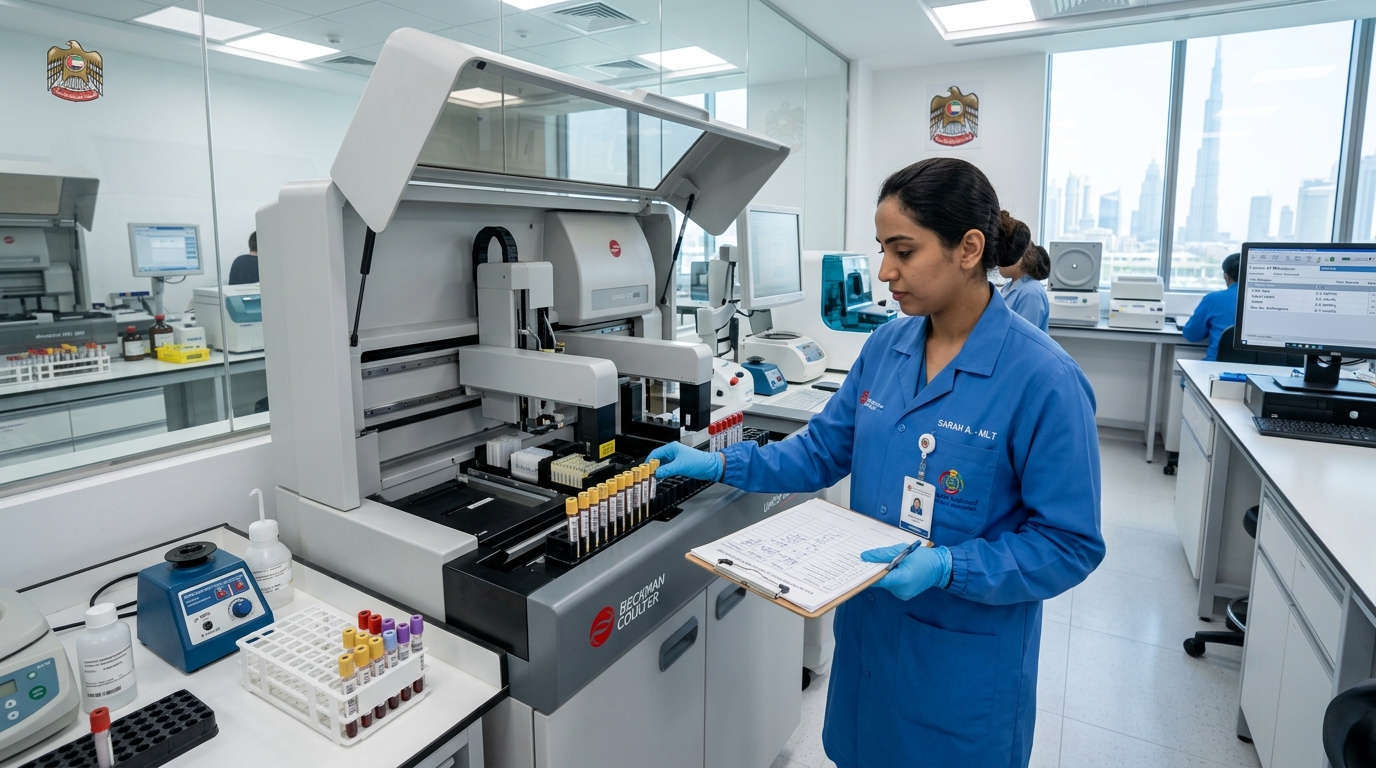
In the United Arab Emirates, couples navigating delayed conception frequently focus investigative efforts on female fertility factors. However, male factor subfertility accounts for nearly 40% to 50% of conception challenges. When standard semen analysis reveals oligospermia, asthenospermia, or teratospermia, comprehensive hormonal profiling is essential. Accessing specialized fertility and hormonal testing in UAE ensures precise quantification of bioavailable androgens, unlocking tailored therapeutic pathways for reproductive restoration.
Circulating Testosterone Fractions: The Binding Equilibrium
To accurately understand free testosterone testing, clinicians must distinguish between the three distinct compartmental states of circulating androgens:
- SHBG-Bound Testosterone (60% to 70%): Tightly bound to sex hormone-binding globulin with high avidity. This fraction is biologically inert and cannot enter target tissues under normal physiological conditions.
- Albumin-Bound Testosterone (30% to 38%): Loosely bound to circulating serum albumin with low affinity. Because this bond easily dissociates within microcapillaries, it is biologically accessible.
- Free Unbound Testosterone (1% to 2%): Completely free and unattached, possessing immediate bioactivity to bind nuclear androgen receptors throughout the male anatomy.
- Bioavailable Testosterone: Represents the mathematical sum of Free Testosterone + Albumin-Bound Testosterone (approximately 35% to 40% of total circulating androgen).
Why Total Testosterone Can Be Misleading in Fertility Assessments
Relying exclusively on total serum testosterone creates significant diagnostic vulnerabilities. Pathological or physiological shifts in hepatic SHBG production distort total testosterone levels while leaving true bioavailable androgens altered:
| Clinical Condition | SHBG Production Impact | Total Testosterone Level | Free Testosterone Level | Diagnostic Reality |
|---|---|---|---|---|
| Obesity / Metabolic Syndrome | Significantly Decreased | Falsely Low (Apparent hypogonadism) | Normal or Mildly Low | Patient may not have true clinical androgen deficiency |
| Type 2 Diabetes Mellitus | Markedly Decreased (Insulin suppression) | Low | Normal or Variable | Evaluates functional androgen status beyond total levels |
| Advanced Age / Hyperthyroidism | Significantly Increased | Falsely Normal or Elevated | Low (True Bioavailable Deficiency) | Masked hypogonadism; patient suffers impaired spermatogenesis |
| Chronic Liver Disease / Cirrhosis | Elevated SHBG | Normal to Low | Severely Low | Profound functional hypogonadism despite borderline total levels |
Physiological Role of Free Androgens in Spermatogenesis
Testosterone is essential for normal male reproductive function, operating through a tightly regulated endocrine and paracrine axis:
- Hypothalamic-Pituitary-Gonadal (HPG) Axis: Pulsatile GnRH triggers pituitary secretion of Luteinizing Hormone (LH) and Follicle-Stimulating Hormone (FSH).
- Intratesticular Testosterone Paracrine Drive: LH stimulates testicular Leydig cells to synthesize testosterone, achieving intratesticular concentrations 50 to 100 times higher than peripheral serum.
- Sertoli Cell Support: Free bioavailable testosterone crosses Sertoli cell membranes, activating genes responsible for maintaining the blood-testis barrier, supporting spermatogonia survival, and preventing premature germ cell apoptosis.
- Spermiogenesis & Motility: Adequate bioavailable androgen levels are required for spermatid elongation, acrosome development, and normal flagellar assembly, directly determining sperm count and progressive motility.
Diagnostic Indications for Ordering Free Testosterone
Endocrinologists and reproductive urologists in the UAE order free testosterone under specific clinical indications:
- Abnormal Semen Parameters: Unexplained low sperm count (oligospermia <15 million/mL) or poor sperm motility (asthenospermia <32% progressive).
- Borderline Total Testosterone Levels: Total testosterone values falling between 250 and 350 ng/dL (8.7 to 12.0 nmol/L), requiring free fraction quantification to confirm or exclude hypogonadism.
- Erectile Dysfunction & Loss of Libido: Male patients experiencing sexual performance deficits and reduced ejaculatory volume alongside subfertility.
- Altered Body Composition & Fatigue: Men presenting with abdominal visceral adiposity, gynecomastia, reduced muscle mass, and chronic lethargy.
- Exogenous Androgen or Anabolic Steroid Use: Evaluating patients seeking fertility restoration after prior use of performance-enhancing steroids that suppress endogenous gonadotropins.
Laboratory Methodologies: Equilibrium Dialysis vs. Calculated Free Androgen Index
Accurate laboratory quantification of free testosterone requires rigorous methodology:
| Testing Methodology | Analytical Principle | Clinical Accuracy | Availability & Practicality |
|---|---|---|---|
| Equilibrium Dialysis (Gold Standard) | Physical dialysis membrane separation of unbound hormone followed by LC-MS/MS | Highest Accuracy (Reference Standard) | Specialized reference laboratories; higher cost and longer turnaround |
| Calculated Free Testosterone (Vermeulen Formula) | Mathematical calculation using Total Testosterone, SHBG, and Albumin binding affinities | Excellent Correlation (>96% with Dialysis) | Widely accessible, cost-effective, standard in Dubai hospital labs |
| Direct Analog Immunoassay (EIA) | Uses labeled testosterone analog competing for antibody binding sites | Poor Accuracy (Prone to cross-reactivity and binding protein interference) | Discouraged by Endocrine Society guidelines for clinical management |
Reference Ranges and Clinical Interpretation
While reference intervals vary slightly depending on laboratory assay calibration, typical adult male values reflect the following parameters:
- Total Testosterone (Adult Male): 300 to 1,000 ng/dL (10.4 to 34.7 nmol/L).
- Free Testosterone (Equilibrium Dialysis / Calculated): 50 to 210 pg/mL (5.0 to 21.0 ng/dL or 174 to 729 pmol/L).
- Sex Hormone-Binding Globulin (SHBG): 10 to 57 nmol/L.
- Free Androgen Index (FAI): [Total T (nmol/L) / SHBG (nmol/L)] × 100 (Normal adult male range: 30% to 150%).
Frequently Asked Questions (FAQ)
Why must testosterone blood tests be drawn in the morning?
Testosterone exhibits strong circadian variation, peaking between 7:00 AM and 10:00 AM in adult men. Afternoon blood draws can result in levels 20% to 40% lower, leading to false-positive hypogonadism diagnoses. Fasting morning draws are mandatory.
Does taking exogenous testosterone therapy improve male fertility?
No—in fact, exogenous testosterone acts as a male contraceptive. Exogenous androgens trigger strong negative feedback on the pituitary gland, shutting down LH and FSH secretion, which collapses intratesticular testosterone and causes severe azoospermia (zero sperm count).
Can lifestyle changes restore low free testosterone?
Yes. In men with obesity and metabolic syndrome, weight loss, resistance exercise, dietary optimization, and managing obstructive sleep apnea reduce insulin resistance, normalize hepatic SHBG, and significantly elevate free bioavailable testosterone.
Scientific References & Authoritative Clinical Guidelines
- Journal of Clinical Endocrinology & Metabolism (JCEM). Evaluation and Management of Testosterone Deficiency: An Endocrine Society Clinical Practice Guideline, 2024.
- American Urological Association (AUA) & American Society for Reproductive Medicine (ASRM). Diagnosis and Treatment of Male Infertility: Endocrine Evaluations. AUA Guideline, 2023.
- Dubai Health Authority (DHA). Clinical Practice Standards for Reproductive Health and Andrology Laboratory Services. UAE Health Regulations, 2024.