
When is Genital Herpes HSV-2 Testing Indicated? Atypical Ulcers, Serological Glycoprotein G & Antiviral Suppressive Protocols
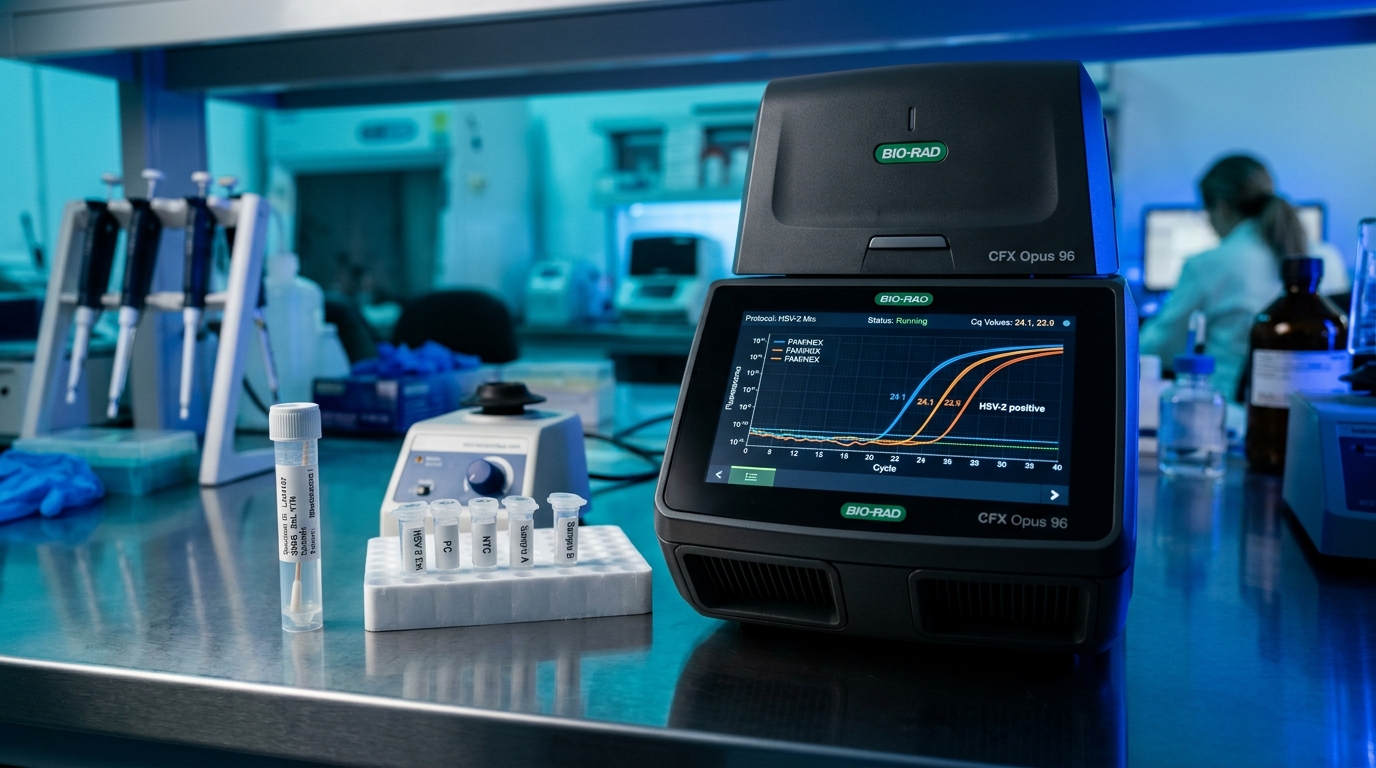
In high-standard clinical centers across Dubai, Abu Dhabi, and Sharjah, acute and recurrent genital ulcers represent a significant proportion of confidential consultations. Establishing definitive virological typing eliminates diagnostic ambiguity and alleviates patient distress. Booking comprehensive discrete sexual health and STI testing packages in Dubai ensures immediate access to multiplex viral PCR panels capable of distinguishing HSV-2 from HSV-1, Syphilis, and Lymphogranuloma Venereum (LGV).
Pathophysiological Mechanisms & Latency Kinetics of HSV-2
HSV-2 exhibits distinct biological behaviors within human epithelial and neurological tissues:
- Sacral Ganglionic Latency: Following mucosal inoculation, virions travel via retrograde axonal transport along sensory nerve fibers to the sacral dorsal root ganglia (S2 to S4). There, the viral genome circularizes into an episome, establishing permanent lifelong latency.
- Anterograde Reactivation: Physical or emotional stress, immunosuppression, ultraviolet exposure, or local tissue trauma triggers viral reactivation. Virions migrate anterograde back down the axon to the epidermal epithelium, causing recurrent vesicular eruption or subclinical shedding.
- High Asymptomatic Shedding Dynamics: Patients with genital HSV-2 shed infectious virus on approximately 15% to 25% of days, with up to 70% of shedding episodes occurring in the complete absence of visible lesions or prodromal symptoms. Consequently, over 80% of new transmissions occur during asymptomatic phases.
Core Clinical Indications: When Should HSV-2 Testing Be Ordered?
Testing for genital HSV-2 is indicated under specific evidence-based clinical circumstances:
| Clinical Indication | Presenting Symptoms / Scenario | Recommended Diagnostic Modality | Actionable Clinical Outcome |
|---|---|---|---|
| Recurrent Genital Lesions | Episodic clusters of painful vesicles or shallow erosions on penile shaft, vulva, perianal, or buttock skin | Lesion Viral Swab Real-Time PCR (NAAT) | Confirms HSV-2; differentiates from HSV-1; establishes indication for long-term daily suppressive antiviral therapy |
| Atypical Mucocutaneous Ulcers | Recurrent linear fissures, localized erythema, or chronic excoriations resembling candidiasis or lichen sclerosus | Lesion PCR Swab during symptomatic flares | Unmasks atypical herpes presentations; prevents inappropriate chronic topical steroid application |
| Discordant Couples Counseling | One sexual partner has documented HSV-2; couple seeks preconception or risk mitigation advice | Type-Specific Glycoprotein G-2 (gG-2) IgG Serology | Identifies uninfected partner; triggers daily suppressive valacyclovir for source partner to reduce transmission by >50% |
| Pregnancy with Known or Suspected Exposure | Pregnant women presenting with suspicious genital lesions or whose partners have documented HSV-2 | Lesion PCR + Maternal gG-2 IgG Serology | Primary acquisition in late pregnancy carries a 30%–50% risk of neonatal herpes; mandates Cesarean delivery |
| Aseptic Meningitis Workup (Mollaret’s) | Recurrent benign lymphocytic meningitis accompanying genital herpes flares | Cerebrospinal Fluid (CSF) Real-Time PCR | Confirms HSV-2 as the causative agent of Mollaret’s meningitis; guides intravenous acyclovir therapy |
Diagnostic Modalities: Lesion PCR vs. Type-Specific Serology
Accurate diagnosis requires selecting the appropriate test based on the presence of physical lesions:
| Diagnostic Method | Analytical Sensitivity | Analytical Specificity | Clinical Application & Limitations |
|---|---|---|---|
| Real-Time PCR (NAAT Swab) | >98% to 100% | >99% | Gold Standard for Symptomatic Patients. Samples fluid from fresh vesicles or ulcer bases. 4-fold more sensitive than viral culture. |
| Type-Specific Glycoprotein G-2 IgG ELISA | 92% to 98% | 96% to 98% | Only Valid Blood Test. Requires 6 to 12 weeks post-exposure for IgG seroconversion. In low-risk populations, index values between 1.1 and 3.0 require confirmatory testing (Biokit or Western Blot). |
| Viral Culture | 30% to 50% | 100% | Requires viable virions; rapid loss of viability during transport; obsolete for modern clinical practice. |
| Crude Antigen / IgM Testing | UNACCEPTABLE | Extremely poor | CONTRAINDICATED BY CDC AND IUSTI. High rate of false-positive results; cannot differentiate HSV-1 from HSV-2. |
Antiviral Management: Episodic vs. Daily Suppressive Therapy
Antiviral nucleoside analogues (Valacyclovir, Acyclovir, Famciclovir) inhibit viral DNA polymerase. Management is stratified into episodic versus continuous suppressive regimens:
| Antiviral Regimen | Drug & Dosage Protocol | Target Patient Cohort | Clinical Goal |
|---|---|---|---|
| Episodic On-Demand Therapy | Valacyclovir 500 mg twice daily for 3 days, OR Famciclovir 1,000 mg twice daily for 1 day | Infrequent recurrences (<6 outbreaks per year) with recognizable prodromes | Initiated at the earliest tingling prodrome; shortens lesion duration by 1 to 2 days |
| Daily Suppressive Therapy | Valacyclovir 500 mg once daily (or 1,000 mg once daily if ≥10 outbreaks/year) | Frequent recurrences (≥6 per year), severe psychological distress, or discordant couples | Reduces outbreak frequency by 70% to 80%; reduces sexual transmission risk by 50% |
| Third-Trimester Suppressive Prophylaxis | Acyclovir 400 mg three times daily OR Valacyclovir 500 mg twice daily from 36 weeks gestation | Pregnant women with any prior history of genital HSV | Prevents active recurrences at labor onset, reducing the necessity for Cesarean delivery |
Discordant Couples Transmission Prevention Strategy
In relationships where one partner is HSV-2 positive and the other is seronegative, a multi-faceted prevention plan is highly effective:
- Daily Antiviral Suppression: The infected partner takes daily suppressive Valacyclovir (500 mg once daily), reducing viral shedding frequency by over 70%.
- Consistent Barrier Protection: Latex or polyurethane condoms reduce male-to-female transmission by approximately 50% and female-to-male transmission by 30%.
- Abstinence During Symptoms: Complete avoidance of sexual contact during any prodromal sensation (tingling, burning, neuralgia) or active skin lesion.
Frequently Asked Questions (FAQ)
Does a positive HSV-2 blood test mean my partner was unfaithful?
No. HSV-2 can remain completely latent and asymptomatic for years or even decades before causing an initial noticeable outbreak or being detected on a routine blood test. It is impossible to determine precisely when or from whom the virus was acquired based on an IgG blood test.
Can HSV-2 cause oral cold sores?
While biologically possible, oral HSV-2 infection is rare (accounting for <5% of oral herpes cases) and virtually never recurs. HSV-2 has an overwhelming physiological preference for the genital and sacral mucosal tract.
What is the risk of false-positive results on HSV-2 IgG blood tests?
In low-risk, asymptomatic individuals, standard commercial ELISA tests returning low-positive index values (between 1.1 and 3.0) have up to a 50% false-positive rate. CDC guidelines recommend performing a confirmatory test (such as the Biokit HSV-2 rapid test or Western Blot) before diagnosing a patient based on a low-positive IgG result.
Scientific References & Authoritative Clinical Guidelines
- Centers for Disease Control and Prevention (CDC). Sexually Transmitted Infections Treatment Guidelines: Genital Herpes Simplex Virus Type 2. MMWR, 2024.
- International Union against Sexually Transmitted Infections (IUSTI). European Guideline for the Management of Genital Herpes Simplex Virus. IUSTI Guidelines, 2024.
- Dubai Health Authority (DHA). Standards for Outpatient Management of Genital Ulcer Disease and Viral STIs. UAE Health Regulations, 2024.