
Gastrointestinal Rapid Testing Clinical Workflow in Urgent Care Clinics: Acute Diarrhea Triage, Stool Antigen SOPs & Sepsis Red Flags
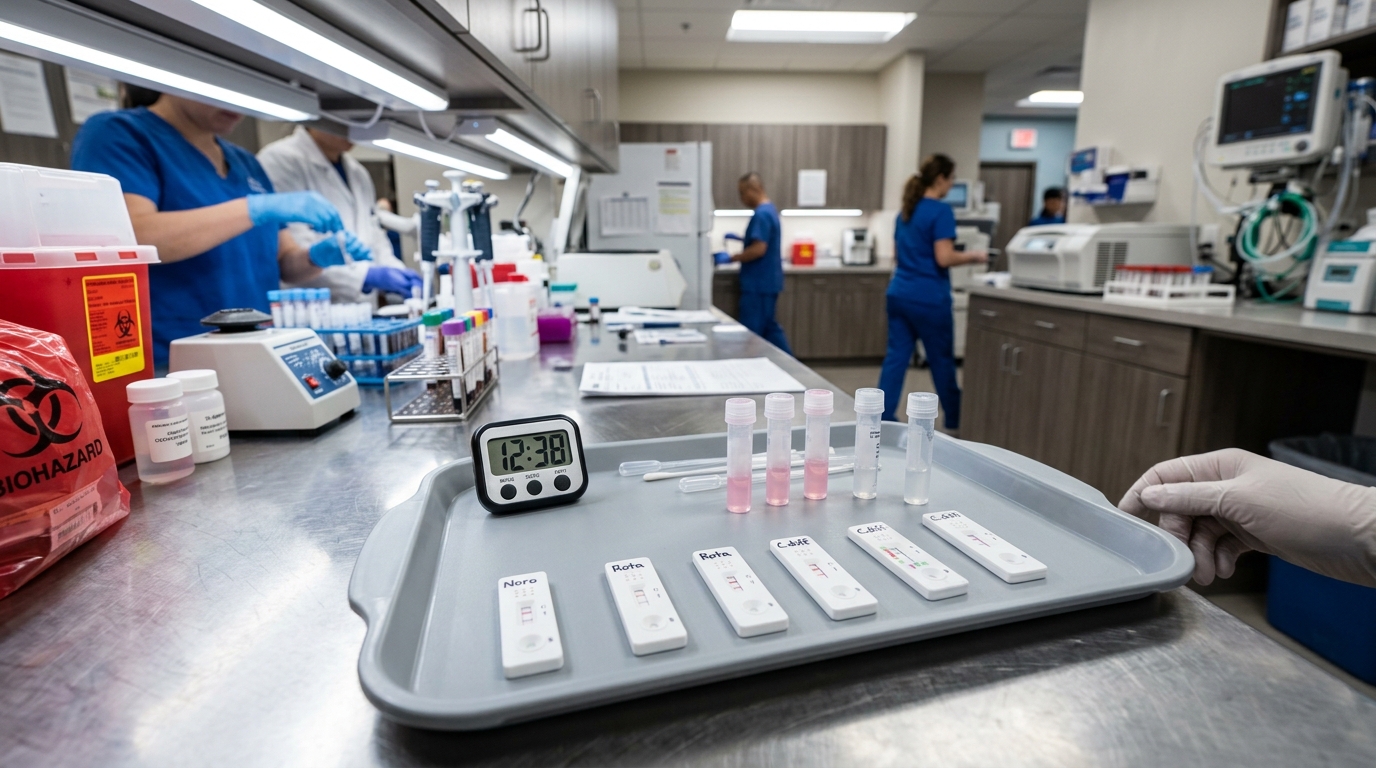
In high-throughput urgent medical centers throughout the UAE, acute gastroenteritis accounts for up to 20% of unscheduled walk-in consultations during peak travel and winter seasons. Relying on centralized laboratory stool cultures with 3- to 5-day turnaround times forces clinicians into blind empiric prescribing. Sourcing certified advanced gastrointestinal rapid test kits in UAE empowers urgent care teams to obtain objective pathogen identification before the patient leaves the facility.
Triage Stratification: Identifying Surgical & Sepsis Red Flags
Prior to initiating rapid stool testing, urgent care triage nurses and physicians must immediately rule out life-threatening surgical abdomens and septic shock:
- Hemodynamic Instability: Systolic blood pressure <90 mmHg, mean arterial pressure (MAP) <65 mmHg, heart rate >110 bpm, or orthostatic dizziness indicating severe volume depletion.
- Peritoneal Signs: Involuntary abdominal wall guarding, rebound tenderness, or rigid abdomen suggesting acute appendicitis, bowel perforation, or toxic megacolon.
- Gross Lower GI Bleeding: Massive frank hematochezia or passing extensive dark clots requiring immediate IV access, fluid resuscitation, and emergency transfer to a tertiary hospital.
- Toxic Systemic Appearance: High pyrexia (>39°C), altered mental status, cold clammy extremities, or oliguria (<0.5 mL/kg/h) triggering the facility’s Systemic Inflammatory Response Syndrome (SIRS) or Sepsis Protocol.
Urgent Care Rapid Diagnostic Menu
An optimized urgent care clinic point-of-care gastrointestinal diagnostic panel includes four rapid antigen tests:
| Rapid Diagnostic Test | Biomarkers Detected | Target Clinical Presentation | Turnaround Time & Immediate Action |
|---|---|---|---|
| Viral Gastroenteritis Combo | Rotavirus VP6 & Adenovirus Hexon Antigens | Infants and children with watery diarrhea, vomiting, low-grade fever | 10 Minutes: Confirms viral etiology; reassures parents; initiates oral rehydration therapy (ORT) |
| Norovirus Rapid Antigen | Norovirus Genogroups I and II Capsid Antigens | Sudden explosive vomiting, watery diarrhea, community/hotel/cruise outbreaks | 15 Minutes: Triggers public health reporting and strict droplet/contact isolation |
| C. difficile Toxin & GDH Combo | Glutamate Dehydrogenase (GDH) + Toxins A & B | Hospitalized, elderly, or post-antibiotic patients with watery foul-smelling stools | 15 Minutes: Differentiates colonization (GDH+ / Toxin-) from active disease (Toxin+); guides oral vancomycin |
| H. pylori Stool Antigen (HpSA) | H. pylori surface antigens | Severe epigastric pain, nocturnal burning, dyspepsia | 10 Minutes: Confirms active peptic ulcerogenic infection; guides quadruple eradication therapy |
Step-by-Step Stool Sampling SOP in Urgent Care Facilities
To ensure high analytical yield and eliminate cross-contamination risks in busy clinics:
- Dedicated Specimen Collection Kit: Provide the patient with a disposable collection pan (“hat”) placed over the toilet seat and a pre-filled extraction buffer vial with an integrated grooved applicator stick.
- Sampling Technique: Insert the spiral grooved tip into 3 to 5 separate areas of the stool specimen. Collect approximately 50 mg of solid stool (covering the grooves) or use a disposable transfer pipette to transfer 100 µL of watery diarrheal fluid into the buffer tube.
- Vortex & Homogenization: Securely cap the vial and vortex or shake vigorously for 15 seconds. Allow heavy debris to settle for 2 minutes.
- Cassette Inoculation: Invert the vial, snap the dispensing dropper tip, and add exactly 2 to 3 vertical drops into the sample well (S). Set the digital timer for 10 to 15 minutes. Never interpret results past 20 minutes.
Dehydration Assessment & Fluid Resuscitation Algorithms
Objective dehydration assessment guides the choice between oral rehydration therapy (ORT) versus intravenous (IV) fluid rehydration:
| Dehydration Severity | Clinical Findings (Gorelick & WHO Criteria) | Fluid Management Protocol |
|---|---|---|
| Mild / None (<3% Volume Deficit) | Normal pulse, moist mucous membranes, normal skin turgor, patient drinks eagerly | Oral Rehydration Solution (ORS) administered slowly: 50 mL/kg over 4 hours plus 10 mL/kg for each unformed stool |
| Moderate (3% to 9% Deficit) | Sunken eyes, dry oral mucosa, skin turgor recoil >2 seconds, tachycardia, irritability | ORS 100 mL/kg over 4 hours. If persistent vomiting prevents ORT, administer single-dose oral ondansetron (0.15 mg/kg) |
| Severe (>9% Deficit / Hypovolemia) | Lethargy, unresponsiveness, absent tears, feeble pulse, capillary refill >3 sec, cool mottled skin | Immediate IV Resuscitation: 20 mL/kg bolus of IV Ringer’s Lactate or Normal Saline over 15 to 30 minutes; repeat until pulses normalize |
Antimicrobial Stewardship: Halting Empiric Fluoroquinolones
In urgent care settings, clinicians frequently feel pressured to prescribe ciprofloxacin or azithromycin empirically for acute diarrhea. However, guidelines from the Infectious Diseases Society of America (IDSA) emphasize that over 85% of acute diarrhea in outpatient urgent care is viral or self-limiting:
- Antibiotic Indications: Antibiotics are indicated ONLY for severe dysentery (fever + bloody diarrhea), immunocompromised patients, or confirmed severe Campylobacter / Shigella.
- EHEC Warning: Prescribing antibiotics for Enterohemorrhagic E. coli (O157:H7) triggers Shiga toxin release, precipitating life-threatening Hemolytic Uremic Syndrome (HUS) and renal failure in children. Rapid antigen testing rules out alternative causes and discourages blind antibiotic use.
Frequently Asked Questions (FAQ)
Can anti-motility agents (loperamide) be given to urgent care diarrhea patients?
Loperamide can be used judiciously in adults with mild-to-moderate watery diarrhea without fever. However, it is strictly contraindicated in pediatric patients and in any patient presenting with bloody diarrhea, high fever, or suspected bacterial enteritis/C. diff, as slowing motility can induce toxic megacolon.
What is the role of oral ondansetron in pediatric acute gastroenteritis?
A single oral weight-based dose of ondansetron (0.15 mg/kg) administered in the urgent care clinic significantly reduces persistent emesis, increases the success rate of oral rehydration therapy, and cuts unnecessary hospital admissions by over 50%.
How quickly must a stool specimen be processed after collection?
Fresh stool should ideally be inoculated into the extraction buffer within 1 hour of defecation. Once homogenized in the extraction buffer, antigens are chemically stabilized for up to 8 hours at room temperature.
Scientific References & Authoritative Clinical Guidelines
- Infectious Diseases Society of America (IDSA). 2024 Clinical Practice Guidelines for the Diagnosis and Management of Infectious Diarrhea. CID, 2024.
- Centers for Disease Control and Prevention (CDC). Viral Gastroenteritis: Clinical Assessment, Triage & Point-of-Care Testing in Ambulatory Settings. CDC MMWR, 2024.
- Dubai Health Authority (DHA). Urgent Care Clinical Standards: Management of Acute Dehydration and Enteric Infections. UAE Health Regulations, 2024.