
Bacterial Vaginosis Testing Options: Amsel Criteria, Nugent Gram Stain, Sialidase Enzyme Assays & Multiplex Real-Time PCR
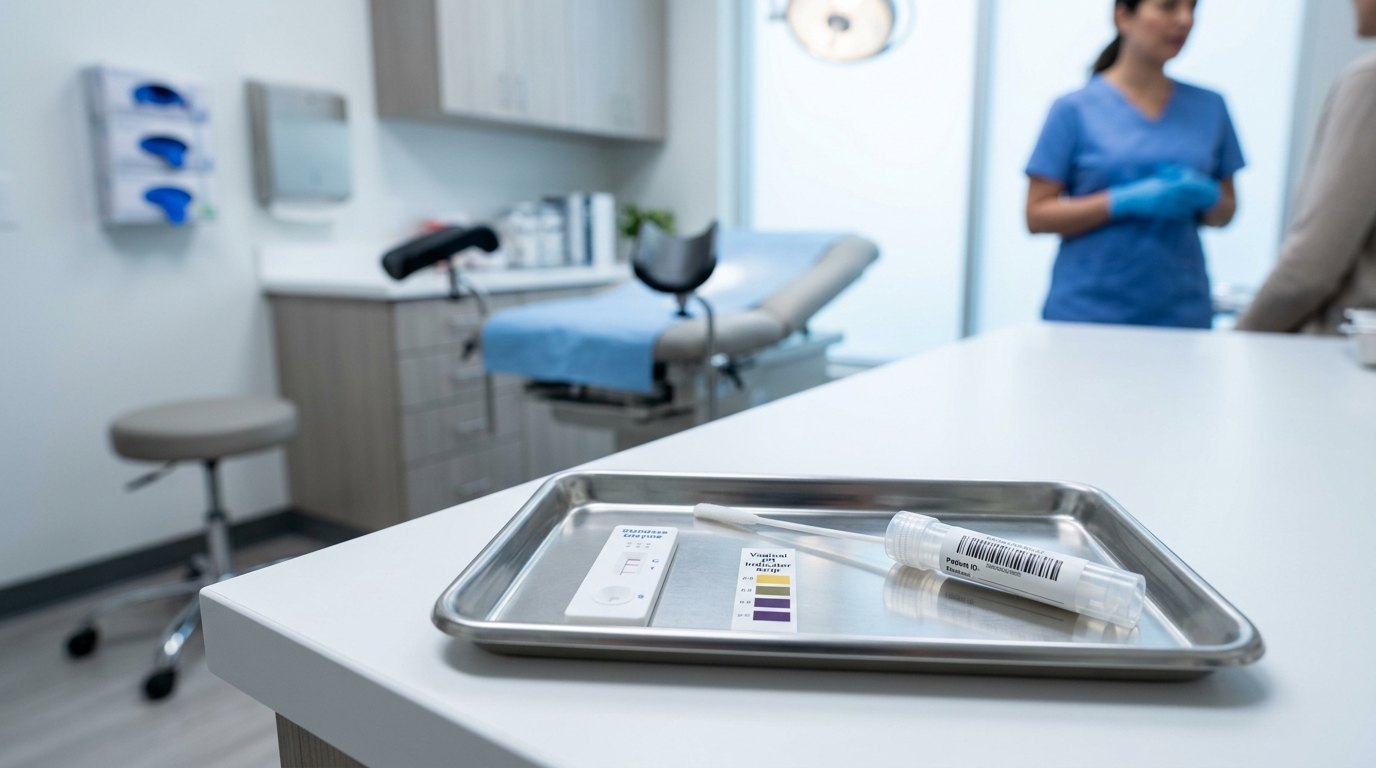
In women’s health clinics and obstetric practices across Dubai, Abu Dhabi, and Sharjah, patients presenting with homogeneous vaginal discharge, unpleasant malodor, or recurrent dysuria frequently experience misdiagnosis and ineffective antifungal treatments. Scheduling specialized advanced gynecological health and vaginal discharge panels in UAE ensures accurate microbial differentiation between Bacterial Vaginosis, Vulvovaginal Candidiasis, and Trichomonas vaginalis from a single swab.
Microbiome Dynamics: From Protective Lactobacilli to Anaerobic Biofilm
A healthy vaginal ecosystem is dominated by beneficial Lactobacillus species (predominantly L. crispatus, L. gasseri, and L. jensenii), which metabolize glycogen to lactic acid, maintaining an acidic microenvironment (pH 3.8 to 4.5) and producing bacteriocins that suppress pathogen growth. In Bacterial Vaginosis, a complex pathophysiological cascade unfolds:
- Biofilm Initiation: Gardnerella vaginalis attaches to vaginal epithelial cells via pili and synthesizes a dense, adherent polymicrobial biofilm.
- Anaerobic Secondary Colonization: The biofilm provides an anaerobic sanctuary for fastidious anaerobes, notably Atopobium vaginae, Megasphaera Type 1/2, Sneathia amnii, and Bacterial Vaginosis-Associated Bacterium 2 (BVAB2).
- Sialidase & Prolidase Secretion: Anaerobic organisms produce virulence enzymes—specifically sialidases and mucinases—that cleave protective mucosal secretory IgA and degrade vaginal mucus layers, facilitating direct cellular invasion and peeling of mature squamous epithelial cells.
- Amine Volatilization: Decarboxylation of amino acids generates volatile biogenic amines (putrescine, cadaverine, and trimethylamine), which volatilize at alkaline pH, producing the classic “fishy” malodor.
Comparative Evaluation of the 4 Main Diagnostic Modalities
Clinicians evaluate BV through four established diagnostic pathways, each offering distinct analytical profiles:
| Diagnostic Modality | Diagnostic Target / Methodology | Clinical Sensitivity & Specificity | Turnaround Time & Setting |
|---|---|---|---|
| Amsel Clinical Criteria | Requires ≥3 of 4 criteria: Thin discharge, pH >4.5, Clue cells >20%, Positive Whiff test | Sensitivity: 60%–70% Specificity: 85%–90% |
Immediate (5–10 min) In-clinic consultation room with microscope |
| Nugent Gram Stain (Historical Gold Standard) | Standardized 0–10 score quantifying morphotypes: Large Gram+ rods, small Gram-variable rods, curved rods | Sensitivity: 85%–90% Specificity: 90%–95% |
24 to 48 Hours Centralized laboratory; requires skilled cytotechnologist |
| Point-of-Care Sialidase Enzyme Test | Chromogenic or lateral flow detection of bacterial sialidase enzyme activity in vaginal fluid | Sensitivity: 88%–92% Specificity: 95%–98% |
10 Minutes Rapid bedside card; zero microscopy required |
| Multiplex Quantitative Real-Time PCR (NAAT) | Automated quantitative amplification of Gardnerella, Atopobium, Megasphaera vs. Lactobacillus ratios | Sensitivity: >96% to 99% Specificity: >95% to 98% |
2 to 4 Hours Molecular pathology laboratory; FDA-cleared and automated |
Deep-Dive: The Amsel Clinical Criteria
To diagnose Bacterial Vaginosis at the bedside using Amsel criteria, at least 3 out of the following 4 criteria must be documented:
- Homogeneous Discharge: Thin, white-to-gray, homogeneous discharge that smoothly coats the vaginal walls without gross clumping.
- Elevated Vaginal pH: Vaginal secretions demonstrate a pH >4.5 measured with narrow-range indicator paper touched to the lateral vaginal wall.
- Positive Whiff Test: Immediate release of a prominent, pungent amine (“fishy”) odor upon adding a single drop of 10% Potassium Hydroxide (KOH) to vaginal secretions on a glass slide.
- Clue Cells on Saline Wet Mount: Microscopic examination reveals that ≥20% of vaginal epithelial cells are “clue cells”—squamous cells whose cell borders are completely obscured and stippled by dense adherent coccobacilli.
The Nugent Scoring System (0 to 10 Scale)
In centralized laboratories, the Nugent Gram stain evaluates the weighted ratio of three bacterial morphotypes under 1,000x oil-immersion microscopy:
| Nugent Score Bracket | Microscopic Morphotype Distribution | Clinical Interpretation |
|---|---|---|
| Score 0 to 3 | Abundant large Gram-positive rods (Lactobacillus morphotypes); zero or rare small Gram-variable coccobacilli | Normal Vaginal Microbiome (Negative for BV) |
| Score 4 to 6 | Reduced lactobacilli morphotypes; moderate presence of Gardnerella and curved Gram-variable rods | Intermediate Flora (Equivocal / In Transition); correlate with clinical symptoms |
| Score 7 to 10 | Complete absence of Lactobacillus rods; high field density of Gardnerella, Bacteroides, and Mobiluncus | Definitive Bacterial Vaginosis (Positive); treatment indicated |
Why Simple Bacterial Culture is Strictly Contraindicated for BV
A frequent error among junior clinicians is ordering a routine vaginal bacterial culture. Culture is strictly contraindicated for diagnosing Bacterial Vaginosis by the CDC, ACOG, and UAE health authorities:
- Gardnerella vaginalis is a normal, harmless commensal present in low concentrations in up to 50% to 60% of healthy, completely asymptomatic women.
- A positive qualitative culture simply detects the presence of the organism without quantifying its ratio relative to protective lactobacilli. Diagnosing BV based on culture alone leads to massive overtreatment of healthy women.
Evidence-Based Therapeutic Protocols for Confirmed BV
Once Bacterial Vaginosis is confirmed, CDC guidelines recommend targeted anti-anaerobic antibiotic regimens:
- Oral Metronidazole: 500 mg orally twice daily for 7 days (Gold standard; cure rate >85%). Patients must abstain from alcohol during therapy and for 48 hours post-treatment due to disulfiram-like reactions.
- Topical Metronidazole Gel (0.75%): One applicatorful (5 g) intravaginally once daily at bedtime for 5 days. Minimal systemic side effects; preferred if oral metronidazole causes nausea.
- Topical Clindamycin Cream (2%): One applicatorful (5 g) intravaginally at bedtime for 7 days (Note: Clindamycin cream is oil-based and weakens latex condoms/diaphragms for up to 72 hours).
- Recurrent BV Regimen: For women experiencing ≥3 episodes per year: Metronidazole 500 mg twice daily for 10–14 days, followed immediately by suppressive topical Metronidazole gel 0.75% twice weekly for 4 to 6 months.
Frequently Asked Questions (FAQ)
Is Bacterial Vaginosis considered a sexually transmitted infection (STI)?
BV is classified as a dysbiosis (microbial ecosystem imbalance) rather than a classic STI. While sexual activity, new sexual partners, and lack of barrier protection are major triggers that disrupt vaginal flora, BV can occur in sexually inactive women. Routine treatment of male sexual partners has not been shown to prevent recurrences.
What are the dangers of untreated Bacterial Vaginosis in pregnancy?
Untreated BV during pregnancy significantly increases the risk of adverse obstetric outcomes, including late miscarriage, preterm premature rupture of membranes (PPROM), spontaneous preterm delivery (<37 weeks), and postpartum endometritis. Screening and treatment are strongly indicated in pregnant women with symptoms or a prior history of preterm delivery.
Can douching cause Bacterial Vaginosis?
Yes. Vaginal douching washes away protective, acid-producing lactobacilli and alters the natural vaginal pH, directly encouraging anaerobic biofilm proliferation. Clinicians advise against all forms of vaginal douching.
Scientific References & Authoritative Clinical Guidelines
- Centers for Disease Control and Prevention (CDC). Sexually Transmitted Infections Treatment Guidelines: Bacterial Vaginosis. MMWR, 2024.
- American College of Obstetricians and Gynecologists (ACOG). Practice Bulletin No. 215: Vaginitis in Nonpregnant Patients. Obstet Gynecol, 2024 Reaffirmation.
- Dubai Health Authority (DHA). Standards for Women’s Health and Management of Lower Genital Tract Infections. UAE Health Regulations, 2024.