
Oligospermia Assessment Fertility Testing Meaning: WHO 6th Edition Criteria, Hormonal Axes, Varicocele Workup & Reproductive Strategies
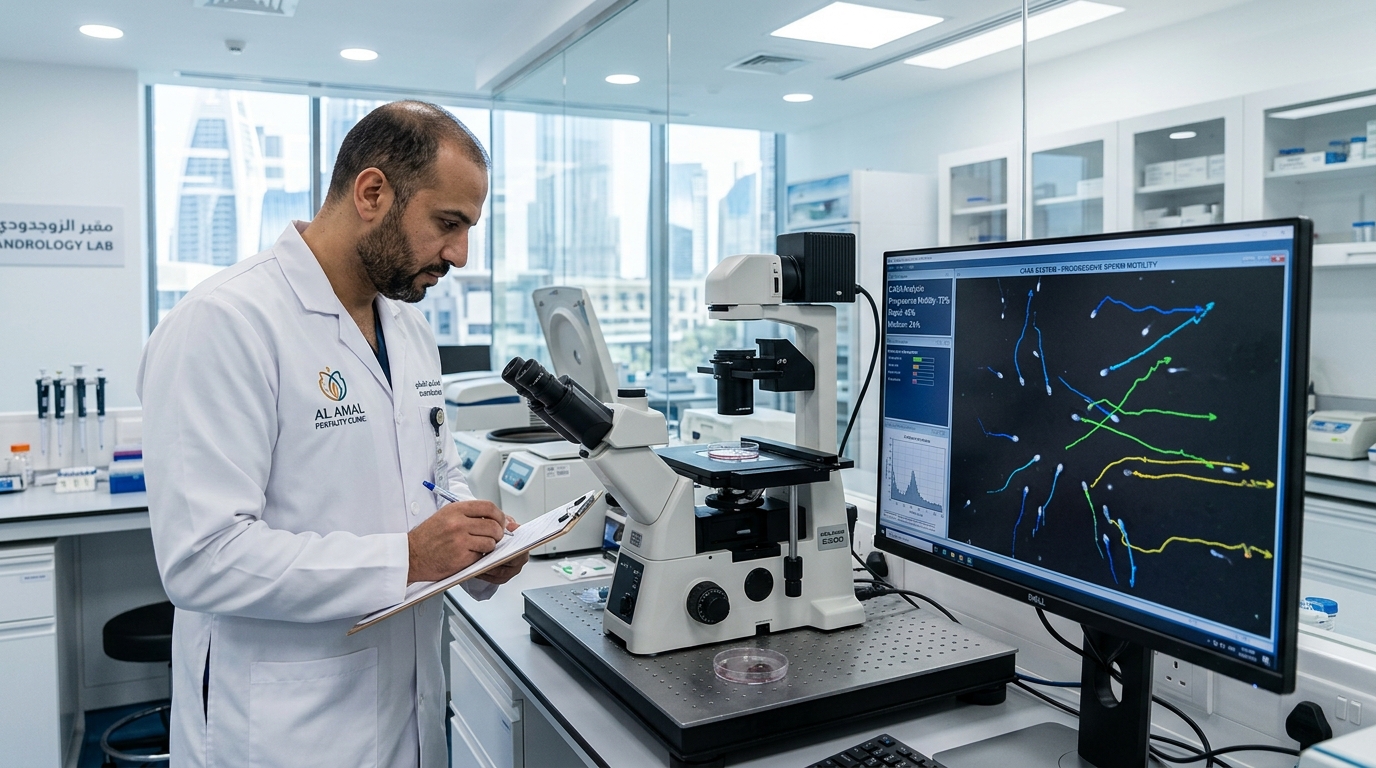
In modern reproductive medicine across Dubai, Abu Dhabi, and the UAE, comprehensive semen testing provides critical physiological insights into spermatogenesis and male general health. Sourcing validated professional fertility and diagnostic systems in Dubai empowers clinicians to deliver swift, accurate reproductive assessments adhering strictly to international andrology standards.
WHO 6th Edition Semen Analysis Reference Limits
Published in 2021, the WHO 6th Edition Manual for the Examination and Processing of Human Semen revised lower reference limits derived from fertile men whose partners achieved pregnancy within 12 months. Understanding these thresholds is essential for accurate clinical staging:
| Semen Parameter | WHO 5th Edition (2010) | WHO 6th Edition (2021) Lower Limit | Clinical & Diagnostic Significance |
|---|---|---|---|
| Sperm Concentration | 15 × 106 / mL | 16 × 106 / mL (95% CI: 15–18) | Primary definition of oligospermia when falling below this threshold. |
| Total Sperm Number | 39 × 106 / ejaculate | 39 × 106 / ejaculate (95% CI: 35–40) | Crucial for assessing total fecundity potential in patients with abnormal semen volume. |
| Ejaculate Volume | 1.5 mL | 1.4 mL (95% CI: 1.3–1.5) | Volumes < 1.4 mL indicate retrograde ejaculation, ejaculatory duct obstruction, or androgen deficiency. |
| Total Motility (PR + NP) | 40% | 42% (95% CI: 40–43) | Combined percentage of progressively and non-progressively motile spermatozoa. |
| Progressive Motility (PR) | 32% | 30% (95% CI: 29–31) | Forward-moving spermatozoa capable of traversing cervical mucus and penetrating the zona pellucida. |
| Normal Morphology | 4.0% | 4.0% (Tygerberg strict criteria) | Evaluates strict structural head, neck, and tail morphology; < 4% defines teratospermia. |
| Vitality (Membrane Integrity) | 58% | 54% (95% CI: 50–56) | Differentiates dead immotile sperm (necrozoospermia) from live asthenic sperm using eosin-nigrosin staining. |
Severity Grading of Oligospermia: Clinical Implications
Oligospermia is not a monolithic diagnosis. The concentration of spermatozoa directly dictates the downstream diagnostic workup, genetic evaluation, and assisted reproductive technology (ART) pathway:
- Mild Oligospermia (10 to 15 million/mL): Often responsive to reversible lifestyle optimizations (cessation of smoking, weight normalization, elimination of scrotal hyperthermia from saunas or tight gear), correction of subclinical thyroid/adrenal issues, or surgical varicocelectomy. High probability of achieving spontaneous natural conception or success with Intrauterine Insemination (IUI).
- Moderate Oligospermia (5 to 10 million/mL): Warranting detailed endocrine profiling and scrotal ultrasound. Typically indicates combined medical management with selective estrogen receptor modulators (Clomiphene citrate) or IUI / In Vitro Fertilization (IVF).
- Severe Oligospermia (< 5 million/mL): An urgent indication for mandatory genetic workup (karyotype analysis and Y-chromosome AZF microdeletion testing). Spontaneous natural conception rates are minimal; primary management is directed toward Intracytoplasmic Sperm Injection (ICSI).
Comprehensive Etiological Categorization
The diagnostic workup of oligospermia systematically evaluates four pathological domains across the male reproductive axis:
1. Pre-Testicular (Endocrine & Hypothalamic-Pituitary Axis)
Disruption of the hypothalamic gonadotropin-releasing hormone (GnRH) pulse generator or anterior pituitary gonadotrophs leads to secondary testicular failure (hypogonadotropic hypogonadism). Causes include pituitary adenomas, severe hyperprolactinemia, exogenous anabolic steroid abuse (which suppresses pituitary LH and FSH via negative feedback), obesity-related peripheral aromatization of testosterone to estradiol, and chronic systemic illnesses.
2. Testicular (Primary Spermatogenic Failure)
Pathology residing within the seminiferous tubules or Leydig cell interstitium. Common causes include clinical varicoceles (causing testicular hyperthermia, venous stasis, and reactive oxygen species accumulation), history of cryptorchidism (undescended testes), previous mumps orchitis, testicular torsion trauma, gonadotoxic chemotherapy/radiation, and environmental toxin exposures.
3. Post-Testicular (Transport & Ejaculatory Disorders)
Impairments in sperm transit along the male ductal system. While complete bilateral obstruction produces azoospermia, partial obstruction of the epididymis or ejaculatory ducts, accessory gland infections (prostatitis, epididymitis), and partial retrograde ejaculation cause severe oligospermia with low semen volume.
4. Genetic Etiologies
Chromosomal abnormalities account for approximately 10% to 15% of severe oligospermia cases. These encompass Klinefelter syndrome mosaicism (47,XXY/46,XY), Robertsonian translocations, and microdeletions within the Azoospermia Factor (AZF) region of the Y chromosome (specifically AZFa, AZFb, and AZFc deletions, where AZFc microdeletions frequently preserve minimal sperm production amenable to ICSI).
Diagnostic Workup Protocol: Step-by-Step Clinical Guide
When an initial semen analysis reveals oligospermia, clinicians must follow a validated diagnostic algorithm:
- Step 1: Repeat Confirmatory Semen Analysis: Spermatogenesis takes approximately 74 days, and semen parameters fluctuate widely based on recent viral illnesses, stress, and lifestyle. A repeat analysis must be conducted 2 to 4 weeks later, strictly observing 2 to 7 days of sexual abstinence.
- Step 2: Early-Morning Serum Endocrine Panel: Blood drawn between 08:00 and 10:00 AM (when diurnal testosterone peaks) measuring:
- Serum Total Testosterone & SHBG: Evaluates Leydig cell androgen production and calculates free testosterone.
- Follicle-Stimulating Hormone (FSH): Elevated FSH indicates primary seminiferous tubule failure and Sertoli cell damage; low/normal FSH in severe oligospermia suggests hypogonadotropic hypogonadism.
- Luteinizing Hormone (LH): Gauges pituitary feedback stimulation of Leydig cells.
- Serum Prolactin: Rules out prolactinoma when libido is diminished or testosterone is depressed.
- Serum Estradiol (E2): Assesses elevated aromatase activity in overweight or gynecomastia patients.
- Step 3: High-Resolution Scrotal Color Doppler Ultrasound: Assesses testicular volume (normal > 15 mL per testis), identifies testicular parenchymal microlithiasis or subclinical tumors, and documents pampiniform venous plexus dilatation (> 2.5–3.0 mm at rest or with Valsalva maneuver) confirming varicoceles.
- Step 4: Genetic Screening (if < 5 million/mL): Peripheral blood karyotype and Y-chromosome microdeletion testing prior to any ICSI intervention to counsel parents on potential transmission of infertility to male offspring.
Frequently Asked Questions (FAQ)
Can a man with oligospermia father a child naturally?
Yes. Oligospermia represents subfertility rather than absolute sterility. While the probability of spontaneous monthly conception is reduced compared to men with normozoospermic counts, spontaneous pregnancies regularly occur, particularly in mild-to-moderate cases where sperm progressive motility and morphology remain normal.
Does taking exogenous testosterone improve low sperm count?
No. Taking exogenous testosterone is a catastrophic mistake in men seeking fertility. Exogenous testosterone floods the systemic circulation, triggering powerful negative feedback on the pituitary gland. This shuts down endogenous LH and FSH secretion, eliminating intratesticular testosterone—which must be 50 to 100 times higher than blood levels to maintain spermatogenesis—often plunging the patient into complete zero-sperm azoospermia.
How does varicocele repair help oligospermia?
Surgical microscopic varicocelectomy ligates dilated internal spermatic veins, reversing venous reflux, reducing testicular temperature, and clearing toxic metabolite accumulation. Studies show that 60% to 70% of men experience significant improvement in sperm concentration, motility, and DNA fragmentation index within 3 to 6 months post-surgery.
Authoritative Clinical References
- World Health Organization – WHO Laboratory Manual for the Examination and Processing of Human Semen (6th Edition, 2021)
- American Urological Association (AUA) & ASRM – Diagnosis and Treatment of Infertility in Men Guideline (2020)
- European Association of Urology (EAU) – Guidelines on Sexual and Reproductive Health