
Influenza A/B Rapid Antigen Test Limitations: Analytical Sensitivity Bounds, Seasonal Mismatch & Confirmatory PCR Clinical Decision Paths
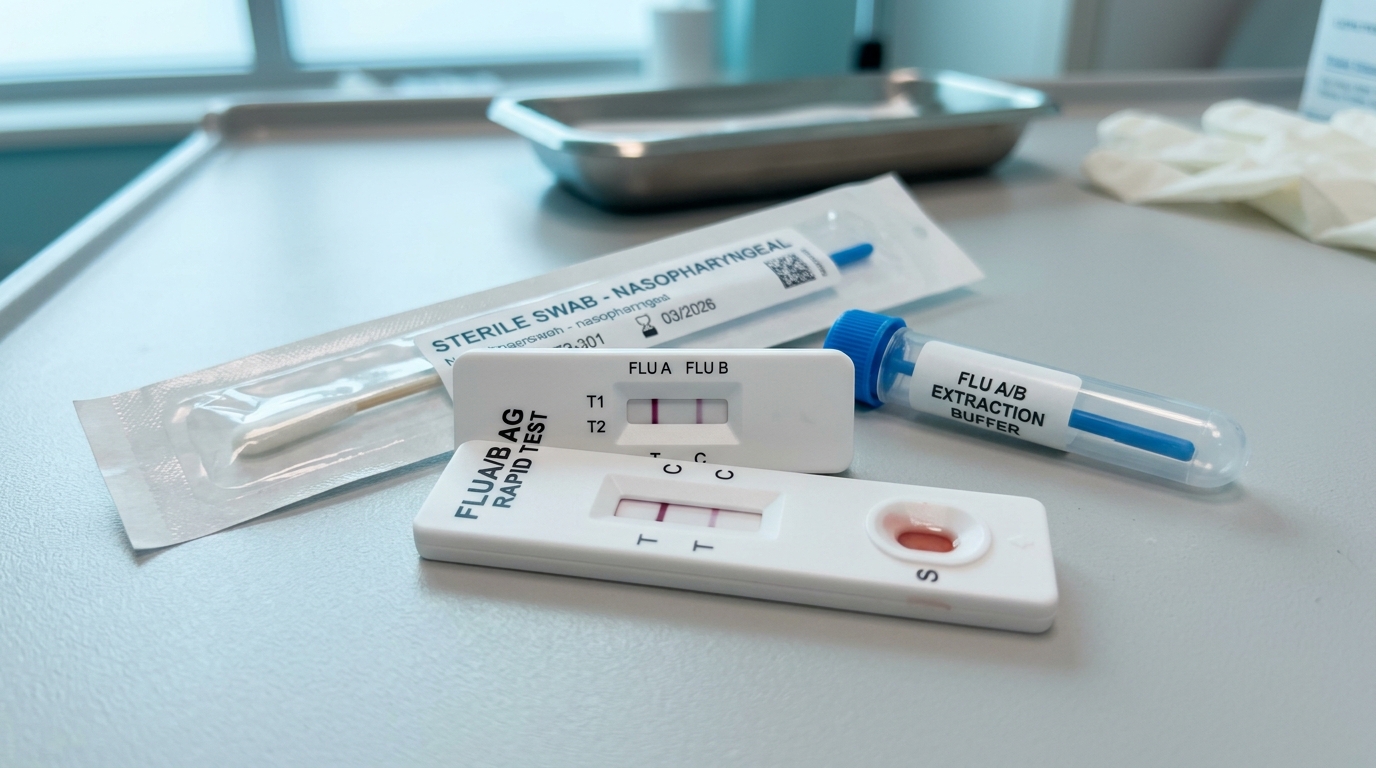
In healthcare centers and emergency hubs throughout Dubai, Abu Dhabi, and the wider UAE, understanding the nuances of respiratory diagnostics prevents clinical misdirection during winter surges. Procuring verified professional respiratory rapid test kits in the UAE ensures clinic directors utilize assays engineered with high-affinity monoclonal antibodies compliant with international regulatory benchmarks.
The Sensitivity Deficit: Why Rapid Tests Miss Active Flu
To interpret rapid influenza test results effectively, clinicians must appreciate the physiological and biochemical constraints of lateral flow technology:
- Absence of Target Amplification: Real-time RT-PCR multiplies viral genetic sequences through thermocycling, achieving a Limit of Detection (LoD) down to 102 viral copies/mL. In contrast, rapid antigen tests rely entirely on direct physical binding between monoclonal antibodies and viral nucleoproteins, requiring 105 to 106 viral particles/mL to generate a visible colorimetric line.
- Viral Load Kinetics in Adults vs Children: Children shed significantly higher viral titers for longer durations (7 to 10 days), giving rapid tests higher sensitivity in pediatric populations (~70%–80%). Adults, especially previously vaccinated individuals, shed lower viral loads that peak within 24 to 48 hours and decline rapidly, dropping rapid test sensitivity to 50%–60%.
- Influenza B Inferiority: Across major commercial RIDTs, the analytical sensitivity for Influenza B is consistently 5% to 15% lower than for Influenza A, primarily due to lower replication rates and mucosal antigen shedding.
Predictive Values & The Seasonal Prevalence Paradox
The clinical reliability of any diagnostic test depends directly on the disease prevalence in the community (Bayes’ Theorem):
| Epidemiological Season | Community Influenza Prevalence | Positive Predictive Value (PPV) | Negative Predictive Value (NPV) | Clinical Practice Implication |
|---|---|---|---|---|
| Peak Winter Surge | High (25% – 40% of respiratory cases) | Very High (> 95%) | Substantially Reduced (60% – 75%) | A positive test is definitive; a negative test is untrustworthy (up to 40% false-negative rate); negative tests must be confirmed with RT-PCR in hospitalized patients. |
| Summer / Off-Peak Period | Low (1% – 5% of respiratory cases) | Substantially Reduced (40% – 60%) | Very High (> 98%) | A negative test reliably excludes flu; a positive test carries high false-positive risk; positive results should be verified by PCR. |
| Early Outbreak Onset | Moderate (10% – 15%) | Moderate-High (~85%) | Moderate (~85%) | Clinical presentation (abrupt onset fever, cough, myalgias) guides empiric decisions alongside testing. |
Pre-Analytical Pitfalls Driving False-Negative Results
In community clinics, procedural deviations during specimen collection represent the leading cause of false-negative RIDT outcomes:
- Nasal Swab vs Nasopharyngeal Swab: While anterior nasal swabbing is less invasive, nasopharyngeal swabbing collects epithelial cells from the posterior nasopharynx where influenza replication is highest, yielding a 10% to 15% higher diagnostic sensitivity.
- Timing from Symptom Onset: Testing should ideally occur within 48 hours of symptom onset. After Day 3 or 4, viral replication drops sharply, causing false-negative rapid tests despite persistent clinical cough and fever.
- Swab Material Interference: Calcium alginate swabs or swabs with wooden shafts contain chemical compounds that inhibit lateral flow conjugate binding; only synthetic flocked polyester or Dacron swabs with plastic shafts should be used.
Antiviral Stewardship & Clinical Decision Algorithm
The primary clinical hazard of a false-negative rapid flu test is withholding oral neuraminidase inhibitors (Oseltamivir / Tamiflu) or endonuclease inhibitors (Baloxavir marboxil):
The CDC 48-Hour Antiviral Rule: Antiviral therapy provides maximum clinical benefit (shortening illness duration, reducing ICU admissions and secondary bacterial pneumonia) when initiated within 48 hours of symptom onset. The CDC and American Academy of Pediatrics explicitly advise:
- In patients with severe, progressive illness or high-risk individuals (age ≥ 65, children < 2, chronic cardiac/pulmonary disease, pregnancy, immunocompromised), antiviral treatment should be initiated immediately based on clinical presentation, without waiting for confirmatory PCR results, regardless of a negative rapid test.
- Do not withhold antivirals from a high-risk symptomatic patient during peak flu season solely based on a negative rapid antigen test!
- Inpatients admitted with acute respiratory illness must have a gold-standard multiplex real-time RT-PCR performed immediately.
Frequently Asked Questions (FAQ)
Can a rapid flu test distinguish between H1N1 and H3N2 Influenza A strains?
No. Standard commercial rapid antigen tests only determine whether the virus belongs to Influenza A or Influenza B. They do not perform subtype differentiation (H1N1 vs H3N2) or assess avian influenza strains (H5N1). Subtyping requires central laboratory molecular RT-PCR.
Can recent live attenuated influenza vaccination (FluMist) cause a false-positive rapid test?
Yes. The intranasal live-attenuated influenza vaccine contains live, attenuated cold-adapted virus that replicates in the nasopharynx. Testing within 7 days of receiving FluMist can yield a false-positive rapid antigen test.
What is the advantage of Digital Immunoassay (DIA) readers over visual strips?
Digital immunoassay readers utilize computerized optical scanners to measure fluorescent or colorimetric line intensity objectively. DIAs eliminate subjective human visual interpretation and improve analytical sensitivity by 10% to 15% compared to naked-eye visual strips.
Authoritative Clinical References
- Centers for Disease Control and Prevention (CDC) – Guidance for Clinicians on the Use of Rapid Influenza Diagnostic Tests
- Infectious Diseases Society of America (IDSA) – Clinical Practice Guidelines by the IDSA: 2018 Update on Diagnosis and Treatment of Influenza
- World Health Organization (WHO) – Global Influenza Surveillance and Response System (GISRS) Manual