
When is Syphilis Treponemal Testing Indicated? TP-PA, FTA-ABS, Automated CLIA Screening & Lifetime Antibody Persistence
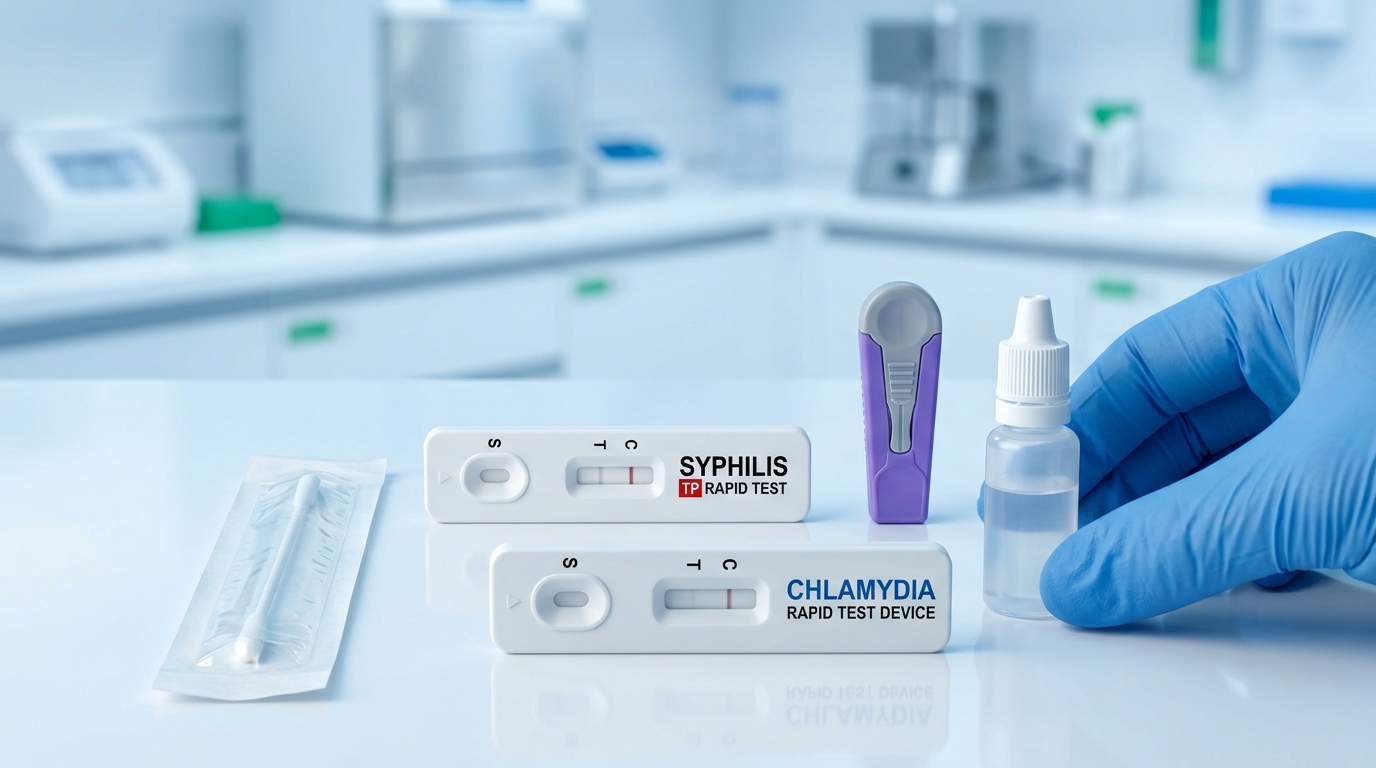
In polyclinics and diagnostic centers across Dubai, Abu Dhabi, and the wider UAE, automated treponemal serology provides rapid, objective answers. Booking confidential and comprehensive sexual health testing packages in Dubai guarantees patients receive high-accuracy molecular and serological testing adhering to strict international clinical guidelines.
Treponemal vs Non-Treponemal: The Biological Divergence
To avoid diagnostic misinterpretation, clinicians must understand the distinct immunological targets of treponemal testing:
- Specific Antigen Targets: Treponemal tests detect antibodies against specific outer membrane proteins of T. pallidum, such as TpN15, TpN17, and TpN47 (a major 47-kDa membrane lipoprotein). Consequently, biological false-positive rates are exceptionally low compared to cardiolipin-based non-treponemal tests.
- Early Emergence in Primary Syphilis: Treponemal IgM and IgG antibodies appear within 1 to 3 weeks following chancre formation, often becoming reactive days to weeks before non-treponemal RPR titers turn positive.
- The “Lifetime Scar” Phenomenon: In greater than 85% to 90% of successfully treated patients, treponemal antibodies remain permanently detectable for life. A reactive treponemal test merely proves that the patient was infected with syphilis at some point in their life; it cannot differentiate active, untreated syphilis from a remote, cured infection.
Primary Clinical Indications for Treponemal Testing
International clinical guidelines from the U.S. Centers for Disease Control and Prevention (CDC), the British Association for Sexual Health and HIV (BASHH), and the Dubai Health Authority (DHA) outline clear indications:
| Clinical Scenario | Target Patient Cohort | Preferred Treponemal Modality | Clinical Objective & Interpretation |
|---|---|---|---|
| First-Line Reverse Algorithm Screening | Routine sexual health checkups, asymptomatic screening, pre-employment visas | Automated CLIA / EIA / CMIA | High-throughput automation detects true treponemal exposure with near-zero operator error; reactive results reflex to quantitative RPR. |
| Confirmation of Reactive Non-Treponemal Screen | Traditional algorithm screening where initial RPR was reactive | TP-PA or FTA-ABS | Excludes biological false-positive (BFP) reactions caused by autoimmune disease (Lupus), pregnancy, or acute viral infections. |
| Discordant Result Tie-Breaker | Patients with Reactive initial CLIA screen but Non-Reactive reflex RPR | TP-PA (Confirmatory Gold Standard) | If TP-PA is reactive, confirms past treated or late latent syphilis; if non-reactive, confirms the initial CLIA was a false-positive screen. |
| Late Latent / Tertiary Syphilis Workup | Cardiovascular syphilis, tabes dorsalis, gummatous lesions, dementia | TP-PA / FTA-ABS + Quantitative RPR | In tertiary syphilis, non-treponemal RPR titers often burn out and become completely non-reactive; treponemal tests remain 100% reactive. |
| Blood / Organ Donor Screening | All prospective blood donors and organ transplant donors | Automated Treponemal CLIA | Eliminates transfusion-transmitted and transplantation-transmitted spirochetal bacteremia. |
Comparison of Common Treponemal Assays
Different treponemal testing platforms exhibit distinct operational characteristics:
- Automated Chemiluminescent Immunoassays (CLIA / CMIA): High-throughput robotic analyzers detecting recombinant treponemal antigens. Excellent sensitivity (> 99%) across all stages. Used as the primary screening tool in modern hospital laboratories across the UAE.
- Treponema Pallidum Particle Agglutination (TP-PA): Utilizes avian red blood cells or gelatin particles coated with purified T. pallidum antigens. If antibodies are present, particles agglutinate into a visible mat. Serves as the international reference “tie-breaker” assay for resolving discordant screens.
- Fluorescent Treponemal Antibody Absorption (FTA-ABS): Uses fixed T. pallidum Nichols strain on glass slides with fluorescent anti-human globulin. Historically the gold standard, but largely replaced by TP-PA due to subjective fluorescence microscopic interpretation and higher technical labor.
- Point-of-Care Dual Rapid Tests (Treponemal + Non-Treponemal): Portable lateral flow cassettes that provide visual dual-band readings at the bedside within 15 minutes, widely utilized in antenatal outreach and rapid sexual health checkups.
Navigating the Discordant Screen: Reactive CLIA with Non-Reactive RPR
In contemporary clinical practice, the single most common diagnostic puzzle is a patient who screens Reactive for Treponemal Antibodies (CLIA) but Non-Reactive on RPR. Clinicians must follow the CDC-endorsed pathway:
- Step 1: Perform TP-PA (Second Treponemal Test):
Because the initial CLIA uses synthetic antigens, a second distinct treponemal assay (TP-PA) is required to exclude an automated assay artifact.
- Step 2A — If TP-PA is Reactive (Confirmed Positive):
The patient has genuine treponemal antibodies. Clinicians must assess history: (a) If the patient has a documented history of penicillin treatment, this represents an expected lifelong “serological scar” and requires no treatment. (b) If the patient has never been treated for syphilis, they are diagnosed with Late Latent Syphilis (or Syphilis of Unknown Duration) and must receive 3 weekly intramuscular doses of Benzathine Penicillin G (2.4 million units weekly × 3 weeks).
- Step 2B — If TP-PA is Non-Reactive (Discordant Negative):
The initial reactive CLIA was a false-positive screening artifact. The patient does not have syphilis, and no treatment or further follow-up is required.
Clinical Counseling & Managing Patient Anxiety Over Lifelong “Serological Scars”
One of the most delicate challenges in clinical venereology is explaining a positive treponemal antibody result to an asymptomatic patient who received curative penicillin years or decades prior:
- The Biological Memory Analogy: Clinicians should educate patients that treponemal IgG antibodies operate like an immunological passport stamp or childhood vaccine titer. They signify historical immune encounter with the spirochete rather than ongoing microbiological activity or therapeutic failure.
- Preventing Inappropriate Retreatment: An asymptomatic individual with a persistent reactive treponemal test and a non-reactive or low stable (serofast ≤ 1:2) RPR who has documented past curative therapy should not receive repeated courses of antibiotics. Unnecessary antimicrobial exposure exposes the patient to adverse drug events and exacerbates antibiotic resistance without clinical benefit.
- Documentation for Immigration and Visa Medicals: For expatriates undergoing residency or employment medical examinations in the UAE, carrying official clinical treatment completion cards or certified laboratory letters detailing prior penicillin therapy and stable non-treponemal titers is crucial to avoid administrative delays or misclassification as active syphilis cases.
Frequently Asked Questions (FAQ)
Can a treponemal test be used to monitor whether syphilis treatment was successful?
No! Treponemal tests (CLIA, TP-PA, FTA-ABS) remain positive for life in over 85% of patients regardless of cure. Monitoring treatment response must be conducted exclusively with quantitative non-treponemal tests (RPR or VDRL) looking for a fourfold decline in titer.
Can endemic non-venereal treponematoses cause a positive syphilis test?
Yes. Treponema pallidum subspecies pertenue (Yaws), endemicum (Bejel), and carateum (Pinta) are antigenically and morphologically indistinguishable from venereal syphilis. Patients who lived in endemic childhood regions may test reactive on treponemal tests despite having zero sexual exposure.
Does a positive treponemal test mean the patient is currently contagious?
Not necessarily. In a patient with past successfully treated syphilis, a positive treponemal test is merely an immunological memory marker. Contagiousness is correlated with active primary lesions (chancres), secondary lesions (condyloma lata), or elevated non-treponemal RPR titers.
Authoritative Clinical References
- Centers for Disease Control and Prevention (CDC) – Syphilis Diagnostic Guidelines and Reverse Algorithm Protocols
- World Health Organization (WHO) – Laboratory Diagnosis of Sexually Transmitted Infections, Including Treponema pallidum
- British Association for Sexual Health and HIV (BASHH) – United Kingdom National Guideline on the Management of Syphilis