
Rotavirus Rapid Antigen Test Indications: Pediatric Acute Gastroenteritis, Dehydration Triage & UAE Clinical Diagnostics
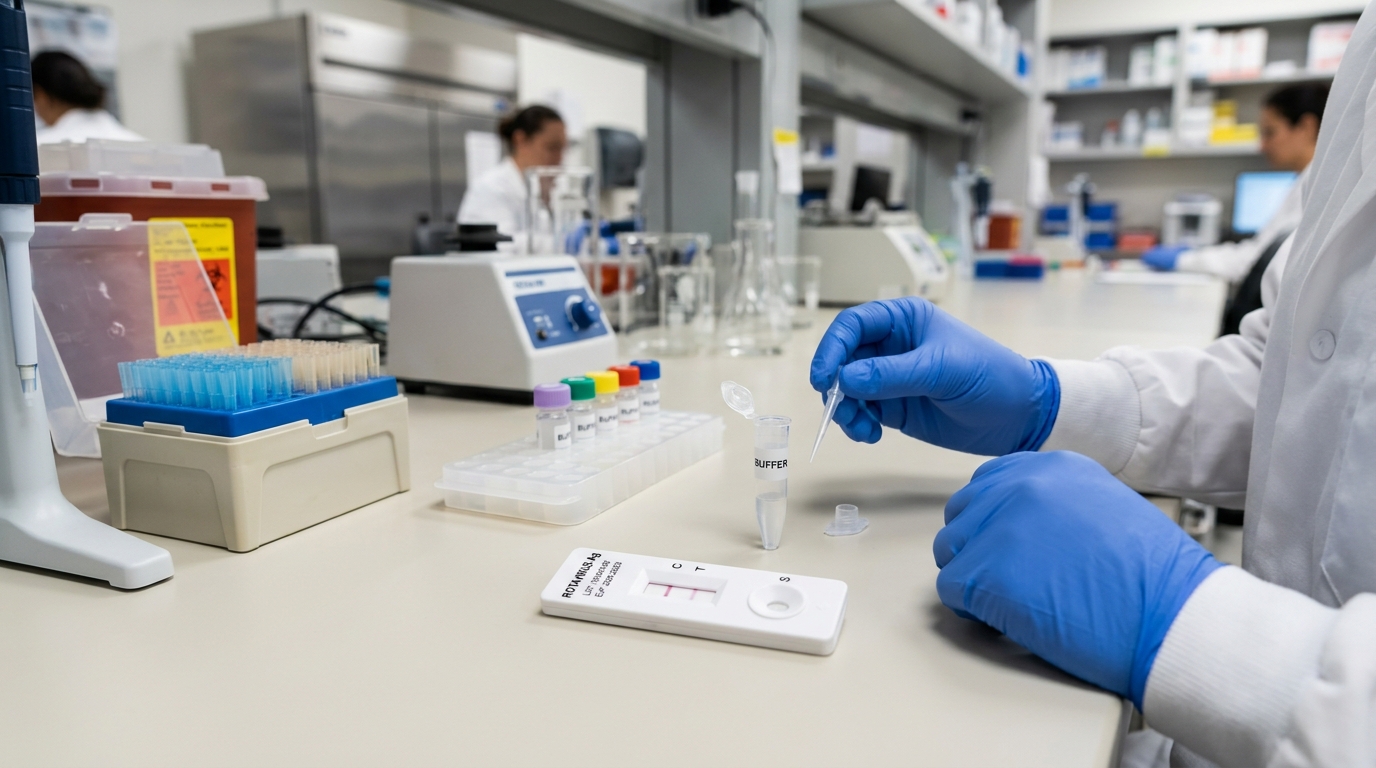
In pediatric hospitals and medical centers across Dubai, Abu Dhabi, and the wider UAE, point-of-care gastrointestinal diagnostics accelerate patient care. Sourcing validated professional gastrointestinal and infectious rapid test kits in the UAE guarantees pediatricians utilize diagnostic devices engineered with superior analytical sensitivity conforming to rigorous international standards.
Pathophysiology: Why Rotavirus Induces Severe Dehydration
The distinctive severity of rotavirus enteritis compared to other viral diarrheas stems from its multi-factorial pathogenic mechanism:
- Enterocyte Destruction & Osmotic Diarrhea: Rotavirus selectively infects and destroys mature, absorptive enterocytes on the tips of small intestinal villi. The loss of brush border disaccharidases (especially lactase) leaves unabsorbed carbohydrates in the intestinal lumen, driving massive osmotic water influx.
- Viral Enterotoxin NSP4 Secretory Diarrhea: Non-Structural Protein 4 (NSP4) acts as the first identified viral enterotoxin. It triggers intracellular calcium release, stimulating enteric nerves and inducing active chloride and fluid secretion via the cystic fibrosis transmembrane conductance regulator (CFTR) channel.
- Enteric Nervous System Activation: Rotavirus stimulates serotonin (5-HT) release from enterochromaffin cells, activating vagal pathways that drive severe, intractable projectile vomiting, which severely limits oral rehydration tolerance.
Core Clinical Indications for Rotavirus Antigen Testing
International pediatric clinical guidelines, including European Society for Paediatric Gastroenterology, Hepatology and Nutrition (ESPGHAN) and American Academy of Pediatrics (AAP) protocols, identify clear indications:
| Clinical Scenario | Target Patient Population | Primary Clinical Objective | Impact on Patient Care |
|---|---|---|---|
| Acute Dehydrating Diarrhea Triage | Infants and children under 5 years presenting with vomiting and watery diarrhea | Differentiate viral gastroenteritis from invasive bacterial enteritis (Salmonella, Shigella) | Prevents inappropriate empiric antibiotic administration and guides oral vs IV rehydration. |
| Inpatient Hospital Admission Triage | Pediatric patients requiring inpatient ward admission for dehydration | Infection control cohorting and contact isolation | Mandates contact precautions (gowns, gloves) to prevent virulent nosocomial outbreaks in pediatric wards. |
| Daycare & School Outbreak Investigation | Institutional clusters of vomiting and diarrhea in nurseries | Epidemiological source identification | Guides public health closure, disinfection protocols, and cohort quarantine standards. |
| Immunocompromised Chronic Diarrhea | Children with SCID, organ transplants, or chemotherapy | Identify persistent viral shedding | Guides long-term nutritional support and monitoring for extra-intestinal viral dissemination. |
| Post-Vaccination Surveillance | Infants developing severe symptoms within 14 days of live oral vaccine | Distinguish wild-type rotavirus infection from vaccine strain shedding | Differentiates intercurrent natural infection from rare vaccine-associated symptoms or intussusception. |
Diagnostic Performance: Rapid Antigen vs Real-Time RT-PCR
Pediatricians must understand the comparative performance metrics of bedside rapid antigen tests compared to central laboratory multiplex molecular panels:
- High Viral Shedding in Acute Phase: During the first 3 to 5 days of rotavirus illness, children shed massive quantities of virions in stool (up to 1011 to 1012 viral particles per gram of feces). Consequently, rapid lateral flow antigen tests achieve sensitivity exceeding 90% to 95% and specificity > 98% during peak symptom days.
- Speed and Cost Efficiency: Rapid antigen cassettes deliver diagnostic certainty at the bedside in 15 minutes, costing a fraction of molecular assays and enabling immediate triage decisions before lab turnaround.
- Multiplex PCR for Atypical or Persistent Cases: When rapid antigen testing is negative in an infant with severe persistent diarrhea, multiplex gastrointestinal PCR panels should be ordered to detect low-density rotavirus shedding, adenovirus 40/41, astrovirus, sapovirus, or cryptosporidium.
Sample Collection & Pre-Analytical Compliance
To avoid false-negative or invalid results, specific stool collection criteria must be observed:
- Liquid / Unformed Stool Only: Rapid antigen testing is validated strictly on loose, watery, or unformed stool specimens collected during the acute phase. Formed stool specimens are inappropriate for testing.
- Avoid Diaper Absorption Contamination: Stool should never be scraped from absorbent disposable diaper padding, which filters out liquid antigen and introduces superabsorbent polymer chemicals that interfere with lateral flow migration. Phlebotomists should line diapers with plastic wrap (cling film) or use urine collection bags to prevent specimen loss.
- Optimal Testing Window: Collect stool within the first 72 to 96 hours of symptom onset when fecal antigen shedding is at its absolute maximum.
Clinical Management & Infection Control Directives
Once a rapid test confirms rotavirus antigen positivity, healthcare teams must execute standard supportive management:
- Hypotonic Oral Rehydration Solution (ORS): Initiate rehydration using low-osmolarity WHO-standard ORS (245 mOsm/L). Intravenous fluids (Ringer’s lactate or normal saline) are reserved for severe shock, lethargy, or intractable vomiting failing oral rehydration.
- Antimicrobial Stewardship: Antibiotics and antimotility agents (loperamide) are strictly contraindicated. Inappropriate antibiotic therapy disrupts intestinal microbiome recovery and increases hemolytic uremic syndrome risk in bacterial misdiagnoses.
- Contact Precautions: Rotavirus is remarkably resilient in the environment, surviving on clinic toys, surfaces, and hands for days. Hospitalized infants must be placed under strict contact precautions. Alcohol-based hand rubs are suboptimal against non-enveloped rotavirus; vigorous soap-and-water handwashing is mandatory.
Frequently Asked Questions (FAQ)
Can a child who received the rotavirus vaccine still get rotavirus?
Yes. While rotavirus vaccines (Rotarix, RotaTeq) provide 85% to 98% protection against severe dehydrating illness and hospitalization, vaccinated children can still experience milder breakthrough gastroenteritis caused by heterologous G/P viral genotypes.
Can the rotavirus rapid test differentiate between wild-type virus and the oral vaccine strain?
No. Rapid antigen tests detect the shared VP6 capsid antigen common to both wild-type rotavirus and the live-attenuated vaccine strains. Stool collected within 1 to 2 weeks post-vaccination may test positive due to benign vaccine shedding. Differentiation requires specialized RT-PCR genotyping.
Is a repeat stool test needed before a child returns to daycare?
No. Fecal viral antigen shedding can persist at low levels for several weeks following clinical recovery. Daycare clearance should be based on clinical criteria (resolution of fever, tolerance of normal diet, and absence of diarrhea for at least 24 to 48 hours), not repeated stool antigen negativity.
Authoritative Clinical References
- Centers for Disease Control and Prevention (CDC) – Rotavirus Clinical Overview and Laboratory Testing Guidelines
- ESPGHAN/ESPID – Evidence-Based Guidelines for the Management of Acute Gastroenteritis in Children in Europe
- World Health Organization (WHO) – Rotavirus Surveillance Standards and Diagnostic Manual