
Hormonal Causes of Irregular Ovulation Fertility Testing Meaning: PCOS, Hyperprolactinemia, Thyroid Dysfunction & UAE Reproductive Endocrinology
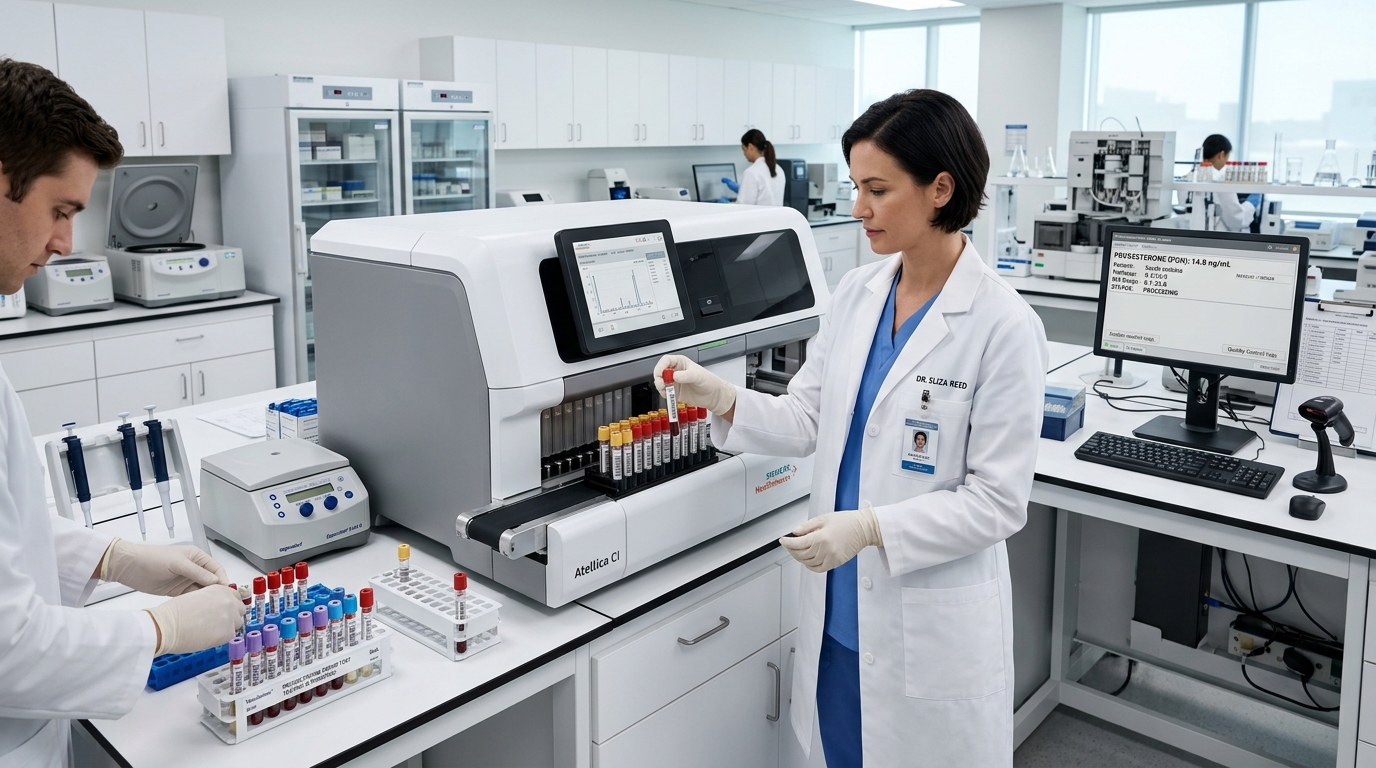
In fertility centers and women’s health clinics throughout Dubai, Abu Dhabi, and the wider UAE, precision endocrine profiling uncovers root physiological causes. Exploring validated professional fertility and hormone diagnostic testing systems in Dubai ensures patients and reproductive specialists rely on high-precision laboratory assays compliant with international endocrine standards.
The 4 Major Hormonal Drivers of Anovulation
Reproductive endocrinologists categorize chronic ovulatory disorders into four distinct pathophysiological patterns:
- 1. Polycystic Ovary Syndrome (WHO Group II – Normogonadotropic): Represents over 70% to 80% of all ovulatory dysfunction. Hyperinsulinemia and insulin resistance stimulate ovarian theca cells to overproduce androgens (testosterone, androstenedione). Elevated intraovarian androgens arrest follicular development at the pre-antral stage (producing the classic “string of pearls” ultrasound morphology). Granulosa cells hypersecrete AMH, while the pituitary exhibits rapid GnRH pulsatility that elevates LH relative to FSH (LH:FSH ratio > 2:1).
- 2. Hyperprolactinemia (Pituitary Oversecretion): Elevated circulating prolactin (caused by pituitary microadenomas, medications, or chronic stress) directly suppresses hypothalamic Gonadotropin-Releasing Hormone (GnRH) pulsatility. Without rhythmic GnRH pulses, the pituitary fails to release FSH and LH, leading to follicular arrest and hypoestrogenic amenorrhea.
- 3. Thyroid Dysfunction (Hypo- and Hyperthyroidism): In primary hypothyroidism, elevated Thyrotropin-Releasing Hormone (TRH) stimulates pituitary lactotrophs alongside thyrotrophs, inducing secondary hyperprolactinemia. Furthermore, altered thyroid hormones reduce liver synthesis of Sex Hormone-Binding Globulin (SHBG), elevating biologically active free testosterone and disrupting normal follicular recruitment.
- 4. Functional Hypothalamic Amenorrhea (WHO Group I – Hypogonadotropic): Caused by relative energy deficiency, excessive exercise, severe emotional stress, or low BMI. The hypothalamic GnRH generator shuts down completely, yielding suppressed FSH, low LH, and profoundly low estradiol (< 20 pg/mL).
Core Hormonal Testing Matrix & Diagnostic Biomarkers
Clinical practice guidelines from the Endocrine Society and the American Society for Reproductive Medicine (ASRM) establish key parameters:
| Endocrine Biomarker | Timing of Phlebotomy | Typical Target Reference Limit | Diagnostic Significance in Ovulatory Disorders |
|---|---|---|---|
| Mid-Luteal Serum Progesterone | Day 21 of 28-day cycle (or 7 days post-LH surge) | > 3.0 ng/mL (confirms ovulation); > 10 ng/mL optimal | The gold standard for biochemical verification of ovulation. Values < 3.0 ng/mL definitively confirm an anovulatory cycle. |
| Basal FSH & LH | Day 2 to 4 of menstrual bleeding | FSH 4 – 8 mIU/mL; LH 3 – 8 mIU/mL | LH:FSH Ratio > 2:1 strongly supports PCOS. Low FSH (< 2) with low LH indicates Hypothalamic Amenorrhea; high FSH (> 25) indicates Premature Ovarian Insufficiency (POI). |
| Serum Anti-Müllerian Hormone (AMH) | Any day of cycle (Cycle-independent) | 1.5 – 3.5 ng/mL | AMH > 4.0 – 5.0 ng/mL reflects vast numbers of arrested small antral follicles characteristic of PCOS; AMH < 0.5 ng/mL suggests diminished reserve. |
| Serum Prolactin | Fasting, mid-morning resting state | < 20 ng/mL (Normal < 400 mIU/L) | Levels > 25–30 ng/mL warrant repeat resting test; levels > 50–100 ng/mL require pituitary MRI to evaluate for prolactinoma. |
| Thyroid-Stimulating Hormone (TSH) | Morning fasting draw | 0.5 – 2.5 mIU/L (Strict fertility target) | TSH > 2.5 mIU/L impairs blastocyst implantation and elevates miscarriage risk; treated with Levothyroxine. |
| Total & Free Testosterone, DHEA-S | Morning draw (Day 2 to 4) | Total Test < 50 ng/dL; DHEA-S age-adjusted | Biochemical hyperandrogenism confirming Rotterdam PCOS criteria; extreme elevation (> 150 ng/dL) warrants adrenal/ovarian tumor workup. |
The Rotterdam Diagnostic Consensus for PCOS
To establish a definitive diagnosis of PCOS, the patient must fulfill at least two of the following three Rotterdam criteria, with other competing etiologies excluded:
- 1. Oligo- or Anovulation: Menstrual cycles longer than 35 days, fewer than 8 periods per year, or complete amenorrhea.
- 2. Clinical and/or Biochemical Hyperandrogenism: Hirsutism (Ferriman-Gallwey score ≥ 4 to 6 in Middle Eastern women), cystic acne, male-pattern alopecia, or elevated serum total/free testosterone.
- 3. Polycystic Ovarian Morphology on Ultrasound: ≥ 20 follicles per ovary measuring 2 to 9 mm in diameter, or an ovarian volume ≥ 10 mL in either ovary (without a dominant cyst).
Evidence-Based Treatment Pathways to Restore Ovulation
Once the hormonal root cause is identified, targeted therapy rapidly restores ovulatory function:
- PCOS First-Line Ovulation Induction: Letrozole (Femara) 2.5 to 5 mg daily on Days 3 to 7 of the cycle is clinically superior to Clomiphene Citrate. Large randomized controlled trials (PPCOS II) demonstrated that Letrozole achieves significantly higher cumulative ovulation rates (61.7% vs 48.3%) and higher live-birth rates (27.5% vs 19.1%) with lower multiple gestation risk.
- Metabolic Insulin Sensitization: In overweight women with PCOS, lifestyle modification (5%–10% weight loss) restores spontaneous regular ovulation in up to 50% of patients. Metformin (1,500 to 2,000 mg daily) improves insulin sensitivity, lowers circulating androgens, and enhances ovulatory response.
- Hyperprolactinemia Therapy: Dopamine receptor agonists (Cabergoline 0.25 to 0.5 mg once or twice weekly) normalize serum prolactin in > 90% of patients, rapidly restoring regular ovulatory menses within 4 to 8 weeks.
Frequently Asked Questions (FAQ)
Can a woman still have regular monthly bleeding if she is not ovulating?
Yes. This is called estrogen breakthrough bleeding (or anovulatory bleeding). When follicles grow and produce estrogen without ever rupturing and forming a corpus luteum, the endometrium becomes excessively thick until parts of it slough off irregularly, masquerading as a normal period.
Why is Letrozole preferred over Clomid for PCOS ovulation induction?
Letrozole is an aromatase inhibitor that temporarily reduces estrogen synthesis, triggering the pituitary to release a natural surge of FSH. Unlike Clomid, Letrozole does not block estrogen receptors in the endometrium and cervix, preserving fertile cervical mucus and maintaining a receptive, healthy endometrial lining.
Does having irregular cycles mean a woman cannot get pregnant naturally?
Not at all. Irregular ovulation means ovulation occurs unpredictably, making natural conception difficult to time. Once the underlying hormonal imbalance (thyroid, prolactin, or insulin resistance) is corrected or ovulation is gently induced, natural conception rates frequently match those of women with regular cycles.
Authoritative Clinical References
- The Endocrine Society – Clinical Practice Guideline: Diagnosis and Treatment of Polycystic Ovary Syndrome
- American Society for Reproductive Medicine (ASRM) – Evidence-Based Ovulation Induction Protocols in Ovulatory Dysfunction
- International PCOS Network / ESHRE – International Evidence-Based Guideline for the Assessment and Management of PCOS