
Enteric Adenovirus Rapid Test Indications: Serotypes 40/41, Prolonged Pediatric Diarrhea & UAE Gastroenterology Triage
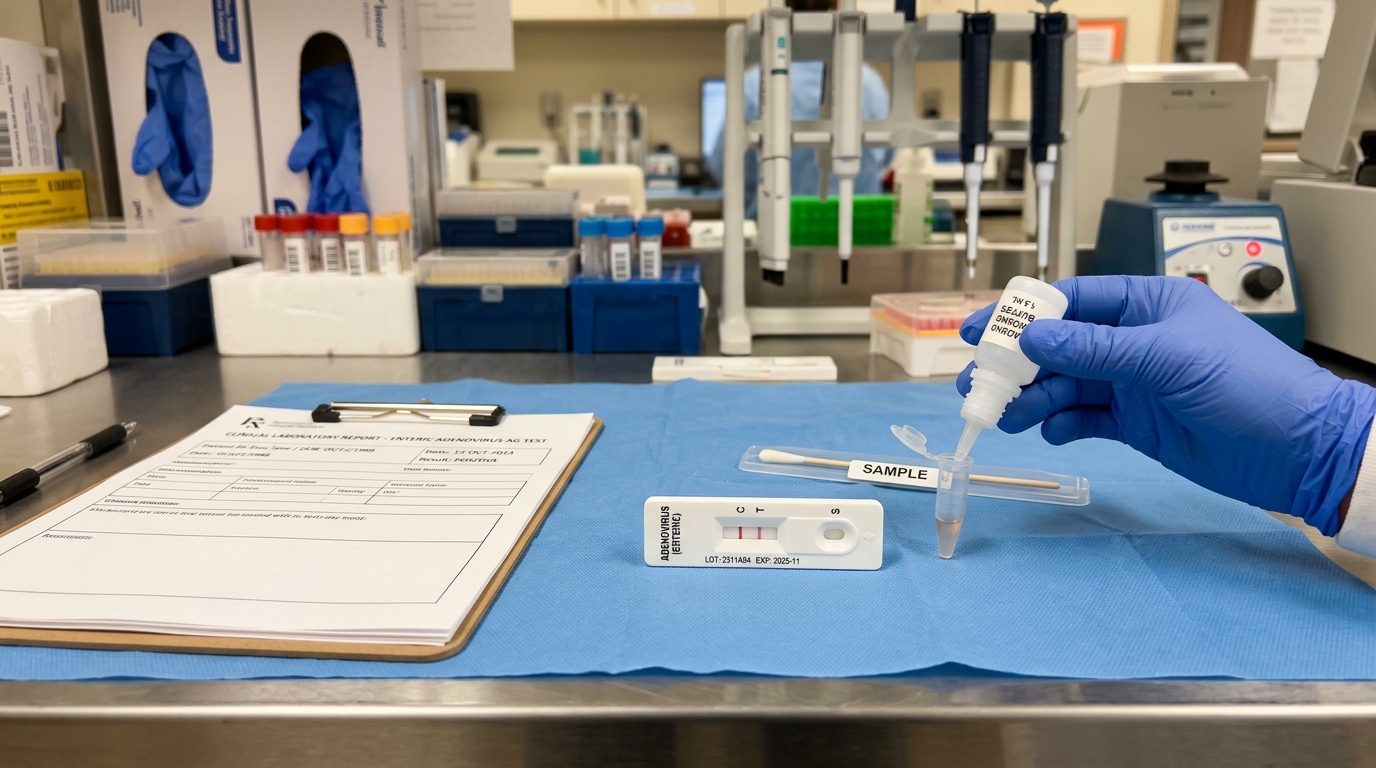
In pediatric medical centers, emergency triage units, and ambulatory clinics across Dubai, Abu Dhabi, and the wider UAE, dual enteric testing optimizes diagnostic workflows. Procuring certified professional gastrointestinal and viral rapid test kits in the UAE ensures clinic directors utilize diagnostic cassettes engineered with monoclonal specificity compliant with international quality benchmarks.
Pathophysiology: The Prolonged Diarrhea Hallmark of Ad40/41
The clinical course of enteric adenovirus differs substantially from other common viral gastroenteritides:
- Non-Enveloped Structural Resilience: Adenoviruses possess an icosahedral protein capsid containing 240 hexon capsomers and 12 fiber projections. Lacking a lipid envelope, they are remarkably stable in the physical environment, resisting gastric acidity, bile salts, and conventional alcohol hand sanitizers.
- Selective Enterotropism: Unlike respiratory adenoviruses, serotypes 40 and 41 demonstrate strict tropism for the apical microvilli of small intestinal and colonic enterocytes, causing focal enterocyte necrosis and villous blunting.
- The Prolonged Clinical Course: While rotavirus typically resolves in 3 to 7 days, enteric adenovirus diarrhea persists for an average of 8 to 12 days (and occasionally up to 14 to 21 days). This extended duration frequently causes parent anxiety and prompts clinicians to mistakenly suspect parasitic or inflammatory bowel disease if diagnostic testing is delayed.
Core Clinical Indications for Enteric Adenovirus Testing
Pediatric clinical practice guidelines, including ESPGHAN and AAP protocols, establish clear testing indications:
| Clinical Scenario | Target Patient Population | Diagnostic Objective | Clinical Practice Benefit |
|---|---|---|---|
| Prolonged Pediatric Diarrhea Triage | Infants and children under 3 years with diarrhea lasting > 7 days | Confirm Ad40/41 viral etiology | Prevents inappropriate hospitalization, unnecessary colonoscopy, and empiric antiparasitic prescribing. |
| Dual Rotavirus / Adenovirus POC Screening | Emergency department acute dehydration presentations | Simultaneous differential testing via combo cassette | Delivers 15-minute diagnostic confirmation, guiding rehydration and contact isolation protocols. |
| Nosocomial Inpatient Outbreak Control | Pediatric inpatient wards, neonatal units, daycare facilities | Identify environmental shedding and transmission index | Enforces enteric contact precautions to protect immunocompromised infants from ward transmission. |
| Immunocompromised Chronic Enteritis | Pediatric bone marrow or solid organ transplant recipients | Differentiate localized infection from systemic dissemination | Severe enteric adenovirus in transplant hosts can disseminate to liver (fulminant hepatitis), lungs, and kidneys. |
Diagnostic Performance: Rapid Monoclonal Antigen vs Central PCR
Clinical laboratory directors must understand the performance parameters of point-of-care rapid testing compared to central molecular panels:
- High Monoclonal Specificity (≥ 98%): Modern rapid lateral flow tests utilize monoclonal antibodies specifically directed against unique conformational epitopes of the Ad40/41 hexon protein. Consequently, they do not cross-react with non-enteric respiratory adenoviruses (such as serotypes 1, 2, 3, or 7) that may be swallowed during a common cold.
- Sensitivity Thresholds: Rapid antigen cassettes exhibit sensitivity of 85% to 92% during the acute phase when fecal viral shedding exceeds 106 virions per gram of stool.
- Multiplex Molecular Panels for Equivocal Cases: In severe hospitalized cases, immunocompromised patients, or when rapid tests are negative despite prolonged symptoms, central multiplex gastrointestinal PCR panels confirm low-titer Ad40/41 DNA and evaluate for coinfections.
Sample Collection & Infection Control Protocols
To avoid false-negative readings and prevent institutional cross-infection, standardized procedures must be followed:
- Collect Raw Watery Stool: Rapid antigen tests are validated solely on unformed, liquid stool specimens. Formed stool or swabs smeared on dry paper must be rejected.
- Soap and Water Hand Hygiene: Because adenovirus is a non-enveloped virus, alcohol-based hand sanitizers are ineffective at destroying viral capsids. Clinical staff and daycare caregivers must enforce vigorous mechanical washing with soap and running water for at least 20 seconds.
- Surface Disinfection: Environmental cleaning requires sodium hypochlorite (bleach-based) solutions (minimum 1,000 ppm active chlorine). Quaternary ammonium disinfectants are inadequate against adenoviral capsids.
Adenovirus-Induced Mesenteric Lymphadenitis & Intussusception Risk
Beyond uncomplicated gastroenteritis, enteric adenovirus carries specific surgical implications in pediatric practice:
- Peyer’s Patch Hypertrophy: Adenovirus replication induces marked lymphoid hyperplasia in the submucosal Peyer’s patches of the terminal ileum. In infants aged 6 to 24 months, these severely swollen lymphoid clusters can act as a pathological lead point for ileocolic intussusception (telescoping of the terminal ileum into the cecum).
- Surgical Red Flags: While ordinary enteric adenovirus produces watery diarrhea, clinicians must immediately suspect secondary intussusception if the child develops severe, episodic paroxysmal crying with legs drawn up, sudden lethargy, bilious emesis, or passage of dark red mucous stool (“currant jelly stool”). Immediate abdominal ultrasound and air/contrast enema reduction are life-saving.
- Comparative Clinical Profile: Unlike norovirus which causes abrupt vomiting that ceases within 24 to 36 hours, or rotavirus which peaks sharply on Days 2 to 4, enteric adenovirus diarrhea smolders with persistent loose stools for up to two full weeks. Reassuring parents with a confirmed positive rapid antigen test prevents unnecessary antibiotic prescriptions and excessive blood testing.
Frequently Asked Questions (FAQ)
Can a swallowed respiratory adenovirus cause a positive enteric adenovirus test?
No. Commercial enteric adenovirus rapid tests utilize monoclonal antibodies specific for the hexon proteins of subgenus F (serotypes 40 and 41). Respiratory adenoviruses (subgenera A, B, C, D, E) do not cross-react on validated enteric rapid cassettes.
Why does enteric adenovirus diarrhea last longer than rotavirus?
Serotypes 40 and 41 induce slower viral replication kinetics and cause patchy, prolonged desquamation across both small and large bowel mucosal enterocytes. Complete enterocyte regeneration and brush-border enzyme restoration typically require 10 to 14 days.
Is there an antiviral medication for enteric adenovirus in children?
For immunocompetent children, treatment is entirely supportive (oral rehydration therapy, zinc supplementation, and gradual refeeding). Antivirals (intravenous Cidofovir) are strictly reserved for severe, life-threatening disseminated adenovirus infections in severely immunocompromised transplant patients.
Authoritative Clinical References
- Centers for Disease Control and Prevention (CDC) – Adenovirus: Clinical Overview, Transmission, and Laboratory Testing
- ESPGHAN/ESPID – Evidence-Based Guidelines on Acute Gastroenteritis: Enteric Adenovirus Management
- World Health Organization (WHO) – Diagnostic Manual for the Surveillance of Viral Diarrheal Pathogens