
CSF PCR vs CSF Culture: Acute Meningitis Multiplex Panels, Bacterial vs Viral Differentiation & UAE Emergency Neurological Protocols
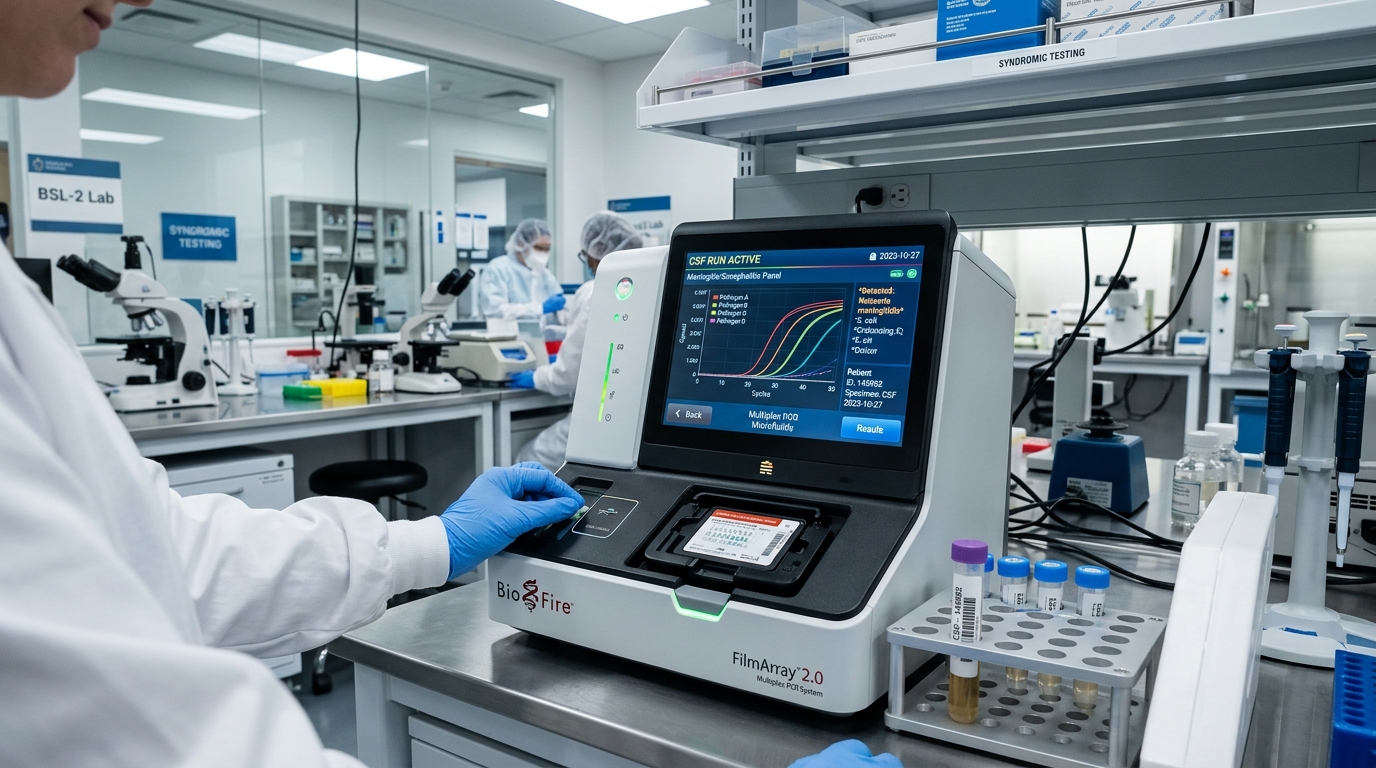
In tertiary emergency departments, intensive care units, and neurotrauma centers across Dubai, Abu Dhabi, and the wider UAE, rapid CSF molecular testing saves irreplaceable neural tissue. Sourcing certified professional multiplex PCR and emergency diagnostic systems in Dubai ensures hospital laboratories deploy assays compliant with international clinical quality standards.
The Critical Timeline: Hours Matter in CNS Infections
The diagnostic kinetics of central nervous system infections dictate clinical outcomes:
- Minute 0 to 60 (Empiric Antimicrobial Window): Under international guidelines (IDSA, European Society of Clinical Microbiology and Infectious Diseases [ESCMID]), every suspected meningitis patient must receive broad-spectrum intravenous empiric therapy (Ceftriaxone + Vancomycin + Ampicillin ± Acyclovir ± Dexamethasone) within 1 hour of hospital arrival.
- The Pre-Treatment Culture Dilemma: In clinical reality, lumbar puncture (LP) is frequently delayed by several hours due to mandatory cranial CT neuroimaging to rule out brain herniation, coagulopathy correction, or patient instability. If empiric antibiotics are administered before the LP is performed, CSF bacterial cultures are sterilized within 2 to 4 hours, rendering traditional culture completely negative in up to 40% to 50% of cases!
- The Molecular Revolution: Unlike culture, which demands viable replicating bacteria, multiplex CSF PCR detects microbial nucleic acid fragments even days after antibiotics have killed living organisms, preserving diagnostic confirmation when cultures are sterile.
Head-to-Head Comparative Diagnostic Matrix
Clinical data compiled by the IDSA, the American Academy of Neurology (AAN), and hospital trial networks highlight essential differences:
| Operational Parameter | Multiplex CSF PCR Panel (e.g., ME Panel) | Traditional CSF Bacterial Culture | Clinical Practice Takeaway |
|---|---|---|---|
| Turnaround Time (TAT) | 60 to 75 Minutes | 48 to 72 Hours (or longer) | PCR enables immediate targeted de-escalation of toxic antibiotics within the emergency department. |
| Diagnostic Sensitivity in Untreated CSF | > 95% – 98% | 70% – 85% | PCR detects low bacterial copy numbers and fastidious viral pathogens missed by culture. |
| Resilience to Prior Antibiotic Therapy | High (> 90% sensitivity): Amplifies bacterial DNA up to 72 hrs post-antibiotics. | Severely Compromised (< 20%–40%): Sterilized rapidly within 2–4 hours of IV ceftriaxone. | PCR solves the diagnostic challenge of the pre-treated meningitis patient. |
| Viral Diagnostics Spectrum | Detects HSV-1, HSV-2, VZV, Enterovirus, CMV, HHV-6, Parechovirus | Zero viral detection capability | Rapid Enterovirus detection enables immediate discharge of benign viral meningitis cases without 14 days of IV antibiotics. |
| Antimicrobial Susceptibility (AST) | Cannot determine phenotypic MICs or penicillin resistance in S. pneumoniae. | Full Phenotypic AST: Delivers minimum inhibitory concentrations for penicillins and cephalosporins. | Culture remains irreplaceable for antibiotic susceptibility confirmation and public health tracking. |
| Sample Volume Required | Minimal: 200 μL (0.2 mL) | 1 to 3 mL | Crucial for neonatal and pediatric lumbar punctures where CSF volume is strictly limited. |
The Antimicrobial Stewardship Triumph: HSV & Enterovirus De-escalation
The greatest clinical and economic victory of rapid CSF PCR panels centers on viral meningoencephalitis management:
- Rapid Acyclovir Discontinuation in HSV-Negative Patients: Herpes Simplex Encephalitis (HSV-1) is rapidly fatal if untreated, necessitating immediate empiric intravenous Acyclovir for all patients presenting with altered mental status and fever. However, IV Acyclovir causes significant nephrotoxicity (crystal nephropathy in up to 10%–15% of patients). A rapid negative CSF PCR for HSV-1/2 within 1 hour allows clinicians to safely stop Acyclovir, protecting kidney function and saving thousands in pharmacy expenditures.
- Early Discharge of Pediatric Enterovirus Meningitis: Enterovirus is the commonest cause of aseptic meningitis in infants during summer months. Before PCR panels, these children were routinely hospitalized for 3 to 5 days on empiric IV ampicillin and cefotaxime awaiting sterile bacterial cultures. Confirming Enterovirus in 1 hour allows safe hospital discharge within 24 hours, sparing families traumatic hospitalizations and saving hospital beds.
Diagnostic Pitfalls: Cryptococcus and Contamination
Clinicians must recognize specific diagnostic boundaries of automated CSF panels:
- Cryptococcus neoformans/gattii Sensitivity: While the panel detects Cryptococcus, multicenter trials reveal that PCR sensitivity for Cryptococcus is slightly lower (~85%–90%) than the gold-standard CSF Cryptococcal Antigen (CrAg) lateral flow immunoassay (> 99% sensitivity). In HIV-infected or transplant patients, a negative PCR must always be accompanied by a CrAg test.
- High Sensitivity & Commensal Contamination: Extreme molecular sensitivity creates a small risk of detecting harmless skin commensals if lumbar puncture skin prep is suboptimal (e.g., Cutibacterium acnes or Staphylococcus epidermidis), though most commercial panels do not include CoNS targets to prevent false-positive overtreatment.
Frequently Asked Questions (FAQ)
Can a multiplex CSF PCR panel be performed on blood or other body fluids?
No. Commercial meningitis PCR panels (like BioFire ME) are FDA-cleared and CE-IVD validated strictly for unspun, native cerebrospinal fluid obtained via lumbar puncture or ventricular drain. They cannot be run on serum or synovial fluid.
Does a negative CSF PCR rule out bacterial meningitis completely?
A negative panel provides extremely high negative predictive value (> 99%) for the 6 specific bacterial targets included (S. pneumoniae, N. meningitidis, H. influenzae, S. agalactiae, L. monocytogenes, and E. coli K1). However, rare atypical pathogens (e.g., Mycobacterium tuberculosis, Treponema pallidum neurosyphilis, or fungal pathogens like Coccidioides) are not on the panel and require dedicated testing.
Why must traditional CSF culture still be ordered alongside PCR?
Because bacteria like Streptococcus pneumoniae exhibit variable resistance to penicillin and cephalosporins, isolating living bacteria via culture is mandatory to perform minimum inhibitory concentration (MIC) susceptibility testing, ensuring targeted antibiotic tailoring.
Authoritative Clinical References
- Infectious Diseases Society of America (IDSA) – Guidelines for the Management of Acute Bacterial Meningitis and Encephalitis
- ESCMID – Consensus Review and Clinical Recommendations for Multiplex CSF PCR in Central Nervous System Infections
- Clinical and Laboratory Standards Institute (CLSI) – Laboratory Diagnosis of Central Nervous System Infections