
High Risk HPV vs Low Risk HPV: Oncogenic Genotypes, Clinical Manifestations & Dubai Cervical Screening Guidelines
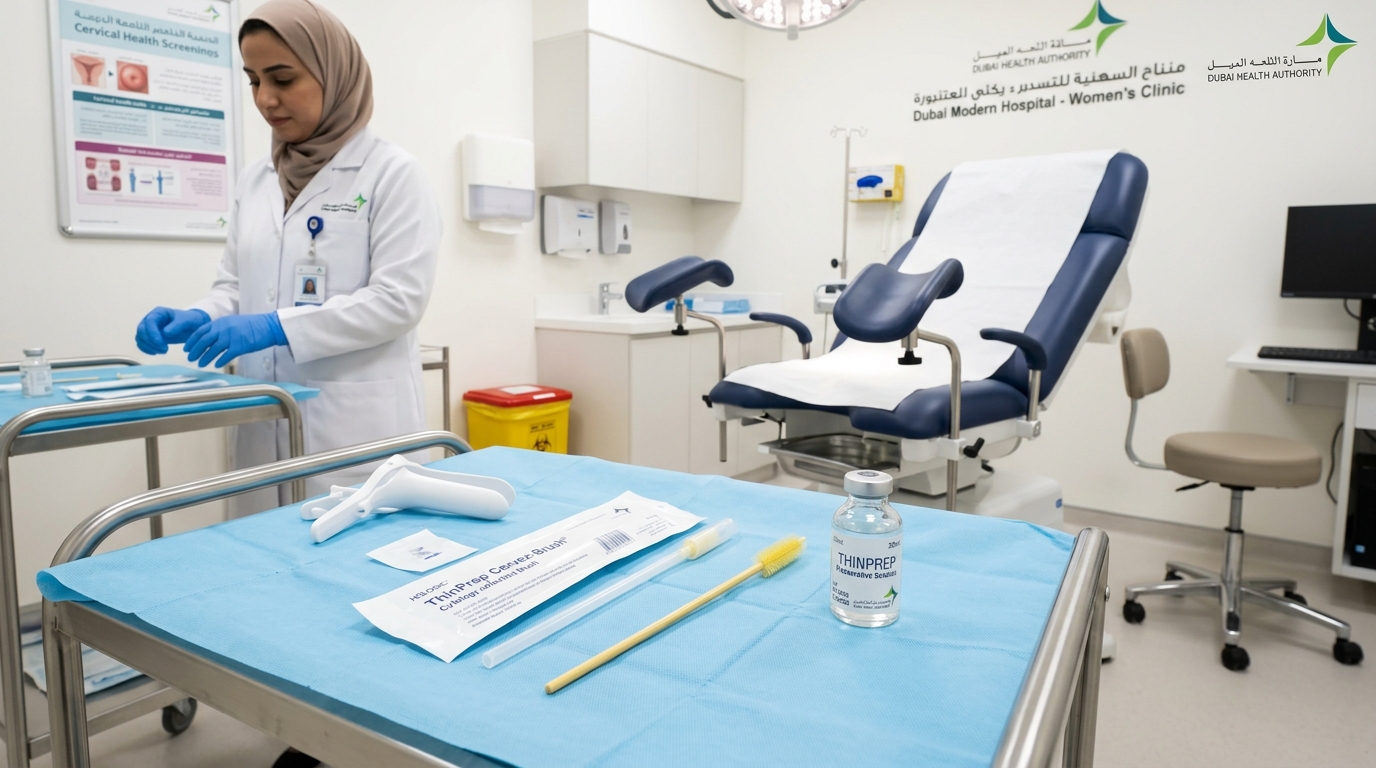
In modern polyclinics across Dubai, Abu Dhabi, and the Northern Emirates, proactive preventative screening saves lives. Clinicians and patients can explore confidential sexual health and STI testing packages in Dubai to access certified HPV DNA real-time PCR genotyping, liquid-based cytology (LBC Pap smear), and discrete clinical follow-up adhering strictly to Dubai Health Authority (DHA) and UAE Ministry of Health and Prevention (MOHAP) protocols.
Genomic Virology: The Molecular Division of HPV Types
Understanding the fundamental distinction between high-risk and low-risk HPV requires examining their molecular pathogenesis, genomic persistence, and oncoprotein expression:
- Viral Capsid and Genome: HPV possesses an 8-kilobase circular double-stranded DNA genome protected by an icosahedral capsid composed of major (L1) and minor (L2) structural proteins. The viral early region encodes regulatory proteins (E1, E2, E4, E5, E6, E7) responsible for replication and transcription control.
- Oncogenic Driver Proteins (E6 and E7): In high-risk genotypes (notably HPV 16, 18, 31, 33, 45, 52, and 58), the early proteins E6 and E7 act as potent viral oncoproteins. High-risk E6 binds to host tumor suppressor protein p53 via ubiquitin ligase E6AP, promoting rapid proteasomal degradation and obliterating the cell’s apoptosis pathway. High-risk E7 binds to the retinoblastoma protein pRb, releasing transcription factor E2F and driving perpetual, uncontrolled entry into the S-phase of the cell cycle.
- Low-Risk Inability to Inactivate Tumor Suppressors: In sharp contrast, the E6 and E7 proteins of low-risk genotypes (such as HPV 6 and 11) have exceptionally low binding affinity for p53 and pRb. As a result, low-risk HPV cannot induce genomic instability or chromosomal aneuploidy, completely precluding malignant cellular transformation.
- Viral Integration vs Episomal State: Low-risk HPV replicates purely as an extrachromosomal circular episome within the host epithelial cell nucleus. High-risk HPV, when establishing chronic persistent infection, frequently undergoes genomic breakage and integrates directly into the host human genome, disrupting the viral E2 repressor gene and causing permanent, uninhibited overexpression of oncogenic E6 and E7.
Comprehensive Comparison: High Risk vs Low Risk HPV
The biological, clinical, and diagnostic divergence between these viral classes is summarized in the evidence-based reference table below:
| Diagnostic Parameter | High-Risk HPV (hrHPV) | Low-Risk HPV (lrHPV) |
|---|---|---|
| Primary Viral Genotypes | HPV 16, 18, 31, 33, 35, 39, 45, 51, 52, 56, 58, 59, 68 (HPV 16 & 18 account for >70% of cancers) | HPV 6, 11, 42, 43, 44, 54, 61, 70, 72, 81 (HPV 6 & 11 cause >90% of genital warts) |
| Oncogenic Potential | High (Malignant transformation); class 1 human carcinogens by WHO/IARC | None (Non-oncogenic); benign cellular hyperplasia only |
| Primary Clinical Lesions | Cervical dysplasia (CIN 1, CIN 2, CIN 3), cervical carcinoma, anal intraepithelial neoplasia (AIN), penile, vulvar, vaginal, and oropharyngeal head/neck carcinomas | Condylomata acuminata (anogenital warts), recurrent respiratory papillomatosis (RRP), low-grade cervical cellular changes (mild transient koilocytosis) |
| Visible Physical Symptoms | Frequently 100% Asymptomatic for years until advanced precancerous or cancerous changes develop | Flesh-colored, cauliflower-like, peduncular, or flat genital papules; pruritus, local irritation, bleeding during friction |
| Primary Diagnostic Modality | Real-Time Multiplex PCR / DNA Genotyping; liquid-based cytology (ThinPrep / SurePath); p16/Ki-67 dual staining | Clinical visual examination; dermoscopy; biopsy with histopathology for atypical, pigmented, or ulcerated lesions |
| Screening Guideline Role | Core component of routine cervical cancer screening every 3 to 5 years in adult women aged 25–65 | Not included in routine cervical screening; testing lrHPV on Pap specimens is not clinically recommended |
| Prophylactic Vaccine Coverage | Covered by Bivalent (16, 18), Quadrivalent (16, 18), and Nonavalent (16, 18, 31, 33, 45, 52, 58) vaccines | Covered by Quadrivalent and Nonavalent vaccines (HPV 6 and 11) |
Clinical Presentation and Manifestations
Because the clinical consequences of hrHPV and lrHPV diverge completely, clinicians must recognize the diagnostic pathways for both presentations:
- The Silent Course of High-Risk HPV: High-risk HPV infections produce no pain, no itching, no discharge, and no visible external warts. In over 80% to 90% of immunocompetent individuals, the host cellular immune system clears or suppresses hrHPV to undetectable levels within 12 to 24 months. However, in approximately 10% to 15% of patients, the virus persists. Persistent hrHPV infection over 5 to 15 years leads sequentially to Cervical Intraepithelial Neoplasia (CIN 1 → CIN 2 → CIN 3 / Carcinoma in Situ) and ultimately invasive squamous cell carcinoma or adenocarcinoma.
- Low-Risk HPV and Genital Warts (Condylomata Acuminata): Infections with HPV 6 or 11 typically manifest clinically 2 to 6 months after exposure as soft, exophytic, hyperkeratotic, or verrucous papules on the vulva, perineum, perianal skin, vaginal introitus, cervical surface, penile shaft, prepuce, or scrotum. While benign, condylomata can cause significant psychological distress, localized discomfort, bleeding, and cosmetic concerns.
- Recurrent Respiratory Papillomatosis (RRP): Perinatal vertical transmission of low-risk HPV 6 or 11 during vaginal delivery can occasionally cause juvenile-onset RRP in infants and young children, leading to wart-like growths on the vocal cords, hoarseness, stridor, and potential airway obstruction requiring repeated surgical debulking.
Dubai & UAE Cervical Cancer Screening Guidelines
In accordance with DHA, MOHAP, and Department of Health (DOH) Abu Dhabi clinical oncology frameworks, cervical cancer screening guidelines have shifted decisively toward primary high-risk HPV DNA molecular testing:
- Ages 21 to 24: Routine HPV testing is not recommended due to exceptionally high rates of transient, benign infections that clear spontaneously. Cervical cytology alone (every 3 years) is utilized if screening is indicated.
- Ages 25 to 29: Primary high-risk HPV DNA testing every 3 years, or cervical cytology (LBC) every 3 years.
- Ages 30 to 65: Primary hrHPV DNA testing every 5 years (preferred international and DHA standard), or co-testing (hrHPV DNA test + liquid-based Pap cytology simultaneously) every 5 years, or Pap cytology alone every 3 years.
- High-Risk Genotype Triage (HPV 16 and 18): Due to their extreme oncogenicity, women testing positive for HPV 16 or HPV 18 are immediately referred for diagnostic colposcopy and directed cervical biopsies, regardless of whether their concurrent Pap cytology is normal!
- Non-16/18 High-Risk HPV Positivity (Pooled 12 Types): If a patient tests positive for high-risk HPV types other than 16/18 (e.g., 31, 33, 45, 52, etc.):
- If concurrent reflex Pap cytology is negative/normal: Repeat co-testing in 12 months.
- If concurrent reflex Pap cytology reveals ASC-US, LSIL, or worse: Immediate referral for colposcopy.
Therapeutic Management and Clinical Protocols
Treatment approaches reflect the distinct biological behaviors of low-risk versus high-risk HPV:
- Managing Genital Warts (Low-Risk): Eradication targets visible lesions to reduce symptoms and shedding. Options include patient-applied topical modulators (Imiquimod 5% cream, Podofilox 0.5% solution) or clinician-administered modalities (cryotherapy with liquid nitrogen, Trichloroacetic acid [TCA] 80–90%, electrocautery, or surgical excision). Spontaneous regression occurs in approximately 30% of cases within 4 months, but recurrence rates remain 20–40% due to persistent subclinical perilesional viral reservoirs.
- Managing Precancerous Dysplasia (High-Risk): No oral antiviral drug eradicates HPV. Management focuses strictly on excising or ablating neoplastic cervical tissue before malignant progression:
- CIN 1 (Low-Grade): Conservative active surveillance with repeat hrHPV/cytology testing at 12 months, as >70% regress spontaneously without intervention.
- CIN 2 and CIN 3 (High-Grade): Excisional therapy via Loop Electrosurgical Excision Procedure (LEEP / LLETZ) or cold knife cone biopsy to remove the cervical transformation zone, followed by rigorous post-treatment surveillance testing at 6 and 12 months.
Frequently Asked Questions (Clinical FAQ)
If I have genital warts, does that mean I will develop cervical or penile cancer?
No. Genital warts are caused almost exclusively by low-risk HPV types (HPV 6 and 11), which are biologically non-oncogenic and cannot cause cancer. However, because HPV is sexually transmitted, it is possible to acquire both low-risk and high-risk HPV genotypes concurrently during intimate exposure. For this reason, individuals with genital warts should still adhere to standard cervical screening and sexual health testing protocols.
Can a blood test detect high-risk or low-risk HPV?
No. HPV is an epitheliotropic virus that replicates exclusively in the basal and differentiated layers of mucosal and cutaneous squamous epithelium; it does not cause viremia (virus circulating in the bloodstream). Therefore, commercial blood antibody tests cannot diagnose active cervical or genital HPV infection. Diagnostic testing requires cellular swabs from the cervix, vagina, anus, or lesions for molecular DNA/RNA PCR analysis.
Does the HPV vaccine protect against both high-risk and low-risk types?
Yes. Modern nonavalent HPV vaccines (Gardasil 9) protect against 9 HPV genotypes: seven high-risk oncogenic types (HPV 16, 18, 31, 33, 45, 52, and 58) that cause approximately 90% of cervical cancers, and two low-risk types (HPV 6 and 11) that cause approximately 90% of genital warts and respiratory papillomas.
Authoritative Clinical References
- World Health Organization (WHO) — Cervical Cancer Elimination Initiative, HPV Genotypes and Screening Guidelines
- Centers for Disease Control and Prevention (CDC) — Human Papillomavirus (HPV) Clinical Overview, High-Risk vs Low-Risk Strains
- American College of Obstetricians and Gynecologists (ACOG) — Clinical Practice Advisory: Updated Cervical Cancer Screening Guidelines and hrHPV Primary Testing