
Typhoid IgG/IgM Rapid Test Indications: Salmonella Typhi O & H Serology, Travel Fever & Dubai Outpatient Diagnostic Algorithms
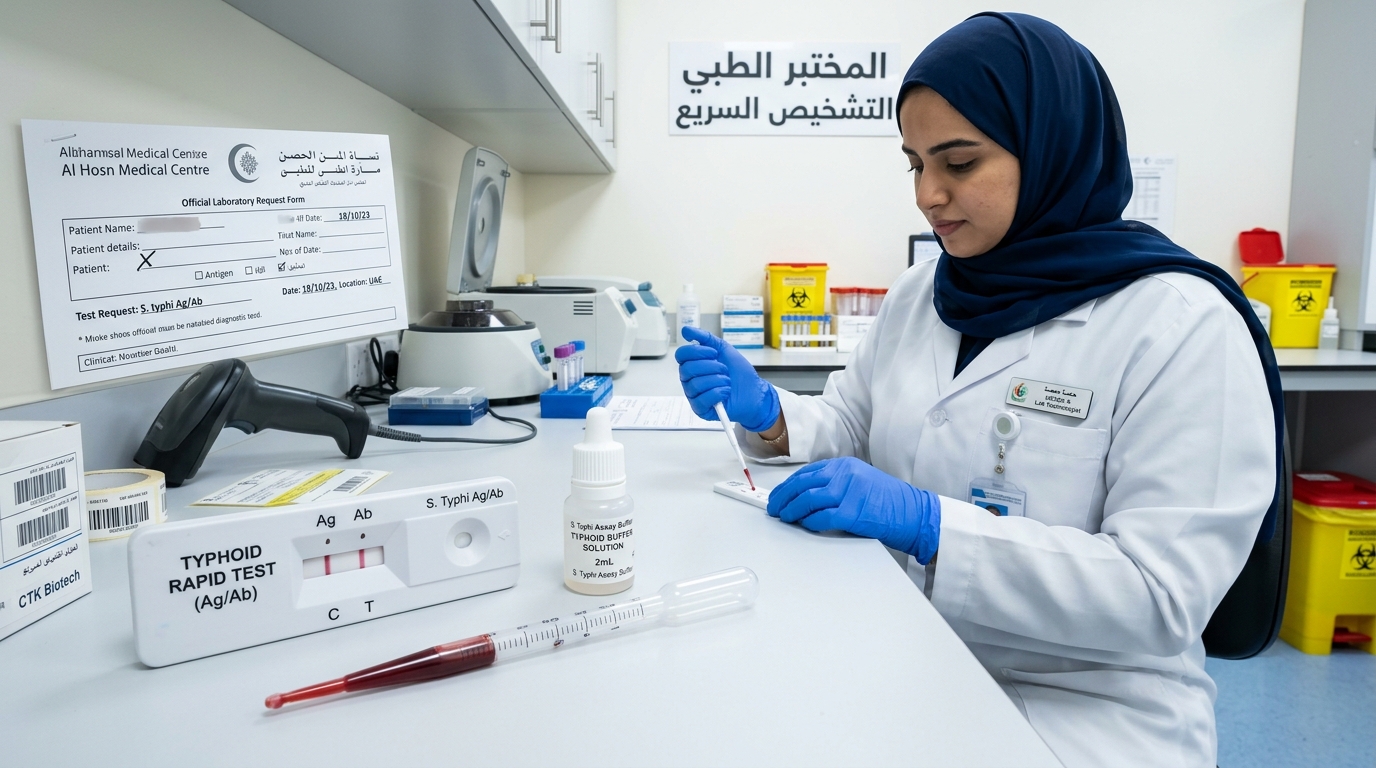
In clinics and medical centers across Dubai, rapid differentiation of acute gastrointestinal and systemic pathogens expedites therapy. Explore certified gastrointestinal rapid test kits and enteric diagnostic panels in Dubai engineered for point-of-care precision, clear differential bands, and reliable outpatient triage.
Pathophysiology and Humoral Immune Kinetics of Salmonella Typhi
Understanding antibody kinetics clarifies the appropriate clinical indications and optimal timing of IgG and IgM testing:
- Invasion and Reticuloendothelial Sequestration (Week 1): Following ingestion of contaminated water or food, S. Typhi invades intestinal M-cells overlying Peyer’s patches in the terminal ileum. Surviving within macrophages, the bacteria migrate to mesenteric lymph nodes, thoracic duct, and enter the bloodstream, causing transient primary bacteremia with seeding into the liver, spleen, and bone marrow. During this first week, patient symptoms (insidious rising fever, malaise) begin, but circulating antibody levels remain undetectable. Blood culture is the primary gold standard during Week 1.
- Secondary Bacteremia & IgM Surge (Week 2): During the second week, massive bacterial release from reticuloendothelial organs back into the bloodstream triggers sustained high fever (>39°C–40°C), delirium (typhoid state), abdominal distension, and rose spots. The host humoral immune system mounts a vigorous primary antibody response, producing anti-Salmonella IgM antibodies targeting specific Outer Membrane Proteins (OMP) and lipopolysaccharide (LPS) antigens. IgM reaches peak diagnostic concentrations between Days 7 and 14 of symptomatic illness.
- Convalescence and IgG Class Switching (Week 3 to 4+): As the disease progresses into the third week and beyond, plasma cells undergo immunoglobulin class switching, synthesizing high-affinity anti-Salmonella IgG antibodies. IgG titers persist for months to years, indicating late-stage infection, past clinical exposure, or immunological memory.
Comparative Diagnostic Modalities for Enteric Fever
To contextualize the role of rapid antibody tests, clinicians must evaluate the comparative diagnostic profile across available methodologies:
| Diagnostic Method | Target Detected | Turnaround Time | Diagnostic Sensitivity by Disease Week | Key Clinical Limitations |
|---|---|---|---|---|
| Typhoid IgG/IgM Rapid Test (POC Lateral Flow) | Host IgM (acute) and IgG (convalescent/past) against S. Typhi OMP / LPS | 15 Minutes | Week 1: 40%–60% Week 2–3: 85%–92% Week 4+: High IgG |
Negative in early first week; IgG may reflect past historical exposure in endemic regions. |
| Blood Culture (Automated BACTEC) | Live viable Salmonella Typhi / Paratyphi organisms | 48 to 72 Hours | Week 1: 80%–90% Week 2: 50%–60% Week 3: 20%–30% |
Sensitivity drops drastically (<30%) if patient received prior empiric oral antibiotics. |
| Bone Marrow Culture | Viable organisms in reticuloendothelial bone marrow aspirate | 48 to 96 Hours | All Weeks: >90%–95% (Even after antibiotics) | Highly invasive, painful procedure; reserved strictly for refractory or ambiguous hospital cases. |
| Widal Tube Agglutination Test | Serum agglutinating antibodies against O (somatic) and H (flagellar) antigens | 24 Hours | Week 1: Low Week 2–3: Variable (60%–70%) |
High False-Positive Rate due to cross-reactivity with non-typhoidal Salmonella, malaria, dengue, and enteroviruses. Considered obsolete by WHO. |
| Stool Culture | Bacterial shedding in fecal specimens | 48 to 72 Hours | Week 1: <10% Week 3–4: 60%–75% |
Reflects hepatobiliary shedding; invaluable for identifying chronic asymptomatic carriers. |
Core Clinical Indications for Ordering Typhoid IgG/IgM Rapid Tests
In accordance with international infectious disease and tropical travel medicine protocols, rapid antibody testing is indicated in the following clinical scenarios:
- 1. Returning Travelers with Acute Febrile Illness: Any patient presenting in the UAE with persistent fever (≥38.5°C for ≥4–5 days) following recent travel (within the past 21 to 30 days) to typhoid-endemic destinations—particularly India, Pakistan, Bangladesh, Nepal, the Philippines, or Sub-Saharan Africa.
- 2. Suspected Enteric Fever in Ambulatory Care: Patients exhibiting classic clinical features: step-ladder remittent fever, relative bradycardia despite high fever (Sphygmo-thermic dissociation / Faget’s sign), coated white “typhoid tongue” with red edges, toxic appearance, abdominal discomfort, and marked leukopenia or normal WBC count with absence of expected bacterial leukocytosis.
- 3. Bridging Clinical Decisions Pending Blood Cultures: When definitive automated blood cultures have been inoculated but results require 48 to 72 hours, an immediate positive IgM result provides actionable objective justification to initiate targeted intravenous or oral antibiotic therapy without delay.
- 4. Food Handler Outbreak Investigation: Rapid screening of commercial kitchen personnel and hospitality food handlers during suspected foodborne transmission clusters in municipal or institutional settings.
Interpreting Typhoid Rapid Cassette Test Results
The lateral flow test cassette displays two separate test lines (IgM and IgG) alongside a procedural control line (C):
- IgM Positive (+), IgG Negative (-): Indicates acute primary typhoid infection. The patient is currently in the acute bacteremic or post-bacteremic phase (typically Days 5 to 14 of illness). Requires immediate clinical assessment, blood cultures, and prompt initiation of targeted antibiotic therapy.
- Both IgM Positive (+) and IgG Positive (+): Indicates mid-to-late stage acute infection (Days 10 to 21+), or an acute reinfection in an individual with previous immunological sensitization.
- IgM Negative (-), IgG Positive (+): Indicates convalescent stage, past historical infection, or prior Vi polysaccharide / conjugated typhoid vaccination. It does not indicate active acute typhoid fever in the absence of IgM.
- Both IgM and IgG Negative (-): Suggests absence of typhoid infection. However, if the test was performed within the first 1 to 4 days of fever onset, antibody levels may be below the analytical limit of detection. If clinical suspicion remains high, repeat testing in 48 to 72 hours or rely on blood cultures!
- Invalid Test (Control Line Absent): The test strip must be discarded and repeated with a new cassette if the control line (C) fails to develop.
Therapeutic Management and Antimicrobial Resistance (XDR Typhoid)
Modern management of typhoid fever requires strict vigilance regarding emerging drug resistance patterns in the South Asian subcontinent:
- The Threat of XDR (Extensively Drug-Resistant) Typhoid: Strains emerging from Pakistan and India exhibit extensive resistance to chloramphenicol, ampicillin, co-trimoxazole, fluoroquinolones (ciprofloxacin), and third-generation cephalosporins (ceftriaxone).
- Empiric Therapy for Returning Travelers: In the UAE, returning travelers with suspected severe typhoid are initiated empirically on Intravenous Azithromycin (1 g/day) or Intravenous Meropenem / Carbapenem while awaiting formal blood culture minimum inhibitory concentration (MIC) susceptibility results.
- Complication Monitoring: Clinicians must monitor for life-threatening third-week complications, notably ileal intestinal perforation (manifesting as sudden severe abdominal pain, guarding, and free air on erect chest radiograph) and massive lower gastrointestinal hemorrhage resulting from mucosal ulceration over necrotizing Peyer’s patches.
Frequently Asked Questions (Clinical FAQ)
Why is the rapid typhoid test preferred over the older Widal test?
The traditional Widal test is notorious for high rates of false-positive and false-negative results. Cross-reactivity occurs frequently with other febrile illnesses (malaria, dengue, non-typhoidal salmonellosis) and in healthy individuals previously exposed or vaccinated. Modern rapid IgG/IgM lateral flow tests utilize specific outer membrane proteins and lipopolysaccharides, providing superior specificity, discrete IgM vs IgG separation, and results within 15 minutes.
Can a typhoid rapid test be false-negative in the first few days of fever?
Yes. The human immune system requires 5 to 7 days of active infection to produce detectable concentrations of anti-Salmonella IgM antibodies. Performing a rapid antibody test on Day 1 or 2 of fever onset frequently yields a false negative. In the first week of symptoms, blood culture is the diagnostic modality of choice.
Does a positive IgG mean the patient is a chronic carrier?
Not necessarily. An isolated positive IgG simply indicates that the patient encountered Salmonella Typhi antigens in the past or received a typhoid vaccine. To confirm chronic carrier status (persistence of bacteria in the gallbladder and shedding in stools for >1 year), serial stool cultures collected after antibiotic therapy are required.
Authoritative Clinical References
- World Health Organization (WHO) — Typhoid Fever Epidemiological Overview, Diagnostic Limitations, and Vaccines
- Centers for Disease Control and Prevention (CDC) — Typhoid and Paratyphoid Fever: Clinical Guidance and Diagnostic Testing
- Infectious Diseases Society of America (IDSA) — Guidelines for the Management of Acute Enteric Infections and Febrile Travelers