
Upper Respiratory Pathogens PCR Specimen Requirements: Swab Types, Transport Media, Stability & Dubai Pre-Analytical Lab Standards
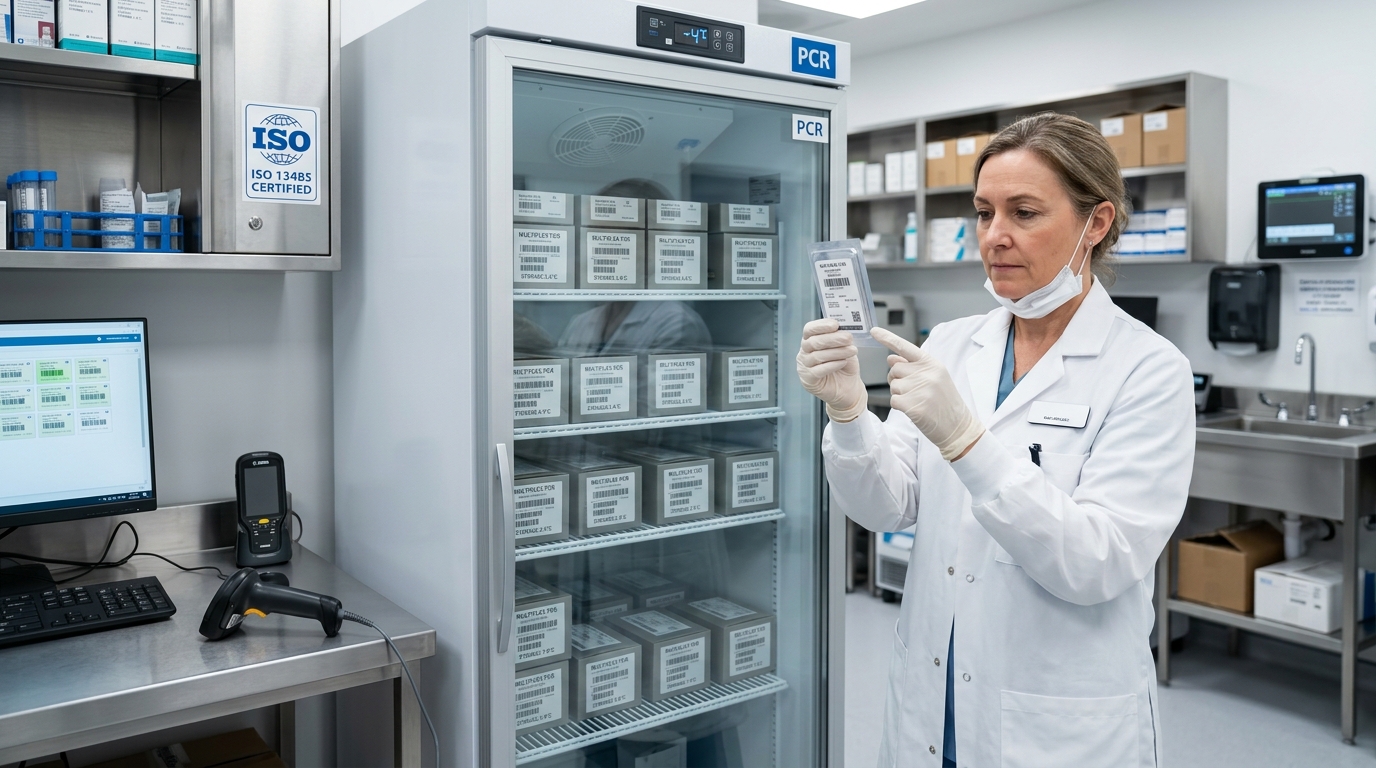
In accredited diagnostic centers throughout the UAE, molecular sample integrity ensures definitive clinical answers. Discover comprehensive upper respiratory multiplex PCR panels and pathogen testing in Dubai utilizing validated automated closed-cartridge extraction and amplification technology with zero cross-contamination risk.
The Pre-Analytical Determinants of Molecular Sensitivity
Because polymerase chain reaction technology amplifies target nucleic acid sequences exponentially, any pre-analytical degradation or inhibition severely compromises diagnostic output:
- Cellular Exfoliation vs Secretion Sampling: Most respiratory viruses (such as Influenza, RSV, and Adenoviruses) are obligate intracellular pathogens that replicate within ciliated columnar epithelial cells lining the respiratory mucosa. Simply dipping a swab into watery nasal secretions yields insufficient viral nucleic acid. The swab must firmly contact and rotate against the posterior nasopharyngeal wall to exfoliate infected intact epithelial cells.
- Chemical PCR Inhibitors: Taq DNA polymerases and reverse transcriptase enzymes are exquisitely sensitive to minute concentrations of chemical and biological inhibitors. Endogenous inhibitors (excessive mucin, whole blood, lactoferrin) and exogenous contaminants (alginate swab fibers, wooden resins, topical nasal sprays containing phenylephrine or oxymetazoline) can increase Cycle Threshold (Ct) values or cause complete amplification failure.
- Ribonuclease (RNase) Degradation: RNA viruses (SARS-CoV-2, Influenza, RSV) possess single-stranded RNA genomes that are extraordinarily vulnerable to ubiquitous environmental RNases present on human skin and laboratory surfaces. Transport media must contain protein stabilizers, buffered salts, and cryoprotectants that neutralize RNases and preserve nucleic acid integrity during transit.
Swab Material Compatibility: The Strict Rules of Molecular Collection
The physical composition of the swab tip and applicator shaft dictates diagnostic viability:
| Swab Tip Material | Applicator Shaft | PCR Suitability | Mechanism & Clinical Practice Assessment |
|---|---|---|---|
| Flocked Synthetic Nylon / Polyester (e.g., Copan FLOQSwabs) | Flexible Plastic or Thin Aluminum | GOLD STANDARD (Mandatory) | Short nylon fibers arranged perpendicularly via electrostatic flocking create an open capillary matrix. Rapidly adsorbs and elutes >95% of cellular specimen into transport buffer with zero enzyme inhibition. |
| Spun Polyester (Dacron) | Plastic | Acceptable Alternative | Inert synthetic fibers without inhibitory chemicals; slightly lower release efficiency (60%–70%) compared to flocked nylon but fully validated for PCR. |
| Calcium Alginate | Aluminum or Wire | STRICTLY PROHIBITED | Derived from seaweed; contains complex polysaccharide alginic acid polymers that strongly inhibit Taq DNA polymerase, causing total false-negative PCR failure! |
| Natural Cotton / Wool | Wooden Dowel | STRICTLY PROHIBITED | Natural cotton fibers trap cellular material; wooden shafts leach toxic resins, lignins, and formaldehydes that irreversibly inactivate molecular amplification enzymes. |
Transport Media Specifications: VTM vs UTM vs Saline
Specimens must be placed immediately into approved transport media tubes to maintain viral stability:
- Universal Transport Medium (UTM) & Viral Transport Medium (VTM):
- Formulation: Buffered physiological saline supplemented with protective proteins (gelatin or bovine serum albumin), sucrose, cryoprotectants, and antimicrobial agents (vancomycin, amphotericin B, colistin) to suppress overgrowth of normal mucosal bacterial and fungal flora.
- Standard Volume: 1.0 mL to 3.0 mL of liquid medium per collection vial.
- Clinical Advantage: Maintains viral envelope structural integrity and stabilizes both RNA and DNA genomes across wide temperature fluctuations.
- Molecular Transport Medium (MTM / Lysis Buffer):
- Formulation: Contains guanidine thiocyanate and detergents that instantly lyse viral capsids, release total nucleic acids, and completely inactivate viable pathogens at the moment of collection.
- Advantage: Eliminates biohazard risks for laboratory couriers and technicians; however, specimen cannot be utilized for subsequent viral viral culture.
- Sterile Phosphate-Buffered Saline (PBS) or 0.9% Normal Saline:
- Utility: Validated emergency alternative when commercial UTM/VTM supply chains are disrupted; requires rapid processing (<24 hours) under strict 2°C–8°C refrigeration.
Step-by-Step Collection Technique for Posterior Nasopharyngeal Swabs
To ensure high diagnostic yield without patient trauma, phlebotomists and nursing staff must execute the standardized procedure:
- Patient Positioning: Instruct patient to blow their nose gently to clear gross mucus. Tilt the patient’s head backward approximately 70 degrees to align the nasal passage directly with the posterior nasopharynx.
- Swab Insertion Plane: Insert the flexible flocked swab horizontally along the floor of the nasal cavity—parallel to the palate, NEVER upward toward the nasal bridge.
- Depth of Insertion: Advance the swab until resistance is met or the distance equals that from the patient’s nostril to the anterior ear lobe (approximately 4 to 6 cm in adults), indicating contact with the posterior nasopharyngeal wall.
- Mucosal Rotation & Contact Time: Leave the swab in place for 3 to 5 seconds to absorb secretions, then slowly rotate the swab 360 degrees 2 to 3 times to dislodge and collect epithelial cells.
- Vial Inoculation: Withdraw the swab slowly, insert the swab tip into the transport media tube, snap the plastic shaft at the molded breakpoint line, securely tighten the screw cap, and invert the tube 3 times to mix.
Sample Stability, Cold-Chain & Rejection Criteria in Dubai Labs
Specimen logistics must comply with strict CAP, ISO 15189, and DHA laboratory accreditation guidelines:
- Storage and Temperature Stability:
- Room Temperature (18°C to 25°C): Maximum 4 hours post-collection. Uncontrolled ambient UAE temperatures (>35°C–45°C during summer months) rapidly denature viral RNA within 30 minutes!
- Refrigerated Cold-Chain (2°C to 8°C): Up to 72 hours. Insulated transport cool-boxes with certified temperature data loggers must be utilized during courier transit across Dubai and Abu Dhabi.
- Frozen Storage (-70°C or Colder): If testing is delayed beyond 72 hours, specimens must be frozen at ≤-70°C. Standard domestic freezers (-20°C) must be avoided, as freeze-thaw ice crystal formation shreds viral RNA.
- Mandatory Laboratory Specimen Rejection Criteria:
- Specimens collected using calcium alginate or wooden-shaft cotton swabs.
- Unlabeled, mislabeled, or leaking specimen collection tubes.
- Specimens transported in dry tubes without transport media.
- Specimens exceeding 72 hours in transit without temperature-controlled cold-chain verification.
- Specimens containing gross particulate matter, excessive whole blood, or non-respiratory transport media (such as formalin).
Frequently Asked Questions (Clinical FAQ)
Can a simple throat (oropharyngeal) swab replace a nasopharyngeal swab for respiratory PCR?
For most respiratory viruses (including Influenza, RSV, and Parainfluenza), nasopharyngeal (NP) swabs yield significantly higher viral loads and diagnostic sensitivity than throat swabs because these viruses demonstrate a strict tropism for ciliated pseudostratified columnar epithelium of the nasopharynx. Throat swabs predominantly sample non-ciliated squamous epithelium. However, for combined multiplex panels, combining an anterior nasal swab and an oropharyngeal swab into a single transport tube is an approved alternative when NP swabbing is contraindicated.
What is the endogenous internal control and why does it fail?
Every accredited respiratory multiplex PCR panel includes an internal control target (such as the human RNase P gene). If the patient swab was swiped only in air, collected pure mucus without cells, or contained PCR inhibitors, the RNase P amplification curve will fail (Ct > 35 or flatline). The laboratory automated analyzer flags the test as “Invalid / Specimen Quality Unsatisfactory,” requiring mandatory recollect.
Do nasal sprays or decongestants interfere with PCR test results?
Yes. Over-the-counter nasal sprays containing oxymetazoline, phenylephrine, fluticasone, or saline rinses with benzalkonium chloride can inhibit PCR enzymes or dilute viral load if used within 2 hours prior to swabbing. Patients should avoid administering topical nasal medications immediately before sample collection.
Authoritative Clinical References
- Centers for Disease Control and Prevention (CDC) — Guidelines for Collecting and Handling Clinical Specimens for Respiratory Virus Detection
- World Health Organization (WHO) — Laboratory Biosafety and Diagnostic Guidance for Respiratory Viruses
- College of American Pathologists (CAP) — Molecular Pathology and Pre-Analytical Specimen Acceptance Checklists