
Male vs Female Fertility Tests Compared: Semen Analysis vs AMH/Ovarian Reserve, Costs & Dubai Couple Diagnostic Workups
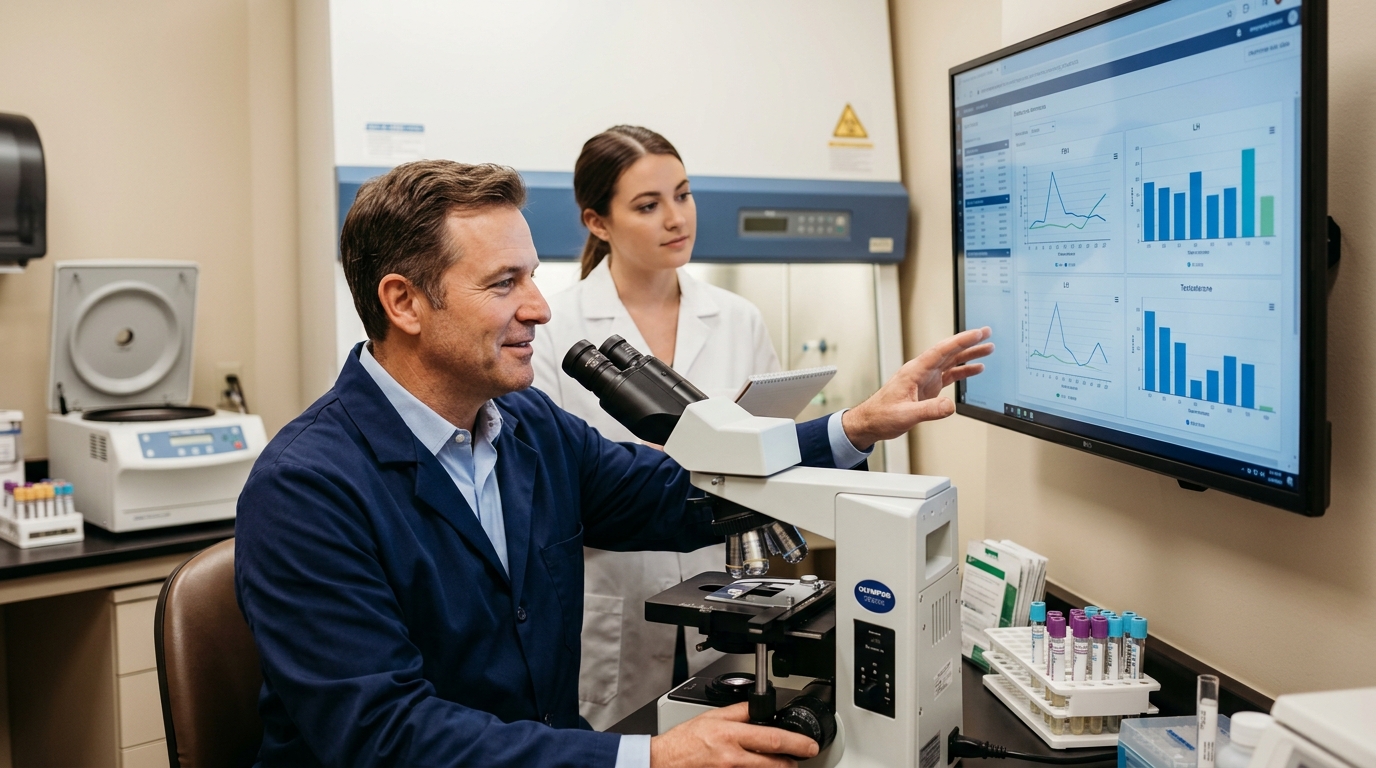
In specialized medical centers throughout Dubai and Abu Dhabi, parallel evaluation of both partners accelerates the path to conception. Couples and physicians can book comprehensive male and female fertility testing packages in Dubai delivering certified andrology semen profiling, AMH ovarian reserve testing, and advanced endocrine workups under expert clinical guidance.
Etiological Balance: Why Both Partners Must Be Tested Simultaneously
Understanding the proportional causes of subfertility justifies an immediate, dual-investigation strategy:
- Female Factors (~40% of cases): Ovulatory dysfunction (PCOS, hypothalamic amenorrhea, hyperprolactinemia) accounting for 25%–30%; tubal obstruction and pelvic adhesions (salpingitis, pelvic inflammatory disease, past appendicitis) accounting for 20%–30%; endometriosis accounting for 10%–15%; uterine cavity abnormalities (submucosal fibroids, endometrial polyps, intrauterine synechiae / Asherman’s syndrome); and diminished ovarian reserve (advanced maternal age).
- Male Factors (~40% of cases): Impaired spermatogenesis or sperm transport, manifesting as severe oligozoospermia (<15 million/mL), asthenozoospermia (<40% motility), teratozoospermia (<4% normal morphology), or azoospermia (zero sperm in ejaculate). Underlying drivers include clinical varicoceles (present in 40% of subfertile men), endocrine hypogonadism, Y-chromosome microdeletions, and lifestyle factors.
- Combined & Unexplained Factors (~20% of cases): Both partners exhibit minor subfertile parameters that synergize to impair fecundity, or standard diagnostic workups remain entirely normal, requiring advanced gamete functional assays.
Comparative Diagnostic Matrix: Male vs Female Workups
The core clinical investigations, diagnostic targets, timing rules, and invasiveness levels are compared below:
| Diagnostic Domain | Male Fertility Investigation | Female Fertility Investigation |
|---|---|---|
| Primary First-Line Test | Comprehensive Semen Analysis (Computer-Assisted Semen Analysis – CASA adhering to WHO 6th Edition manuals) | Ovarian Reserve Blood Panel (Anti-Müllerian Hormone [AMH], Day 2–4 FSH, LH, Estradiol [E2]) + Transvaginal Ultrasound |
| Key Biomarkers / Parameters | Semen volume (≥1.4 mL), total sperm count (≥39 million), concentration (≥16 million/mL), total motility (≥42%), progressive motility (≥30%), normal Kruger morphology (≥4.0%), vitality (≥54%) | AMH (>1.5–4.0 ng/mL), Basal FSH (<10 IU/L), Basal E2 (<50 pg/mL), Antral Follicle Count (AFC ≥10–12 total across both ovaries), mid-luteal Progesterone (>10 ng/mL confirming ovulation) |
| Optimal Testing Timing | After 2 to 7 days of strict ejaculatory abstinence (3 to 5 days optimal). No menstrual cycle constraints. | Strict Cycle Timing: Basal FSH/LH/E2 on Cycle Days 2 to 4; Mid-Luteal Progesterone on Cycle Day 21 (or 7 days prior to expected menses); AMH on any day. |
| Invasiveness Level | Completely Non-Invasive (Masturbation collection into sterile container; performed on-site or delivered within 45–60 min at body temperature) | Minimally to Moderately Invasive (Venous phlebotomy blood draw; transvaginal ultrasonography; radiographic Hysterosalpingography [HSG]) |
| Structural / Anatomical Evaluation | Scrotal color Doppler ultrasound (for varicocele grading ≥2.5–3.0 mm, testicular volume, epididymal cysts, hydroceles) | Hysterosalpingography (HSG) or HyCoSy (tubal patency); 3D Transvaginal Ultrasound or Saline Infusion Sonohysterography (SIS) for uterine cavity mapping |
| Advanced Second-Line Tests | Sperm DNA Fragmentation Index (DFI) via TUNEL or SCSA assays (DFI >20%–30% indicates oxidative DNA damage); Y-chromosome microdeletions (AZFa/b/c); Karyotyping | Diagnostic laparoscopy with chromopertubation (gold standard for endometriosis and peritoneal adhesions); hysteroscopy; endometrial receptivity analysis (ERA) |
| Turnaround Time (TAT) | 2 to 24 Hours | Blood results: 24–48 Hours; Imaging and specialized procedures: 1 to 2 Weeks depending on cycle timing |
The Diagnostic Timeline: Synchronized Workflow
To avoid prolonged emotional exhaustion and financial burden, couples in Dubai should pursue a structured, phased evaluation:
- Phase 1: Semen Analysis + Female Ovarian Reserve Bloods (Week 1): The male partner provides a semen sample for comprehensive CASA analysis. Simultaneously, the female partner undergoes a serum AMH test and thyroid/prolactin screening. Because semen analysis is completely non-invasive and provides an immediate answer for 50% of the fertility equation, it should NEVER be delayed while waiting for complex female tests!
- Phase 2: Ovulation Confirmation & Antral Follicle Count (Cycle Month 1): Transvaginal ultrasound performed during early follicular phase (Cycle Days 2 to 5) calculates Antral Follicle Count (AFC) and examines uterine morphology. Day 21 mid-luteal serum progesterone confirms whether spontaneous ovulation is occurring.
- Phase 3: Tubal Patency & Anatomical Mapping (Cycle Month 2): Following cessation of menstrual flow (Cycle Days 6 to 10), Hysterosalpingography (HSG) or Hysterosalpingo-Contrast-Sonography (HyCoSy) assesses bilateral fallopian tube patency and uterine cavity contour, ruling out tubal obstruction (hydrosalpinx) or congenital uterine anomalies.
- Phase 4: Advanced Specialization (If Indicated): If semen parameters demonstrate recurrent abnormalities, male referral to a reproductive andrologist triggers scrotal Doppler ultrasound and Sperm DNA Fragmentation Index (DFI). If female tubal imaging or ultrasound suggests severe endometriosis or pelvic adhesions, reproductive endocrinology referral discusses diagnostic laparoscopy or primary In Vitro Fertilization (IVF).
Cost Considerations and Diagnostic Efficiency in Dubai
Understanding cost architecture helps couples navigate diagnostic choices effectively:
- Male Semen Analysis: Represents the single most cost-effective diagnostic test in reproductive medicine, generally ranging from AED 350 to AED 800 across accredited laboratories in Dubai. Advanced Sperm DNA Fragmentation testing adds approximately AED 800 to AED 1,500.
- Female Comprehensive Endocrine Panels: Combining AMH, FSH, LH, Estradiol, Progesterone, Prolactin, and TSH typically costs between AED 900 and AED 1,800.
- Female Anatomical Imaging: Transvaginal pelvic ultrasound (AED 500–900) and HSG radiographic tubal assessment (AED 1,200–2,500).
- The “Semen First” Golden Rule: Unnecessary or premature laparoscopic surgeries or expensive hormonal treatments in the female partner are frequently avoided simply by performing a timely, high-quality semen analysis that detects severe male factor subfertility early.
Frequently Asked Questions (Clinical FAQ)
Can a man have a normal semen analysis but still be infertile?
Yes. Approximately 15% of men with unexplained infertility exhibit completely normal standard semen parameters (count, motility, and morphology) under light microscopy. However, specialized testing may reveal a high Sperm DNA Fragmentation Index (DFI >30%), reactive oxygen species (ROS) oxidative stress, or acrosome reaction defects that prevent the sperm from penetrating and fertilizing the oocyte.
Does a high AMH level guarantee pregnancy in women?
No. AMH is a quantitative marker of ovarian reserve—it indicates how many eggs remain in the ovarian antral follicle pool, but it does not measure egg quality. Furthermore, an extremely high AMH (>5.0 ng/mL) is a hallmark of Polycystic Ovary Syndrome (PCOS), where ovulation is chronically arrested. Pregnancy also requires patent fallopian tubes, an anatomically receptive endometrium, and viable sperm.
Why must a semen analysis be repeated after a 2 to 3 month interval?
Human spermatogenesis takes approximately 64 to 74 days from germ cell division to mature spermatozoon release. Temporary physiological insults (such as high febrile illness, COVID-19, acute psychological stress, antibiotic courses, or sauna exposure) can transiently suppress semen parameters. Therefore, a single abnormal semen analysis must never be considered definitive; international guidelines mandate repeating the test 4 to 12 weeks later before establishing a permanent diagnosis.
Authoritative Clinical References
- World Health Organization (WHO) — Laboratory Manual for the Examination and Processing of Human Semen (6th Edition)
- American Society for Reproductive Medicine (ASRM) — Diagnostic Evaluation of the Infertile Female: Practice Committee Opinion
- European Society of Human Reproduction and Embryology (ESHRE) — Evidence-Based Clinical Guidelines on Infertility and Gamete Evaluation