
Respiratory Diagnostic Algorithms for Outpatient Clinics: POC Antigen vs Molecular PCR & Dubai Antimicrobial Stewardship
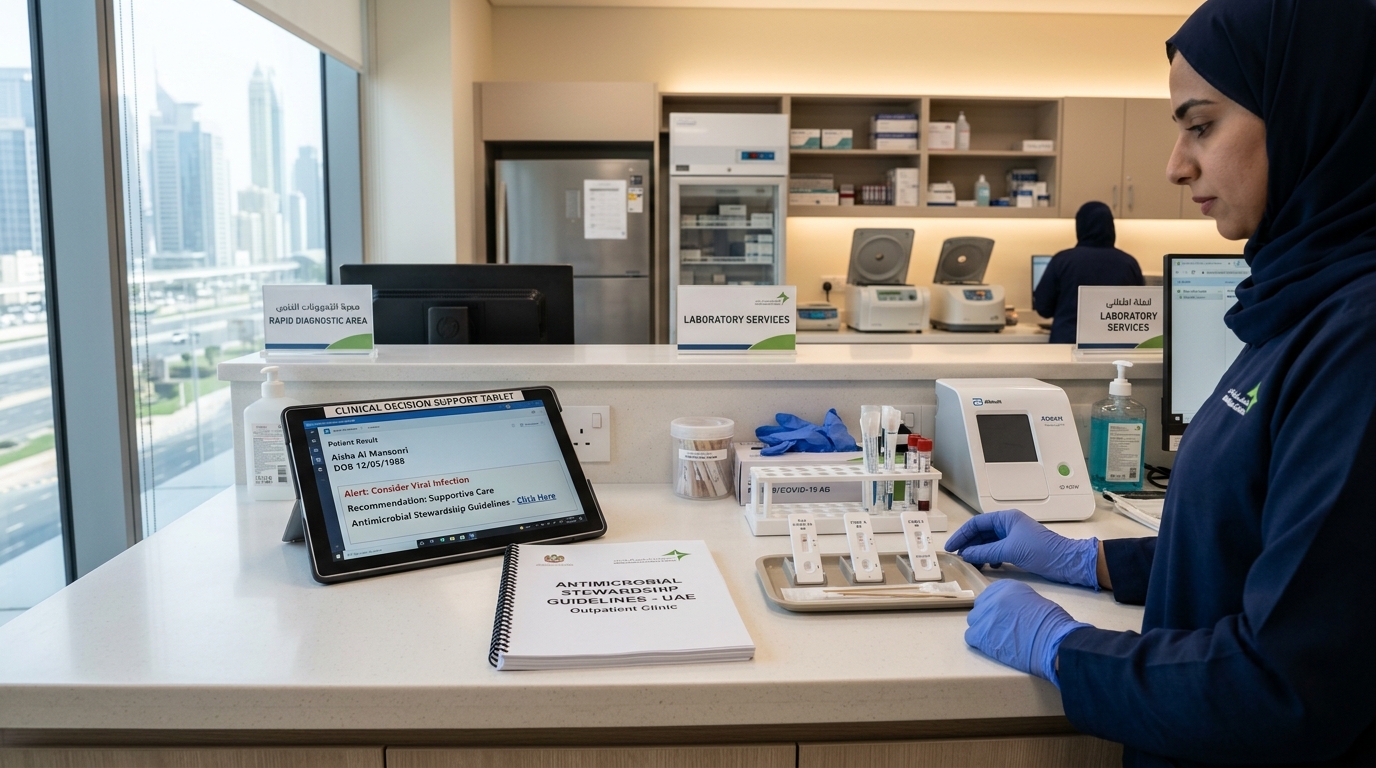
In polyclinics and diagnostic centers across Dubai, Abu Dhabi, and Sharjah, structured diagnostic pathways empower clinical teams to deliver precise care. Review our certified CE-IVD respiratory rapid test kits and point-of-care combo cassettes in Dubai designed for rapid 15-minute triage and seamless clinic workflow integration.
The Clinical Crisis of Empiric ARTI Management
Why outpatient medical leadership must replace unstructured empiric prescribing with objective diagnostic algorithms:
- The Overprescription Reality: Up to 90% of acute bronchitis, non-streptococcal pharyngitis, and viral upper respiratory tract infections are caused by viruses against which antibiotics have zero pharmacological efficacy. Yet, without point-of-care testing, outpatient clinicians prescribe antibiotics to over 60% to 70% of symptomatic patients due to diagnostic uncertainty, time constraints, and patient expectations.
- The Antimicrobial Resistance (AMR) Escalation: Widespread empiric use of broad-spectrum macrolides (Azithromycin) and beta-lactam/clavulanate combinations accelerates the emergence of multidrug-resistant pathogens, including penicillin-resistant Streptococcus pneumoniae, macrolide-resistant Mycoplasma, and beta-lactamase-producing organisms.
- Missed Antiviral Opportunities: Empiric antibiotic prescribing frequently delays or misses targeted antiviral opportunities: Oseltamivir for Influenza within 48 hours or Paxlovid for high-risk COVID-19 within 5 days, resulting in preventable hospitalizations.
Two-Tiered Outpatient Respiratory Triage Architecture
An evidence-based diagnostic framework categorizes patients through a structured decision tree:
| Diagnostic Tier | Clinical Criteria & Target Population | Diagnostic Tool Utilized | Turnaround Time & Clinical Action |
|---|---|---|---|
| Tier 1: Immediate POC Screening | Ambulatory patients of all ages presenting with acute febrile respiratory symptoms (≤3 days onset) and normal vital signs (SpO2 ≥95%, hemodynamically stable) | Multiplex Lateral Flow Rapid Antigen Cassettes (COVID-19 + Flu A/B Combo; Rapid Strep A Dipstick for pharyngitis with Centor Score ≥3) | 15 Minutes on-site at triage. If positive: prescribe targeted antivirals or penicillin/amoxicillin for confirmed Strep A; initiate infection control. Zero unnecessary antibiotics! |
| Tier 2: Reflex Molecular PCR Escalation | High-risk patients: immunocompromised, elderly (>65 years), chronic cardiopulmonary disease (COPD, severe asthma), infants <6 months; OR patients with worsening symptoms despite negative Tier 1 rapid test | Syndromic Multiplex Respiratory RT-PCR Panel (Automated closed cartridge or central lab 15–24 pathogen panel) | 1 to 4 Hours. Identifies atypical bacteria (Mycoplasma, Bordetella), less common viral etiologies (RSV, Metapneumovirus, Adenovirus, Parainfluenza), and provides Ct viral load quantification. |
| Tier 3: Red-Flag Critical Referral | Patients with tachypnea (RR >28/min), hypoxemia (SpO2 <92%), altered mental status, severe pleuritic chest pain, or suspected sepsis | Immediate Chest Radiograph / CT + Arterial Blood Gas + Emergency Transfer | Immediate ED transfer; blood cultures and broad-spectrum parenteral coverage for community-acquired pneumonia (CAP) / ARDS. |
The Pharyngitis Decision Pathway: Centor Criteria & Rapid Strep A
Outpatient sore throat consultations must adhere to standardized risk stratification before prescribing antibiotics:
- Step 1: Calculate the Modified Centor / McIsaac Score:
- Absence of cough (+1 point)
- Tonsillar exudates or swelling (+1 point)
- Tender anterior cervical lymphadenopathy (+1 point)
- Fever > 38.0°C (+1 point)
- Age: 3–14 years (+1 point); 15–44 years (0 points); ≥45 years (-1 point)
- Step 2: Algorithmic Action Based on Score:
- Score 0 to 1: Risk of Group A Strep (GAS) is <10%. Do NOT test; do NOT treat with antibiotics. Provide symptomatic analgesia (Ibuprofen / Paracetamol).
- Score 2 to 3: Intermediate risk (15%–30%). Perform Rapid Strep A Antigen Test. Treat with antibiotics only if rapid antigen test is positive!
- Score 4 to 5: High risk (>50%). Perform Rapid Strep A Antigen Test. In children and adolescents, if rapid test is negative, reflex throat culture or molecular Strep PCR is recommended due to rapid test sensitivity limits (85%–90%).
Antimicrobial Stewardship Metrics in Dubai Polyclinics
Clinical directors can measure the tangible impact of algorithmic diagnostic implementation using key performance indicators (KPIs):
- Antibiotic Prescription Rate for Viral ARTI: Target <10% of total non-pneumonic respiratory consultations, down from historical benchmarks of 50%–70%.
- POC Diagnostic Utilization Rate: Percentage of febrile respiratory presentations undergoing an objective diagnostic test prior to antibiotic issuance (Target >90%).
- Diagnostic Concordance: Proportion of antibiotic prescriptions supported by a laboratory-confirmed bacterial pathogen (Target >85%).
- Patient Satisfaction & Consultation Time: Demonstrating objective negative test results on a visual cassette significantly enhances patient satisfaction and compliance with symptomatic care plans without extending clinic visit duration beyond 20 minutes.
Operationalizing Rapid Testing into Clinic Workflow
To implement seamless testing without causing bottlenecks in busy outpatient practices:
- Nurse-Initiated Triage Protocol: Stationed triage nurses identify patients meeting respiratory inclusion criteria (fever + cough + sore throat) and perform the anterior nasal swab immediately upon arrival in the intake room, before physician examination.
- 15-Minute Incubation Alignment: By the time the physician enters the examination room to conduct physical auscultation, the 15-minute cassette incubation has concluded, placing the objective test result directly into the doctor’s hands at the moment of clinical decision-making.
- Digital EHR Integration: Modern POC readers interface directly via HL7 or FHIR protocols with Electronic Health Record (EHR) systems (such as Epic, Malaffi, or Nabidh in the UAE), eliminating manual transcription errors and ensuring automated public health communicable disease reporting.
Frequently Asked Questions (Clinical FAQ)
What should a clinician do if a patient demands antibiotics for a viral infection?
Having an objective point-of-care test result (e.g., a visible negative Strep A line or positive Influenza A band) transforms the clinical conversation. Showing the patient their objective test result and explaining that antibiotics have zero effect on viruses—while actively prescribing aggressive symptom-relief medications (NSAIDs, saline rinses, decongestants, throat sprays)—satisfies patient expectations while upholding antimicrobial stewardship.
When should a clinic invest in point-of-care PCR rather than lateral flow antigen tests?
Lateral flow antigen tests are ideal for high-volume, low-cost screening of acute symptomatic patients during peak epidemic seasons. However, clinics serving high-risk populations (pediatric subspecialty clinics, oncology centers, geriatrics, urgent care centers connected to inpatient wards) benefit greatly from rapid POC PCR instruments (such as BioFire FilmArray or Cepheid GeneXpert), which deliver laboratory-grade PCR sensitivity within 30 to 60 minutes for complex, immunocompromised patients.
Can C-Reactive Protein (CRP) testing help guide respiratory antibiotic decisions?
Yes. Many European and international outpatient guidelines incorporate point-of-care fingerstick quantitative CRP into respiratory algorithms: a CRP <20 mg/L strongly argues against bacterial pneumonia and contraindicates antibiotics; a CRP between 20 and 100 mg/L suggests delayed “watch and wait” prescription; while a CRP >100 mg/L indicates severe bacterial infection or high-risk pneumonia requiring antibiotic therapy.
Authoritative Clinical References
- World Health Organization (WHO) — Antimicrobial Stewardship Programs in Health-Care Facilities in Low- and Middle-Income Settings
- Centers for Disease Control and Prevention (CDC) — Core Elements of Outpatient Antibiotic Stewardship
- Infectious Diseases Society of America (IDSA) — Clinical Practice Guidelines for the Management of Community-Acquired Respiratory Infections