
Lower Respiratory Pathogens & AMR PCR Specimen Requirements: Sputum vs BAL, Rejection Criteria & Dubai Hospital Lab Standards
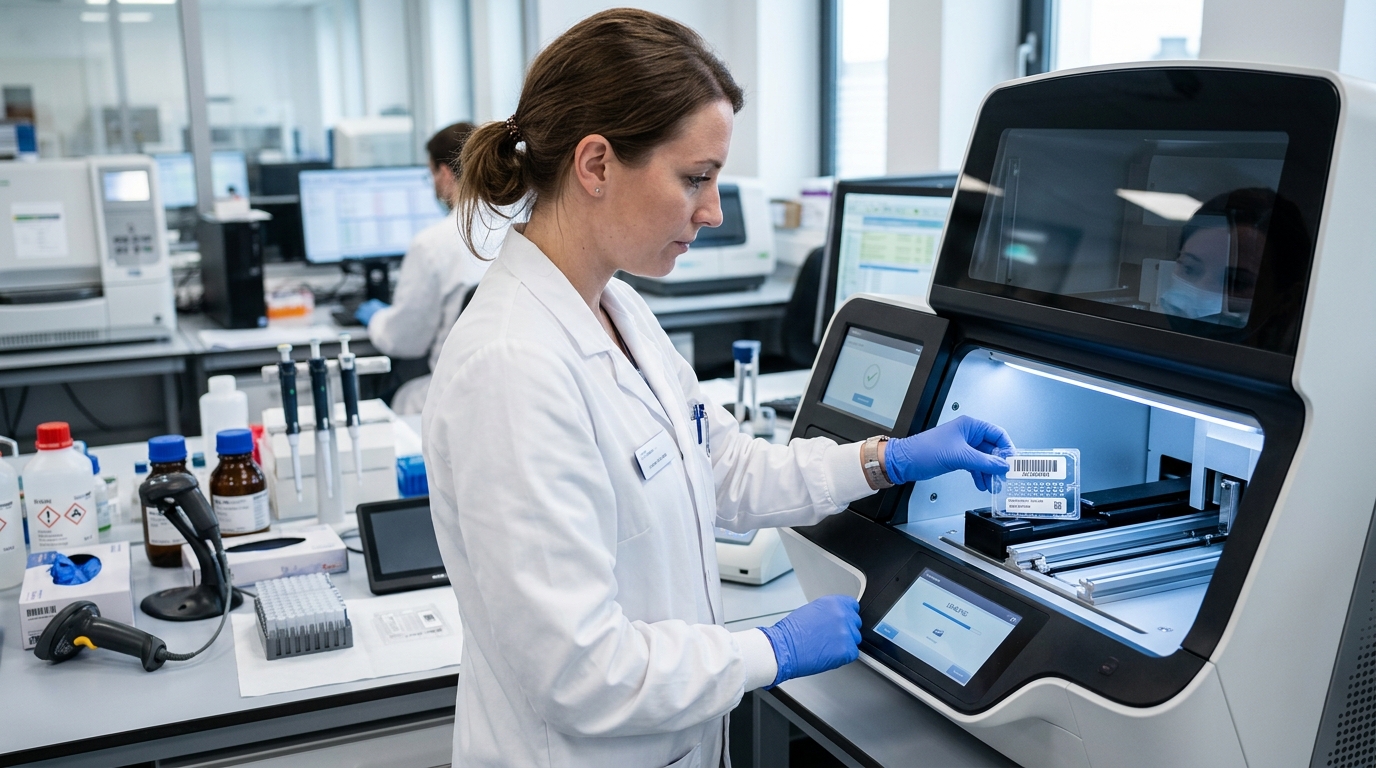
In tertiary hospitals and diagnostic networks throughout the UAE, molecular respiratory diagnostics accelerate targeted therapy. Explore syndromic lower respiratory multiplex PCR panels and AMR profiling in Dubai engineered for automated closed-cartridge processing and sub-hour turnaround times.
The Pre-Analytical Challenge: Colonization vs True Parenchymal Infection
Unlike upper respiratory nasopharyngeal swabs, evaluating lower respiratory secretions requires strict discrimination between oropharyngeal salivary contamination and deep alveolar secretions:
- The Salivary Contamination Problem: Normal human saliva contains 10^8 to 10^9 commensal organisms per milliliter (including oral streptococci, Neisseria, and anaerobes). If a patient expectorates oral saliva rather than deep sputum, multiplex PCR will amplify these commensal targets, generating false-positive pathogen calls and misleading clinicians into prescribing unnecessary antibiotics.
- The Ultra-Sensitivity of PCR: Because multiplex PCR platforms possess analytical limits of detection down to 10^2 to 10^3 DNA copies/mL, even microscopic salivary cross-contamination will be flagged as positive. Therefore, pre-analytical microscopic screening (Bartlett’s or Murray-Washington criteria) is mandatory prior to molecular testing!
- Semiquantitative Molecular Reporting: Modern lower respiratory PCR platforms (such as BioFire FilmArray Pneumonia Panel) report bacterial concentrations semiquantitatively (in genomic bins: 10^4, 10^5, 10^6, ≥10^7 copies/mL). Concentrations ≥10^6–10^7 copies/mL strongly correlate with true clinical pneumonia, whereas 10^4 copies/mL often reflects asymptomatic mucosal colonization.
Specimen Types: Expectorated Sputum vs Endotracheal Aspirate vs BAL
The collection methodologies, anatomical sources, and clinical indications for lower respiratory specimens are compared below:
| Specimen Modality | Collection Technique & Anatomical Target | Diagnostic Quality & Clinical Setting | Pre-Analytical Rejection Criteria |
|---|---|---|---|
| Expectorated Sputum | Deep, vigorous cough following oral rinse with sterile water; collected into sterile, wide-mouth screw-top container | Ambulatory patients or non-intubated ward patients with community-acquired pneumonia | Rejected if >10 Squamous Epithelial Cells (SEC) per low-power field (100x), indicating pure saliva! |
| Endotracheal Aspirate (ETA) | Sterile suction catheter inserted into endotracheal tube in mechanically ventilated ICU patients; secretions trapped in in-line Lukens trap | Intubated ICU patients with suspected Hospital-Acquired or Ventilator-Associated Pneumonia (HAP/VAP) | Volume <1.0 mL; dry traps; specimens collected without sterile suction technique; excessive saline dilution (>5 mL) |
| Bronchoalveolar Lavage (BAL) | Flexible bronchoscopy wedged into subsegmental bronchus; instillation and gentle aspiration of 100–150 mL sterile saline | GOLD STANDARD for ICU pneumonia, non-resolving infiltrates, and immunocompromised patients | Unwedged bronchial washing (saline return <20%); total volume <5 mL; transport delay >2 hours without refrigeration |
| Mini-BAL / Non-Bronchoscopic Lavage | Blind insertion of double-lumen catheter into distal airway by trained ICU nurse or respiratory therapist | Cost-effective alternative to bronchoscopy in mechanically ventilated patients | Catheter tip contamination; volume <2 mL of recovered aspirate |
Microscopic Screening: The Murray-Washington & Bartlett Criteria
Before any expectorated sputum specimen is subjected to molecular extraction, certified microbiology technicians must perform a Gram stain screen:
- Murray-Washington Classification (100x Low Power Field):
- Group 1: >25 Squamous Epithelial Cells (SEC), <10 Polymorphonuclear Leukocytes (PMNs). Action: Immediate specimen rejection (Saliva).
- Group 2: >25 SEC, 10–25 PMNs. Action: Immediate specimen rejection.
- Group 3: >25 SEC, >25 PMNs. Action: Specimen rejected in accredited labs.
- Group 4: 10–25 SEC, >25 PMNs. Action: Borderline quality; evaluate clinical acuity.
- Group 5 (Ideal Sputum): <10 SEC, >25 PMNs. Action: Accepted for molecular PCR and culture. Represents pure lower bronchial exudate!
- Exemption for Invasive Samples: Bronchoalveolar Lavage (BAL) and Endotracheal Aspirates (ETA) are exempt from epithelial cell rejection rules because they bypass the oropharyngeal cavity.
Antimicrobial Resistance (AMR) Gene Targets Detected
Syndromic panels simultaneously identify critical genetic determinants of therapeutic resistance:
- Methicillin Resistance (mecA/mecC & MREJ): Confirms Methicillin-Resistant Staphylococcus aureus (MRSA), rendering all standard penicillins and cephalosporins ineffective and indicating Vancomycin or Linezolid therapy.
- Carbapenemase Resistance Genes:
- blaKPC: Klebsiella pneumoniae carbapenemase (Class A serine carbapenemase). Inhibited by novel beta-lactamase inhibitors: Ceftazidime-Avibactam or Meropenem-Vaborbactam.
- blaNDM, blaVIM, blaIMP: Metallo-beta-lactamases (MBLs / Class B). Cleave all beta-lactams including carbapenems; resistant to avibactam and vaborbactam. Requires combination therapy (Ceftazidime-Avibactam + Aztreonam) or Cefiderocol.
- blaOXA-48-like: Class D carbapenemase prevalent in the Middle East and Mediterranean region.
- Extended-Spectrum Beta-Lactamase (ESBL – blaCTX-M): Confirms resistance to 3rd generation cephalosporins (Ceftriaxone, Ceftazidime), requiring carbapenem (Meropenem) therapy.
Sample Stability, Cold-Chain and Dubai Laboratory Workflow
Specimens must adhere to strict post-collection logistics:
- Viscous Sputum Processing (Mucolytics): Extremely thick, purulent sputum must be treated with equal volumes of dithiothreitol (DTT / Sputolysin) or N-acetylcysteine (NAC) and vortexed for 15 minutes to liquefy mucus polymers prior to automated cartridge pipetting.
- Temperature Control: Lower respiratory specimens must arrive in the laboratory within 2 hours at room temperature, or within 24 hours when maintained at 2°C to 8°C. In UAE summer climates, insulated cooler transport with calibrated temperature data loggers is legally required.
Frequently Asked Questions (Clinical FAQ)
Why did the laboratory reject my patient’s sputum sample as “saliva”?
Under College of American Pathologists (CAP) standards, a microscopic Gram stain is performed on every expectorated sputum sample before testing. If the technician sees more than 10 to 25 Squamous Epithelial Cells (SEC) per low-power field, the sample originated from the mouth and saliva rather than the lungs. Testing saliva produces inaccurate results and misguides antibiotic prescribing, so a new deep-cough sample is required.
If the PCR detects an AMR gene, does it tell me which specific bacteria carries it?
In polymicrobial respiratory specimens containing multiple bacteria, standard multiplex PCR detects the presence of the resistance gene (e.g., blaNDM or blaCTX-M) in the total pool of extracted DNA, but cannot definitively link the gene to a specific host bacterium. However, if a dangerous carbapenemase gene is present alongside a high-titer pathogen (e.g., Klebsiella at 10^7 copies/mL), clinicians must treat the patient assuming that organism is resistant.
How does molecular PCR for lower respiratory infections reduce ICU stay?
Traditional bacterial culture takes 48 to 72 hours to identify organisms and determine drug susceptibility. Syndromic PCR delivers comprehensive pathogen identification and AMR gene profiling within 60 minutes. This allows ICU teams to discontinue broad-spectrum toxic empiric antibiotics (e.g., Vancomycin + Meropenem) early if no MRSA or carbapenemase genes are detected, reducing renal toxicity and ICU duration.
Authoritative Clinical References
- Infectious Diseases Society of America (IDSA) / ATS — Guidelines on the Management of Adults with HAP and VAP
- College of American Pathologists (CAP) — Microbiology and Molecular Pathology Specimen Acceptance Standards
- World Health Organization (WHO) — Diagnostic Stewardship and Molecular Detection of Antimicrobial Resistance