
Blood Culture Gram-Positive PCR Panel: Rapid Sepsis Identification, MRSA mecA vs MSSA Discrimination & UAE Critical Care Stewardship
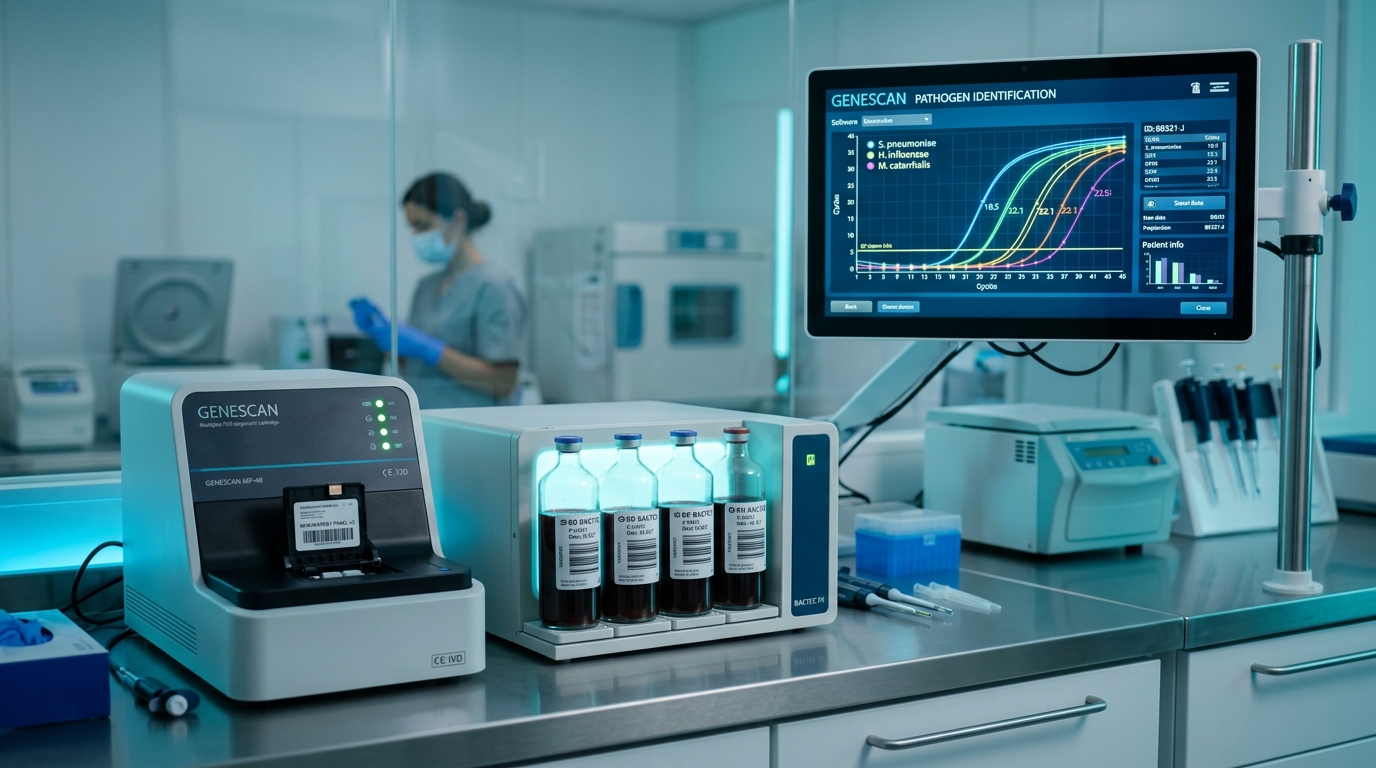
In tertiary care hospitals and trauma centers throughout Dubai, Abu Dhabi, and the wider UAE, deploying automated bloodstream infection molecular panels dramatically reduces sepsis mortality and prevents vancomycin overuse. Procuring certified professional molecular diagnostic and PCR systems in Dubai ensures hospital laboratories deploy assays compliant with international quality and safety benchmarks.
The Sepsis Emergency: Breaking the 72-Hour Culture Bottle-Neck
In severe bloodstream infections, the diagnostic timeline has historically dictated patient outcomes:
- Hour 0 to 24 (Bottle Incubation): Blood culture bottles (aerobic/anaerobic) incubate in automated cabinets. When microbial metabolism produces CO2, the bottle flags positive.
- Traditional Workflow Delay (Hour 24 to 72): The lab performs a Gram stain (e.g., “Gram-positive cocci in clusters”). Because exact identification and resistance profiles are unknown, the physician must continue broad-spectrum empiric Vancomycin or Daptomycin. Subculturing on agar plates takes 24 hours, followed by automated AST taking another 24 hours (total 48–72 hours).
- The Molecular Breakthrough (Hour 24 to 26): As soon as the bottle flags positive and Gram stain confirms Gram-positive morphology, a 1 mL aliquot is injected into a multiplex PCR cartridge. Within 60 to 75 minutes, the panel reports the exact organism genus/species and resistance genes, shortening time-to-optimal-targeted-therapy by over 40 hours!
Core Target Portfolio: Organisms and Resistance Genes
Standard multiplex Gram-positive blood culture panels (e.g., BioFire BCID2, GenMark ePlex, Cepheid GeneXpert) target the primary pathogens responsible for bacteremia:
| Pathogen / Marker Category | Specific Molecular Targets | Clinical Significance & Pathogenicity | Mandated Clinical Action |
|---|---|---|---|
| Staphylococci | Staphylococcus aureus, S. epidermidis, S. lugdunensis, CoNS | Differentiates highly virulent S. aureus and S. lugdunensis from harmless skin contaminants (Coagulase-Negative Staphylococci [CoNS]). | If CoNS is detected in 1 of 2 bottle sets without mecA, Vancomycin can be safely discontinued as a contaminant. |
| Methicillin Resistance (MRSA) | mecA, mecC, and mreA (MREJ junction) | Encodes modified Penicillin-Binding Protein 2a (PBP2a), conferring resistance to all beta-lactams except ceftaroline. | MSSA (mecA Negative): Immediately de-escalate Vancomycin to Cefazolin/Cloxacillin; MRSA (mecA Positive): Continue Vancomycin/Daptomycin. |
| Streptococci | Streptococcus pneumoniae, S. pyogenes (Group A), S. agalactiae (Group B), Streptococcus anginosus group, viridans group | Major causes of lobar pneumonia sepsis, necrotizing fasciitis, neonatal bacteremia, and deep occult abscesses. | Allows immediate targeted therapy with high-dose intravenous Penicillin G or Ceftriaxone, sparing reserve agents. |
| Enterococci & Vancomycin Resistance | Enterococcus faecalis, Enterococcus faecium + vanA and vanB genes | E. faecalis is typically ampicillin-susceptible; E. faecium is frequently ampicillin-resistant and vancomycin-resistant (VRE). | Detection of vanA/B triggers immediate switch to Linezolid or Daptomycin and enforecs strict contact isolation. |
| Listeria & Anaerobes | Listeria monocytogenes | Critical foodborne pathogen in neonates, elderly, and immunocompromised hosts; resistant to cephalosporins. | Immediately mandates intravenous Ampicillin, which is not part of routine empiric sepsis regimens. |
The Stewardship Masterstroke: Vancomycin De-Escalation
The single greatest clinical and pharmacoeconomic victory of the Gram-positive blood culture panel is rapid de-escalation from Vancomycin to Cefazolin in Methicillin-Susceptible Staphylococcus aureus (MSSA) bacteremia:
- The Clinical Evidence: For MSSA bacteremia, beta-lactams (Cefazolin or Oxacillin/Cloxacillin) are clinically vastly superior to Vancomycin. Meta-analyses demonstrate that continuing Vancomycin for MSSA results in a twofold higher mortality rate, higher relapse rates, and significantly higher acute kidney injury (nephrotoxicity) compared to beta-lactam therapy.
- Immediate Actionability: Within 1 hour of blood culture positivity, detecting S. aureus with a negative mecA/C gene gives clinicians the confidence to immediately stop Vancomycin and start Cefazolin, saving lives and protecting renal function days before phenotypic AST is completed.
Contaminant Recognition: Halting Overtreatment of CoNS
Coagulase-Negative Staphylococci (Staphylococcus epidermidis, S. hominis) represent normal skin flora and are the commonest blood culture contaminants, accounting for up to 30% to 50% of positive blood culture bottles due to improper phlebotomy skin antisepsis:
Without rapid molecular panels, patients with contaminated blood bottles are routinely hospitalized and treated with unnecessary empiric intravenous Vancomycin for 3 to 4 days while awaiting culture identification. Rapid molecular identification of CoNS in a stable patient without prosthetic heart valves or central venous catheters allows infectious disease teams to immediately cancel Vancomycin orders, saving thousands of dollars per patient and preventing hospital-acquired complications.
Regulatory Mandates & Laboratory Accreditation
Under international accreditation standards (ISO 15189:2022 and College of American Pathologists [CAP]):
- Critical Value Notification: Blood culture Gram stain and rapid PCR results are legally mandated critical laboratory values requiring immediate verbal telephone escalation to the treating physician within 15 minutes, documented with full read-back verification.
- Diagnostic Stewardship Integration: Best practice models integrate automated antimicrobial stewardship pager or electronic medical record (EMR) alerts that prompt clinicians with standardized dosing and de-escalation algorithms upon molecular result release.
Frequently Asked Questions (FAQ)
Can a blood culture PCR panel be run directly on whole blood without incubating the bottle?
Generally, no. Bacterial concentrations in circulating whole blood during sepsis are exceptionally low (often 1 to 10 colony-forming units per milliliter [CFU/mL]). Blood must first incubate in blood culture bottles until microbial proliferation reaches approximately 107 to 108 CFU/mL to trigger the bottle sensor and provide sufficient template DNA for rapid PCR.
What is the clinical significance of detecting both Staphylococcus aureus and mecA in a polymicrobial bottle?
If a blood culture bottle contains both S. aureus and a coagulase-negative staphylococcus (e.g., S. epidermidis) alongside the mecA gene, the molecular test cannot definitively determine whether the resistance gene belongs to the S. aureus (making it MRSA) or to the harmless CoNS. Clinicians must treat the patient for MRSA until subculture AST separates the two organisms.
Why is Listeria monocytogenes detection so critical on this panel?
Listeria monocytogenes is intrinsically resistant to all cephalosporins (including Ceftriaxone and Cefepime). Because cephalosporins are the primary empiric therapy for sepsis and meningitis, a patient with listeriosis will die if Ampicillin is not immediately added. Rapid PCR identification provides life-saving guidance within 1 hour.
Authoritative Clinical References
- Infectious Diseases Society of America (IDSA) – Guidelines for the Use of Rapid Molecular Bloodstream Infection Panels
- Clinical and Laboratory Standards Institute (CLSI) – M47: Principles and Procedures for Blood Cultures
- Surviving Sepsis Campaign – International Guidelines for Management of Sepsis and Septic Shock (2021)