
Burning Urination with Negative Urine Culture
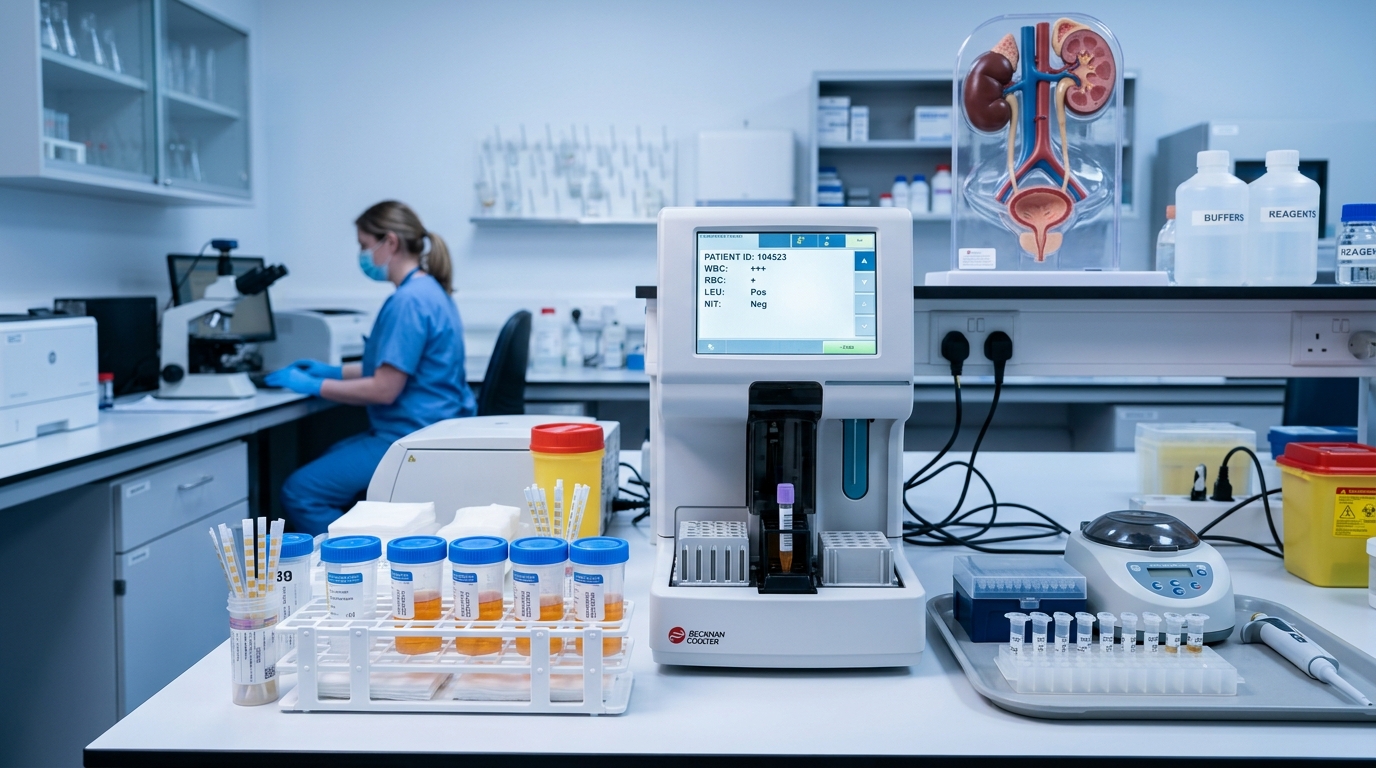
Dysuria—described by patients as sharp, stinging, or burning pain during urination—is universally assumed to signal a standard bacterial urinary tract infection (UTI) typically triggered by Escherichia coli or Klebsiella pneumoniae. However, clinical studies establish that up to 25% to 35% of individuals presenting with classic UTI symptoms return a laboratory culture report stating: “No significant bacterial growth (< 10⁴ CFU/mL).” For men and women seeking accredited urogenital screening options in the UAE, understanding why routine cultures fail is the first critical step toward resolving chronic symptoms and preventing inappropriate empirical antibiotic cycles.
Why Standard Urine Cultures Miss Infections: The Limitations of Agar
Routine hospital and commercial microbiology laboratories rely on calibrated loop streaking onto blood agar and MacConkey agar plates, incubated aerobically at 35°C for 24 to 48 hours. This methodology was engineered in the 1950s (the Kass criteria) specifically to detect acute pyelonephritis and robust Gram-negative coliforms at counts exceeding $10^5$ colony-forming units per milliliter ($CFU/mL$).
This traditional paradigm harbors major blind spots in modern urology:
- Fastidious and Cell-Wall Deficient Microorganisms: Pathogens such as Mycoplasma genitalium, Ureaplasma urealyticum, and Chlamydia trachomatis lack peptidoglycan cell walls or are obligate intracellular bacteria. They cannot grow on routine agar culture media under any clinical circumstance.
- Low-Count Coliform Urethritis: In symptomatic young women, E. coli counts between $10^2$ and $10^3 CFU/mL$ frequently trigger acute bladder trigone inflammation but are discarded by routine laboratory reporting thresholds as “insignificant growth” or “commensal skin contamination.”
- Anaerobic and Fastidious Uropathogens: Organisms like Gardnerella vaginalis, Actinotignum schaalii, and Streptococcus anginosus require specialized enriched media, anaerobic incubation, or extended 5-day culture protocols to produce colonies.
Differential Diagnosis: Key Infectious Causes
When a conventional urine culture is reported negative despite active burning, clinical investigation must prioritize targeted molecular Nucleic Acid Amplification Tests (NAAT / PCR):
| Suspected Pathogen | Biological Mechanism | Why Routine Culture Misses It | Gold Standard Diagnostic Test |
|---|---|---|---|
| Mycoplasma genitalium (Mgen) | Urethral / cervical epithelial intracellular colonization; emerging superbug with high macrolide resistance | Takes up to 6 months to culture in specialized broth; completely unculturable in standard labs | Multiplex Real-Time PCR (first-catch urine or vaginal swab) |
| Ureaplasma urealyticum / parvum | Hydrolyzes urea to ammonia, causing severe urethral mucosal burning and urgency | Lacks rigid cell wall; requires specialized urea broth with color indicator, not standard agar | Quantitative Molecular PCR with macrolide/quinolone resistance typing |
| Chlamydia trachomatis | Obligate intracellular parasite infecting squamocolumnar epithelial lining of urethra | Requires living cell culture or molecular amplification; cannot divide on nutrient agar | NAAT / PCR (First-void urine in men; endocervical/vaginal swab in women) |
| Trichomonas vaginalis | Parasitic flagellated protozoan causing urethritis, dysuria, and post-void discomfort | Protozoan organism that does not grow in bacterial cultures; microscopy sensitivity < 50% | RNA NAAT (Aptima® or Panther® multiplex assay) |
| Herpes Simplex Virus (HSV-1/2) | Neurotropic viral ulcerations within the distal urethral meatus | Viral etiology unaffected by bacterial media; causes excruciating internal burning | Viral PCR swab of meatal lesions or first-void urine PCR |
Non-Infectious Etiologies to Consider
If comprehensive multiplex PCR panels rule out both traditional and fastidious microbial pathogens, the diagnostic focus shifts toward structural, immunological, and neuromuscular conditions:
1. Interstitial Cystitis / Bladder Pain Syndrome (IC/BPS)
A chronic condition characterized by recurring bladder discomfort, suprapubic pressure, and dysuria that intensifies as the bladder fills and temporarily relieves following voiding. It is associated with mucosal glycosaminoglycan (GAG) layer disruption and mast cell activation rather than bacterial invasion.
2. Pelvic Floor Muscle Dysfunction (Hypertonic Pelvic Floor)
Chronic spasm or inability to relax the levator ani and pubococcygeus muscles compresses the urethra and pudendal nerve, mimicking the burning sensation of a severe acute UTI. Symptoms frequently worsen following prolonged sitting, intercourse, or physical exercise.
3. Chemical and Contact Urethritis
Direct exposure to harsh vaginal washes, scented feminine hygiene sprays, spermicidal lubricants, bubble baths, or laundry detergents can trigger contact dermatitis of the urethral meatus, causing severe stinging upon contact with acidic urine.
Structured Clinical Diagnostic Workflow
For patients experiencing recurring or refractory dysuria with unyielding negative cultures, the following sequential evaluation protocol is recommended:
- First-Catch Urine PCR Panel: Submit the very first 20 to 30 mL of urine (holding urine for at least 2 hours prior) for multiplex syndromic PCR covering Chlamydia, Gonorrhea, Trichomonas, Mycoplasma genitalium, Mycoplasma hominis, Ureaplasma urealyticum, and Ureaplasma parvum.
- Expanded Quantitative Urine Culture (EQUC): Request extended laboratory incubation (48 hours under $5\% CO_2$ and anaerobic conditions) with plating on supplemented media to detect slow-growing Gram-positive organisms.
- Urinary Tract Ultrasonography: Renal and bladder ultrasound with post-void residual (PVR) measurement to rule out nephrolithiasis (kidney/bladder stones), urinary retention, or anatomical diverticula.
- Urological Referral & Flexible Cystoscopy: In patients with microscopic hematuria, persistent refractory pain, or age over 50, cystoscopic visualization of the bladder urothelium is necessary to inspect for Hunner’s ulcers or rule out carcinoma in situ.
Peer-Reviewed Clinical References
- Nickel, J. C., et al. Clinical evaluation of patients with persistent dysuria and negative bacterial cultures. Urologic Clinics of North America, 2019; 46(2): 215-225.
- Price, T. K., et al. The Clinical Urine Culture: Enhanced Techniques Improve Detection of Clinically Relevant Microorganisms. Journal of Clinical Microbiology, 2018; 56(5): e02052-17.
- Hooton, T. M., et al. A prospective study of risk factors for recurrence after an initial episode of acute uncomplicated cystitis. New England Journal of Medicine, 2020; 383(14): 1345-1354.