
Candida Albicans Testing Options: Vaginal Swab PCR vs Wet Mount Microscopy vs Fungal Culture in Dubai Urogenital Care
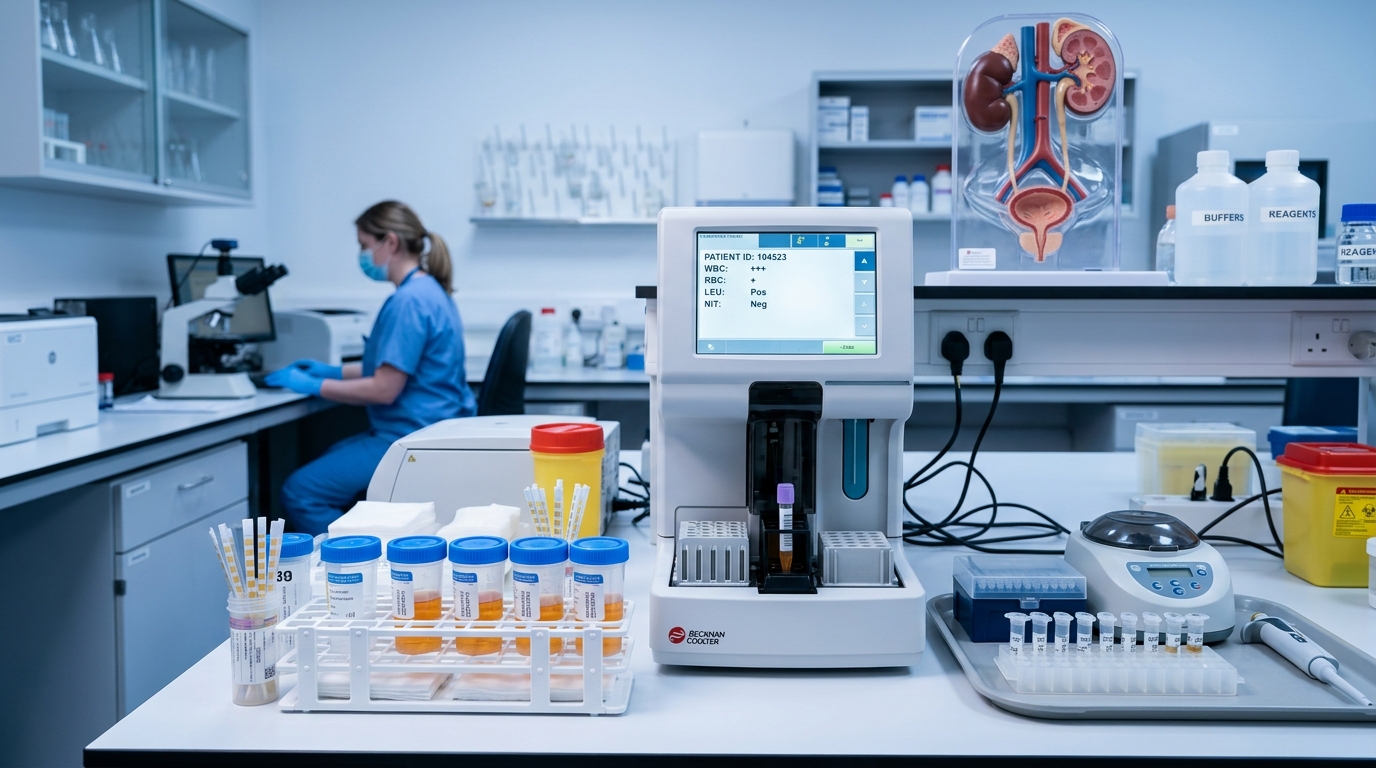
In women’s health and multi-specialty polyclinics across Dubai and Abu Dhabi, objective mycological differentiation prevents chronic pelvic discomfort. Discover certified urogenital testing packages and vaginitis PCR panels in Dubai engineered for multiplex pathogen detection, discrete sampling, and actionable antifungal guidance.
Pathophysiological Mechanisms and the Yeast-to-Hyphae Transition
To interpret diagnostic results accurately, clinicians must understand the commensal versus pathogenic states of Candida:
- Commensal Colonization: Candida albicans is a normal, non-pathogenic commensal constituent of the lower genital and gastrointestinal tract in 20% to 30% of healthy, asymptomatic women of reproductive age. In this commensal state, the organism exists primarily as unicellular, budding oval blastoconidia (yeast forms), tightly regulated by normal vaginal flora—predominantly hydrogen peroxide-producing lactobacilli (Lactobacillus crispatus, Lactobacillus jensenii) maintaining an acidic vaginal pH (<4.5).
- The Morphogenetic Switch to Filamentous Hyphae: Under host triggers—elevated endogenous estrogen (pregnancy, high-dose COCPs), broad-spectrum antibiotic therapy (which obliterates protective lactobacilli), poorly controlled diabetes mellitus (hyperglycemia providing glycogen substrates), or systemic immunosuppression—C. albicans undergoes a phenotypic switch. It transforms from benign yeast cells into invasive, filamentous pseudohyphae and true germ tubes.
- Tissue Invasion and Candidalysin Secretion: Hyphal elongation penetrates superficial vaginal squamous epithelial cells. Filamentous forms secrete the cytolytic peptide toxin candidalysin along with secreted aspartyl proteinases (Saps) and phospholipases, causing mucosal membrane pore formation, intense local tissue inflammation, intense pruritus, burning, and the classic thick, curd-like “cottage cheese” discharge.
Comparative Diagnostic Modalities for Vaginal Candidiasis
The comparative clinical utility, turnaround times, and diagnostic strengths across available testing modalities are detailed below:
| Diagnostic Modality | Target Detected | Turnaround Time | Diagnostic Sensitivity & Specificity | Key Clinical Practice Role |
|---|---|---|---|---|
| Direct Microscopic Wet Mount (Saline & 10% KOH) | Visualized budding yeast blastospores and branching pseudohyphae under 40x light microscopy | 5 to 10 Minutes (In-clinic POC) | Sensitivity: 50% to 65% Specificity: >90% |
Immediate first-line clinic screen. 10% Potassium Hydroxide (KOH) dissolves squamous cells and WBCs, enhancing hyphal visibility; negative result does NOT rule out yeast! |
| Syndromic Multiplex Molecular PCR Swab | Specific amplified fungal DNA fragments (ITS / 18S rDNA targets) | 1 to 4 Hours | Sensitivity: >95% to 98% Specificity: >95% |
Highest sensitivity available. Simultaneously detects C. albicans, C. glabrata, Bacterial Vaginosis (Gardnerella, Atopobium), and Trichomonas vaginalis from a single swab. |
| Fungal Culture with Species Identification (Sabouraud Dextrose Agar) | Viable colonies identified via chromogenic agar (CHROMagar) or MALDI-TOF mass spectrometry | 48 to 72 Hours | Sensitivity: 90% to 95% Specificity: >98% |
Gold standard for Recurrent VVC and suspected azole-resistant non-albicans infections; enables quantitative Minimum Inhibitory Concentration (MIC) drug testing. |
| Vaginal pH Testing (Hydrion Paper) | Physiological acidity of vaginal secretions | 10 Seconds | Non-specific triage adjunct | Crucial differential biomarker: In pure Candida infection, vaginal pH remains normal (<4.5)! A pH >4.5 indicates concurrent Bacterial Vaginosis or Trichomoniasis. |
Differential Diagnosis: Distinguishing Common Vaginitides
Because physical symptoms overlap significantly, clinical examination alone causes misdiagnosis in up to 50% of cases:
- Vulvovaginal Candidiasis: Severe pruritus, vulvar erythema, dyspareunia, external dysuria; thick, white, flocculent “cottage cheese” discharge; pH ≤ 4.5; negative amine “whiff” test; pseudohyphae/blastospores on KOH wet mount.
- Bacterial Vaginosis (BV): Thin, homogeneous, off-white/gray discharge; prominent fishy odor; pH > 4.5; positive amine whiff test (release of volatile amines on 10% KOH addition); clue cells (>20% of squamous cells covered by bacteria) on saline wet mount; absence of true inflammatory erythema.
- Trichomoniasis: Copious, yellow-green, frothy, malodorous discharge; intense vulvar irritation; “strawberry cervix” (colpitis macularis); pH > 5.0 to 6.0; motile flagellated trichomonads and abundant polymorphonuclear leukocytes (PMNs) on saline microscopy.
The Threat of Non-Albicans Species and Antifungal Resistance
In patients presenting with recurrent or refractory symptoms, identifying the precise species is critical:
- Candida glabrata: The most common non-albicans pathogen, accounting for 10% to 15% of refractory cases. C. glabrata does not form pseudohyphae (presents only as small budding blastoconidia, frequently missed on standard microscopy!). Crucially, C. glabrata exhibits intrinsic low susceptibility or high-level resistance to oral Fluconazole. Treatment requires topical vaginal Boric Acid (600 mg gelatin capsules nightly for 14 to 21 days) or Amphotericin B suppositories.
- Candida krusei: Intrinsically 100% resistant to Fluconazole; requires topical clotrimazole, miconazole, or oral voriconazole/itraconazole guided by in vitro susceptibility testing.
- Candida parapsilosis & Candida tropicalis: Frequently associated with intrauterine contraceptive devices (IUDs), vaginal pessaries, or severe underlying endocrine disease.
Evidence-Based Therapeutic Protocols
Treatment must be tailored according to whether the infection is uncomplicated or classified as complicated/recurrent:
- Uncomplicated VVC (C. albicans in healthy, non-pregnant woman):
- Oral Fluconazole (Diflucan): A single 150 mg oral dose achieves therapeutic vaginal mucosal concentrations lasting ≥72 hours, yielding >90% clinical cure rates.
- Topical Azoles: Clotrimazole 500 mg vaginal tablet as a single dose, or Miconazole 2% vaginal cream for 7 days. (Topical azoles are the mandatory choice during pregnancy; oral fluconazole is contraindicated in pregnancy due to spontaneous abortion and congenital cardiac defect risks).
- Complicated & Recurrent VVC (≥4 episodes/year):
- Induction Phase: Oral Fluconazole 150 mg every 72 hours for a total of 3 doses (Days 1, 4, and 7).
- Maintenance Suppressive Phase: Oral Fluconazole 150 mg once weekly for a full 6 months. Maintenance therapy achieves >90% symptom-free remission during treatment; following discontinuation, approximately 40%–50% of women may experience late recurrence, requiring repeat maintenance.
Frequently Asked Questions (Clinical FAQ)
Can a woman have Candida on a PCR test and not need any treatment?
Yes. Because Candida is a normal commensal organism in up to 20% to 30% of healthy women, a positive molecular PCR swab in an entirely asymptomatic woman (no itching, burning, redness, or discharge) represents harmless colonization rather than active disease. International guidelines state that asymptomatic colonization should never be treated with antifungal medications.
Why did my over-the-counter yeast medication fail to cure my infection?
Self-treatment failure usually occurs for one of three reasons: first, the true underlying condition is Bacterial Vaginosis or Trichomoniasis rather than a yeast infection; second, the infection is caused by a non-albicans species (such as Candida glabrata) that is naturally resistant to standard over-the-counter azole antifungals; or third, the symptoms represent non-infectious dermatitis or vulvar vestibulitis. An objective diagnostic swab with PCR or culture is required.
Does my male partner need to be treated if I have a yeast infection?
Routine treatment of male sexual partners is not recommended by CDC or European guidelines because vulvovaginal candidiasis is not categorized as a traditional sexually transmitted infection (it arises primarily from internal microbiome imbalance). However, if the male partner exhibits visible signs of balanitis (erythema, itching, or tiny red papules on the glans penis), topical antifungal cream (Clotrimazole 1%) applied twice daily for 7 days is indicated.
Authoritative Clinical References
- Centers for Disease Control and Prevention (CDC) — Vulvovaginal Candidiasis: Diagnostic and Treatment Guidelines
- International Union against Sexually Transmitted Infections (IUSTI) / WHO — European Guideline on the Management of Vulvovaginal Candidiasis
- American College of Obstetricians and Gynecologists (ACOG) — Practice Bulletin: Vaginitis in Nonpregnant Patients and Diagnostic Modalities