
Cat Dander Allergy Symptoms & Testing: Fel d 1 Molecular IgE Panels vs Skin Prick Tests, Cross-Reactivity & Dubai Clinical Management
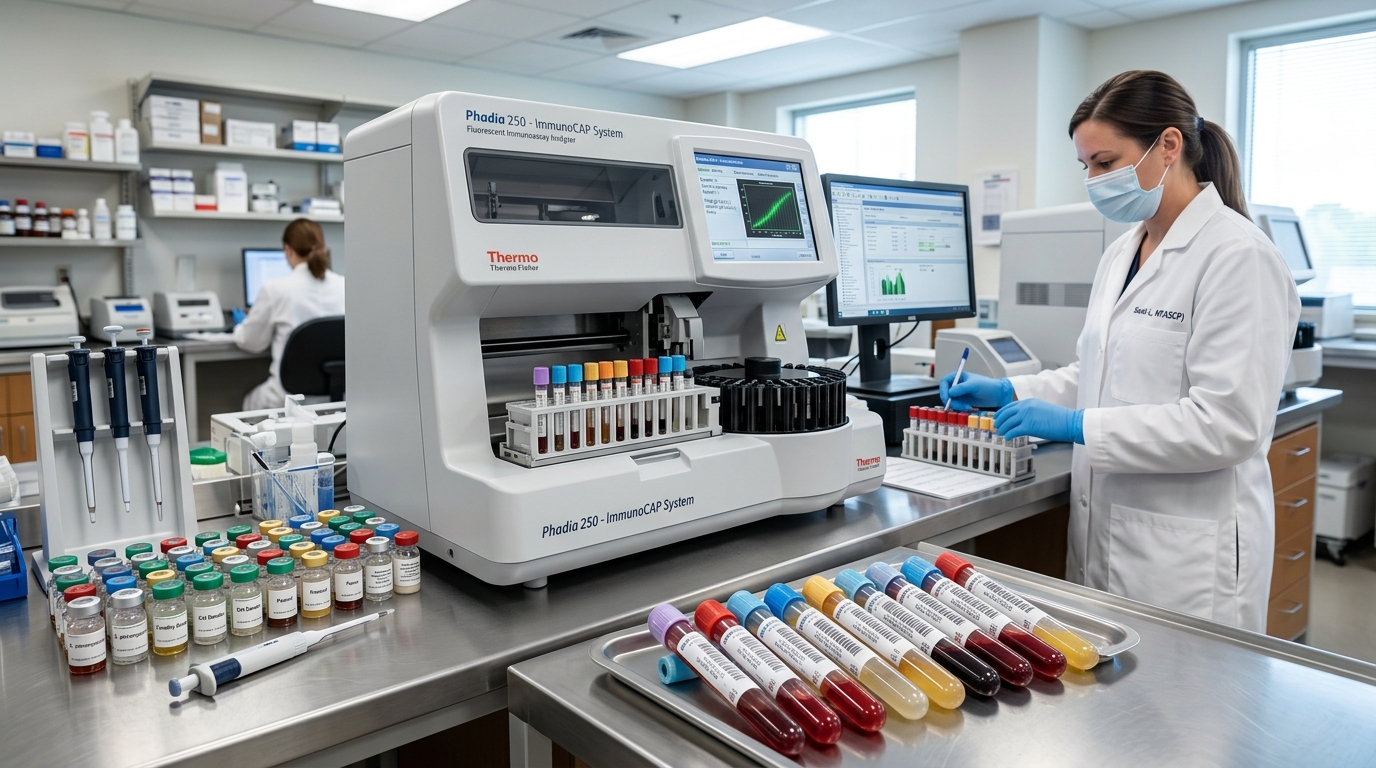
In community polyclinics and diagnostic centers across Dubai, Abu Dhabi, and the wider UAE, indoor air-conditioned environments amplify pet dander concentration. Accessing comprehensive professional diagnostic and allergy screening tests in Dubai guarantees patients obtain certified, high-sensitivity immunoglobulin IgE profiling without unnecessary medication washouts.
The Molecular Architecture of Cat Allergens: Beyond Fur
Patient education is a vital component of allergy management. Patients frequently believe that purchasing a short-haired or hairless cat (e.g., Sphynx) will eliminate allergic reactions. Molecular allergology disproves this myth:
- Fel d 1 (Major Secretoglobin Allergen): Responsible for over 95% of cat-allergic reactions in sensitized humans. Fel d 1 is synthesized primarily in feline sebaceous (skin) glands and salivary glands. Cats spread the protein across their coat during daily grooming; when saliva dries, microscopic flakes of epithelial dander detach and become airborne. All domestic cat breeds produce Fel d 1, regardless of coat length.
- Fel d 2 (Feline Serum Albumin): A minor allergen accounts for roughly 15% to 20% of cat allergies. Clinically critical because feline albumin shares high structural homology with porcine (pig) serum albumin, driving “Pork-Cat Syndrome”—a condition where cat-allergic patients develop severe urticaria or anaphylaxis after ingesting undercooked pork.
- Fel d 4 (Lipocalin): Found in feline submandibular salivary glands; exhibits cross-reactivity with lipocalins from dogs (Can f 1/Can f 2) and horses (Equ c 1), explaining why many pet owners react to multiple animal species.
Clinical Symptom Spectrum: From Allergic Rhinitis to Acute Asthma
Due to the small aerodynamic size of cat dander particles (< 5 µm), allergens penetrate deep into the lower respiratory tract, triggering severe bronchospasm:
| Anatomical Organ System | Acute Clinical Symptoms | Underlying Pathophysiology | Clinical Severity & Risk Profile |
|---|---|---|---|
| Upper Respiratory (Nose & Sinuses) | Paroxysmal sneezing, profuse clear rhinorrhea, severe nasal congestion, itchy palate | IgE-mediated mast cell degranulation releasing histamine, leukotrienes, and prostaglandins in nasal mucosa. | Moderate impairment of sleep quality, chronic sinusitis, daytime fatigue. |
| Ocular (Eyes) | Allergic conjunctivitis: bilateral scleral erythema, chemosis, palpebral edema, intense itching | Direct airborne impaction of dander on conjunctival membranes; vascular permeability surge. | Acute discomfort; rubbing eyes introduces secondary bacterial keratitis risk. |
| Lower Respiratory (Bronchial Airways) | Acute bronchospasm, dry hacking cough, expiratory wheezing, dyspnea, chest tightness | Deep airway inhalation triggers smooth muscle constriction, bronchial mucosal edema, and mucous plugging. | High-risk medical emergency; cat exposure is a well-documented cause of acute, life-threatening asthma attacks in sensitized individuals. |
| Cutaneous (Skin) | Contact urticaria (hives) where licked or scratched, atopic eczema flare, facial angioedema | Direct epidermal contact with feline saliva or dander through compromised stratum corneum skin barrier. | Chronic pruritus, secondary staphylococcal skin infections from scratching. |
Diagnostic Modalities Head-to-Head: Skin Prick vs Blood sIgE
Accurate clinical diagnosis requires objective immunological confirmation before patients make life-altering decisions regarding pet rehoming:
| Diagnostic Feature | Skin Prick Testing (SPT) | Serum Specific IgE (sIgE ImmunoCAP) |
|---|---|---|
| Testing Methodology | Epicutaneous lancet prick introducing standardized cat extract; wheal measured at 15–20 min | Venous blood sample analyzed via automated in vitro fluorescence enzyme immunoassay |
| Turnaround Time | Immediate: 15–20 Minutes | 24 to 48 Hours (Central Laboratory) |
| Medication Washout Mandate | Mandatory 5–7 Day Washout of all oral antihistamines, tricyclics, and topical steroids | Zero Washout Required: Patients can safely remain on antihistamines and systemic steroids |
| Skin Condition Limitations | Cannot be performed in active eczema, dermatographism, or extensive dermatitis | Completely unaffected by severe skin conditions or cutaneous inflammation |
| Anaphylaxis Risk | Extremely low, but theoretical systemic allergic reaction risk exists | Zero patient risk (In vitro testing on extracted serum tube) |
| Component-Resolved Diagnostics | Limited to crude whole-extract allergen solutions | Exceptional: Measures discrete quantitative IgE titers against Fel d 1, Fel d 2, Fel d 4 |
Component-Resolved Diagnostics (CRD): Unraveling Cross-Reactivity
In modern allergy clinics, molecular component testing resolves diagnostic dilemmas:
- Isolated Fel d 1 Sensitization: Confirms genuine, primary cat allergy. High quantitative sIgE titers (> 3.5 kUA/L) predict high clinical reactivity upon exposure and identify ideal candidates for allergen-specific sublingual or subcutaneous immunotherapy (AIT).
- Positive Fel d 2 (Albumin): Alerts the allergist to screen for Pork-Cat Syndrome. These patients must be counseled regarding potential severe food allergic reactions following pork consumption.
- Negative IgE Despite Clinical Symptoms: Rules out IgE-mediated cat allergy; suggests non-allergic vasomotor rhinitis triggered by dust, dry air-conditioning, or litter box silica particles.
Evidence-Based Environmental Control in UAE Homes
Complete pet rehoming is emotionally devastating for families. Clinical guidelines from the American Academy of Allergy, Asthma & Immunology (AAAAI) recommend a multi-modal environmental strategy to drastically reduce airborne Fel d 1 loads:
- Strict Bedroom Sanctuary: The cat must be permanently barred from the allergic patient’s bedroom. Install a solid door and seal under-door gaps to keep sleeping areas dander-free.
- Medical-Grade HEPA Filtration: Deploy continuous True-HEPA air purifiers in living rooms and bedrooms. In air-conditioned UAE apartments, clean AC duct filters monthly to prevent allergen recirculation.
- Textile & Carpet Elimination: Remove wall-to-wall carpeting, heavy curtains, and fabric upholstery. Smooth tile or hardwood floors prevent dander accumulation and allow frequent wet-mopping.
- Neutralizing Feline Diets: Innovative commercial cat foods coated with specialized egg-derived anti-Fel d 1 IgY antibodies bind active Fel d 1 in feline saliva, reducing active airborne dander shedding by up to 47% within 3 weeks.
Frequently Asked Questions (FAQ)
Is there such a thing as a 100% hypoallergenic cat?
No. Scientifically, no domestic cat breed is truly hypoallergenic. All cats produce Fel d 1 in their saliva, sebaceous glands, and anal glands. While some individual cats shed lower concentrations of Fel d 1, all breeds produce sufficient allergen to provoke severe reactions in sensitized individuals.
Can cat allergy develop suddenly in adulthood?
Yes. Adult-onset pet allergy is well-documented. An individual can live with cats for years without symptoms and subsequently develop sensitization following an acute respiratory viral infection, prolonged absence from pets followed by re-exposure, or general immune dysregulation.
How does allergen immunotherapy (allergy shots) treat cat allergy?
Allergen-specific immunotherapy (AIT) gradually introduces escalating micro-doses of purified Fel d 1 allergen over 3 to 5 years. This shifts the immune response from an IgE-driven allergic pathway toward protective IgG4 blocking antibodies and regulatory T-cells, providing permanent desensitization.
Authoritative Clinical References
- American Academy of Allergy, Asthma & Immunology (AAAAI) – Environmental Pet Allergens Clinical Practice Guidelines
- European Academy of Allergy and Clinical Immunology (EAACI) – Molecular Allergology User’s Guide on Mammalian Allergens
- Journal of Allergy and Clinical Immunology (JACI) – Fel d 1 Allergen Reduction Strategies and Clinical Outcomes