
Chlamydia Urine Test vs Swab Test: Key Differences Explained
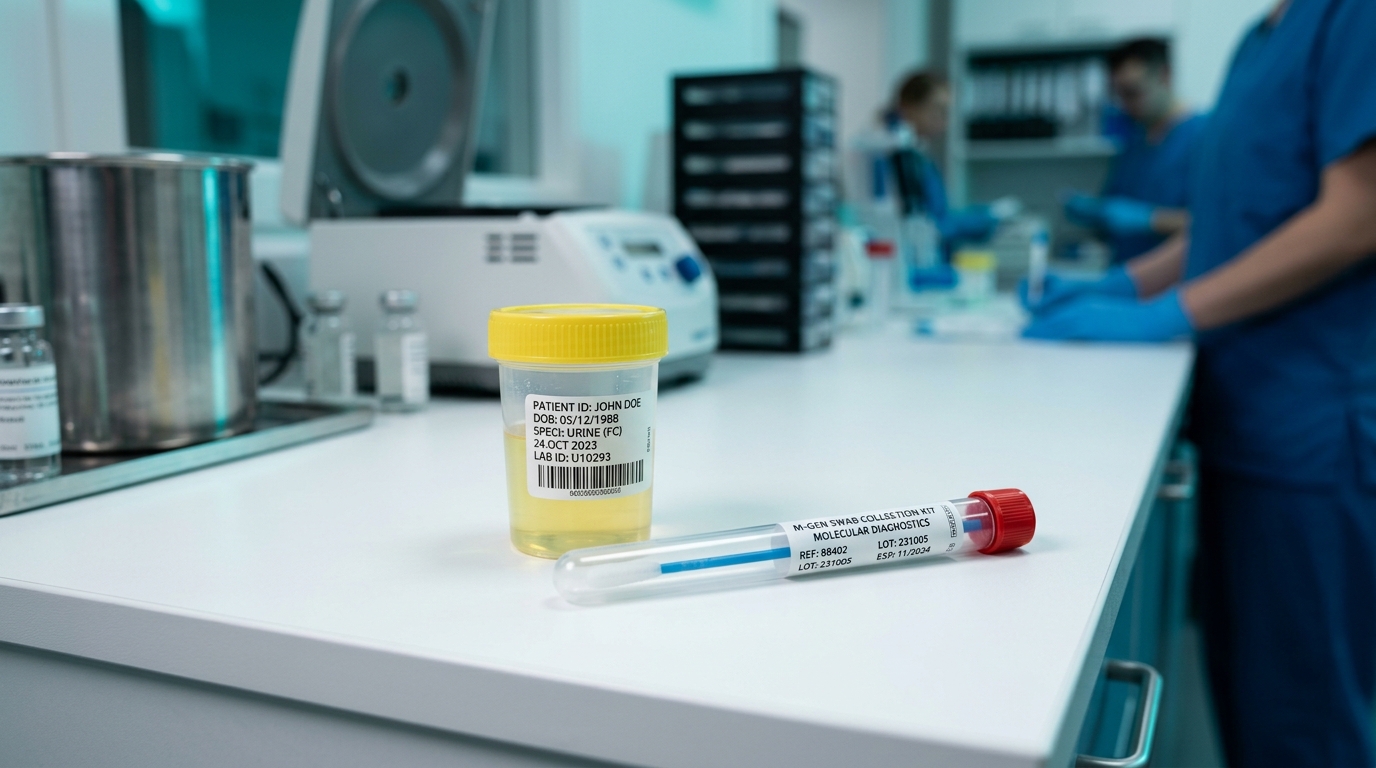
Sexually transmitted infections (STIs) represent one of the most common public health challenges worldwide, with Chlamydia trachomatis remaining the most frequently reported bacterial STI across both clinical practices and screening clinics in the UAE. Because an estimated 70% of infected females and up to 50% of infected males remain entirely asymptomatic during the early stages of transmission, reliable laboratory screening forms the cornerstone of effective clinical management. Individuals seeking comprehensive confidential STD testing options in Dubai frequently encounter two primary specimen choices: first-catch urine collection and specialized molecular swabs. While both approaches utilize advanced molecular amplification, their diagnostic performance varies markedly depending on biological sex and exposure pathways.
Who Needs Chlamydia Testing and Why Specimen Choice Matters
The decision of whether to submit a urine sample or undergo an anatomical swab is not merely a matter of patient convenience—it is governed by pathogen biology. Chlamydia trachomatis is an obligate intracellular bacterium that selectively infects squamocolumnar epithelial cells. It does not multiply freely in bodily fluids like typical urinary tract bacteria; instead, it establishes an intracellular replication cycle within the mucosal lining of the endocervix, urethra, rectum, or oropharynx.
Consequently, an effective diagnostic sample must harvest sufficient numbers of desquamated epithelial cells harboring chlamydial elementary and reticulate bodies. For male patients, the primary site of urogenital colonization is the anterior urethral epithelium. As urine passes through the urethra, the initial stream dislodges these infected cells, making first-catch urine an exceptionally rich diagnostic specimen. Conversely, in female patients, the primary reservoir of urogenital chlamydial infection is the endocervical canal, with urethral co-infection occurring in only a subset of cases. Relying solely on urine in females can occasionally result in lower bacterial yields compared to direct mucosal sampling.
Diagnostic Technologies: How NAAT Performs on Urine vs Swabs
Historically, chlamydia diagnosis relied on bacterial culture, direct fluorescent antibody (DFA) staining, or enzyme immunoassays (EIA). These legacy methods suffered from low sensitivity (frequently 50% to 70%) and required viable organism transport. Today, international health authorities, including the CDC STI Treatment Guidelines, universally recommend Nucleic Acid Amplification Tests (NAATs) as the diagnostic gold standard for chlamydia detection.
NAAT platforms—such as Polymerase Chain Reaction (PCR), Transcription-Mediated Amplification (TMA), and Strand Displacement Amplification (SDA)—amplify specific conserved DNA or ribosomal RNA (rRNA) sequences of Chlamydia trachomatis. Because NAAT assays can detect minute quantities of genetic material, they exhibit exceptional analytical specificity exceeding 99%. However, biological sample quality remains the single largest determinant of clinical sensitivity:
- For Biological Males: First-catch urine NAAT demonstrates a clinical sensitivity of 95% to 98% and a specificity of >99%. It is virtually identical or superior in sensitivity to urethral swabs, rendering painful urethral swab insertions completely obsolete for routine male urogenital screening.
- For Biological Females: Self-collected or clinician-collected vaginal swabs represent the optimal specimen, achieving 96% to 99% clinical sensitivity. First-catch urine in females exhibits a slightly lower sensitivity ranging from 87% to 92%, primarily because cervical cellular shedding into the urinary stream varies across the menstrual cycle.
- Extragenital Sites (Rectal and Pharyngeal): Urine tests cannot detect rectal or pharyngeal chlamydia. Extragenital infections require site-specific swab collection with NAAT transport media, as mucosal colonization at these sites occurs independently of urogenital shedding.
| Diagnostic Parameter | First-Catch Urine Test | Self/Clinician Swab Test | Clinical Recommendation |
|---|---|---|---|
| Ideal Patient Population | Males (preferred first-line); Females (alternative) | Females (vaginal swab preferred); All extragenital sites | Vaginal swabs for women; Urine for men |
| Clinical Sensitivity (Men) | 95% – 98% (Extremely high) | 94% – 97% (Urethral swab – rarely needed) | Urine is non-invasive and painless for men |
| Clinical Sensitivity (Women) | 87% – 92% (Moderate-high) | 96% – 99% (Vaginal / Endocervical swab) | Vaginal swab provides superior cellular yield |
| Pre-Analytical Preparation | Must hold urine for 1–2 hours; First 20–30 mL | Avoid douches, vaginal creams, or menses blood | Strict adherence to collection protocol required |
| Extragenital Coverage | No (Cannot detect throat or rectal chlamydia) | Yes (Validated rectal and pharyngeal swabs) | Swabs mandatory for non-urogenital exposures |
Diagnostic Windows, Incubation Periods, and Result Interpretation
A frequent clinical pitfall is testing too early following potential sexual exposure. Following transmission, Chlamydia trachomatis undergoes an incubation and logarithmic replication phase before shedding sufficient bacterial copies for molecular amplification. The diagnostic window for modern NAAT assays is typically between 7 and 14 days post-exposure.
Testing prior to day 7 carries a high probability of generating a false-negative result, even if transmission occurred. In cases of acute clinical symptoms (e.g., dysuria, mucopurulent urethral or vaginal discharge, pelvic discomfort), diagnostic testing should occur immediately, with repeat testing scheduled 14 days post-exposure if initial findings return non-reactive.
According to comparative diagnostic evaluations published in the NCBI PubMed literature on NAAT collection modalities, self-collected vaginal swabs demonstrated equivalence or slight superiority to healthcare-provider collected cervical swabs. This breakthrough allows patients to collect their own samples comfortably in a private clinic restroom without undergoing an invasive speculum examination, dramatically increasing screening uptake without sacrificing clinical accuracy.
When to Consult a Clinician and Urgent Red Flags
While chlamydia is readily curable with appropriate targeted antibiotics (such as first-line doxycycline regimens recommended by international guidelines), untreated infection can ascend through the reproductive tract, causing severe long-term sequelae. In women, ascending chlamydial infection can lead to Pelvic Inflammatory Disease (PID), irreversible fallopian tube scarring, tubal factor infertility, and ectopic pregnancy. In men, untreated chlamydia can progress to epididymitis, testicular pain, and reduced semen quality.
Under WHO STI Management Guidelines, partner management is mandatory. Whenever an individual tests positive for chlamydia, all sexual partners from the preceding 60 days must be evaluated and empirically treated to prevent reciprocal reinfection. Additionally, a test-of-cure is advised 3 to 4 months post-treatment to confirm eradication and rule out re-exposure.
Practical Decision Checklist and Frequently Asked Questions (FAQ)
Use this practical clinical checklist when scheduling your diagnostic evaluation:
- Verify the Window Period: Ensure at least 7 to 14 days have elapsed since the suspected exposure before routine screening.
- Select the Right Specimen: Men should request a first-catch urine NAAT; women should opt for a self-collected vaginal swab for maximum sensitivity.
- Follow Collection Protocols: If providing urine, avoid voiding for at least 60 minutes beforehand and capture the first 20–30 mL.
- Include Comprehensive Screening: Co-infection with gonorrhea, trichomoniasis, and mycoplasma genitalium is common; consider multiplex panels.
Authoritative Medical References:
- Centers for Disease Control and Prevention (CDC). Sexually Transmitted Infections Treatment Guidelines: Chlamydia trachomatis. Available from: cdc.gov/std/treatment-guidelines/chlamydia.htm
- World Health Organization (WHO). Guidelines for the Management of Symptomatic Sexually Transmitted Infections. Geneva: WHO; Available from: who.int/publications/i/item/9789240024168
- Van Der Pol B, et al. Comparative Diagnostic Performance of Urine and Swab Specimens for Molecular Chlamydia Screening. PubMed / NCBI; Available from: pubmed.ncbi.nlm.nih.gov/25854898/