
Enteric Adenovirus Rapid Test: What Does It Detect and When to Use It?
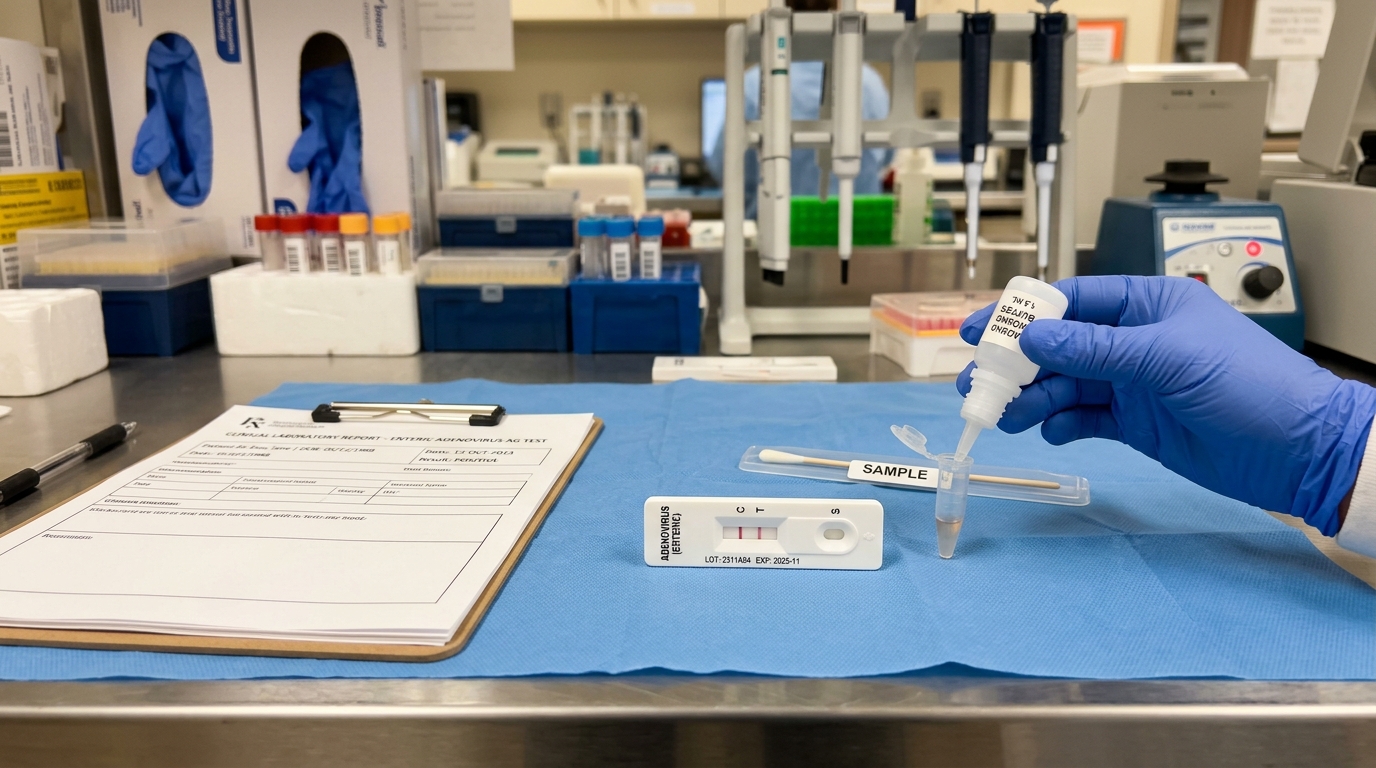
In pediatric outpatient clinics, daycares, and urgent care centers across the UAE, acute viral gastroenteritis represents one of the most common causes of medical consultations and emergency admissions. Following the widespread introduction of the rotavirus vaccine, enteric adenoviruses have risen to become the second or third most prevalent viral gastrointestinal pathogen in children under 5 years old. Utilizing high-accuracy point-of-care gastrointestinal rapid test kits provides immediate diagnostic clarity, directing focus to rehydration and preventing unnecessary prescribing.
Pathogen Virology: What Makes Enteric Adenovirus Unique?
Adenoviridae constitute a family of non-enveloped, double-stranded DNA (dsDNA) viruses possessing an icosahedral capsid. Over 100 genotypes have been cataloged, subclassified into Species A through G:
- Species F (Serotypes 40 & 41): These specific serotypes are known strictly as “enteric adenoviruses.” They exhibit specialized acid-resistant capsid adaptations that survive gastric hydrochloric acid and pancreatic bile salts, colonizing the microvilli of human small intestine enterocytes.
- Prolonged Clinical Duration: Unlike Norovirus or Rotavirus—which typically cause intense diarrhea resolving in 3 to 5 days—enteric adenovirus gastroenteritis frequently causes prolonged watery diarrhea lasting 8 to 14 days, frequently accompanied by low-grade fever and vomiting.
- High Environmental Stability: Because they lack a fragile lipid envelope, enteric adenoviruses are highly resistant to lipid-dissolving disinfectants, drying, and mild chlorination, persisting on toys, diaper stations, and daycare surfaces for weeks.
How the Rapid Antigen Test Works: Target Detection
Point-of-care lateral flow cassettes utilize sandwich immunochromatography designed for targeted stool analysis:
- Hexon Protein Target: The test cassette membrane is pre-coated with monoclonal antibodies directed against conserved epitopes of the adenovirus hexon protein—the major structural capsid component present in thousands of copies per viral particle.
- Stool Extraction Procedure: A small stool aliquot (50 mg of solid stool or 100 µL of liquid stool) is mixed with extraction buffer in a dropper vial, lysing mucosal debris and freeing viral capsid antigens.
- Capillary Migration: Applying 2 to 3 drops to the sample well causes antigen-antibody complexes to migrate across the nitrocellulose strip. Binding to immobilized capture antibodies at the test line (T) produces a visible red or blue colored line within 10 to 15 minutes.
Clinical Presentation: Enteric Adenovirus vs. Other GI Pathogens
Differentiating viral gastroenteritis causes helps pediatricians anticipate disease trajectory and hydration needs:
| Pathogen | Typical Age Group | Diarrhea Duration | Vomiting & Fever | Stool Characteristics | Rapid Test Utility |
|---|---|---|---|---|---|
| Enteric Adenovirus (40/41) | Infants & Toddlers (<24 months) | 8 to 14 days (Prolonged) | Mild to moderate fever; vomiting lasts 1–3 days | Profuse watery, non-bloody, mucus occasional | High utility (Antigen Cassette) |
| Rotavirus | Infants 6 to 36 months | 5 to 7 days | Severe vomiting, high fever, rapid dehydration | Watery, explosive, yellowish green | High utility (Combined Combo Cassettes) |
| Norovirus | All ages (adults & children) | 1 to 3 days (Acute short burst) | Violent projectile vomiting, severe nausea | Watery, non-bloody | Limited POCT sensitivity; PCR preferred |
| Bacterial (Salmonella / Shigella) | All ages; food/water exposure | 3 to 7 days | High septic fevers, severe abdominal cramping | Dysentery: Mucopurulent, bloody stools | Stool culture & molecular panels required |
Diagnostic Limitations: What Can the Rapid Test Miss?
While rapid antigen tests offer outstanding bedside utility, clinicians must interpret results within analytical boundaries:
- Serotype Differentiation: Many broad-spectrum commercial rapid antigen tests cross-react with non-enteric respiratory adenovirus serotypes (such as types 1, 2, or 5) excreted in stool following swallowed respiratory secretions. Specific dual-monoclonal enteric assays reduce this cross-reactivity by targeting Species F epitopes exclusively.
- Limit of Detection in Late Waning Phases: During the second week of diarrhea, viral shedding may drop below the analytical limit of detection (LOD), yielding a false-negative result despite active illness.
- Bacterial & Parasitic Co-Pathogens: A negative adenovirus test does not rule out enteropathogenic E. coli, Campylobacter, or Giardia lamblia. Stools containing macroscopic blood or leukocytes require formal microbiological culture.
Clinical Management Protocol Following Rapid Test Results
Detecting enteric adenovirus immediately shapes patient management:
- Withhold Antibiotics: Adenovirus is an intracellular DNA virus completely unaffected by antibacterial medications. Reassure parents that antibiotics will disrupt intestinal microflora and potentially prolong diarrhea.
- Aggressive Oral Rehydration Therapy (ORT): Utilize reduced-osmolarity Oral Rehydration Salts (ORS) solution administered in frequent small sips (5 to 10 mL every 5 minutes) to replace fluid losses.
- Dietary Management: Continue breastfeeding or age-appropriate feeding without dilution; avoid hyperosmolar juices and soft drinks that exacerbate osmotic diarrhea.
- Infection Control & Daycare Exclusion: Children must remain home until diarrhea-free for at least 48 hours. Enforce strict handwashing with soap and running water, as alcohol gels are less effective against non-enveloped capsids.
Frequently Asked Questions (FAQs)
What is the difference between enteric adenovirus and common adenovirus?
Common adenoviruses (Species B, C, and E) primarily infect the upper respiratory tract, eyes, and lungs, causing pharyngitis, conjunctivitis, and bronchitis. Enteric adenoviruses (Species F, serotypes 40 and 41) are structurally adapted to survive stomach acid and infect intestinal enterocytes, causing diarrhea and gastroenteritis.
How long does diarrhea last with enteric adenovirus?
Enteric adenovirus is notorious for causing unusually prolonged diarrhea, typically lasting between 8 and 14 days—longer than rotavirus or norovirus. Rehydration must be maintained diligently throughout this recovery period.
Can adults get enteric adenovirus?
Yes, though most adults have acquired partial immunity from childhood exposures and experience mild or subclinical symptoms. However, severe diarrhea can occur in immunocompromised adults, elderly individuals, and healthcare workers during community outbreaks.
Scientific References & Clinical Guidelines
- World Health Organization (WHO). The Treatment of Diarrhoea: A Manual for Physicians and Other Senior Health Workers. 4th rev. WHO Guidelines. 2019; ISBN 978-92-4-151557-3.
- Clinical Microbiology Reviews. Adenoviruses: Molecular Biology, Clinical Manifestations, and Laboratory Diagnostics in Children. Clin Microbiol Rev. 2019;32(2):e00030-18.
- Pediatric Infectious Disease Journal. Epidemiology and Clinical Characteristics of Enteric Adenovirus Infections in Hospitalized Children. Pediatr Infect Dis J. 2021;40(4):302-308.