
Gastrointestinal Rapid Testing Clinical Workflow in Community Clinics: Point-of-Care Stool Antigens, Pediatric Rehydration & Antimicrobial Stewardship
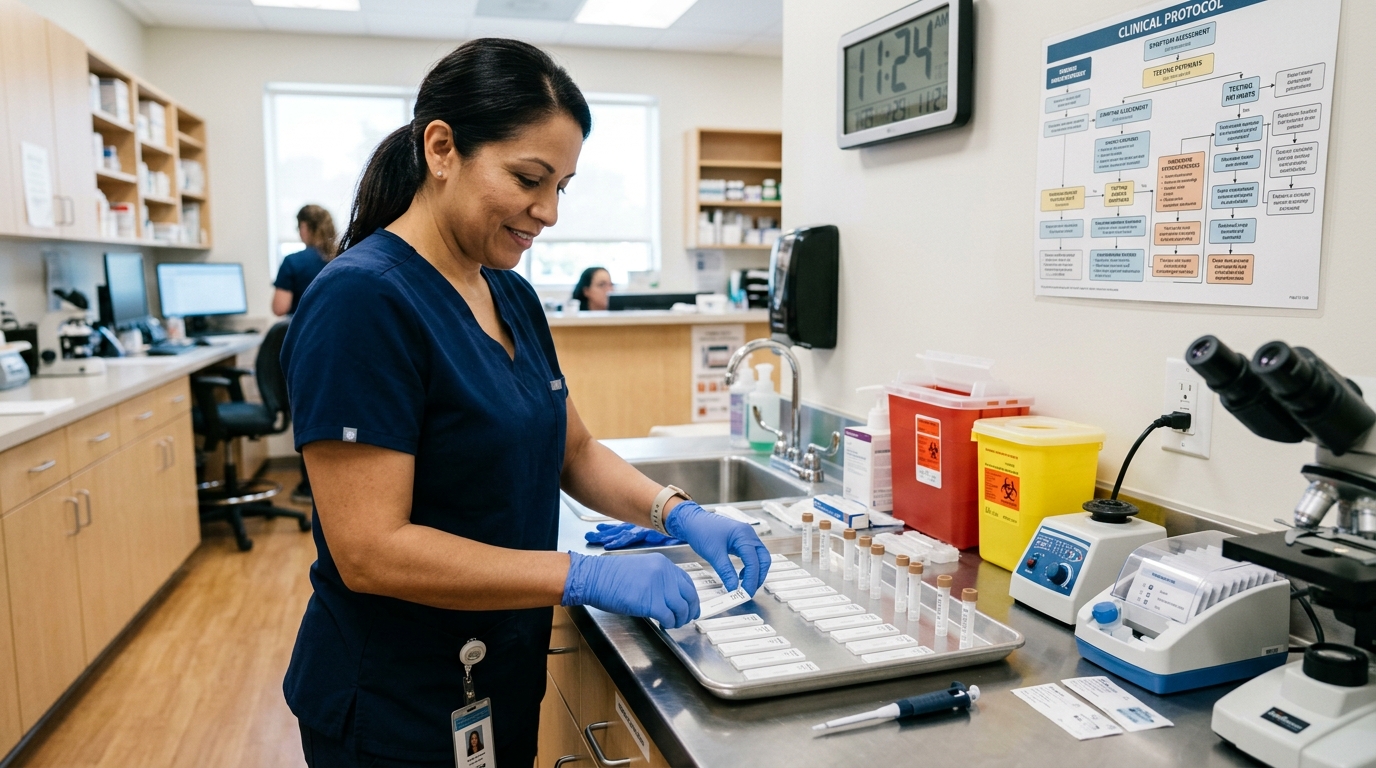
In community healthcare clinics across residential districts in Dubai, Sharjah, and Ajman, family practitioners manage diverse patient demographics ranging from infants in daycares to elderly multimorbid patients. Relying on external referral laboratories for basic stool cultures delays critical decisions by 3 to 5 days, fueling parental anxiety and inappropriate medication use. Integrating certified advanced gastrointestinal rapid test kits in UAE equips community clinic consultation rooms with reliable, immediate point-of-care diagnostics.
The Community Clinic Challenge: Balancing Clinical Need with Resource Efficiency
Unlike tertiary hospital emergency rooms with dedicated 24/7 stat laboratories, community clinics operate with lean staffing and compact clean-utility areas. Diagnostic workflows must be intuitive, bio-secure, and rapid:
- Rapid Pediatric Viral Triage: Acute watery diarrhea in infants and toddlers is viral in >80% of cases (Rotavirus, Adenovirus 40/41, Norovirus). Confirming a viral etiology right at the consultation prevents parental pressure for antibiotic prescriptions.
- Screening for Active Peptic Ulcer Infection: Dyspepsia is ubiquitous among adult community populations. Point-of-care H. pylori stool antigen testing confirms active colonization without requiring expensive endoscopy or radioactive urea breath tests.
- Colorectal Cancer Screening in Primary Care: Performing annual immunochemical fecal occult blood testing (iFOBT / FIT) for asymptomatic adults aged 45 to 75 as part of routine community wellness checkups.
Comprehensive 5-Step Clinical Workflow for Community Clinics
A standardized 5-stage workflow executed from patient intake to electronic prescription generation ensures clinical rigor and biosafety:
| Workflow Stage | Responsible Personnel | Specific Clinical Action | Quality Assurance Check |
|---|---|---|---|
| Stage 1: Intake & Dehydration Triage | Triage Nurse | Assess vitals: Weight, heart rate, capillary refill, mucous membrane hydration, skin pinch turgor | Screen for Red Flags: High fever (>38.5°C), peritoneal guarding, gross blood in stool |
| Stage 2: Stool Specimen Collection | Patient / Parent / Nurse | Provide stool collection kit with integrated spiral grooved applicator stick; collect ~50 mg stool | Ensure no urine or toilet bowl water contamination |
| Stage 3: Buffer Homogenization | Clinic Nurse / Phlebotomist | Insert applicator into pre-filled extraction vial; shake vigorously for 15 seconds; settle 2 min | Verify complete particulate suspension in extraction buffer front |
| Stage 4: Cassette Inoculation & Timing | Trained Clinic Staff | Dispense 2 to 3 vertical drops into cassette well; start digital timer for 10 to 15 minutes | Never read results after 20 minutes (prevents false-positive drying lines) |
| Stage 5: EMR Logging & Physician Review | Treating Physician | Verify control line (C); interpret test lines (T); document in EMR (Malaffi/Nabidh) | Communicate diagnosis to family; initiate targeted Oral Rehydration Therapy (ORT) |
Pediatric Dehydration Assessment: Gorelick & WHO Scoring in Primary Care
Accurate clinical dehydration scoring guides the safe decision between outpatient Oral Rehydration Therapy (ORT) and hospital emergency transfer:
| Dehydration Grade | Gorelick Clinical Criteria (Any 2 Present = Grade) | Community Outpatient Management SOP |
|---|---|---|
| Mild / No Dehydration (<3% Deficit) | Moist tongue, normal tears, normal skin turgor recoil (<1 sec), normal radial pulse | Discharge home with Oral Rehydration Solution (ORS): 50 mL/kg over 4h plus 10 mL/kg per loose stool. Continue normal breastfeeding/feeding. |
| Moderate Dehydration (3% to 9% Deficit) | Sunken eyes, decreased tears, dry oral mucosa, skin pinch recoil 1–2 sec, tachycardia | Observed in-clinic ORT: Administer ORS 100 mL/kg over 4 hours under nursing supervision. If vomiting persists, administer single-dose oral ondansetron. |
| Severe Dehydration (>9% Deficit) | Lethargy, unconsciousness, feeble/absent pulse, skin pinch recoil >2 sec, capillary refill >3 sec | Immediate 998 Ambulance Transfer: Establish emergency peripheral IV access; infuse 20 mL/kg Normal Saline bolus immediately while awaiting transport. |
Biosafety & Waste Management in Compact Clinic Settings
Because stool specimens in community clinics frequently contain highly infectious enteric viruses and bacteria, strict biosafety measures must be maintained:
- Dedicated Clean Utility Testing Zone: Testing must be performed on a non-porous stainless steel or chemical-resistant laminate bench in the clean-utility room, never in patient examination rooms or consultation desks.
- Personal Protective Equipment (PPE): Staff must wear fluid-resistant disposable nitrile gloves, a lab coat, and protective eyewear during stool homogenization and dispensing.
- Biohazard Disposal: Used cassettes, swabs, and extraction buffer vials must be discarded immediately into rigid yellow clinical biohazard bins for medical waste incineration.
- Surface Disinfection: Clean all surfaces after testing with EPA-registered 1,000 ppm sodium hypochlorite (bleach) wipes. Alcohol-based disinfectants are ineffective against non-enveloped enteric viruses like rotavirus and norovirus.
Community Antibiotic Stewardship: Preventing Ciprofloxacin Misuse
In community outpatient practice, empiric prescription of ciprofloxacin, metronidazole, or azithromycin for acute uncomplicated diarrhea remains a major driver of regional antimicrobial resistance. UAE national guidelines for antimicrobial stewardship mandate that antibiotics should NOT be prescribed for acute watery diarrhea unless specific criteria are met (severe dysentery with gross blood, documented shigellosis, or immunocompromised hosts).
Frequently Asked Questions (FAQ)
Can community clinics test formed stool specimens on rapid antigen cassettes?
Yes. For H. pylori antigen and fecal occult blood (iFOBT), solid or formed stool is completely acceptable. The applicator stick’s spiral grooves scrape the necessary 50 mg sample from multiple surface points of the stool.
What instructions should be given to parents collecting a stool sample from an infant?
Instruct parents to line the infant’s diaper with plastic wrap (food-grade cling film) or invert the diaper so the plastic non-absorbent backing faces the skin. This prevents liquid stool and antigens from absorbing into the diaper’s absorbent cotton padding.
How long are rapid gastrointestinal cassettes stable when stored in community clinics?
Most commercial immunochromatographic cassettes are stable for 18 to 24 months from manufacture when stored at ambient controlled temperatures between 2°C and 30°C. Storage in direct sunlight or unconditioned storage rooms exceeding 35°C must be strictly avoided.
Scientific References & Authoritative Clinical Guidelines
- Infectious Diseases Society of America (IDSA). Clinical Practice Guidelines for the Diagnosis and Management of Infectious Diarrhea in Outpatient Settings. CID, 2024.
- World Health Organization (WHO). The Treatment of Diarrhoea: A Manual for Physicians and Other Senior Health Workers. 4th Rev, WHO Press, 2024.
- Dubai Health Authority (DHA). Primary Healthcare Sector: Clinical Practice Guidelines for Acute Gastroenteritis and Pediatric Dehydration. UAE Health Authority, 2024.