
Gastrointestinal Rapid Testing Clinical Workflow in Outpatient Clinics: Stool Antigen Panels, Dehydration Triage & Diagnostic SOPs
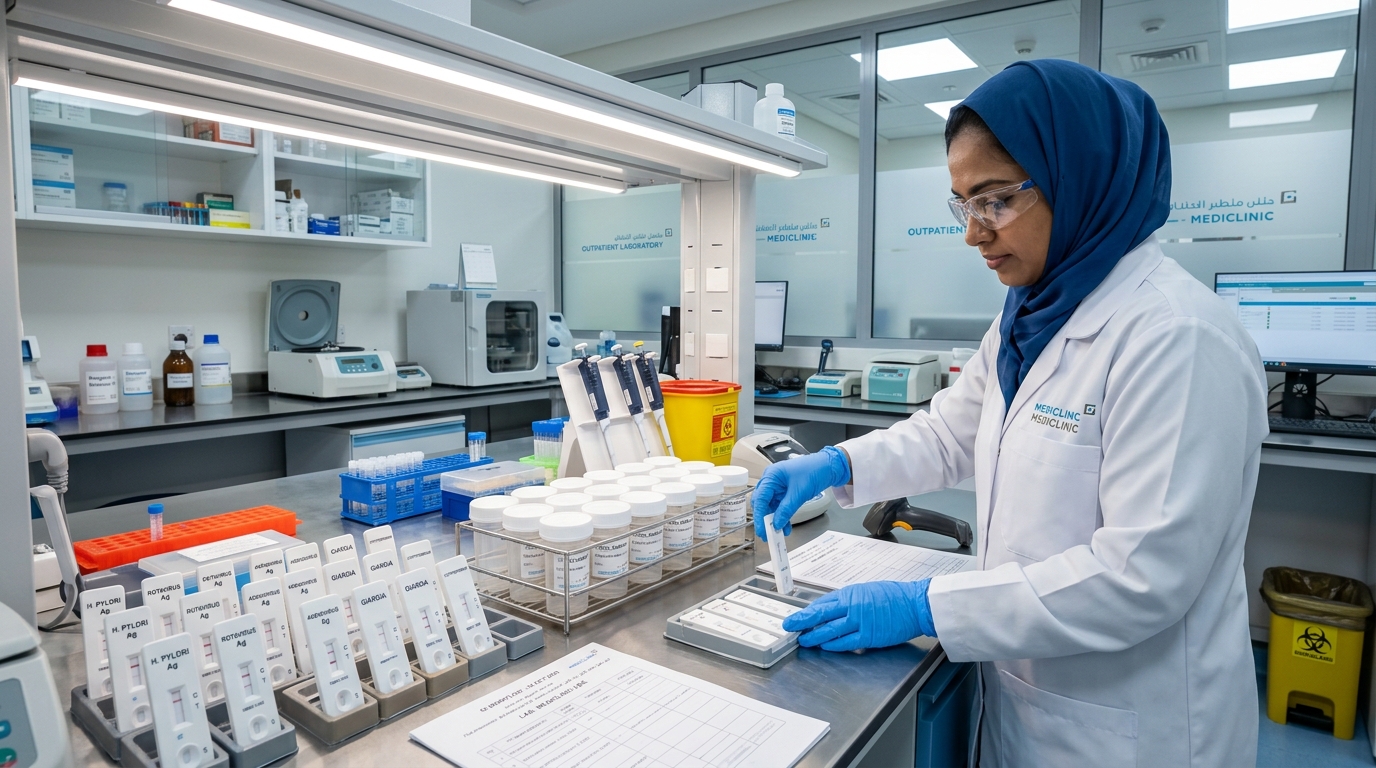
In high-throughput ambulatory medical centers across Dubai, Abu Dhabi, and Sharjah, outpatient clinics encounter high volumes of pediatric gastroenteritis, adult foodborne enteritis, and irritable bowel presentations. Establishing a standardized bedside diagnostic pipeline eliminates empirical guesswork and accelerates patient stabilization. Integrating certified advanced gastrointestinal rapid test kits in UAE provides clinical teams with rapid, reliable diagnostic panels directly within clinic procedure rooms.
The 4 Pillars of Ambulatory Gastrointestinal Point-of-Care Testing
Modern outpatient clinics structure their gastrointestinal diagnostic menu into four validated clinical testing streams:
| Testing Stream | Specific Biomarker / Pathogen | Target Patient Population | Clinical Actionable Outcome |
|---|---|---|---|
| Upper GI Triage | Helicobacter pylori Stool Antigen (HpSA) | Dyspepsia, epigastric burning, postprandial fullness, nausea | Immediate confirmation of active ulcerogenic infection; guides eradication triple/quadruple therapy |
| Pediatric Viral Gastroenteritis | Rotavirus & Adenovirus Combo Antigen | Infants and young children with acute watery diarrhea, vomiting, fever | Confirms viral etiology; prevents unnecessary empiric antibiotics; focuses on oral rehydration therapy |
| Colorectal Bleeding Screen | Immunochemical Fecal Occult Blood (iFOBT / FIT) | Routine colorectal screening (ages 45–75) or unexplained microcytic anemia | Specific for human lower GI globin; triggers optical colonoscopy referral without dietary restrictions |
| IBD vs. IBS Differentiation | Fecal Calprotectin Rapid Semi-Quantitative Test | Chronic abdominal pain, altered bowel habits, persistent bloating | Elevated (>150 µg/g) indicates active mucosal neutrophil degranulation (Crohn’s/Colitis); normal rules out IBD |
Step-by-Step Clinical Workflow in Ambulatory Practice
A standardized 5-stage workflow executed from patient registration to electronic health record sign-off ensures analytical consistency, diagnostic speed, and biosafety:
- Stage 1: Clinical Triage & Dehydration Assessment:
- Triage nurse checks vital signs: Blood pressure, heart rate (tachycardia indicates hypovolemia), orthostatic blood pressure changes, oxygen saturation, and body temperature.
- Assess pediatric dehydration using the World Health Organization (WHO) and Gorelick clinical dehydration scores: Skin turgor (recoil >2 sec), sunken eyes, dry oral mucosa, lethargy, and absent tears during crying.
- Screen for acute “Red Flags”: High pyrexia (>38.5°C), peritoneal guarding, gross hematochezia, toxic appearance, or hemodynamic instability requiring immediate emergency resuscitation.
- Stage 2: Standardized Stool Collection SOP:
- The patient or parent is provided with a sterile, leak-proof stool collection vial featuring an integrated collection stick with grooved spirals.
- Patient dips the applicator stick into 3 to 5 separate areas of the fresh stool specimen (harvesting ~50 mg of solid stool or 100 µL of watery stool) and re-inserts it into the pre-filled extraction buffer tube.
- Avoid contamination with toilet bowl water, urine, or feminine hygiene products.
- Stage 3: Rapid Buffer Homogenization:
- Vigorously shake or vortex the extraction vial for 15 to 30 seconds to release trapped antigens into the extraction liquid front.
- Allow particulate debris and fibers to settle at the tube bottom for 1 to 2 minutes prior to sampling.
- Stage 4: Cassette Loading & Timed Incubation:
- Break the dropper tip of the extraction vial. Dispense exactly 2 to 3 vertical drops into the cassette sample well (S).
- Start the digital laboratory timer set strictly to 10 to 15 minutes. Reading past 20 minutes is strictly prohibited due to potential false-positive drying artifacts.
- Stage 5: Electronic Medical Record (EMR) Integration:
- Verify procedural control line (C). Interpret test lines (T).
- Directly scan or log results into the clinic information system (Malaffi, Nabidh, or Riayati) for immediate physician review and prescription generation.
Deep-Dive: Helicobacter Pylori Stool Antigen Testing Nuances
H. pylori stool antigen testing (HpSA) is the non-invasive test of choice for detecting active gastric colonization. However, pre-analytical medications can cause false-negative results:
| Medication Class | Mechanism of Interference | Mandatory Washout Period |
|---|---|---|
| Proton Pump Inhibitors (PPIs) (Omeprazole, Esomeprazole, Pantoprazole) | Suppresses bacterial metabolic activity and decreases fecal antigen shedding | Discontinue for 2 Weeks prior to testing |
| Antibiotics & Bismuth Subsalicylate | Temporarily suppresses bacterial density below analytical threshold | Discontinue for 4 Weeks prior to testing |
| H2 Receptor Antagonists (Famotidine) | Minimal impact on bacterial density | Can be used as a bridge therapy during the PPI washout window |
Fecal Calprotectin Semi-Quantitative Cutoff Interpretation
Fecal calprotectin is a 36-kDa calcium-binding protein released by neutrophils during mucosal inflammation. Rapid point-of-care cassettes provide semi-quantitative stratification:
- <50 µg/g (Normal): Non-inflammatory bowel disorder. Strongly supports Irritable Bowel Syndrome (IBS), functional dyspepsia, or dietary intolerance. Avoids unnecessary colonoscopies in over 80% of low-risk patients.
- 50 to 200 µg/g (Borderline / Mild Elevation): Low-grade mucosal inflammation. Common causes include regular NSAID use, mild infectious enteritis, diverticular disease, or celiac disease. Discontinue NSAIDs and re-test in 4 to 6 weeks.
- >200 µg/g to >600 µg/g (Significantly Elevated): Active mucosal ulceration and extensive neutrophil infiltration. Highly predictive of active Inflammatory Bowel Disease (Crohn’s Disease or Ulcerative Colitis). Mandates urgent gastroenterology consultation and optical ileocolonoscopy with biopsy.
Biosafety and Infection Control Protocols in Clinic Laboratories
Because stool specimens may harbor highly contagious pathogens (norovirus, rotavirus, C. difficile, enteric salmonellae), stringent biosafety measures must be maintained:
- Personal Protective Equipment (PPE): All staff handling stool vials must wear fluid-resistant disposable nitrile gloves, a lab coat, and protective eyewear or a face shield.
- Designated Processing Zone: Testing must be performed in a dedicated, ventilated clean-utility or point-of-care testing bench, never in patient consultation rooms or break areas.
- Disinfection Standards: Surface decontamination using EPA-registered chlorine-based disinfectants (1,000 ppm sodium hypochlorite) or accelerated hydrogen peroxide wipes after every testing run. Quaternary ammonium compounds are ineffective against non-enveloped viruses like norovirus.
- Biohazard Disposal: Used cassettes, swabs, and sample vials are disposed of immediately in rigid yellow biohazard clinical waste bins for high-temperature incineration.
Impact on Antimicrobial Stewardship in the UAE
Empiric prescription of ciprofloxacin, metronidazole, or azithromycin for acute uncomplicated diarrhea remains a major driver of regional antimicrobial resistance. In the UAE, over 80% of acute pediatric gastroenteritis is viral in origin (rotavirus, adenovirus, norovirus, sapovirus). Implementing rapid viral and antigen screening provides objective evidence of self-limiting viral gastroenteritis to the patient and family, reducing unnecessary antibiotic utilization by over 70% in ambulatory settings.
Frequently Asked Questions (FAQ)
Can watery diarrhea be tested on rapid gastrointestinal cassettes?
Yes. Watery diarrhea can be sampled using a sterile disposable transfer pipette to draw approximately 50 to 100 µL of liquid stool directly into the extraction buffer tube. Ensure the sample is thoroughly mixed before applying drops to the cassette.
What is the difference between chemical guaiac FOBT and immunochemical iFOBT?
Traditional guaiac FOBT detects any peroxidase activity, requiring strict dietary restrictions (avoiding red meat, broccoli, turnips, vitamin C) to prevent false positives. Modern immunochemical tests (iFOBT / FIT) use monoclonal antibodies specific solely to human lower gastrointestinal globin, requiring zero dietary restrictions and delivering far higher specificity.
How long can a stool specimen be stored before rapid testing?
Fresh stool should ideally be tested within 1 to 2 hours of collection at room temperature. If testing is delayed, the unextracted specimen can be refrigerated at 2°C to 8°C for up to 48 hours without compromising antigen integrity.
Can rapid fecal calprotectin tests be used to monitor IBD flare-ups?
Yes. In patients with established Ulcerative Colitis or Crohn’s Disease, serial semi-quantitative rapid calprotectin testing provides an objective indicator of mucosal healing or impending clinical flare, allowing timely titration of biologic or immunosuppressive therapy without repeated endoscopic procedures.
Scientific References & Authoritative Clinical Guidelines
- Infectious Diseases Society of America (IDSA). 2024 Clinical Practice Guidelines for the Diagnosis and Management of Infectious Diarrhea. CID, 2024.
- American College of Gastroenterology (ACG). ACG Clinical Guideline: Management of Irritable Bowel Syndrome and the Role of Fecal Calprotectin Triage. Am J Gastroenterol, 2024.
- Dubai Health Authority (DHA). Point-of-Care Testing (POCT) Standards and Quality Assurance in Outpatient Ambulatory Care Clinics. UAE Health Authority, 2024.