
Gonorrhea Symptoms in Men vs Women: Key Differences Explained
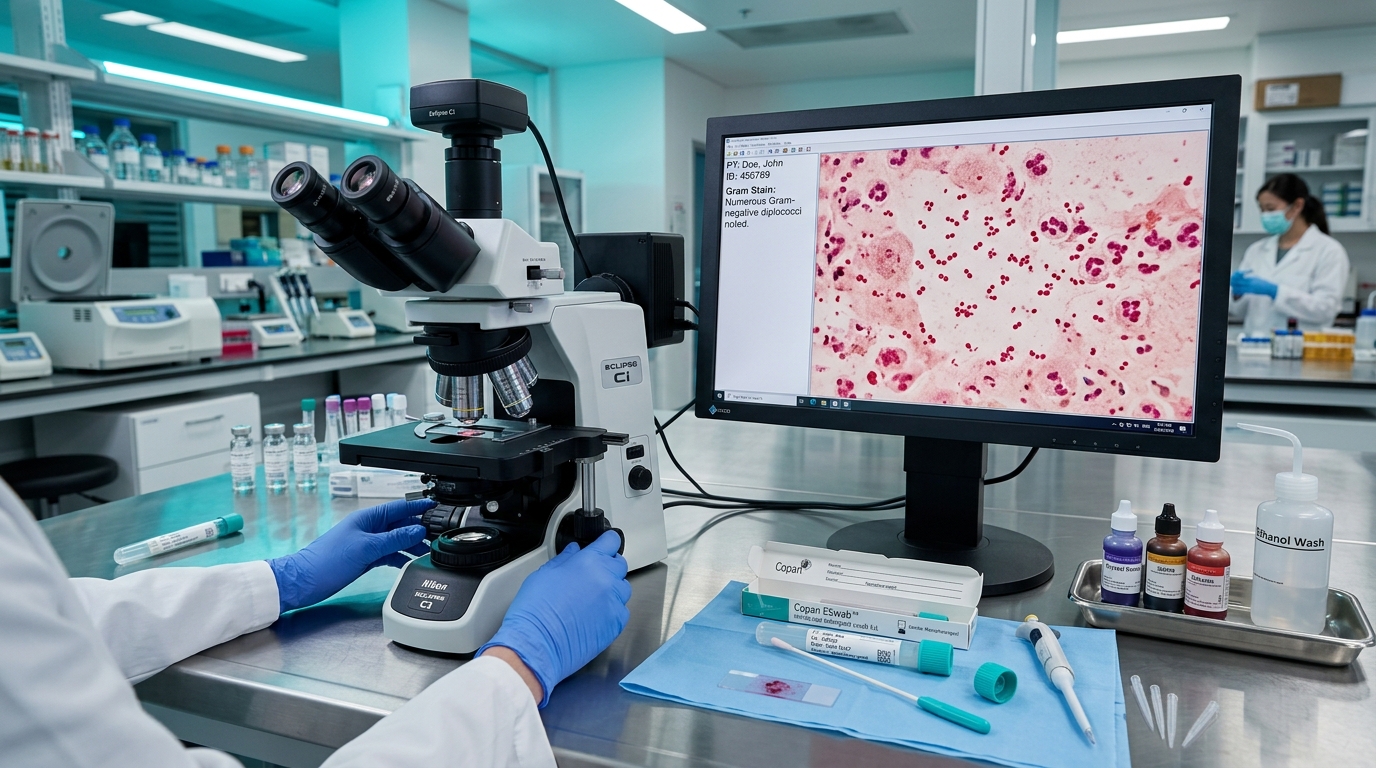
Among bacterial sexually transmitted infections globally and within outpatient clinics across the UAE, gonorrhea ranks second only to chlamydia in clinical prevalence. The causative bacterium, Neisseria gonorrhoeae, is a fastidious Gram-negative diplococcus with an intense predilection for mucous membranes lined by non-cornified columnar and transitional epithelial cells. Individuals exploring confidential STD testing options in Dubai must recognize that clinical symptoms cannot be relied upon as a sole screening trigger. The profound disparity in symptomatic expression between men and women represents one of the most critical diagnostic challenges in modern venereology.
Clinical Context: Why Gonorrhea Presentation Differs by Anatomical Sex
The divergent clinical manifestations between biological sexes stem directly from anatomical architecture and local immune responses. In men, Neisseria gonorrhoeae infects the anterior urethral epithelium, triggering an intense, localized neutrophilic inflammatory response. Within days, this immune confrontation generates severe mucosal irritation, marked dysuria, and copious purulent discharge, compelling the majority of infected males to seek immediate medical intervention.
In women, the primary anatomic site of urogenital colonization is the transitional epithelium of the endocervical canal, with the squamocolumnar junction serving as the main bacterial reservoir. The endocervix possesses significantly fewer sensory pain receptors than the male anterior urethra. Consequently, acute endocervicitis often produces mild, non-specific mucosal discharge or subtle erythema that is easily mistaken for physiological leukorrhea, candidiasis, or bacterial vaginosis. Clinical studies establish that over 70% to 80% of infected women remain completely asymptomatic or exhibit symptoms so mild they go unnoticed until ascending complications occur.
Distinct Symptoms in Men vs Women: Urethral vs Endocervical Manifestations
Recognizing early physical signs is vital for timely therapeutic intervention before bacterial replication ascends into deeper reproductive structures.
Clinical Presentation in Biological Men
In men, the incubation period typically ranges from 2 to 5 days, though symptoms can appear up to two weeks post-exposure. Hallmark symptoms include:
- Copious Urethral Discharge: Thick, opaque discharge varying from milky white to yellow or greenish-yellow, frequently staining underwear.
- Severe Dysuria: Intense, burning pain during micturition, often described by patients as feeling like “broken glass” in the urethra.
- Erythema of the Urethral Meatus: Visible redness, edema, and tenderness at the opening of the penis.
- Testicular / Scrotal Tenderness: Pain radiating along the spermatic cord, indicative of ascending epididymitis or orchitis.
Clinical Presentation in Biological Women
When symptoms do present in women (usually within 10 days post-transmission), they are frequently non-specific and subtle:
- Altered Vaginal Discharge: Increased volume of thin, purulent, yellowish or cloudy vaginal discharge originating from the cervical os.
- Dysuria and Urinary Frequency: Burning during urination caused by concurrent urethral colonization, often misdiagnosed and mistreated as a common E. coli urinary tract infection (UTI).
- Intermenstrual and Post-Coital Bleeding: Cervical friability and inflammation leading to light spotting between periods or bleeding immediately following intercourse.
- Deep Pelvic Discomfort: Dull lower abdominal aching or dyspareunia (painful intercourse) signaling early upper genital tract involvement.
| Clinical Feature | Manifestation in Men | Manifestation in Women | Clinical Implication |
|---|---|---|---|
| Asymptomatic Rate | Low (Only 10% – 15% asymptomatic) | High (70% – 80% entirely asymptomatic) | Women require proactive screening regardless of symptoms |
| Incubation Window | Rapid: 2 to 5 days | Variable: 5 to 14 days (or undetected) | Men present earlier; women present with complications |
| Primary Discharge Type | Profuse, thick, yellowish-green penile discharge | Mild, thin, yellowish vaginal/cervical discharge | Male discharge is easily noticeable; female discharge is subtle |
| Pain Characteristics | Sharp, severe urethral burning during urination | Mild dysuria, deep dyspareunia, or lower pelvic ache | Female dysuria is frequently mismanaged as a simple bladder infection |
| Major Long-Term Risk | Epididymo-orchitis, urethral stricture, infertility | Pelvic Inflammatory Disease (PID), ectopic pregnancy, infertility | Female reproductive consequences are severe and irreversible |
Extragenital Infections and Modern NAAT Diagnostic Modalities
Gonorrhea is not confined to the urogenital tract. Depending on sexual practices, Neisseria gonorrhoeae readily infects extragenital anatomical sites, where it presents unique diagnostic challenges:
- Pharyngeal Gonorrhea: Acquired through receptive oral intercourse. More than 90% of pharyngeal gonococcal infections are completely asymptomatic. When symptoms occur, they present as mild pharyngitis, tonsillar exudate, or cervical lymphadenopathy. Crucially, pharyngeal gonorrhea is the primary anatomical incubator for the emergence of antimicrobial resistance, as gonococci exchange genetic resistance plasmids with commensal oral Neisseria species.
- Rectal Gonorrhea: Acquired through receptive anal intercourse. While often asymptomatic, symptomatic presentations involve proctitis, anal pruritus, tenesmus, mucopurulent rectal discharge, and painful defecation.
- Ocular Gonorrhea (Adult Gonococcal Keratoconjunctivitis): Results from accidental autoinoculation of infectious genital secretions into the eye, causing severe conjunctival erythema, chemosis, eyelid edema, and profuse purulent exudate capable of inducing corneal perforation if untreated.
In diagnostic laboratory practice, international guidelines issued by the CDC Sexually Transmitted Infections Treatment Guidelines designate Nucleic Acid Amplification Tests (NAAT) as the gold standard for diagnosis. NAAT assays demonstrate sensitivity and specificity exceeding 98% for both urine and swab specimens. For men, first-catch urine NAAT is the primary specimen of choice. For women, self-collected or clinician-collected vaginal swabs offer superior diagnostic yield compared to urine. For extragenital exposures, validated site-specific molecular swabs must be collected.
Antimicrobial Resistance and Urgent Medical Red Flags
One of the most pressing concerns in modern medicine is the alarming rise of multidrug-resistant Neisseria gonorrhoeae, designated by the World Health Organization as a High-Priority Pathogen. Gonococci have successively developed resistance to sulfonamides, penicillins, tetracyclines, fluoroquinolones, and macrolides. Currently, first-line international therapy relies on high-dose injectable ceftriaxone monotherapy (500 mg intramuscularly).
Untreated urogenital gonorrhea carries severe pathology. In women, ascending infection into the uterus and fallopian tubes causes Pelvic Inflammatory Disease (PID) in up to 20% of untreated cases, resulting in permanent tubal occlusion, chronic pelvic pain, and a 7- to 10-fold increased risk of life-threatening ectopic pregnancy. In men, untreated epididymo-orchitis can cause painful testicular swelling and secondary obstructive azoospermia. Furthermore, active gonococcal mucosal ulceration increases the biological risk of acquiring or transmitting Human Immunodeficiency Virus (HIV) by three- to five-fold.
- Severe, intractable lower abdominal pain accompanied by high fever and chills.
- Disseminated Gonococcal Infection (DGI): Petechial or pustular skin lesions on the extremities, migratory polyarthralgia, or septic arthritis (acute swelling of a single joint, such as the knee or wrist).
- Acute scrotal swelling, intense testicular pain, or inability to urinate.
Decision Checklist and Frequently Asked Questions (FAQ)
Follow this clinical checklist to ensure comprehensive diagnostic coverage:
- Screen Early: Test between 5 and 14 days post-exposure; repeat testing if initial screening occurs within 48 hours of exposure.
- Request Comprehensive Multiplex Testing: Gonorrhea and chlamydia co-infection occurs in up to 40% of cases; verify your clinic runs dual NAAT PCR panels.
- Inform All Partners: All sexual partners from the preceding 60 days must receive presumptive treatment to prevent reciprocal ping-pong transmission.
- Abstain During Treatment: Refrain from all sexual contact for 7 days following completion of antibiotic therapy and until symptoms resolve entirely.
Authoritative Medical References:
- Centers for Disease Control and Prevention (CDC). Sexually Transmitted Infections Treatment Guidelines: Gonococcal Infections in Adolescents and Adults. Atlanta: CDC; Available from: cdc.gov/std/treatment-guidelines/gonorrhea.htm
- World Health Organization (WHO). Multi-drug resistant gonorrhoea: Global Action Plan and Surveillance. Geneva: WHO; Available from: who.int/news/item/07-07-2017-antibiotic-resistant-gonorrhoea-on-the-rise-new-drugs-needed
- Unemo M, et al. Gonorrhoea: Clinical Presentation, Diagnostic Testing, and Antimicrobial Resistance Dynamics. Nature Reviews Disease Primers / PubMed; Available from: pubmed.ncbi.nlm.nih.gov/31754173/