
Grass Pollen Allergy Symptoms & Testing: Timothy vs Bermuda Grass, Specific IgE Blood Panels & Dubai Seasonal Diagnostics
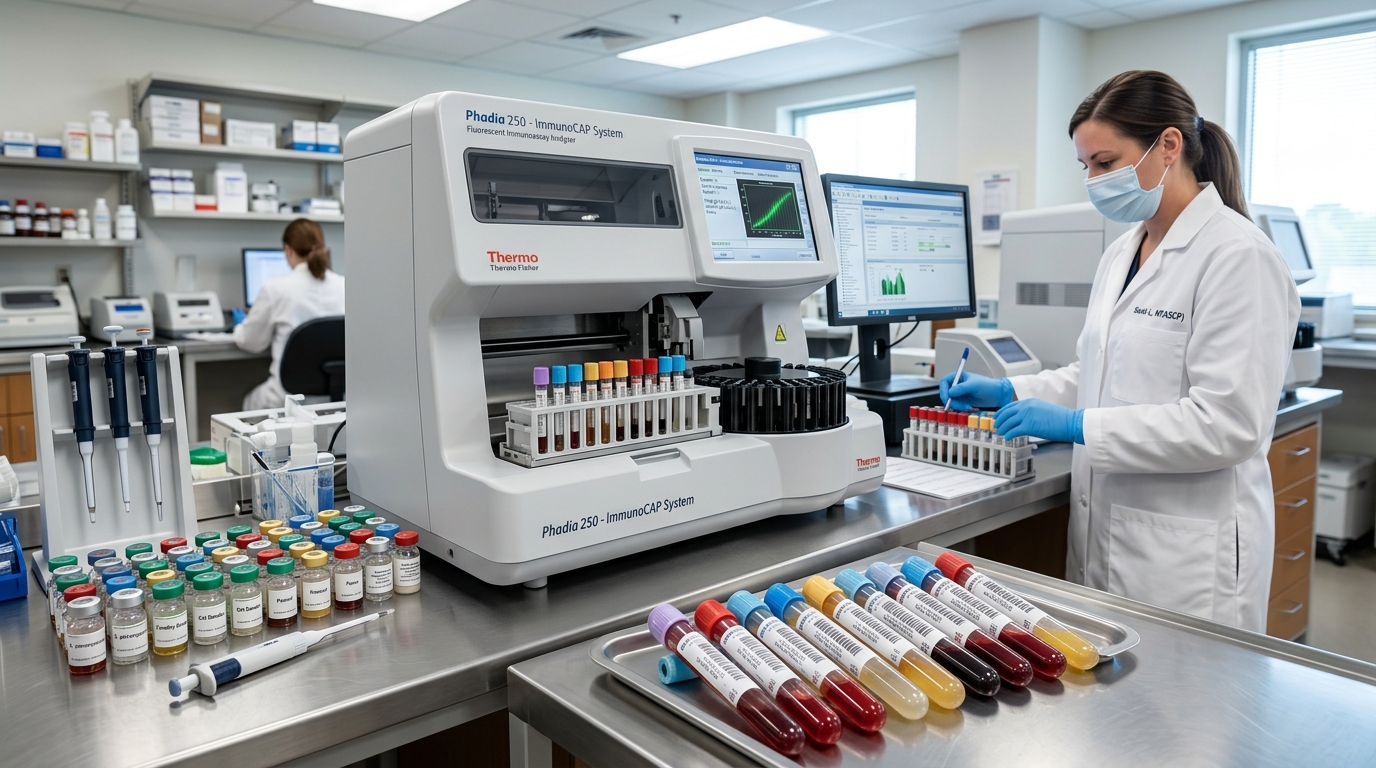
In modern multi-specialty medical centers across Dubai, Abu Dhabi, and Sharjah, precise allergen mapping prevents debilitating chronic airway inflammation. Explore certified comprehensive allergy testing blood panels in Dubai utilizing gold-standard ImmunoCAP specific IgE quantitative profiling without the need to discontinue antihistamine medications.
Immunological Pathogenesis of Type I Hypersensitivity
Inhalation of microscopic grass pollen grains triggers a classic, biphasic IgE-mediated immune response in atopic individuals:
- Allergen Exposure and Sensitization Phase: Aerodynamic grass pollen grains (20 to 40 µm) deposit onto nasal and conjunctival mucosal surfaces. Mucosal moisture extracts major water-soluble pollen glycoproteins (such as group 1 and group 5 allergens). Dendritic antigen-presenting cells capture, process, and present allergen epitopes via MHC class II to naive T cells, promoting differentiation into T-helper 2 (Th2) lymphocytes.
- Th2 Cytokine Cascade & IgE Synthesis: Th2 cells release interleukin-4 (IL-4) and interleukin-13 (IL-13), inducing B-lymphocyte immunoglobulin class switching to synthesize allergen-specific Immunoglobulin E (sIgE). Newly synthesized sIgE enters the systemic circulation and binds with high affinity to Fc-epsilon-RI (FcεRI) receptors on the surface of tissue mast cells and circulating basophils, sensitizing the individual.
- Immediate Early-Phase Reaction (Minutes 0 to 60): Upon subsequent inhalation of grass pollen, bivalent allergen molecules cross-link adjacent IgE antibodies on mucosal mast cells. This triggers explosive mast cell degranulation, releasing preformed inflammatory mediators: histamine, tryptase, prostaglandins (PGD2), and leukotrienes (LTC4, LTD4). This causes acute paroxysmal sneezing, intense palatal and nasal itching, copious watery rhinorrhea, and conjunctival erythema.
- Late-Phase Allergic Reaction (Hours 4 to 12): De novo synthesized cytokines (IL-5, TNF-alpha) recruit circulating eosinophils, basophils, and neutrophils into the nasal mucosa. Eosinophil major basic protein and eosinophil cationic protein cause tissue damage, chronic mucosal edema, persistent nasal congestion, anosmia, and bronchial hyperreactivity (pollen-induced asthma).
Regional Aeroallergens: Temperate vs UAE Gulf Flora
Understanding regional pollen dynamics is critical for clinicians evaluating patients in the UAE’s unique landscape:
| Grass Aeroallergen Species | Primary Major Allergens | Geographic & Climate Distribution | UAE Clinical Relevance & Pollen Season |
|---|---|---|---|
| Bermuda Grass (Cynodon dactylon) [Allergen Code: g2] | Cyn d 1 (beta-expansin), Cyn d 15, Cyn d 22 | Subtropical, tropical, and arid regions; dominant lawn and turf grass worldwide | Primary grass allergen in the UAE. Thrives in irrigated landscaping, golf courses, parks, and residential villas; pollinates almost year-round with peaks in spring and autumn. |
| Timothy Grass (Phleum pratense) [Allergen Code: g6] | Phl p 1 (beta-expansin), Phl p 5 (ribonuclease), Phl p 6, Phl p 12 (profilin) | Cool temperate zones (Europe, North America, northern Asia) | Major trigger for expatriate populations migrating to Dubai; cross-reacts with other Pooideae grasses (Rye, Bluegrass, Fescue). |
| Perennial Rye Grass (Lolium perenne) [Allergen Code: g5] | Lol p 1, Lol p 2, Lol p 3, Lol p 5 | Temperate pasture lands and sports playing fields | Extensive cross-reactivity with Timothy grass due to high amino acid homology of Group 1 and Group 5 allergens. |
| Meadow Grass / Kentucky Blue (Poa pratensis) [Allergen Code: g8] | Poa p 1, Poa p 5 | Temperate lawns, pastures, and parks | Frequently co-sensitizes with Timothy and Rye grass; common component of commercial European imported seed mixes. |
Diagnostic Modalities: Specific IgE Blood Test vs Skin Prick Test
When investigating grass pollen hypersensitivity, clinicians choose between in vitro molecular blood panels and in vivo skin tests:
- Serum Specific IgE (sIgE) Fluorescent Immunoassay (ImmunoCAP):
- Mechanism: Quantitative measurement of circulating allergen-specific IgE antibodies in serum (reported in kUA/L).
- Advantages: Completely unaffected by oral antihistamines, tricyclic antidepressants, or topical corticosteroids; safe for patients with severe eczema, dermatographism, or history of anaphylaxis; requires a single standard venous blood collection.
- Interpretation: Levels ≥0.35 kUA/L indicate positive allergic sensitization (Class 1 to Class 6 grading).
- Skin Prick Testing (SPT):
- Mechanism: Allergen extracts are pricked into the epidermal layer of the volar forearm; mast cell degranulation produces a localized wheal-and-flare reaction within 15 minutes.
- Limitations: Patient must strictly discontinue all first- and second-generation H1-antihistamines for at least 5 to 7 days prior to testing; cannot be performed on actively inflamed skin or during pregnancy; carries a rare risk of systemic allergic reaction.
Clinical Grading of Specific IgE Antibody Concentrations
Laboratory results are interpreted across standardized quantitative sensitization classes:
| IgE Class | Concentration (kUA/L) | Sensitization Level | Clinical Practice Interpretation |
|---|---|---|---|
| Class 0 | < 0.35 | Undetectable / Negative | Absence of detectable specific IgE; clinical allergic symptoms unlikely due to this allergen. |
| Class 1 | 0.35 – 0.69 | Low Level Sensitization | Borderline/low antibody titer; clinical symptoms require correlation with exposure history. |
| Class 2 | 0.70 – 3.49 | Moderate Sensitization | Definite sensitization; frequently correlates with mild to moderate seasonal rhinitis. |
| Class 3 | 3.50 – 17.49 | High Sensitization | Strongly positive; high likelihood of severe symptoms during peak pollination. |
| Class 4 | 17.50 – 49.99 | Very High Sensitization | Robust antibody titers; marked risk of seasonal allergic rhinoconjunctivitis and pollen asthma. |
| Class 5 / 6 | > 50.00 | Extremely High Sensitization | Extreme hypersensitivity; candidate for targeted allergen immunotherapy (AIT). |
Pollen-Food Allergy Syndrome (Oral Allergy Syndrome)
A critical clinical phenomenon associated with grass pollen sensitization is cross-reactivity with certain plant foods:
- Molecular Mimicry (Profilins and Panallergens): Grass pollens contain panallergens such as profilins (e.g., Phl p 12) and lipid transfer proteins (LTPs) that share substantial structural homology with proteins found in fresh fruits and vegetables.
- Oral Allergy Syndrome Symptoms: When a grass-pollen sensitized patient consumes fresh, raw cross-reactive foods, IgE antibodies recognize the homologous epitopes, triggering immediate localized itching, tingling, and mild swelling of the lips, tongue, palate, and pharynx.
- Common Cross-Reactive Foods with Grass Pollen:
- Melons: Watermelon, cantaloupe, and honeydew.
- Fruits: Peaches, oranges, tomatoes, and kiwi.
- Vegetables: Celery, potatoes, and Swiss chard.
- Heat Lability: Because profilins are heat-labile proteins, cooked, pasteurized, or canned versions of these foods typically do not trigger symptoms.
Evidence-Based Therapeutic Interventions
Comprehensive patient management integrates environmental avoidance, pharmacotherapy, and desensitization:
- Environmental Barrier Strategies: Keeping residential windows closed during morning peak pollen release (05:00 to 10:00); running True HEPA air filtration units in bedrooms; showering and washing hair immediately after outdoor recreational activities to remove trapped pollen; wearing wraparound sunglasses outdoors.
- First-Line Pharmacotherapy:
- Intranasal Corticosteroid Sprays (INCS): Fluticasone furoate, mometasone furoate, or budesonide represent the most potent first-line treatment, reducing both early- and late-phase mucosal inflammation.
- Second-Generation Oral Antihistamines: Cetirizine, fexofenadine, or desloratadine provide rapid relief of sneezing, itching, and rhinorrhea without central nervous system sedation.
- Intranasal Antihistamine/Steroid Combos: Azelastine/Fluticasone (Dymista) provides superior symptom control over monotherapy within 15–30 minutes of administration.
- Allergen Immunotherapy (AIT): Sublingual immunotherapy (SLIT tablets/drops) or Subcutaneous immunotherapy (SCIT allergy shots) is the only disease-modifying therapy capable of inducing long-term immune tolerance, shifting Th2 responses toward protective regulatory T cells (Treg) and blocking IgG4 antibodies.
Frequently Asked Questions (Clinical FAQ)
Can I take my allergy medications before having a specific IgE blood test?
Yes. Serum specific IgE blood tests (such as ImmunoCAP) measure circulating antibodies and are completely unaffected by antihistamines, nasal steroid sprays, decongestants, or oral prednisone. You do not need to stop any medications prior to your blood draw.
Why are grass allergies common in the UAE when it is a desert climate?
While the natural desert flora consists of drought-resistant desert shrubs and date palms, urbanized environments throughout Dubai and Abu Dhabi feature extensive artificial irrigation, supporting expansive manicured lawns, championship golf courses, public parks, and highway greenery dominated by Bermuda grass, which pollinates prolifically in warm conditions.
How do I know if my symptoms are from grass pollen or indoor dust mites?
Indoor dust mite allergies are typically perennial (year-round), peaking when indoors, in air-conditioned spaces, or when waking up in bed. Grass pollen allergies often worsen outdoors, during windy days, and after lawn mowing. However, clinical symptoms overlap significantly; only quantitative specific IgE blood testing or skin prick testing can definitively identify the precise sensitizing allergens.
Authoritative Clinical References
- European Academy of Allergy and Clinical Immunology (EAACI) — Guidelines on Allergic Rhinitis and Aeroallergen Diagnostics
- American Academy of Allergy, Asthma & Immunology (AAAAI) — Grass Pollen Allergens and Specific IgE Diagnostic Testing
- World Allergy Organization (WAO) — Diagnostic Workup of Allergic Rhinitis in Subtropical and Arid Environments