
HBsAg vs Anti-HBs vs Anti-HBc: Hepatitis B Serology Panel Interpretation, Window Periods & Dubai Visa Screening Rules
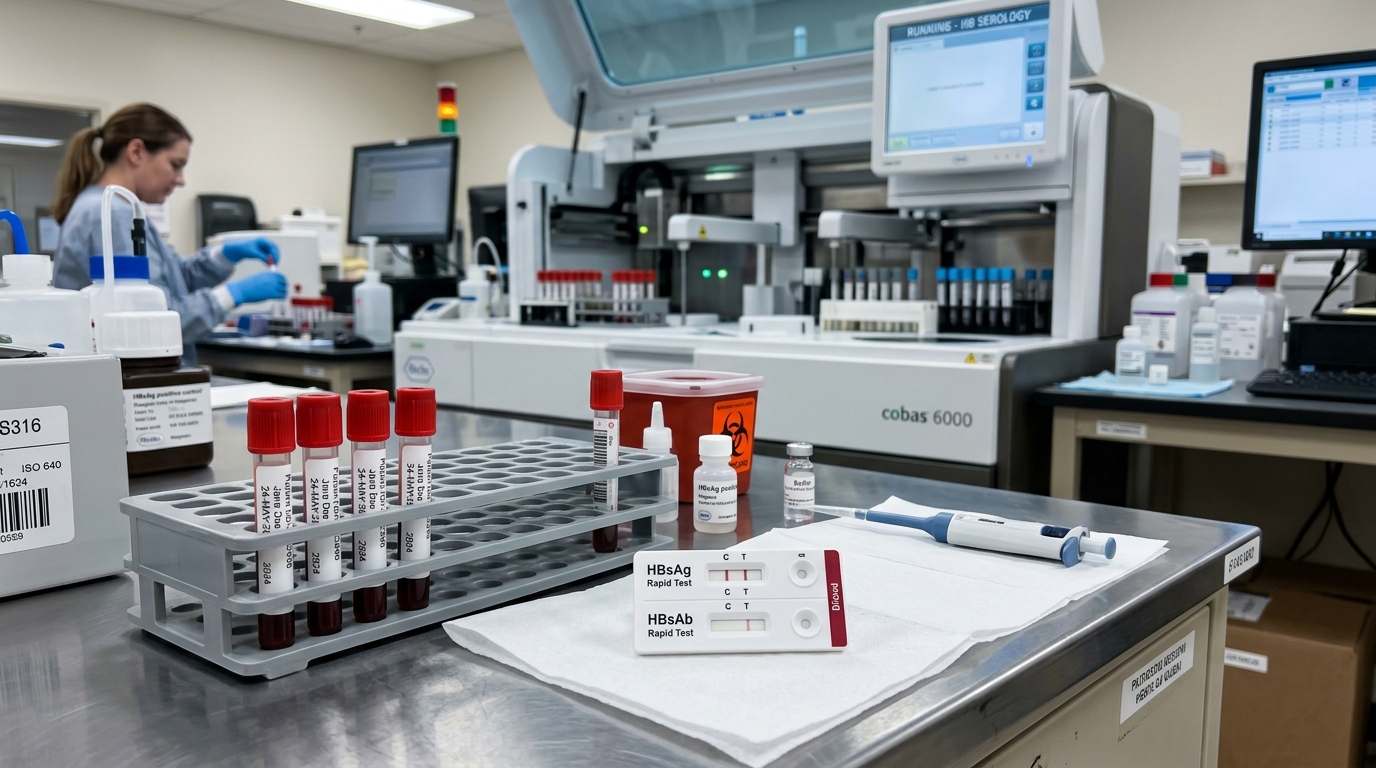
In medical centers across Dubai and Abu Dhabi, accurate hepatitis serology ensures occupational compliance and viral eradication. Patients and corporate health programs can explore confidential viral hepatitis and comprehensive STI testing panels in Dubai providing certified chemiluminescent immunoassays (CMIA) and rapid clinical counseling aligned with UAE Ministry of Health and Prevention (MOHAP) frameworks.
The Biological Foundations of Hepatitis B Serological Markers
To master hepatitis B diagnostic algorithms, clinicians must examine the molecular origins and host immune kinetics of each marker:
- 1. Hepatitis B Surface Antigen (HBsAg): HBsAg is the outer lipoprotein envelope protein of the virion (Dane particle). It is the earliest detectable serological marker, appearing in peripheral blood 1 to 9 weeks (average 4 to 6 weeks) following viral exposure, well before biochemical transaminitis (elevated ALT/AST) or clinical jaundice. The persistence of HBsAg for greater than 6 months defines chronic Hepatitis B infection.
- 2. Hepatitis B Surface Antibody (anti-HBs / HBsAb): Anti-HBs is the host neutralizing immunoglobulin directed against the protective “a” determinant epitope of the surface antigen. The emergence of anti-HBs signals clinical recovery from acute infection and non-infectivity. Crucially, recombinant Hepatitis B vaccines contain only purified HBsAg protein; therefore, successfully vaccinated individuals develop anti-HBs antibodies in complete isolation, without ever generating antibodies against core antigens! A quantitative anti-HBs titer ≥ 10 mIU/mL is internationally recognized by the CDC and WHO as conferring lifelong protective immunity.
- 3. Hepatitis B Core Antibody (anti-HBc / HBcAb): Unlike HBsAg, the Hepatitis B core antigen (HBcAg) remains sequestered within the viral nucleocapsid and intracellular hepatocytes; free HBcAg is not detectable in serum. However, host exposure to whole virions during natural infection provokes a vigorous humoral response against the core protein:
- anti-HBc IgM: Appears during acute infection and persists for approximately 4 to 6 months. It represents the diagnostic hallmark of acute primary HBV.
- anti-HBc Total (primarily IgG): Emerges shortly after IgM and persists for life, serving as an immutable immunological scar of natural exposure, whether the infection resolves or progresses to chronic chronicity. Vaccine-induced immunity NEVER produces anti-HBc!
Master Hepatitis B Serology Interpretation Matrix
The CDC and WHO diagnostic interpretation matrix summarizes every clinical combination of these three primary markers:
| HBsAg | Anti-HBs | Anti-HBc Total | Anti-HBc IgM | Clinical Diagnostic Interpretation | Recommended Clinical Action |
|---|---|---|---|---|---|
| Negative (-) | Negative (-) | Negative (-) | Negative (-) | Susceptible (Non-Immune, Never Infected) | Administer 3-dose recombinant Hepatitis B vaccination series (0, 1, and 6 months). |
| Negative (-) | Positive (+) (≥10 mIU/mL) | Negative (-) | Negative (-) | Immune Due to Vaccination | Protected. No clinical action needed; booster doses generally not required in immunocompetent individuals. |
| Negative (-) | Positive (+) | Positive (+) | Negative (-) | Immune Due to Natural Resolved Infection | Protected from reinfection. Not contagious. Caution: Risk of viral reactivation under intense immunosuppression or anti-CD20 therapy (Rituximab). |
| Positive (+) | Negative (-) | Positive (+) | Positive (+) | Acute Hepatitis B Infection | Patient actively infected and contagious. Monitor liver enzymes (ALT/AST), PT/INR, and bilirubin; evaluate for fulminant liver failure; repeat HBsAg at 6 months. |
| Positive (+) | Negative (-) | Positive (+) | Negative (-) | Chronic Hepatitis B Infection | Active chronic carrier. Order quantitative HBV DNA viral load (PCR), HBeAg/Anti-HBe, liver ultrasound, and transient elastography (FibroScan); refer to hepatology. |
| Negative (-) | Negative (-) | Positive (+) | Negative (-) | Isolated Anti-HBc (Four Clinical Scenarios) | See detailed clinical core-window differential below: order quantitative HBV DNA PCR and consider single vaccine challenge dose. |
The Core Window Period Phenomenon
During the natural resolution of acute Hepatitis B, an intriguing diagnostic interval known as the “Core Window” occurs:
- Disappearance of HBsAg: As the host immune system controls acute viremia, circulating HBsAg levels fall below the analytical limit of detection.
- Delayed Appearance of Anti-HBs: However, detectable free circulating anti-HBs antibodies may not appear for several weeks to months after HBsAg clearance. During this window, all surface antibodies are actively bound to residual surface antigen molecules, forming circulating immune complexes that mask free antibody detection.
- The Sole Diagnostic Marker: During this core window, anti-HBc IgM is the ONLY detectable serological marker of active resolving infection. If a clinician only orders HBsAg and anti-HBs, the patient would be falsely classified as negative! Testing anti-HBc IgM solves this critical diagnostic blind spot.
Deciphering the “Isolated Anti-HBc” Mystery
Finding a patient who tests positive for total anti-HBc while testing negative for both HBsAg and anti-HBs is a common diagnostic challenge in clinical practice. This finding represents one of four distinct clinical scenarios:
- 1. Distant Resolved Infection with Waning Anti-HBs: The most common scenario in adults. The patient successfully cleared Hepatitis B decades ago, and over 20 to 30 years, surface antibody titers waned below the laboratory cutoff (<10 mIU/mL), while core IgG remained positive for life. Administering a single booster dose of HBV vaccine elicits a rapid, anamnestic anti-HBs spike (>100 mIU/mL) within 2 weeks, confirming immunological memory.
- 2. Low-Level “Occult” Chronic Hepatitis B: The patient has chronic viral replication in hepatocytes, but HBsAg production is either mutated (S-gene escape mutants) or below standard immunoassay detection limits. Testing serum HBV DNA by sensitive real-time PCR (LoD < 10 IU/mL) confirms or excludes occult infection.
- 3. Acute Infection in the Core Window: The resolving phase described above, confirmed by testing positive for anti-HBc IgM.
- 4. False-Positive Test Result: In low-prevalence populations, non-specific binding can generate a false-positive core antibody result. If the patient has zero risk factors, negative HBV DNA, and fails to mount an anamnestic response to vaccination, a false-positive immunoassay is confirmed.
Dubai & UAE Residency Visa Screening Guidelines
In the United Arab Emirates, visa medical fitness regulations enforced by DHA and MOHAP mandate strict communicable disease screening:
- Mandatory Occupational Categories for Hepatitis B: While routine residency visas for most professional categories do not screen for Hepatitis B, mandatory HBsAg testing is required for specific high-transmission and food-handling vocations:
- Healthcare workers (doctors, nurses, dentists, laboratory technologists).
- Food handlers, chefs, and restaurant catering staff.
- Nursery workers, kindergarten teachers, and nannies/domestic workers.
- Barbers, salon workers, beauty therapists, and massage parlor staff.
- HBsAg Positive (+) Findings: Individuals applying for new visas within these high-risk categories who test positive for HBsAg are deemed medically unfit under standard labor law regulations.
- Protective Vaccination Mandate: Applicants testing negative for HBsAg and anti-HBs in these vocational categories are required to receive the Hepatitis B vaccine series and demonstrate protective anti-HBs titers (≥10 mIU/mL) for employment clearance.
Frequently Asked Questions (Clinical FAQ)
Can I transmit Hepatitis B if I am positive for Anti-HBs?
No. Anti-HBs is a neutralizing protective antibody. If you have anti-HBs at a level ≥10 mIU/mL and test negative for HBsAg, you are immune to Hepatitis B, cannot become infected, and cannot transmit the virus to sexual partners or household members.
What does it mean if my HBsAg is positive?
A positive HBsAg indicates active Hepatitis B virus circulating in your bloodstream. You are infectious and require medical evaluation. Your physician will order follow-up tests, including an HBV DNA PCR viral load test, liver function tests (ALT/AST), and ultrasound imaging to determine whether you have an acute temporary infection or chronic Hepatitis B requiring oral antiviral therapy (such as Entecavir or Tenofovir).
Why did my Hepatitis B vaccine give me anti-HBs but not anti-HBc?
Commercial Hepatitis B vaccines are recombinant subunit vaccines produced using yeast (Saccharomyces cerevisiae) engineered with the surface gene. The vaccine contains only the surface protein (HBsAg) and zero core proteins (HBcAg). Therefore, your immune system only makes antibodies against the surface protein (anti-HBs). Having anti-HBs without anti-HBc is the classic, textbook proof of successful immunization!
Authoritative Clinical References
- Centers for Disease Control and Prevention (CDC) — Interpretation of Hepatitis B Serologic Test Results
- World Health Organization (WHO) — Hepatitis B Diagnostics, Epidemiology, and Vaccination Guidelines
- American Association for the Study of Liver Diseases (AASLD) — Practice Guidelines for the Prevention, Diagnosis, and Treatment of Chronic Hepatitis B