
HPV Test vs Pap Smear: Key Differences Explained
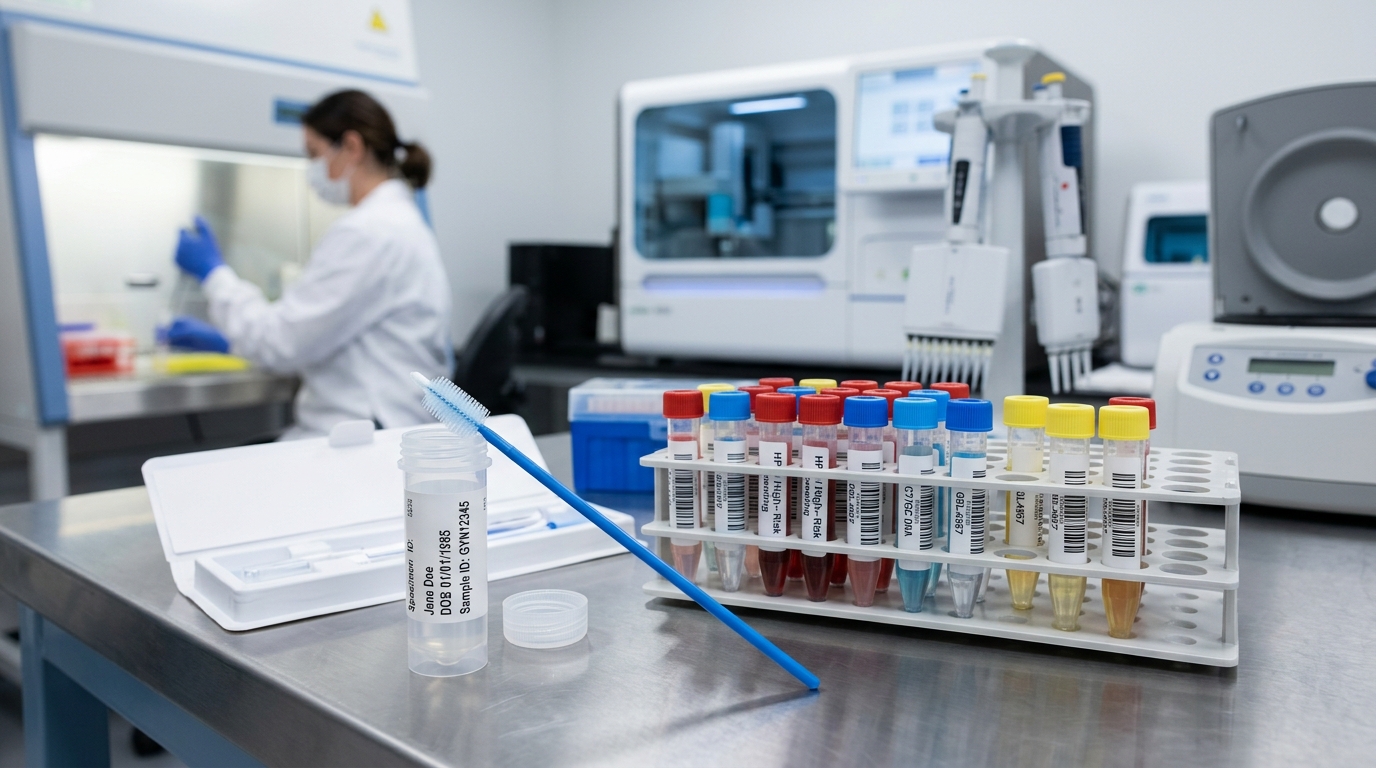
Cervical cancer is almost entirely preventable through regular clinical screening, yet confusion between cytological smears and molecular viral assays remains widespread among patients. Women booking appointments for confidential STD test packages in Dubai or routine wellness checks often assume a Pap smear automatically tests for Human Papillomavirus (HPV). In truth, a traditional cytology screen only flags cellular abnormalities after viral integration has begun altering epithelial morphology. For complete cervical risk stratification, modern clinical guidelines recommend combining cytology with high-precision comprehensive HPV 32 genotype PCR screening to detect high-risk oncogenic strains before precancerous lesions develop.
Biological Targets: Cytology vs Molecular Virology
To understand the difference, consider the underlying mechanism of cervical carcinogenesis. High-risk types of Human Papillomavirus (predominantly genotypes 16 and 18, along with 31, 33, 45, 52, and 58) express two potent oncoproteins, E6 and E7. These viral proteins degrade host tumor suppressor proteins p53 and retinoblastoma protein (pRb), driving uncontrolled epithelial proliferation over a 10 to 20-year window.
- The Pap Smear (Cytology): Evaluates phenotypic host cell changes. A pathologist or cytotechnologist examines exfoliated cervical cells on a glass slide to detect dysplastic alterations: Atypical Squamous Cells of Undetermined Significance (ASC-US), Low-Grade Squamous Intraepithelial Lesions (LSIL), or High-Grade Squamous Intraepithelial Lesions (HSIL).
- The HPV DNA / RNA Test (Molecular): Detects the infectious etiological agent itself. Real-Time Polymerase Chain Reaction (PCR) or transcription-mediated amplification identifies viral genomic sequences in cervical mucus, confirming viral carriage even if host epithelial cells appear completely normal under the microscope.
Head-to-Head Comparison: Diagnostic Parameters
The operational and clinical differences between the two modalities are summarized below:
| Screening Parameter | Conventional / Liquid Pap Smear | High-Risk HPV DNA/RNA PCR Test |
|---|---|---|
| What It Detects | Abnormal cell morphology & dysplasia | Viral genetic material of 14–32 high-risk genotypes |
| Analytical Sensitivity (CIN3+) | 55% – 75% (subject to human reader fatigue) | > 95% (objective automated fluorometry) |
| Recommended Interval | Every 3 years (ages 21–29) | Every 5 years (ages 30–65 if negative) |
| Early Warning Window | Detects damage after it has occurred | Detects viral persistence years before cellular damage |
| Sample Collection Method | Cervical brush / spatula in preservative vial | Same liquid cytology vial (reflex testing possible) |
| Genotype Differentiation | Cannot determine viral strain | Differentiates HPV 16, 18, and other high-risk pools |
The Power of Co-Testing: Combining Cytology and PCR
In patients aged 30 and older, the American College of Obstetricians and Gynecologists (ACOG) and the American Society for Colposcopy and Cervical Pathology (ASCCP) support co-testing—performing both a liquid-based Pap smear and an HPV DNA test from the same cervical specimen brush. If a patient is also undergoing broader reproductive health investigations, such as a Total 35 STD infections panel, co-testing ensures that neither subclinical bacterial co-infections nor oncogenic viral strains are missed.
Co-testing produces distinct clinical scenarios that dictate next management steps:
- HPV Negative + Pap Normal: Lowest possible risk of cervical precancer (< 0.1% over 5 years). Safe to rescreen in 5 years.
- HPV Positive (16 or 18) + Pap Normal: High immediate risk because types 16 and 18 cause 70% of invasive cervical cancers. Immediate colposcopy is clinically indicated regardless of normal cytology.
- HPV Positive (Non-16/18) + Pap ASC-US: Immediate colposcopy directed biopsy or repeat testing in 12 months depending on age and clinical history.
- HPV Negative + Pap Abnormal (LSIL/HSIL): Cytological review or colposcopy is required, as rare cervical carcinomas can occur in HPV-negative contexts or due to atypical strains.
How to Prepare for Your Cervical Screening Appointment
To avoid non-evaluable cytology or assay inhibition, patients should observe standard pre-analytical instructions:
- Timing: Schedule the appointment 10 to 14 days after the first day of your last menstrual period. Avoid scheduling during heavy menstrual bleeding, as red blood cells obscure cytological visualization.
- Intercourse & Intimate Products: Refrain from vaginal intercourse, douching, tampon usage, and vaginal suppositories or medicinal creams for at least 48 hours prior to the swab.
Peer-Reviewed Clinical References
- Centers for Disease Control and Prevention (CDC). Cervical Cancer Screening Guidelines and HPV Prevention. Updated 2024.
- World Health Organization (WHO). WHO Guidelines for Screening and Treatment of Cervical Pre-cancer Lesions for Cervical Cancer Prevention, 2nd Edition, 2021.
- Perkins, R. B., et al. 2019 ASCCP Risk-Based Management Consensus Guidelines for Abnormal Cervical Cancer Screening Tests and Cancer Precursors. Journal of Lower Genital Tract Disease, 2020; 24(2): 102-131.