
IgE Blood Test Explained: What You Need to Know
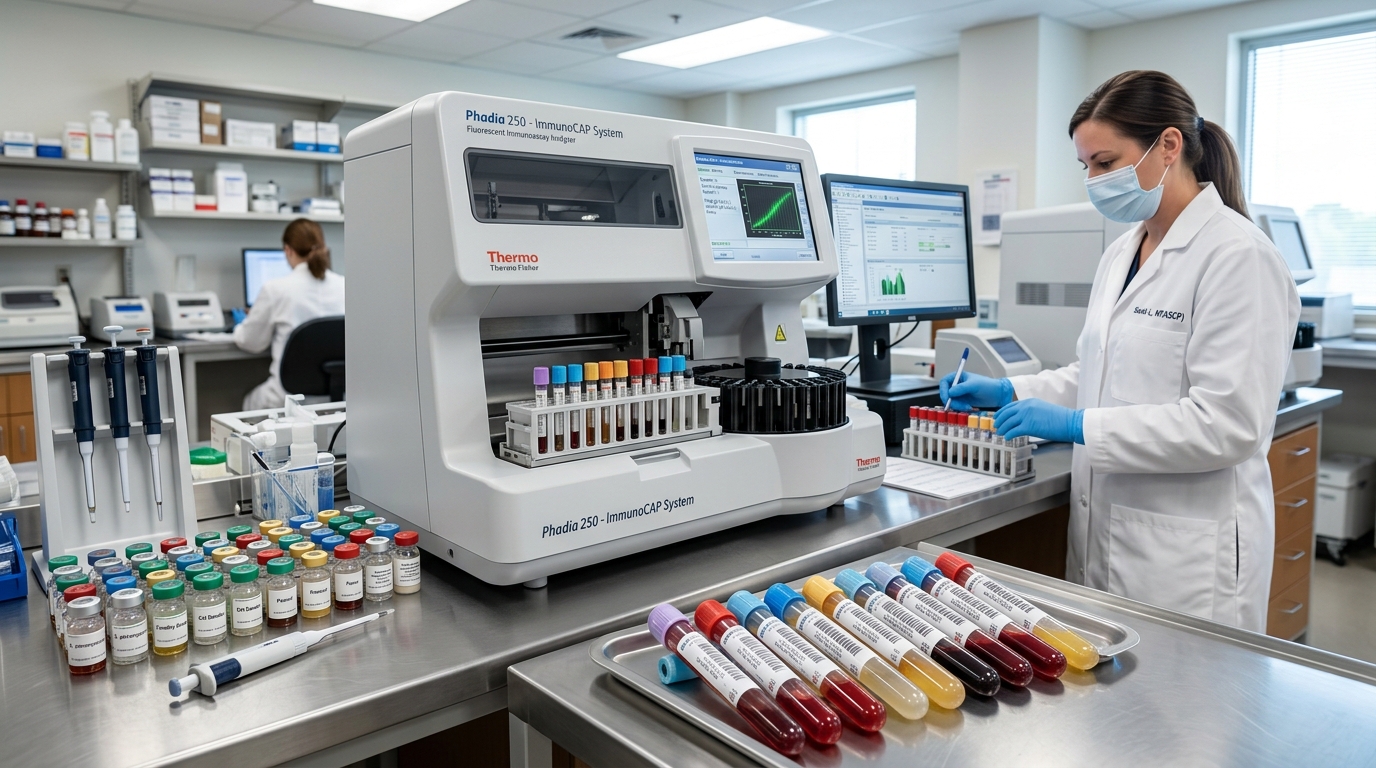
In the UAE’s arid climate, indoor air conditioning, desert dust mites, and diverse culinary environments trigger frequent allergic reactions. Patients suffering from chronic urticaria, allergic rhinitis, eczema, or acute food reactions frequently seek clinical guidance for food and respiratory allergy testing. Depending on clinical presentation, allergists recommend targeted investigations such as the Food Allergy 44 package, the Respiratory Allergy 47 panel, or the multiplex Comprehensive Allergy 295 test. Understanding what IgE measures is the key to differentiating true allergies from non-allergic sensitivities.
Immunological Mechanism: What Is Immunoglobulin E?
Immunoglobulin E (IgE) is a specialized class of antibody produced by plasma cells. Although it represents less than 0.05% of all circulating immunoglobulins in healthy individuals, it mediates Type I Hypersensitivity reactions:
- Sensitization Phase: Upon initial exposure to an allergen (e.g., peanut protein or dust mite feces), genetically predisposed individuals produce allergen-specific IgE antibodies, which bind via high-affinity Fc receptors (FcεRI) to the surface of tissue mast cells and circulating basophils.
- Re-Exposure & Degranulation: Upon subsequent exposure, allergen molecules cross-link adjacent IgE antibodies on the mast cell surface, triggering explosive release of preformed histamine, leukotrienes, and prostaglandins, causing bronchoconstriction, vasodilation, swelling, and itching within minutes.
Class Rating Scale: Interpreting Specific IgE (sIgE) Results
Modern clinical allergy laboratories utilize automated fluoro-immunoassays (such as ImmunoCAP®) to quantify specific IgE in kilounits per liter ($kU_A/L$):
| sIgE Concentration (kU_A/L) | Allergy Class Rating | Level of Sensitization | Clinical Interpretation |
|---|---|---|---|
| < 0.10 kU/L | Class 0 | Undetectable / Absent | Sensitization to this allergen is extremely unlikely. |
| 0.10 – 0.34 kU/L | Class 0/1 | Very Low / Borderline | Equivocal; clinical symptoms dictate significance. |
| 0.35 – 0.69 kU/L | Class 1 | Low Level Sensitization | Sensitization present; low probability of acute clinical reaction. |
| 0.70 – 3.49 kU/L | Class 2 | Moderate Sensitization | Frequently associated with clinical symptoms upon significant exposure. |
| 3.50 – 17.49 kU/L | Class 3 | High Sensitization | High probability of active allergic disease; strict allergen avoidance indicated. |
| 17.50 – 49.99 kU/L | Class 4 | Very High Sensitization | Strong immunological reactivity; assess risk for severe reactions. |
| 50.00 – 99.99 kU/L | Class 5 | Ultra High Sensitization | High risk of severe symptoms; emergency auto-injector (EpiPen) evaluation. |
| ≥ 100.0 kU/L | Class 6 | Extremely High | Maximal immunological sensitization. |
Sensitization vs Clinical Allergy: The Fundamental Rule
A critical diagnostic tenet in allergology is that sensitization does NOT equal clinical allergy:
- Sensitization: The laboratory finding that your blood contains specific IgE antibodies against an allergen ($sIgE > 0.35 kU/L$).
- Clinical Allergy: The manifestation of physical symptoms (hives, wheezing, vomiting, anaphylaxis) when you actually ingest, inhale, or touch that substance.
If an IgE blood test reports a Class 2 sensitization to wheat, but you consume bread daily with zero symptoms, you are NOT allergic to wheat. Eliminating foods solely based on positive blood tests without clinical symptoms leads to malnutrition and anxiety.
Peer-Reviewed Clinical References & Scientific Sources
- Ansotegui, I. J., et al. A WAO – ARIA – GA²LEN Consensus Document on Molecular-Based Allergy Diagnostics. World Allergy Organization Journal, 2020; 13(2): 100091.
- Sicherer, S. H., & Sampson, H. A. Food Allergy: A Review and Update on Evaluation and Management. Journal of Allergy and Clinical Immunology, 2018; 141(1): 41-58.
- Muraro, A., et al. EAACI Guidelines on Allergen Immunotherapy: IgE-Mediated Food Allergy. Allergy, 2022; 77(2): 354-377.