
Influenza A B Rapid Antigen Test Indications: Seasonal Flu Triage, High-Risk Patients & Clinical POCT Guidelines in UAE
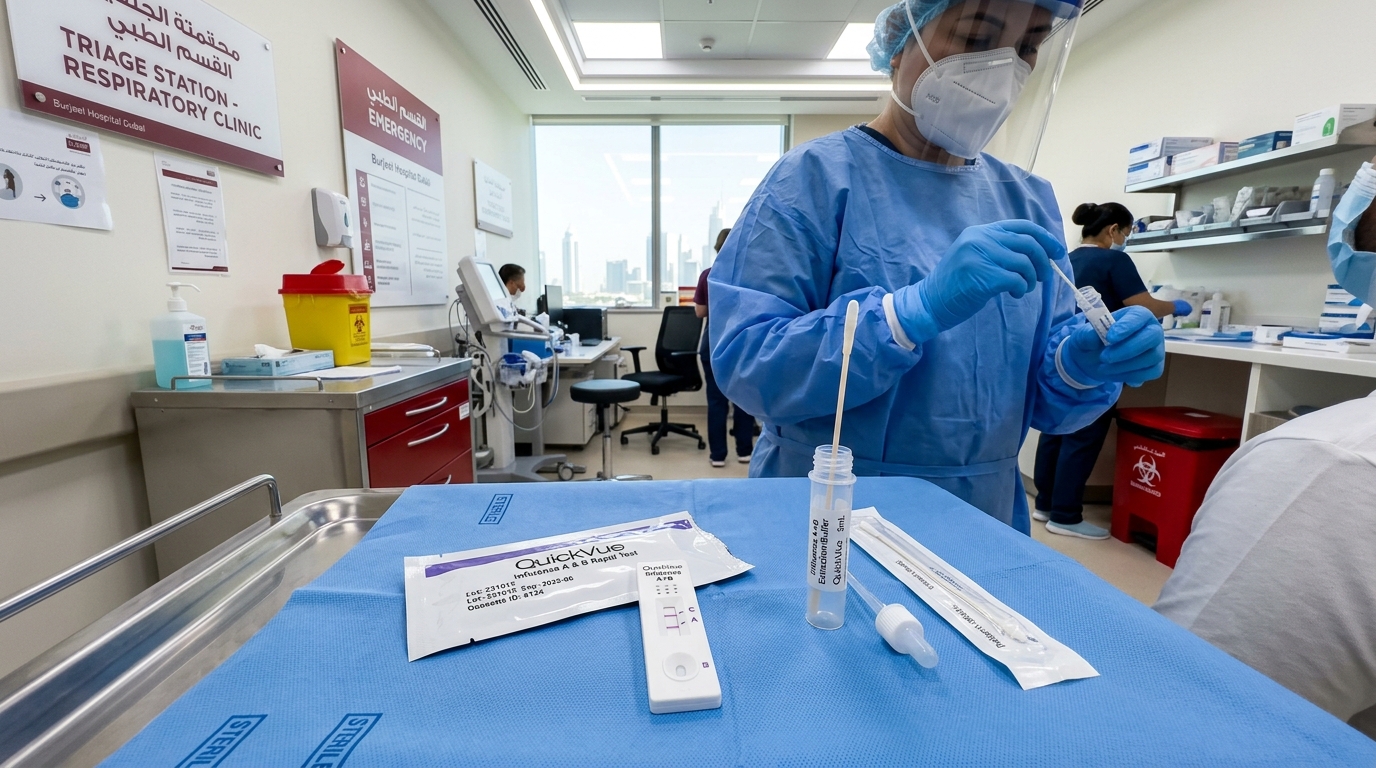
In the vibrant, climate-controlled environments of Dubai, Abu Dhabi, and the Northern Emirates, indoor congregation during peak winter months creates prime conditions for rapid seasonal influenza transmission. Healthcare practitioners faced with surges in febrile respiratory presentations must swiftly differentiate influenza from viral rhinitis, streptococcal pharyngitis, or COVID-19. Utilizing reliable professional respiratory rapid test kits in UAE provides emergency triage nurses and clinic doctors with immediate point-of-care confirmation directly at the bedside.
Influenza Virology: Influenza A vs. Influenza B
Understanding the virological differences between the two primary circulating genera informs clinical interpretation and epidemiological tracking:
- Influenza A (Orthomyxoviridae): Infects humans and animal reservoirs (aquatic birds, swine). Subtyped according to surface glycoproteins Hemagglutinin (H1 to H18) and Neuraminidase (N1 to N11), such as H1N1 and H3N2. Characterized by frequent genetic antigenic drift and shift, driving both seasonal epidemics and global pandemics. Tends to present with higher peak pyrexia and systemic severity.
- Influenza B: Exclusively infects humans and lacks animal reservoirs. Divided into two distinct genetic lineages: B/Victoria and B/Yamagata. Undergoes antigenic drift more slowly than Influenza A, but produces severe febrile illness, croup, and myositis, especially in pediatric and adolescent cohorts.
Core Clinical Indications for Rapid Antigen Testing
According to infectious disease society and UAE health authority guidelines, rapid influenza antigen testing is specifically indicated in the following patient scenarios:
| Clinical Indication | Patient Cohort | Diagnostic Goal | Actionable Clinical Outcome |
|---|---|---|---|
| High-Risk Vulnerable Cohorts | Patients aged >65, infants <2 years, pregnant women, COPD/asthma, diabetics | Immediate confirmation to initiate antiviral therapy within 48 hours | Reduces risk of ICU admission, viral pneumonitis, and secondary bacterial mortality |
| Hospital Admission Triage | Patients admitted to acute medical wards or ICUs with febrile illness | Rapid cohorting and respiratory isolation | Prevents nosocomial transmission to immunosuppressed inpatients |
| Pediatric Febrile Encephalopathy / Sepsis Rule-Out | Young children presenting with sudden high pyrexia (>39°C) and febrile seizures | Identify benign viral etiology for high fever | Avoids invasive lumbar punctures and unnecessary empiric broad-spectrum IV antibiotics |
| Outbreak Investigation in Closed Facilities | Nursing homes, residential schools, corporate compounds | Establish index pathogen during cluster respiratory illnesses | Informs public health reporting and institutional antiviral chemoprophylaxis |
The Critical 48-Hour Antiviral Window
The primary clinical driver for rapid antigen testing is the time sensitivity of antiviral pharmacotherapy. Once viral replication peaks around 48 to 72 hours post-symptom onset, host immunopathological inflammatory cascades dominate, rendering antiviral agents far less effective:
- Neuraminidase Inhibitors (Oseltamivir / Zanamivir): Cleave sialic acid residues to prevent newly formed virions from budding out of infected respiratory epithelial cells. Initiating therapy within 48 hours of symptom onset shortens fever duration by 1.5 to 2.5 days and dramatically lowers secondary otitis media and pneumonia rates.
- Cap-Dependent Endonuclease Inhibitors (Baloxavir Marboxil): A single-dose oral agent halting viral mRNA transcription, effective when administered within 48 hours of symptom onset.
Mechanics of the Influenza A+B Rapid Test Cassette
Modern point-of-care rapid influenza test cassettes utilize immunochromatographic lateral flow sandwich technology:
- Specimen Extraction: A sterile nasopharyngeal or anterior nasal flocked swab is swirled in extraction buffer. The detergent lyses viral envelopes, releasing conserved internal nucleoprotein (NP) antigens into solution.
- Sample Application: Three drops of the extracted sample are dispensed into the cassette sample well (S).
- Conjugate Binding: Liquid flows across a conjugate pad impregnated with colloidal gold-labeled monoclonal antibodies directed against Influenza A NP and Influenza B NP.
- Chromatographic Separation:
- Line A (Influenza A): Immobilized anti-Influenza A monoclonal antibodies capture A-specific nucleoprotein complexes, forming a visible pink/red line.
- Line B (Influenza B): Immobilized anti-Influenza B antibodies capture B-specific complexes, forming a separate pink/red line.
- Procedural Control (Line C): Confirms adequate reagent migration, buffer viscosity, and capillary membrane function.
Diagnostic Accuracy: Sensitivity, Specificity & Molecular Comparison
Clinicians must understand the analytical boundaries of rapid antigen tests compared to reference-standard laboratory molecular RT-PCR:
| Performance Metric | Rapid Antigen Test (POCT) | Molecular RT-PCR Panel |
|---|---|---|
| Clinical Sensitivity | 70% to 85% in adults (Higher in children >85% due to high viral shedding) | >98% (Gold Standard) |
| Clinical Specificity | >98.5% (Very low false-positive rate) | >99.5% |
| Turnaround Time | 10 to 15 Minutes | 2 to 4 Hours (Centralized laboratory) |
| Clinical Rule | A positive test is clinically actionable; a negative test in high-risk patients requires PCR confirmation | Definitive diagnosis for resolving discordant rapid tests |
Antimicrobial Stewardship Impact
Unnecessary antibiotic prescription for viral upper respiratory tract infections remains a significant healthcare challenge. A rapid positive Influenza A or B test delivers immediate, objective biological proof of viral etiology to both clinician and patient, directly eliminating unnecessary prescriptions for amoxicillin, azithromycin, or fluoroquinolones.
Frequently Asked Questions (FAQ)
Does a negative rapid flu test completely rule out influenza?
No. Rapid antigen tests have a sensitivity of 70% to 85%. If a patient presents with classic influenza symptoms during high community viral prevalence, a negative rapid test may represent a false-negative caused by low viral shedding or late presentation. High-risk patients should receive confirmatory RT-PCR testing.
Can the flu vaccine cause a positive rapid test?
No. Standard injected seasonal influenza vaccines contain inactivated (killed) viral sub-fragments or recombinant hemagglutinin that do not replicate in the nasopharynx and will not trigger a rapid antigen test. Only the live-attenuated intranasal spray vaccine (FluMist) can cause transient positive antigen tests within 2 to 3 days of administration.
What swab type provides the best test accuracy?
Nasopharyngeal swabs or flocked anterior nasal swabs collected within 48 to 72 hours of symptom onset yield the highest diagnostic sensitivity. Throat swabs are significantly less sensitive for influenza antigen testing and are discouraged.
Scientific References & Authoritative Clinical Guidelines
- Infectious Diseases Society of America (IDSA). Clinical Practice Guidelines by the IDSA: 2024 Update on Diagnosis, Treatment, Chemoprophylaxis, and Institutional Outbreak Management of Seasonal Influenza. CID, 2024.
- Centers for Disease Control and Prevention (CDC). Rapid Diagnostic Testing for Influenza Viruses: Information for Clinical Laboratory Personnel. MMWR, 2024.
- Dubai Health Authority (DHA). Guidelines for the Management of Seasonal Influenza and Respiratory Illnesses in Outpatient Healthcare Facilities. UAE Health Protocols, 2024.