
Lower Respiratory Pathogens and AMR Multiplex PCR Indications: Pneumonia Diagnosis & Resistance Genes
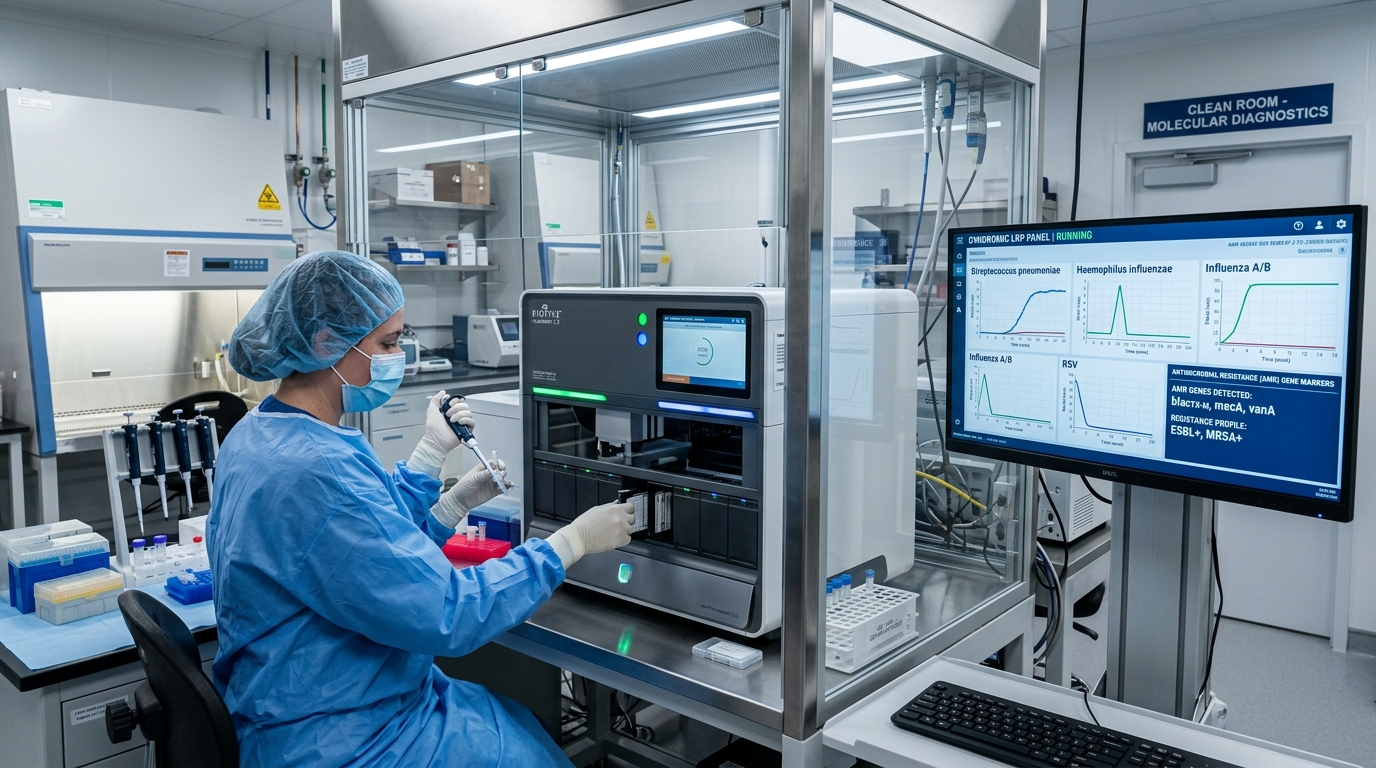
In tertiary medical centers across the UAE, critical care physicians face grave clinical stakes when treating intubated patients developing sudden pulmonary infiltrates and septic shock. Waiting 48 to 72 hours for standard quantitative microbiology cultures to isolate gram-negative bacilli and generate phenotypic drug susceptibility profiles forces physicians to initiate empirical combination therapies (e.g., meropenem plus vancomycin plus colistin). Deploying advanced lower respiratory multiplex PCR panel testing enables rapid de-escalation of toxic antibiotics within hours of ICU admission, saving lives and curbing hospital superbugs.
Syndromic Lower Respiratory Panels vs. Standard Sputum Culture
The diagnostic contrast between conventional phenotypic microbiology and molecular syndromic testing is profound:
- Speed of Pathogen Identification: Conventional cultures require 2 to 4 days for colonial growth, biochemical identification, and automated broth microdilution susceptibility testing. Multiplex RT-PCR delivers definitive identification and resistance gene detection in under 2 hours.
- Overcoming Antibiotic Pre-Treatment Inactivation: Up to 50% of ICU patients have received antibiotic doses prior to specimen collection, rendering standard sputum cultures falsely negative due to bacterial growth suppression. Molecular PCR detects intact genomic DNA, identifying pathogens even when antibiotics prevent in vitro colony formation.
- Semi-Quantitative Genomic Binning: Unlike binary qualitative tests, modern pneumonia panels report bacterial genomic copies in semi-quantitative bins (10^4, 10^5, 10^6, or ≥10^7 genomic copies/mL), allowing clinicians to distinguish true high-titer invasive pneumonia from low-level upper airway mucosal colonization.
Target Pathogens & AMR Resistance Markers Detected
Comprehensive syndromic panels analyze a wide spectrum of respiratory threats and resistance genes:
| Category | Specific Pathogens Detected | AMR Resistance Genes & Mechanisms | Clinical Decision Impact |
|---|---|---|---|
| Gram-Negative Bacilli (Enterobacterales) | Escherichia coli, Klebsiella pneumoniae, Enterobacter cloacae, Proteus, Serratia marcescens | blaCTX-M: Extended-Spectrum Beta-Lactamase (ESBL); confers resistance to ceftriaxone/cefepime | Directs immediate transition to carbapenem or novel beta-lactamase inhibitor combinations |
| Carbapenem-Resistant Pathogens (CRE / CRPA / CRAB) | Pseudomonas aeruginosa, Acinetobacter baumannii, Stenotrophomonas maltophilia | blaKPC, blaNDM, blaOXA-48-like, blaVIM, blaIMP: Carbapenemase enzymes | Guides early selection of Ceftazidime-Avibactam or Cefiderocol; triggers strict contact isolation |
| Gram-Positive Pathogens | Staphylococcus aureus, Streptococcus pneumoniae, Streptococcus pyogenes | mecA/mecC: Methicillin resistance; mreA: Vancomycin resistance indicators | Rapidly distinguishes MRSA from MSSA; allows safe early discontinuation of Vancomycin/Linezolid |
| Atypical Respiratory Bacteria | Legionella pneumophila, Mycoplasma pneumoniae, Chlamydia pneumoniae | Intrinsic beta-lactam resistance (cell-wall deficiency) | Confirms Legionnaires’ disease instantly without waiting for specialized urinary antigen or BCYE agar |
| Viral Respiratory Pathogens | Influenza A/B, RSV, SARS-CoV-2, Adenovirus, Parainfluenza, Metapneumovirus, Rhinovirus | N/A (Viral genomes) | Initiates antiviral therapy; allows complete cessation of all antibacterial drugs when viral monoinfection is proven |
Evidence-Based Clinical Indications for Ordering LRP Panels
Because of diagnostic complexity and cost considerations, professional infectious disease societies specify clear clinical indications:
1. Mechanically Ventilated Patients with Suspected VAP
Patients on mechanical ventilation for >48 hours who develop new or progressive pulmonary infiltrates, purulent endotracheal secretions, deteriorating oxygenation ratios (PaO2/FiO2), and leukocytosis. Running an LRP on a sterile endotracheal aspirate (ETA) or bronchoalveolar lavage (BAL) prevents delayed therapy for multidrug-resistant pathogens.
2. Severe Community-Acquired Pneumonia (CAP) in the ICU
Non-intubated or newly admitted ICU patients meeting ATS/IDSA severe pneumonia criteria (septic shock requiring vasopressors or acute respiratory failure requiring invasive ventilation). Rapid identification of pneumococcal, legionella, or MRSA etiology optimizes targeted therapy.
3. Immunocompromised Host with Pulmonary Infiltrates
Patients with hematologic malignancies, post-chemotherapy neutropenia, or organ transplant recipients. These patients frequently harbor atypical, viral, or opportunistic co-infections requiring immediate broad molecular coverage.
4. Hospital-Acquired Pneumonia (HAP) Failing Empiric Regimens
Non-ventilated ward patients whose clinical pneumonia deteriorates after 48 to 72 hours of standard empiric cephalosporin or piperacillin-tazobactam therapy. The panel reveals whether unexpected resistant pathogens (e.g., KPC-producing Klebsiella or Pseudomonas) have emerged.
Diagnostic Stewardship: Integrating Results into Clinical Practice
Maximizing the impact of syndromic pneumonia panels requires coordinated hospital protocols:
- Pairing with Conventional Cultures: Multiplex PCR does not replace culture; standard bacterial cultures must always be processed concurrently to provide full phenotypic minimum inhibitory concentration (MIC) values and detect rare organisms not represented on the panel.
- Interpreting mecA Detection in S. aureus: If Staphylococcus aureus is detected at 10^7 copies and mecA is negative, the strain is Methicillin-Susceptible (MSSA). Clinicians can immediately de-escalate from vancomycin to targeted cefazolin or oxacillin, protecting kidneys from nephrotoxicity.
- Rapid Negative Predictive Value (NPV): If the panel is completely negative for bacterial pathogens and resistance genes, and reveals Influenza A, empiric broad-spectrum antibiotics can be safely discontinued within 24 hours under guidance of clinical procalcitonin levels. Complementary testing with frontline respiratory rapid diagnostic test kits supports out-of-ICU triaging.
Frequently Asked Questions (FAQs)
Can a lower respiratory multiplex PCR panel replace traditional sputum culture?
No. While the molecular panel delivers rapid pathogen identification and resistance gene detection in 1 to 2 hours, traditional culture remains necessary to isolate the viable organism, confirm phenotypic antibiotic susceptibility (MIC values), and identify rare pathogens not included in the molecular panel.
What is the clinical advantage of detecting the blaCTX-M gene?
The blaCTX-M gene is the most prevalent genetic marker for Extended-Spectrum Beta-Lactamases (ESBL) in Gram-negative bacteria like E. coli and Klebsiella pneumoniae. Detecting it proves resistance to third-generation cephalosporins (ceftriaxone, ceftazidime), allowing immediate selection of carbapenem therapy without a 48-hour delay.
What specimen types can be used for lower respiratory PCR?
Validated specimen types include bronchoalveolar lavage (BAL), mini-BAL, endotracheal aspirates (ETA) from mechanically ventilated patients, and high-quality expectorated or induced deep sputum specimens with minimal salivary squamous epithelial contamination.
Scientific References & Clinical Guidelines
- American Thoracic Society / Infectious Diseases Society of America (ATS/IDSA). Diagnosis and Treatment of Adults with Community-Acquired Pneumonia: An Official Clinical Practice Guideline. Am J Respir Crit Care Med. 2019;200(7):e45-e67.
- Clinical Infectious Diseases. Multicenter Evaluation of the BioFire FilmArray Pneumonia Panel for Rapid Detection of Lower Respiratory Pathogens and Resistance Markers. Clin Infect Dis. 2021;73(4):e908-e916.
- Critical Care. Impact of Multiplex Molecular Diagnostic Testing on Antimicrobial De-escalation in Severe Hospital-Acquired and Ventilator-Associated Pneumonia. Crit Care. 2020;24(1):577.