
Meningitis Pathogens Multiplex PCR Indications: Rapid CSF Analysis, Bacterial vs Viral Differentiation & ICU Sepsis Workflows
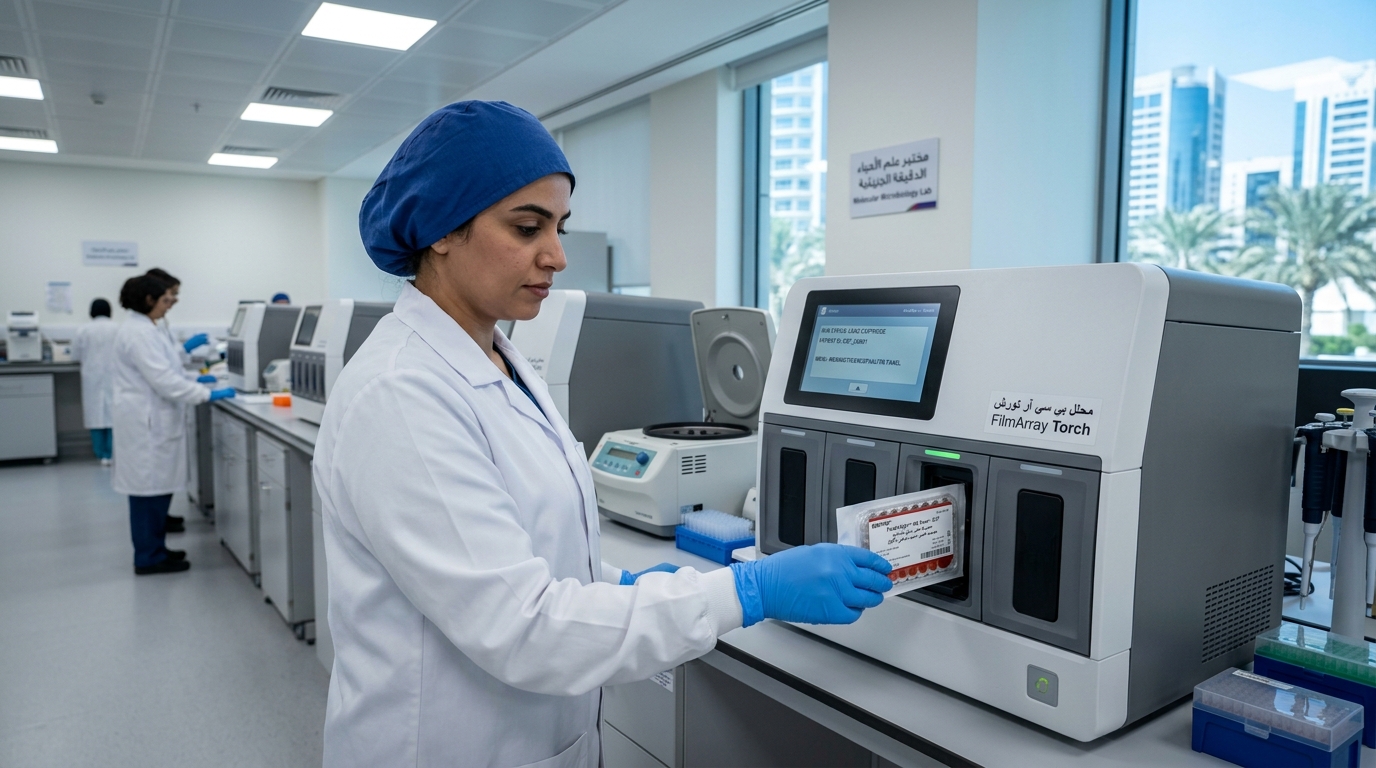
In tertiary emergency hospitals across Dubai, Abu Dhabi, and the Northern Emirates, patients presenting with fever, severe headache, photophobia, and altered mental status demand rapid diagnostic evaluation. Waiting 48 to 72 hours for traditional CSF bacterial cultures can lead to prolonged empiric administration of broad-spectrum antibiotics and antivirals. Integrating automated molecular panels such as advanced meningitis multiplex PCR panels in UAE empowers neurocritical care teams to identify causative pathogens within one hour of lumbar puncture.
Diagnostic Emergency: The Lethal Window of Acute Meningitis
Bacterial meningitis caused by Streptococcus pneumoniae, Neisseria meningitidis, or Haemophilus influenzae carries mortality rates of 15% to 30%, with over 30% of survivors suffering lifelong neurological sequelae (sensorineural hearing loss, seizure disorders, motor deficits). Conversely, viral meningitis (enteroviruses, parechoviruses) is generally self-limiting and requires supportive care rather than broad-spectrum antibiotics.
Conventional diagnostic workflows—Gram stain, cell count, protein, glucose, and culture—suffer from notable limitations. If a patient received even a single dose of pre-hospital oral or IV antibiotics, bacterial culture sensitivity drops from ~85% to less than 40%. Multiplex PCR, by contrast, amplifies microbial DNA/RNA fragments independent of bacterial viability, maintaining high sensitivity (>95%) even after antibiotic exposure.
Clinical Indications for CSF Multiplex PCR Testing
Multiplex CSF PCR is strictly indicated upon obtaining cerebrospinal fluid via diagnostic lumbar puncture in the following clinical scenarios:
- Classic Meningeal Triad: Acute onset of high fever, neck stiffness (nuchal rigidity with positive Kernig’s or Brudzinski’s signs), and altered mental status.
- Pediatric Febrile Encephalopathy / Seizures: Infants and young children presenting with sudden high pyrexia, bulging fontanelle, paradoxical irritability, or unexplained status epilepticus.
- CSF Pleocytosis on Lumbar Puncture: Any CSF analysis demonstrating elevated white blood cell counts (>5 WBCs/µL in adults or >20 WBCs/µL in neonates).
- Suspected Viral Encephalitis: Patients presenting with focal neurological deficits, behavioral changes, dysphasia, or temporal lobe abnormalities on MRI/CT suggestive of Herpes Simplex Virus (HSV-1/2) encephalitis.
- Immunocompromised Host Meningitis: HIV-positive patients, organ transplant recipients, or patients on biologic immunosuppressants presenting with subacute headache suggestive of Cryptococcus neoformans/gattii or Listeria monocytogenes.
Syndromic Multiplex Panel Diagnostic Spectrum
Comprehensive CSF syndromic panels simultaneously target 14 major neuro-invasive pathogens across three biological domains:
| Biological Class | Specific Pathogen Targets | Typical Clinical Syndrome | Targeted Therapeutic Regimen |
|---|---|---|---|
| Gram-Positive Bacteria | Streptococcus pneumoniae Streptococcus agalactiae (GBS) Listeria monocytogenes |
Severe community-acquired meningitis; neonatal sepsis; maternal-fetal sepsis in elderly | High-dose Ceftriaxone + Vancomycin; Ampicillin specifically required for Listeria |
| Gram-Negative Bacteria | Neisseria meningitidis Haemophilus influenzae Escherichia coli K1 |
Epidemic meningococcal meningitis with purpura fulminans; pediatric meningitis | Third-generation Cephalosporins (Ceftriaxone / Cefotaxime) + Public health chemoprophylaxis |
| DNA Viruses | Herpes Simplex Virus 1 (HSV-1) Herpes Simplex Virus 2 (HSV-2) Varicella-Zoster Virus (VZV) Cytomegalovirus (CMV) Human Herpesvirus 6 (HHV-6) |
Necrotizing temporal encephalitis (HSV-1); benign lymphocytic meningitis (HSV-2 / Mollaret); post-herpetic vasculitis | Immediate IV Acyclovir (10 mg/kg q8h) to prevent permanent frontal-temporal necrosis |
| RNA Viruses | Enterovirus (Coxsackie, Echovirus) Human Parechovirus (HPeV) |
Aseptic viral meningitis; neonatal sepsis-like illness with severe irritability | Supportive therapy; prompt discontinuation of empiric IV antibiotics and hospital discharge |
| Yeast / Fungus | Cryptococcus neoformans / gattii | Subacute fungal meningoencephalitis in immunocompromised or HIV patients | Liposomal Amphotericin B + Flucytosine induction therapy |
Antimicrobial Stewardship and Clinical ICU Impact
Clinical trials in neuro-intensive care units have quantified the operational and financial impact of rapid syndromic PCR panels:
| Clinical Metric | Conventional Microbiology Workflow | Multiplex CSF PCR Workflow | Clinical Advantage |
|---|---|---|---|
| Pathogen Confirmation | 48 to 72 Hours (Culture + AST) | 1 Hour from LP arrival | Enables targeted pathogen-directed therapy 47+ hours faster |
| Empiric Antibiotic Duration | Averages 72 to 96 hours | Reduced to <24 hours in confirmed viral cases | Protects gut microbiome, prevents C. diff, curbs AMR |
| Acyclovir De-escalation | 3 to 5 days awaiting viral cultures | Discontinued within 2 hours if HSV-1/2 negative | Prevents drug-induced acute crystalline nephropathy |
| Hospital Stay for Enteroviral Cases | Averages 4.5 days | Reduced to 1.5 to 2.0 days | Saves substantial hospitalization expenses per pediatric patient |
Protocol for Handling Discordant Laboratory Findings
In accordance with neurocritical care standards in UAE accredited hospitals:
- Negative PCR with High Clinical Suspicion: While multiplex PCR sensitivity exceeds 95%, a negative result in a patient with severe purulent CSF (protein >200 mg/dL, glucose ratio <0.3) warrants continuing broad-spectrum coverage while awaiting 48-hour automated bacterial culture and 16S rRNA metagenomic sequencing.
- HHV-6 Detection in Asymptomatic Patients: Human Herpesvirus 6 can integrate into human germline chromosomes (inherited chromosomally integrated HHV-6), resulting in persistent positive PCR. Clinicians evaluate whole-blood viral load and clinical correlation before treating.
Frequently Asked Questions (FAQ)
Does multiplex PCR replace conventional CSF bacterial culture?
No. While multiplex PCR delivers unmatched speed, bacterial cultures remain mandatory for phenotypic antimicrobial susceptibility testing (determining precise minimal inhibitory concentrations – MICs for penicillin and ceftriaxone) and for detecting rare organisms not covered on the panel.
Why must empiric IV antibiotics be given before the lumbar puncture if there is a delay?
If a patient requires a pre-LP brain CT scan to rule out herniation risk, empiric IV Ceftriaxone, Vancomycin, and Dexamethasone must NOT be withheld. Because multiplex PCR detects bacterial DNA rather than living bacteria, the panel remains sensitive even after antibiotics are administered.
Can the panel detect tuberculous meningitis (TB)?
No. Standard commercial 14-target meningitis panels do not include Mycobacterium tuberculosis. In suspected tuberculous meningitis, a dedicated GeneXpert MTB/RIF Ultra assay and mycobacterial MGIT liquid cultures must be ordered separately on large-volume CSF (>5 mL).
Scientific References & Authoritative Clinical Guidelines
- Infectious Diseases Society of America (IDSA). Clinical Practice Guidelines for the Management of Bacterial Meningitis and Encephalitis. CID, 2024.
- Journal of Clinical Microbiology (JCM). Multicenter Diagnostic Evaluation of the BioFire FilmArray Meningitis/Encephalitis Panel for Rapid Cerebrospinal Fluid Analysis. ASM Press, 2023.
- Dubai Health Authority (DHA). Neurocritical Care Standards and Clinical Diagnostic Guidelines for Acute Central Nervous System Infections. UAE Health Authority, 2024.