
Multiplex Target Selection Procurement Criteria: Syndromic Panel Optimization, Clinical Utility vs Overdiagnosis & UAE Hospital Tenders
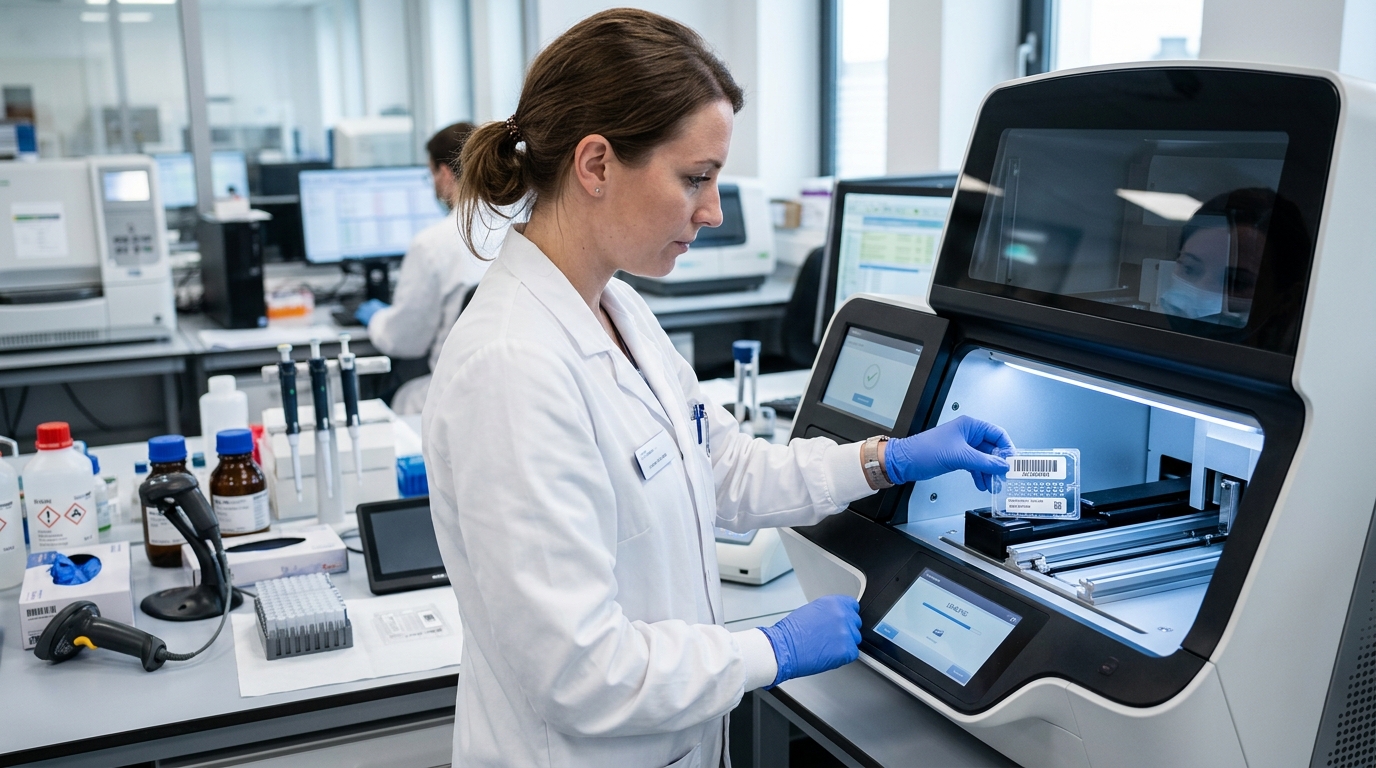
In tertiary medical centers and reference laboratories throughout Dubai, Abu Dhabi, and the wider UAE, selecting molecular platforms engineered with optimal target portfolios ensures diagnostic precision while supporting institutional financial sustainability. Sourcing certified professional molecular diagnostic and PCR solutions in Dubai guarantees healthcare institutions acquire platforms compliant with international accreditation standards.
The Syndromic Paradigm: Actionability vs Overdiagnosis
The core objective of syndromic multiplex testing is rapid clinical decision-making. When procurement committees evaluate panels with 4 targets versus 24 targets, they must apply the principle of diagnostic actionability:
- High Actionability Targets: Pathogens where immediate identification directly alters therapy, infection prevention, or hospitalization. Examples: Influenza A/B (triggers oseltamivir), SARS-CoV-2 (triggers isolation and antivirals), RSV (triggers monoclonal antibody and pediatric cohorting), Legionella pneumophila (triggers fluoroquinolones/macrolides), Bordetella pertussis (triggers macrolides and public health quarantine).
- Low Actionability / High Colonization Targets: Organisms where molecular detection frequently reflects non-pathogenic carriage or prolonged shedding long after clinical illness has resolved. Examples: Rhinovirus/Enterovirus in asymptomatic school children, low-titer Clostridioides difficile toxin B genes in infants, or Epstein-Barr Virus in immunocompetent hosts.
- Clinical Overdiagnosis Hazard: Detecting an incidental colonizer often tempts clinicians into prescribing unnecessary antibiotics, undermining antimicrobial stewardship and prolonging hospital length of stay.
Strategic Procurement Matrix: Evaluating Clinical Syndromes
Hospital tender committees should evaluate multiplex target composition across four primary clinical syndromes:
| Syndromic Clinical Domain | Recommended Core Target Portfolio | Optional / Specialized Targets | Procurement Decision Drivers |
|---|---|---|---|
| Acute Respiratory Infections (RVP) | Influenza A, Influenza B, RSV, SARS-CoV-2 (Core Quadruple) | Parainfluenza 1–4, Adenovirus, Metapneumovirus, Mycoplasma pneumoniae, Chlamydia pneumoniae | Emergency departments require rapid 4-plex (turnaround < 30 min) for triage; ICUs and oncology wards benefit from comprehensive 20+ target syndromic panels. |
| Gastrointestinal Infections (GIP) | Rotavirus, Norovirus GI/GII, Campylobacter, Salmonella, Shigella, Shiga toxin 1/2 | Giardia, Cryptosporidium, Entamoeba histolytica, C. difficile, EPEC, ETEC | Essential to avoid reporting C. difficile in children < 2 years; selective algorithmic reporting prevents overtreatment of self-limiting viral diarrhea. |
| Central Nervous System (MEP) | HSV-1, HSV-2, VZV, Enterovirus, Parechovirus, Streptococcus pneumoniae, Neisseria meningitidis | Listeria monocytogenes, Cryptococcus neoformans, CMV, HHV-6 | Extremely high-consequence panel; every target is actionable; turnaround < 2 hours cuts empirical acyclovir and vancomycin days significantly. |
| Bloodstream Infections (BCID) | Gram-positive panel, Gram-negative panel, Candida species + AMR markers (mecA/C, vanA/B, KPC, NDM, OXA-48, VIM) | Broad fungal species, pan-bacterial 16S | Testing directly from positive blood culture bottles; integration of carbapenemase resistance markers saves lives in septic shock. |
Antimicrobial Resistance (AMR) Markers Integration
In hospital inpatient tenders, multiplex molecular panels that detect only the microbial identity are increasingly obsolete. Procurement specifications must prioritize panels that simultaneously amplify key genetic resistance determinants:
- Methicillin Resistance: Co-detection of mecA and mecC genes in Staphylococcus aureus (MRSA vs MSSA), enabling immediate de-escalation from Vancomycin to Cefazolin within 1 hour.
- Vancomycin Resistance: Co-detection of vanA and vanB in Enterococcus faecium (VRE), directing immediate linezolid or daptomycin administration.
- Carbapenemase Resistance: Co-detection of “Big 5” carbapenemase genes (KPC, NDM, VIM, IMP, and OXA-48-like) in Gram-negative bacilli (Klebsiella, Pseudomonas, Acinetobacter), directing the selection of novel beta-lactamase inhibitor combinations (Ceftazidime-Avibactam vs Meropenem-Vaborbactam).
Economic Framework: Tiered Testing vs “One-Size-Fits-All”
The single most common procurement failure is deploying a large 24-target multiplex cartridge for every ambulatory patient presenting with a mild cough. Large syndromic cartridges cost $80 to $150 per test, quickly consuming hospital operational budgets:
The Two-Tiered Diagnostic Model:
- Tier 1 — Ambulatory Rapid 4-Plex: Low-cost, high-speed automated cartridges covering Flu A, Flu B, RSV, and COVID-19 deployed in Emergency Departments, urgent care centers, and outpatient clinics. Cost: $20–$35; Turnaround: 15–20 minutes.
- Tier 2 — Inpatient Comprehensive Panel: Full 20+ target syndromic cartridges reserved for ICU patients, immunocompromised oncology patients, or patients who test negative on Tier 1 but require hospital admission.
Regulatory Compliance & Tender Evaluation Scoring
Under UAE federal procurement standards and international laboratory accreditation (ISO 15189:2022):
IVDR CE-Marking: All panels must hold formal CE-IVD clearance under Regulation (EU) 2017/746 or US FDA 510(k) clearance for the specific clinical specimen matrices utilized (e.g., CSF, whole blood, bronchoalveolar lavage).
Reagent Stability & Cold-Chain: Tenders should award preferential scoring to room-temperature stable (lyophilized) cartridges (15°C to 30°C storage), which eliminates cold-chain transport failures in Middle Eastern desert climates.
Frequently Asked Questions (FAQ)
Can a hospital selectively mask or unmask specific targets on a multiplex panel?
Yes. Many modern molecular platforms offer software-configurable reporting where the laboratory can run a broad panel but electronically unmask and report only the specific targets requested by the physician, assisting with reimbursement compliance.
Why is detecting multiple pathogens (co-infections) complicated in gastrointestinal panels?
Multiplex gastrointestinal panels frequently detect 2 or 3 pathogens in a single stool specimen (e.g., Norovirus + EPEC). Distinguishing which organism is the true driver of acute illness versus a bystander colonizer requires clinical correlation with inflammatory markers (fecal calprotectin) and symptoms.
What is the typical hands-on preparation time for automated syndromic cartridges?
Modern closed-cartridge systems require less than 2 to 3 minutes of hands-on preparation: the operator pipettes liquid specimen into the cartridge, clicks the lid shut, and inserts the cartridge into the instrument.
Authoritative Clinical References
- Infectious Diseases Society of America (IDSA) – Guidelines for the Use of Multiplex Molecular Panels in Infectious Disease
- Clinical and Laboratory Standards Institute (CLSI) – MM03: Molecular Diagnostic Methods for Infectious Diseases
- World Health Organization – Diagnostic Stewardship: A Guide to Implementation in Antimicrobial Resistance