
Mycoplasma Genitalium PCR Test Explained: Symptoms, Resistance & Diagnosis
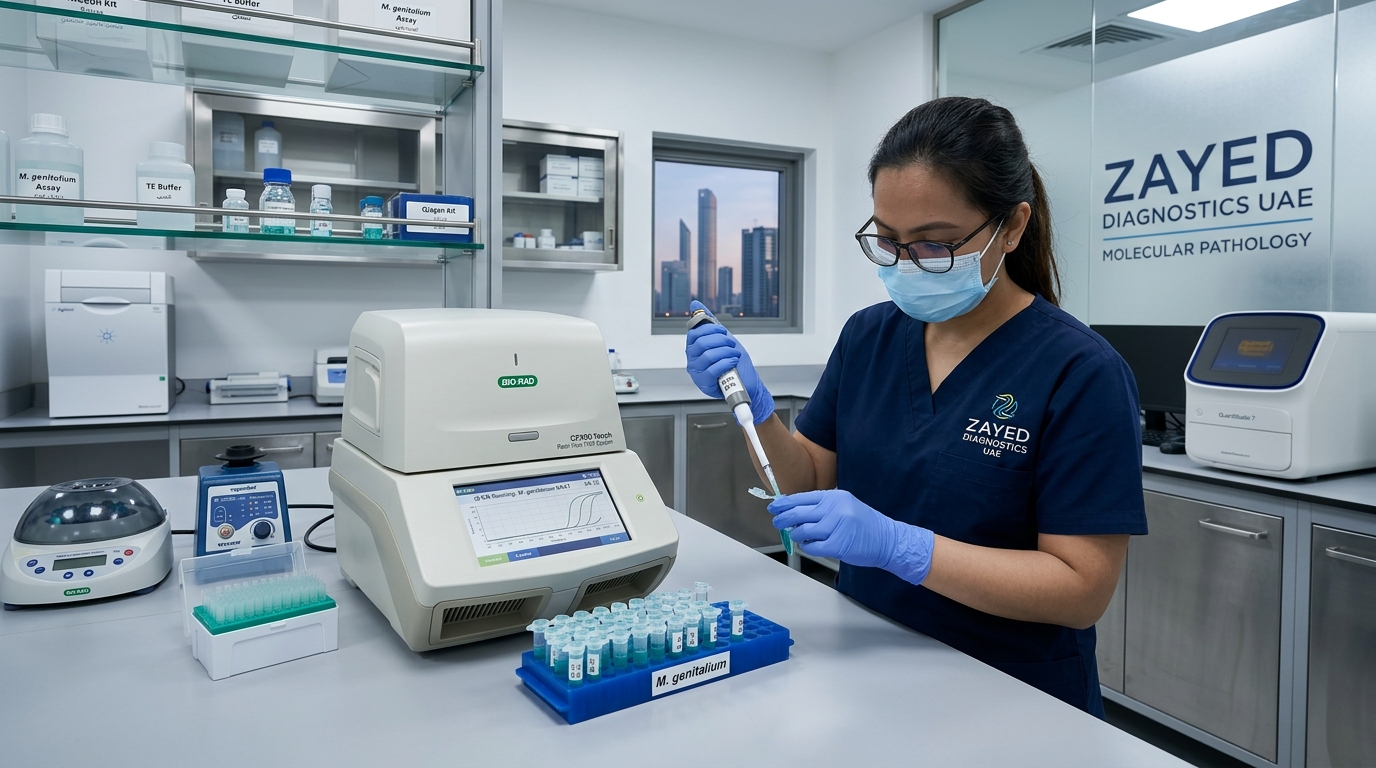
Sexually active adults in the UAE who experience recurrent dysuria, clear or mucoid discharge, or pelvic discomfort after testing negative for Chlamydia and Gonorrhea frequently wonder why their symptoms persist. Routine clinic urine cultures almost always return as “no bacterial growth” because Mycoplasma lacks a peptidoglycan cell wall and takes up to six months to cultivate in vitro. For patients seeking definitive answers, exploring comprehensive STD testing options in Dubai that incorporate multiplex molecular targets is the clinical standard of care.
Pathogen Biology: Why Mycoplasma Genitalium Defies Standard Tests
To understand why a molecular PCR test is mandatory, clinicians evaluate the biological characteristics of the organism:
- Absence of Peptidoglycan Cell Wall: Unlike classical bacteria (like Staphylococcus or E. coli), Mycoplasma species possess only a flexible triple-layered lipid membrane. Consequently, common beta-lactam antibiotics (such as penicillins, amoxicillin, and cephalosporins) that target bacterial cell wall synthesis have zero antibacterial activity.
- Extremely Small Genome & Slow Replication: With only ~580 kilobase pairs, Mgen has the smallest known genome among self-replicating organisms. Its doubling time exceeds 16 to 24 hours, making routine microbiological culturing impossible for patient management.
- Intracellular Mucosal Colonization: The bacterium uses a terminal specialized organelle (containing the MgPa adhesin protein) to adhere tenaciously to human columnar epithelial cells of the urethra, cervix, and respiratory tract, avoiding host immune clearance.
Clinical Indications: When Is a PCR Test Necessary?
International guidelines from the US CDC and the British Association for Sexual Health and HIV (BASHH) recommend targeted PCR testing for:
- Persistent or Recurrent Urethritis: Men with persistent dysuria, penile itching, or clear urethral discharge who failed empiric doxycycline or azithromycin treatment for presumed Chlamydia.
- Unexplained Cervicitis & Intermenstrual Bleeding: Women presenting with mucopurulent cervical discharge, postcoital spotting, or deep dyspareunia.
- Pelvic Inflammatory Disease (PID): All women presenting with clinical signs of acute pelvic infection (uterine or adnexal tenderness) must be evaluated for Mgen to prevent fallopian tube scarring and ectopic pregnancy.
- Routine Sexual Health Screening: Individuals undergoing multi-pathogen screening via the Essential 14 STD infections panel or the comprehensive Total 35 STD infections panel.
- Sexual Partners of Infected Individuals: Asymptomatic partners of confirmed cases require testing and concurrent therapy to prevent immediate reinfection (“ping-pong” transmission).
Sample Collection Guidelines: First-Catch Urine vs Swabs
Analytical sensitivity depends heavily on proper anatomical sampling:
| Patient Group | Preferred Specimen Type | Collection Technique & Instructions | Clinical Sensitivity |
|---|---|---|---|
| Biological Men | First-catch urine (initial 15–30 mL) | Must withhold urination for at least 1–2 hours prior to collection; collect first stream, NOT midstream | >95% sensitivity via NAAT |
| Biological Women (Self-Collected) | Vaginal flocked swab | Insert swab 3–5 cm into vagina, rotate gently for 15–30 seconds, insert into transport vial | >96% sensitivity (superior to female urine) |
| Biological Women (Clinician-Collected) | Endocervical swab | Remove excess mucus with cleaning swab, insert sampling swab into os, rotate for 10–15 seconds | 90% to 94% sensitivity |
| Extragenital Sites (Rectal / Pharyngeal) | Targeted mucosal synthetic swab | Swab mucosal surfaces directly in universal transport medium; indicated in receptive exposure history | 88% to 92% (variable shedding) |
Diagnostic Interpretation: What Your PCR Result Means
- Positive PCR Result: Detects M. genitalium-specific nucleic acids. Indicates active infection requiring targeted antimicrobial therapy for the patient and all recent sexual partners within the preceding 60 days.
- Negative PCR Result: No bacterial DNA detected. If the patient withheld urination properly and the test was performed at least 14 days after exposure, Mgen is ruled out with high diagnostic confidence.
- Resistance Mutation Detected (When reflex testing is performed): Identifies specific point mutations in the 23S rRNA gene conferring macrolide resistance, alerting the treating physician to bypass azithromycin in favor of moxifloxacin.
Test of Cure (TOC): When Should You Re-Test?
Because slow-growing bacteria can shed non-viable DNA fragments for several days post-treatment, clinical guidelines mandate performing a Test of Cure (TOC) at 3 to 4 weeks following completion of therapy. Re-testing earlier than 21 days leads to false-positive results from lingering non-viable bacterial remnants.
Frequently Asked Questions (FAQs)
Can a standard urine culture find Mycoplasma genitalium?
No. Standard urine cultures use nutrient agar plates incubated for 24 to 48 hours, which support common bacteria like E. coli and Klebsiella. Mycoplasma genitalium has fastidious growth requirements and cannot grow on standard culture media. Only molecular NAAT/PCR assays can detect it.
Can Mycoplasma genitalium cause infertility if left untreated?
Yes. In women, untreated Mgen can ascend from the cervix into the upper genital tract, causing endometritis and pelvic inflammatory disease (PID), which may lead to permanent tubal scarring, ectopic pregnancy, and tubal factor infertility.
Why did my symptoms return after taking azithromycin?
Due to widespread macrolide resistance mutations, single-dose azithromycin fails in up to 60% of cases. When treatment fails, clinicians prescribe resistance-guided regimens such as doxycycline followed by moxifloxacin for 7 to 10 days.
Scientific References & Clinical Guidelines
- Centers for Disease Control and Prevention (CDC). Mycoplasma genitalium – STI Treatment Guidelines. MMWR Recomm Rep. 2021;70(4):43-46.
- Clinical Infectious Diseases. Macrolide and Fluoroquinolone Resistance Mutations in Mycoplasma genitalium: A Global Clinical Challenge. Clin Infect Dis. 2020;71(10):e624-e632.
- Journal of Clinical Microbiology. Multicenter Analytical Evaluation of Commercially Available NAAT Assays for Mycoplasma genitalium. J Clin Microbiol. 2020;58(11):e00945-20.