
Reproductive Tract Pathogens Multiplex PCR Indications: Pelvic Inflammatory Disease (PID), Chronic Ureaplasma & Subfertility Panels
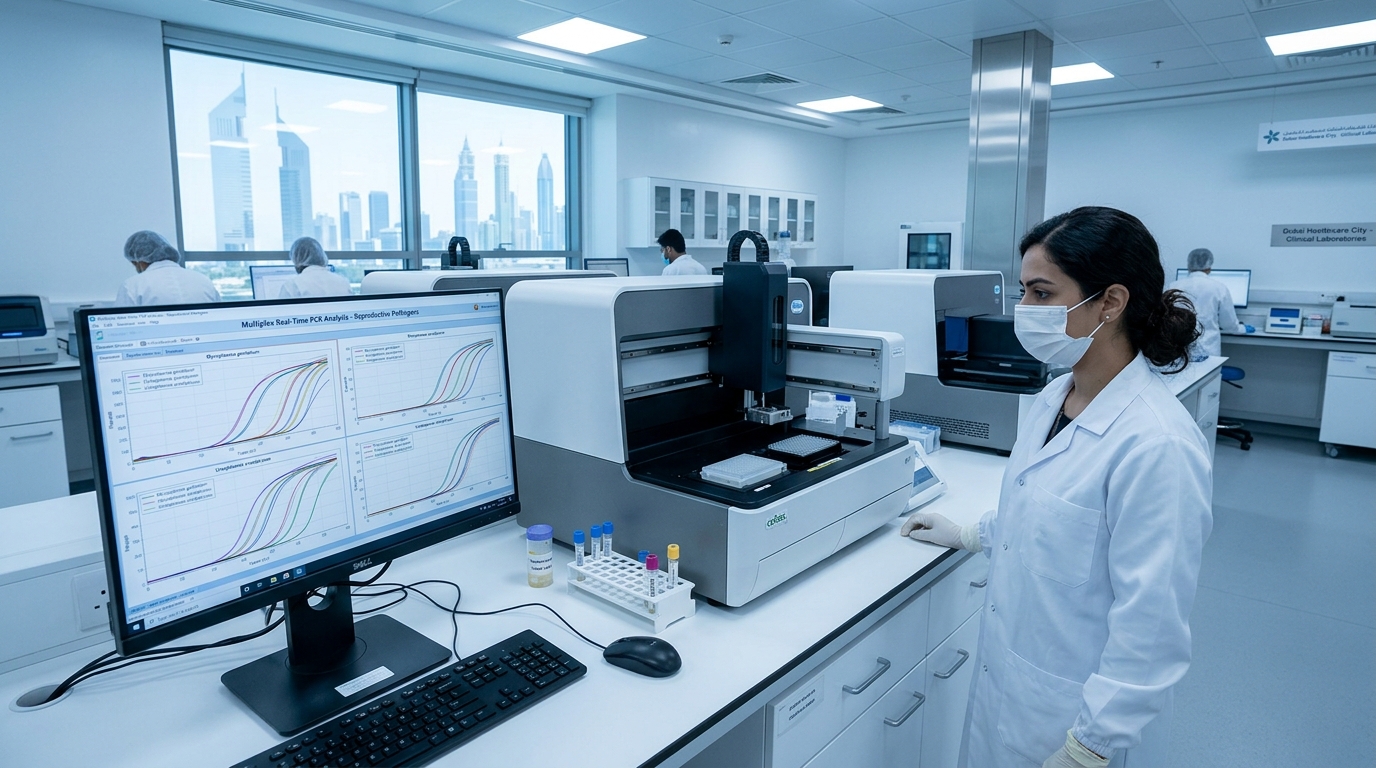
In specialized fertility and gynecological centers across Dubai, Abu Dhabi, and the wider UAE, couples experiencing unexplained primary or secondary subfertility frequently undergo extensive anatomical and hormonal testing. However, subclinical endometrial and tubal microbial colonization is often overlooked. Integrating comprehensive molecular panels such as advanced reproductive tract multiplex PCR panels in UAE provides clinicians with rapid, comprehensive microbial profiling from a single non-invasive swab or urine sample.
Pathophysiological Mechanisms: The Silent Threat of Fastidious Mollicutes
The class Mollicutes (Mycoplasmas and Ureaplasmas) are unique among bacteria in that they completely lack a peptidoglycan cell wall. Bound solely by a triple-layered sterol-containing cell membrane, they exhibit distinct clinical behaviors:
- Intrinsic Beta-Lactam Resistance: Completely impervious to penicillins, cephalosporins, and carbapenems. Empiric therapy with amoxicillin or ceftriaxone fails universally against Mollicutes because there are no penicillin-binding proteins or peptidoglycan targets.
- Mucosal Adherence & Ciliostasis: M. genitalium and U. urealyticum adhere via specialized terminal tip organelle adhesins (MgPa) to the ciliated epithelial cells of the fallopian tubes, inducing ciliostasis, localized oxidative mucosal necrosis, and tubal scarring that precipitates ectopic pregnancies or tubal factor infertility.
- Chronic Subclinical Endometritis: Low-grade infection recruits CD138+ stromal plasma cells into the endometrial cavity, disrupting cytokine profiles (IL-6, TNF-alpha) and preventing normal blastocyst implantation, contributing to repetitive IVF embryo transfer failures and early miscarriages.
- Urease Toxicity in Pregnancy: Ureaplasma species hydrolyze urea to generate cytotoxic ammonia and carbon dioxide, elevating amniotic fluid pH, inducing matrix metalloproteinase release, and weakening the collagen matrix of fetal chorioamniotic membranes.
Core Clinical Indications for Multiplex PCR Panels
Comprehensive multiplex reproductive panels are indicated under the following evidence-based clinical scenarios:
| Clinical Indication | Patient Cohort | Primary Microbial Suspects | Diagnostic Rationale & Clinical Action |
|---|---|---|---|
| Pelvic Inflammatory Disease (PID) | Women presenting with pelvic tenderness, cervical motion tenderness, and purulent discharge | C. trachomatis, N. gonorrhoeae, M. genitalium | Identifies non-gonococcal etiologies; prevents tubal factor occlusion and chronic pelvic pain |
| Unexplained Infertility & IVF Pre-Workup | Couples failing natural conception after 12 months; prior to initiating IVF/ICSI cycles | Ureaplasma urealyticum, Mycoplasma hominis, Chlamydia | Clears subclinical endometritis to optimize endometrial receptivity and prevent embryonic loss |
| Recurrent Pregnancy Loss (RPL) | Women with ≥2 consecutive first- or early second-trimester miscarriages | Ureaplasma urealyticum, Listeria, Chlamydia | Identifies chronic decidual colonization causing inflammatory embryonic rejection |
| Male Leukocytospermia & Asthenozoospermia | Men with semen analysis showing >1 million WBCs/mL and impaired sperm motility | Ureaplasma urealyticum, M. genitalium | Ureaplasma attaches to sperm head and flagella, causing oxidative motility arrest and DNA fragmentation |
| Preterm Labor & Chorioamnionitis History | Pregnant women with prior history of PPROM or late second-trimester loss | Ureaplasma parvum / urealyticum, Group B Strep | Urease activity hydrolyzes urea to cytotoxic ammonia, weakening fetal amniotic membranes |
Diagnostic Superiority: Multiplex PCR vs. Fungal/Bacterial Culture
The technical challenges of culturing Mollicutes highlight why molecular PCR has become the diagnostic standard:
| Diagnostic Parameter | Multiplex Real-Time PCR (NAAT) | Traditional Culture & Serology |
|---|---|---|
| Analytical Sensitivity | >98% to 100% | 30% to 50% (Organisms die rapidly during transport) |
| Turnaround Time | 2 to 4 Hours | 3 to 7 Days (Requires specialized Eaton/Shepard’s urea broth) |
| M. genitalium Detection | Routine, rapid, and automated | Virtually Impossible to Culture (Can take up to 6 months to grow in vitro) |
| Macrolide Resistance Profiling | Simultaneous 23S rRNA point mutation detection | Not available via routine phenotypic testing |
| Sample Versatility | First-catch urine, endocervical swab, vaginal swab, semen | Rigid transport media required; prone to overgrowth by contaminants |
Macrolide and Fluoroquinolone Resistance Management
Due to decades of inappropriate single-dose Azithromycin administration, Mycoplasma genitalium has developed over 60% to 80% resistance to macrolides worldwide. Advanced multiplex panels performed in accredited Dubai laboratories include reflex resistance typing:
- Macrolide-Susceptible Strains (Wild Type): Doxycycline 100 mg orally twice daily for 7 days, followed immediately by high-dose Azithromycin (1 g orally on Day 1, then 500 mg once daily for Days 2 to 4).
- Macrolide-Resistant Strains (23S rRNA Mutated): Doxycycline 100 mg twice daily for 7 days to reduce initial bacterial load, followed by Moxifloxacin 400 mg once daily for 7 days.
- Refractory or Dual-Resistant Strains: When both macrolide and quinolone mutations (parC) are detected, specialist options include Pristinamycin (1 g orally four times daily for 10 days) or Minocycline (100 mg twice daily for 14 days).
Sample Collection Protocols for High Analytical Yield
Obtaining optimal clinical sensitivity requires adhering to anatomical sampling standards:
- In Women: Self-collected or clinician-collected vaginal swabs (inserted 3 to 5 cm and rotated for 15 seconds) or endocervical swabs demonstrate the highest diagnostic sensitivity (>98%), outperforming urine samples. Endometrial biopsies can also be processed via PCR for chronic endometritis workups.
- In Men: First-catch urine (initial 20 to 30 mL after holding urine for ≥1 to 2 hours) or whole semen ejaculate provides superior yield for urethral and prostatic colonization.
Pre-IVF and Pre-Embryo Transfer Molecular Screening Checklist
Leading fertility centers across the UAE incorporate routine pre-cycle molecular pathogen clearance to optimize pregnancy rates per transfer:
- Perform simultaneous multiplex swab/urine testing for both male and female partners 4 to 6 weeks before planned ovarian stimulation or frozen embryo transfer (FET).
- If Ureaplasma or Mycoplasma is detected, complete targeted antibiotic course.
- Perform a Test of Cure (TOC) 3 to 4 weeks post-treatment to confirm negative molecular status prior to transfer.
- Practice strict barrier contraception throughout the treatment and testing window.
Frequently Asked Questions (FAQ)
Is Ureaplasma always considered a sexually transmitted disease?
Ureaplasma can be part of the commensal genital flora in up to 40% to 50% of sexually active, completely healthy women. However, when present in high quantitative concentrations (>10^4 CFU/mL) in the setting of pelvic pain, leukocytospermia, or unexplained infertility, it is considered a clinically significant pathogen warranting targeted eradication.
Should both sexual partners be treated simultaneously?
Yes. If a patient tests positive for Mycoplasma genitalium, Chlamydia, or symptomatic Ureaplasma, both sexual partners must receive simultaneous antimicrobial treatment and practice barrier abstinence until completion of therapy to prevent ping-pong reinfection.
When should a Test of Cure (TOC) be conducted?
A Test of Cure via repeat multiplex PCR is strongly recommended 3 to 4 weeks after completing therapy for Mycoplasma genitalium. Testing earlier than 3 weeks can detect non-viable bacterial DNA fragments, yielding false-positive results.
Can reproductive tract pathogens cause male infertility?
Yes. Chronic subclinical infections by Ureaplasma and Mycoplasma adhere to sperm membranes, inducing elevated reactive oxygen species (ROS), flagellar curling, premature acrosomal reaction, and elevated sperm DNA fragmentation, leading to impaired fertilization potential.
Scientific References & Authoritative Clinical Guidelines
- Centers for Disease Control and Prevention (CDC). Sexually Transmitted Infections Treatment Guidelines: Pelvic Inflammatory Disease (PID) and Mycoplasma Genitalium. MMWR, 2024.
- International Union against Sexually Transmitted Infections (IUSTI). European Guideline for the Management of Mycoplasma genitalium and Fastidious Reproductive Pathogens. IUSTI Guidelines, 2024.
- Dubai Health Authority (DHA). Standards for Assisted Reproductive Technologies (ART) and Gynecological Molecular Diagnostics. UAE Health Regulations, 2024.