
Respiratory Adenovirus Rapid Test Limitations: Low Adult Sensitivity, Pharyngoconjunctival Fever & RT-PCR Confirmatory Workflows
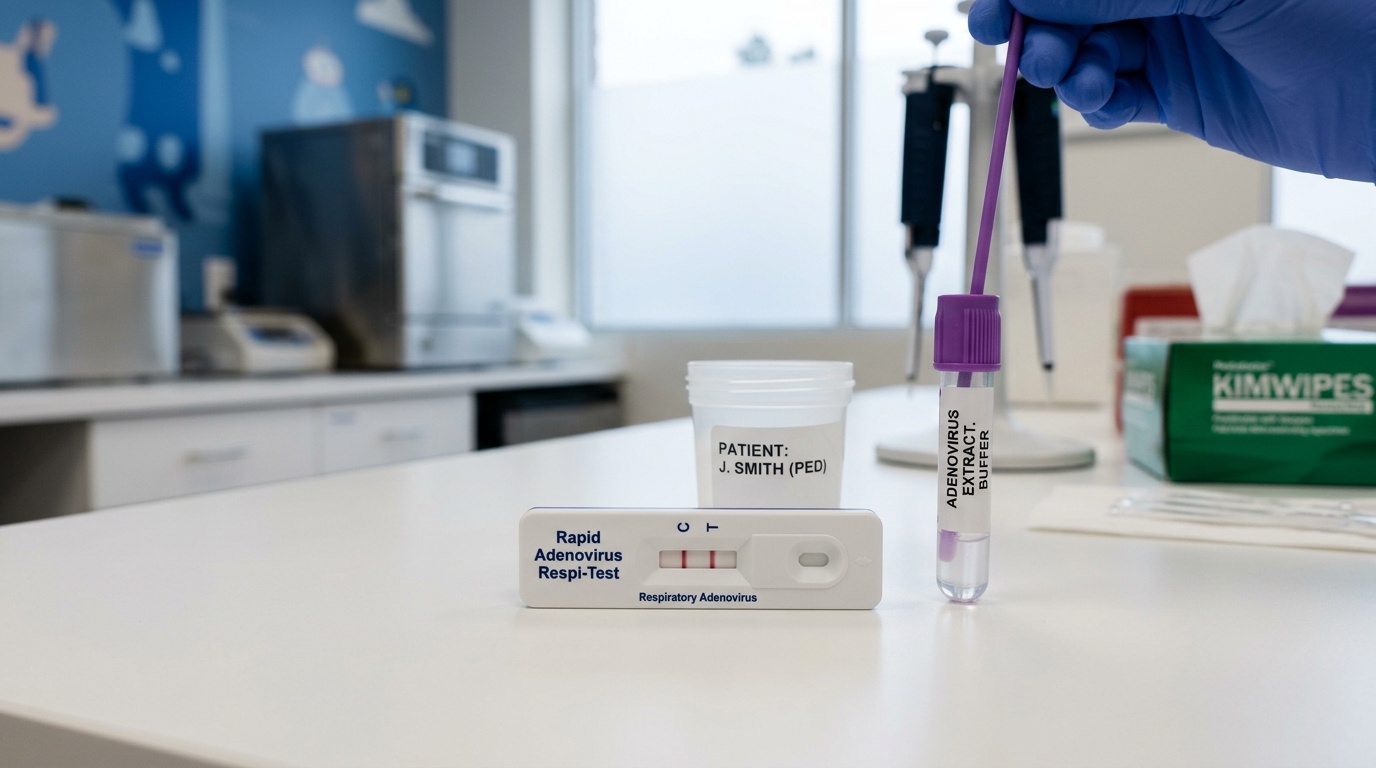
In pediatric emergency units and polyclinics throughout Dubai, Abu Dhabi, and the wider UAE, rapid respiratory diagnostics prevent inappropriate antibiotic use. Sourcing certified professional respiratory rapid test kits and molecular diagnostic systems in the UAE ensures clinic directors utilize assays engineered with validated monoclonal accuracy compliant with international standards.
The Analytical Sensitivity Deficit: RADT vs RT-PCR
The primary performance limitation of rapid antigen cassettes centers on the biological limit of detection (LoD):
- Viral Concentration Requirements: Rapid lateral flow test strips require high upper respiratory viral shedding—typically 105 to 107 viral particles per milliliter of transport media—to generate a visible chromogenic band at the test line.
- Real-Time RT-PCR Superiority: Central laboratory multiplex real-time RT-PCR amplifies conserved regions of the adenoviral hexon gene, detecting viral concentrations down to 50 to 200 copies/mL. Studies demonstrate that RT-PCR detects 2 to 3 times more adenovirus infections than rapid antigen testing.
- The Age Divergence: While young infants experiencing primary infection shed high viral titers, older children and adults with pre-existing immunity shed significantly lower viral loads (Ct > 28–32), resulting in false-negative rapid antigen rates exceeding 50% to 70% in adults.
Comparative Diagnostic Modalities Matrix
Clinical laboratory standards from the American Society for Microbiology (ASM) and the CDC compare respiratory diagnostic platforms:
| Diagnostic Technology | Infant Sensitivity (< 2 yrs) | Adult Sensitivity (≥ 18 yrs) | Analytical Specificity | Turnaround Time & Setting |
|---|---|---|---|---|
| Lateral Flow Rapid Antigen (POC) | 60% – 75% | 25% – 45% (Suboptimal) | 96% – 99% | 15 minutes (Bedside urgent care) |
| Digital Optical Antigen Readers | 70% – 82% | 40% – 55% | 97% – 99% | 15 minutes (Point-of-care digital reader) |
| Multiplex Respiratory RT-PCR | > 98% – 100% | > 98% – 100% (Gold Standard) | > 99.5% | 45 – 90 minutes (Hospital laboratory) |
| Direct Fluorescent Antibody (DFA) | 75% – 85% | 50% – 65% | 98% | 2 – 4 hours (Fluorescence microscopy) |
Clinical Syndromes & The Pharyngoconjunctival Fever Signature
Clinicians should recognize the hallmark clinical patterns that strongly indicate respiratory adenoviral etiology:
- Pharyngoconjunctival Fever (PCF – Serotypes 3, 7, 14): Characterized by the classic triad of high persistent fever (39°C–40°C), exudative pharyngitis, and non-purulent follicular conjunctivitis, often accompanied by preauricular lymphadenopathy. Frequently associated with community swimming pool outbreaks.
- Prolonged Pyrexia Hallmark: Adenovirus is notorious for producing high spiking fevers that persist for 5 to 10 days, significantly longer than Influenza or RSV. This protracted fever frequently triggers diagnostic panic and inappropriate hospitalization for suspected occult bacterial sepsis.
- Viral Pneumonia & Bronchiolitis Obliterans: In young infants and immunocompromised hosts, species B (serotypes 3, 7) and species C (serotypes 1, 2, 5) can cause necrotizing bronchiolitis and severe viral pneumonia leading to permanent chronic lung injury (bronchiolitis obliterans).
Pre-Analytical Pitfalls & Specimen Collection Rules
Procedural deviations during specimen accessioning severely impact rapid antigen detection rates:
- Swab Depth: Anterior nasal swabbing is completely inadequate. Clinicians must collect deep nasopharyngeal swabs (NPS) or combined nasopharyngeal/oropharyngeal swabs to sample ciliated columnar respiratory epithelial cells where adenovirus replicates.
- Nasopharyngeal Aspirate (NPA) in Infants: In hospitalized infants under 1 year, suction-collected nasopharyngeal aspirates yield significantly higher viral biomass and increase rapid test sensitivity by 10% to 15% over dry swabs.
- Eye Swabbing in Conjunctivitis: In patients presenting with suspected pharyngoconjunctival fever, swabbing the palpebral conjunctiva with a sterile polyester swab provides high diagnostic yields on rapid antigen testing.
Structured Decision Pathways in Hospital Triage
Healthcare institutions must institute structured clinical pathways to safeguard patient care:
- Ambulatory Pediatric Clinic: A positive rapid antigen test in a child with high fever and red eyes provides immediate clinical confirmation, allowing the pediatrician to withhold antibiotics and reassure anxious parents.
- Inpatient Admission / Severe Disease: Any child or adult admitted to an intensive care unit (PICU/ICU) for severe pneumonia with a negative rapid antigen test must immediately reflex to multiplex respiratory RT-PCR to rule out severe adenoviral pneumonia.
- Infection Control & Contact Precautions: Hospitalized patients with confirmed adenovirus must be placed under droplet and contact precautions. Hand hygiene requires vigorous soap and water, as alcohol rubs do not destroy non-enveloped adenoviral capsids.
Environmental Persistence & Institutional Outbreak Prevention
The biophysical stability of human adenovirus makes it a persistent hospital-acquired pathogen:
- Extreme Fomite Survival (> 30 Days): Lacking a fragile lipid envelope, human adenovirus survives on non-porous surfaces (examination tables, stethoscopes, toys, doorknobs) for weeks at room temperature. In hospital wards, transmission occurs readily via indirect contact with contaminated environmental surfaces.
- Disinfection Resistance: Standard hospital disinfectants based on quaternary ammonium compounds or 70% alcohol are ineffective. Infection control directives mandate using sodium hypochlorite (0.5% bleach) or hydrogen peroxide vapor for terminal room cleaning following an adenovirus patient discharge.
- Nosocomial Outbreak Triage: In neonatal ICUs, ophthalmology clinics (epidemic keratoconjunctivitis), and military barracks, suspected clusters must be investigated using rapid molecular PCR to map transmission chains and isolate infected cohorts immediately.
Frequently Asked Questions (FAQ)
Can a respiratory adenovirus rapid test detect enteric adenovirus serotypes 40/41?
Generally, no. Respiratory rapid tests are optimized for respiratory species (A, B, C, D, E) collected from nasopharyngeal swabs, whereas enteric tests specifically detect subgenus F (serotypes 40/41) collected from stool specimens.
Why does adenovirus cause fevers that last up to 10 days?
Adenoviruses produce intense systemic cytokine release (IL-6, TNF-alpha, IFN-gamma) and replicate efficiently in lymphoid tissue (tonsils, adenoids, mesenteric nodes), producing prolonged inflammatory pyrexia even as the child remains clinically well-appearing between fever spikes.
Is there an approved antiviral for respiratory adenovirus?
For immunocompetent individuals, treatment is strictly supportive. In severely immunocompromised patients (stem cell transplant recipients) with life-threatening disseminated adenovirus pneumonia or hepatitis, intravenous Cidofovir is used off-label under infectious disease guidance.
Authoritative Clinical References
- Centers for Disease Control and Prevention (CDC) – Human Adenoviruses: Clinical Guidance and Diagnostic Methods
- Journal of Clinical Microbiology (ASM) – Performance Evaluation of Rapid Antigen Tests vs Molecular Panels for Respiratory Viruses
- Clinical and Laboratory Standards Institute (CLSI) – Viral Diagnostic Methods in Respiratory Disease