
RSV Rapid Antigen Test Indications: Pediatric Bronchiolitis Triage, High-Risk Infants & UAE Emergency Protocols
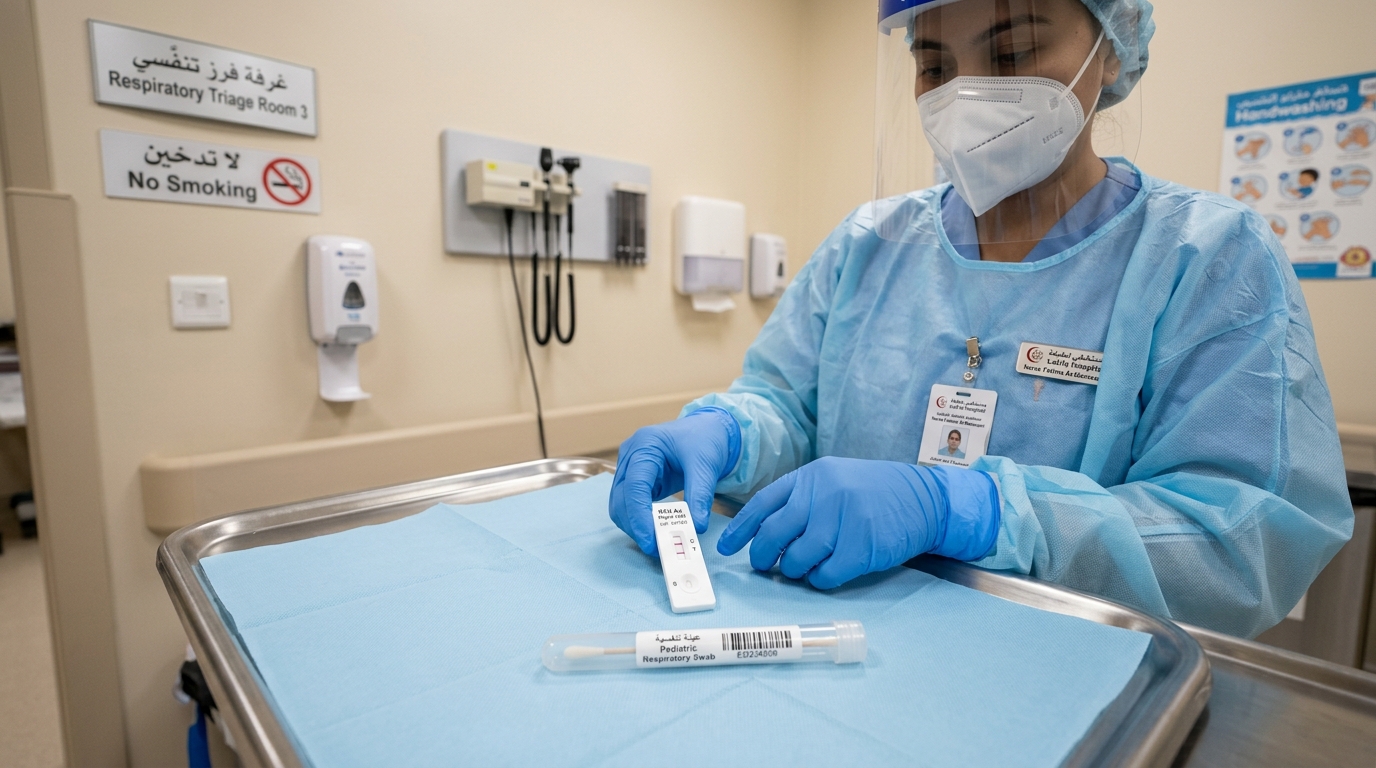
In the urban medical infrastructure of Dubai, Abu Dhabi, and Sharjah, seasonal winter respiratory surges place substantial demands on pediatric urgent care units. Parents presenting with wheezing, tachypneic infants require fast, reliable diagnostic evaluation to distinguish viral bronchiolitis from bacterial pneumonia or foreign body aspiration. Deploying certified professional respiratory rapid test kits in UAE empowers emergency pediatricians to obtain definitive point-of-care confirmation directly at the bedside within minutes of presentation.
Pathophysiological Impact: RSV Bronchiolitis in Infants
RSV infects the ciliated epithelial cells lining the nasopharynx, spreading down into the terminal bronchioles where it induces widespread syncytia formation (cell fusion), extensive epithelial necrosis, peribronchiolar lymphocytic infiltration, and hypersecretion of thick, tenacious mucus:
- Airway Obstruction Mechanics: Because infant airway resistance is inversely proportional to the fourth power of the luminal radius (Poiseuille’s law), microscopic plugs of sloughed necrotic cells and mucus create severe partial or complete bronchiolar occlusion.
- Clinical Hallmarks: Marked tachypnea (>60 breaths/min), subcostal and intercostal retractions, nasal flaring, expiratory wheezing, and coarse crepitations on lung auscultation.
- Apnea Risk in Neonates: Preterm infants and neonates under 2 months of age can present with central apnea episodes as the primary or sole clinical sign before cough or wheezing manifests.
Core Clinical Indications for RSV Rapid Antigen Testing
According to American Academy of Pediatrics (AAP) and UAE Ministry of Health clinical protocols, rapid RSV testing is indicated in specific diagnostic scenarios:
| Clinical Indication | Target Patient Population | Primary Clinical Mandate | Actionable Outcome |
|---|---|---|---|
| High-Risk Infant Triage | Infants <6 months, ex-preterm (<35 weeks), congenital heart disease (CHD), bronchopulmonary dysplasia (BPD) | Identify high-risk bronchiolitis early to initiate high-flow nasal cannula or ICU monitoring | Prevents acute respiratory decompensation and respiratory arrest |
| Hospital Inpatient Cohorting | All pediatric hospital admissions with acute wheezing or respiratory distress | Prevent nosocomial transmission in shared inpatient pediatric wards | Guides dedicated RSV-positive isolation rooms and cohort nursing |
| Antimicrobial Stewardship | Previously healthy infants presenting with acute fever and wheeze | Provide objective proof of viral etiology to eliminate unnecessary empiric antibiotics | Avoids unnecessary amoxicillin, macrolide, or cephalosporin prescriptions |
| Severe Adult & Geriatric Illness | Adults aged >65 with severe COPD, congestive heart failure, or hematological malignancies | Identify under-recognized RSV outbreaks causing severe cardiopulmonary decompensation | Informs supportive care and prevents unnecessary antibacterial escalation |
Analytical Performance: Children vs. Adults
The clinical sensitivity of rapid RSV antigen cassettes is strongly dependent on patient age and viral shedding concentration:
| Patient Cohort | Viral Shedding Duration & Titers | Rapid Antigen Test Sensitivity | Recommended Testing Strategy |
|---|---|---|---|
| Infants and Children (<5 Years) | Extremely high titers (10^6 to 10^8 copies/mL); shed for 10 to 21 days | High Sensitivity (85% to 94%) | Rapid Antigen Cassette is optimal frontline choice; highly reliable bedside test |
| Adults & Elderly (>65 Years) | Low viral titers; brief shedding window (3 to 5 days) | Lower Sensitivity (50% to 65%) | Negative rapid test requires confirmatory laboratory Multiplex RT-PCR panel |
Mechanics of the RSV Lateral Flow Cassette
Modern RSV rapid cassettes employ colloidal gold-conjugated monoclonal antibody sandwich technology:
- Specimen Extraction: A sterile nasopharyngeal aspirate or flocked nasal swab is mixed into a specialized lysis buffer that disrupts viral lipid bilayers, liberating internal viral nucleoproteins.
- Sample Well Dispensing: Three drops of extracted fluid are applied to the cassette sample well (S).
- Immunochromatography: Liquid migrates through the conjugate pad where dye-labeled anti-RSV monoclonal antibodies bind viral antigens.
- Test Line Capture (T Line): Recombinant anti-RSV capture antibodies immobilized at the test band trap the gold-labeled complexes, generating a distinct pink/red band.
- Procedural Validation (C Line): Anti-species antibodies capture excess conjugate, proving adequate membrane wicking and reagent integrity.
Infection Control & Clinical Management Bundles in UAE
Accredited hospitals across Dubai and Abu Dhabi implement dedicated clinical pathways upon receiving a positive RSV rapid result:
- Droplet and Contact Isolation: RSV remains viable on healthcare surfaces for up to 6 hours and on unwashed hands for 30 minutes. Strict gown, glove, and surgical mask precautions are enforced.
- Supportive Respiratory Therapy: Heated Humidified High-Flow Nasal Cannula (HFNC) oxygen therapy reduces work of breathing and lowers intubation rates by 80%.
- Eliminating Unhelpful Medications: Evidence-based guidelines strongly discourage routine systemic corticosteroids, bronchodilators (salbutamol), and chest physiotherapy for uncomplicated viral bronchiolitis.
Frequently Asked Questions (FAQ)
Can an RSV test be performed on a simple throat swab?
No. RSV replicates predominantly in the ciliated columnar epithelial cells of the nasopharynx. Throat swabs or anterior oral swabs yield very low viral loads, leading to false-negative rates exceeding 50%. Nasopharyngeal flocked swabs or gentle nasal aspirates are mandatory.
Is there an antiviral medication available to treat RSV?
Currently, treatment for acute RSV infection is primarily supportive (supplemental oxygen, gentle nasal suctioning, and hydration). While Ribavirin exists, its use is restricted to severely immunocompromised transplant recipients due to high toxicity. Prevention via maternal vaccination or long-acting monoclonal antibodies (Nirsevimab / Beyfortus) provides high protection.
How long is a child with RSV contagious?
Infants typically shed infectious virus for 3 to 8 days, but young infants and immunocompromised children can shed infectious virions for 3 to 4 weeks. Isolation precautions should be maintained until acute respiratory secretions and fever resolve.
Scientific References & Authoritative Clinical Guidelines
- American Academy of Pediatrics (AAP). Clinical Practice Guideline: The Diagnosis, Management, and Prevention of Bronchiolitis. Pediatrics, 2024 Reaffirmation.
- Centers for Disease Control and Prevention (CDC). Respiratory Syncytial Virus Infection (RSV): Clinical Guidance and Diagnostic Testing. CDC MMWR, 2024.
- Dubai Health Authority (DHA). Pediatric Emergency Care Standards and Viral Respiratory Infection Protocols. UAE Health Regulations, 2024.