
RSV Rapid Antigen Test Limitations: Pediatric Sensitivity vs Adult Underdetection, RT-PCR Reflexing & UAE Clinical Winter Protocols
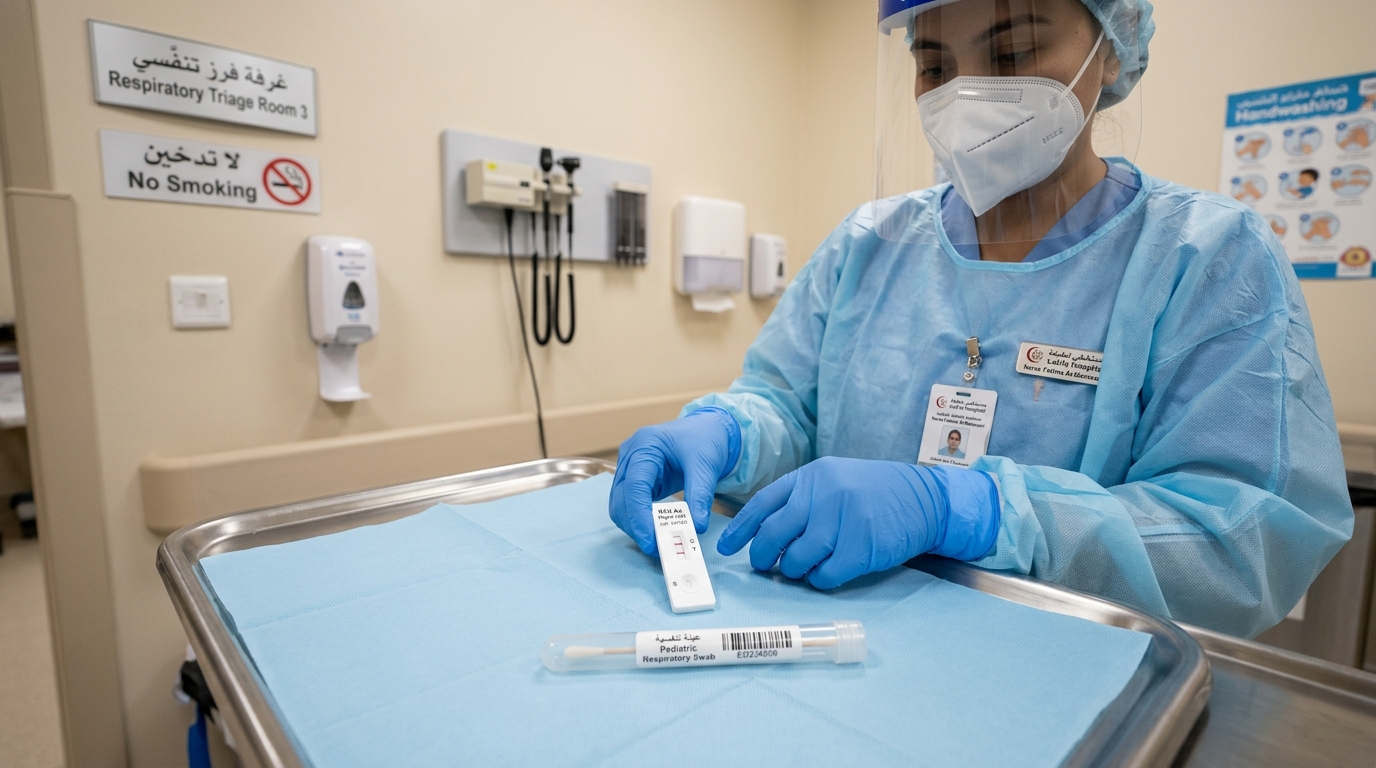
In pediatric emergency units, primary clinics, and hospital facilities across Dubai, Abu Dhabi, and the wider UAE, reliable respiratory diagnostics prevent unnecessary antibacterial use. Procuring certified professional respiratory rapid test kits and molecular systems in the UAE ensures clinic directors utilize validated diagnostic assays conforming to international performance guidelines.
The Pediatric vs Adult Viral Shedding Paradox
The primary clinical limitation of RSV rapid antigen tests centers on the biological difference in upper airway viral concentration across age cohorts:
- Infants and Young Children (< 2 Years): Immunologically naïve infants experience uncontrolled primary viral replication in the nasopharyngeal epithelium. They shed massive concentrations of RSV (frequently 106 to 108 viral RNA copies/mL) for 10 to 21 days. Consequently, rapid antigen tests perform exceptionally well in this cohort, delivering sensitivity of 80% to 92% and specificity > 98%.
- Older Children and Adults (≥ 18 Years): Adults possess pre-existing partial immunity from repeated lifetime RSV encounters. When reinfected, host mucosal IgA antibodies rapidly neutralize extracellular viral particles, restricting viral replication to the lower airways. Upper respiratory viral shedding in adults is low (often 102 to 104 copies/mL, with Ct values > 30). Because the limit of detection (LoD) of rapid antigen cassettes is ~105 copies/mL, rapid antigen sensitivity in adults falls to an abysmal 15% to 35%!
- Clinical Takeaway: A negative RSV rapid antigen test in an infant provides reasonable clinical confidence; a negative RSV rapid antigen test in an adult or elderly patient with acute respiratory failure is completely uninformative and must never be used to rule out RSV.
Comparative Diagnostic Performance Matrix
International diagnostic guidelines from the CDC, the Infectious Diseases Society of America (IDSA), and the American Academy of Pediatrics (AAP) compare respiratory modalities:
| Diagnostic Modality | Infant Sensitivity (< 2 yrs) | Adult Sensitivity (≥ 18 yrs) | Analytical Specificity | Turnaround Time & Setting |
|---|---|---|---|---|
| Lateral Flow Rapid Antigen (POC) | 75% – 90% | 15% – 35% (Unreliable) | 96% – 99% | 15 minutes (Bedside clinic / Urgent care) |
| Digital Immunoassay Antigen Readers | 85% – 93% | 40% – 55% | 97% – 99% | 15 minutes (Point-of-care digital scanner) |
| Multiplex Real-Time RT-PCR | > 98% – 100% | > 98% – 100% (Gold Standard) | > 99.5% | 45 – 90 minutes (Hospital / Central laboratory) |
| Viral Cell Culture | 60% – 70% | 10% – 20% | 100% | 4 – 7 days (Historical reference, slow) |
Pre-Analytical Pitfalls Driving Diagnostic Inaccuracy
Beyond biological viral load variations, technical collection flaws commonly compromise rapid antigen accuracy:
- Nasopharyngeal Aspirate vs Swab: In young infants, nasopharyngeal aspirates (NPA) or deep nasopharyngeal washes collect significantly greater mucosal cellular biomass than dry polyester swabs. Studies confirm that rapid antigen tests performed on NPAs yield 8%–12% higher sensitivity compared to swab specimens.
- Anterior Nares Swabbing Failure: Anterior nasal swabs (swabbing the front nostril opening) are severely inadequate for RSV antigen detection. RSV replicates deep in the ciliated respiratory epithelium of the posterior nasopharynx. Superficial swabs miss the viral nidus entirely.
- Symptom Duration: Testing beyond Day 5 to 7 of illness in infants yields frequent false negatives because host antibody production begins neutralizing free viral surface antigens, even as clinical bronchiolitis peaks.
- Cross-Reactivity Profile: Modern monoclonal RADTs do not cross-react with Influenza A/B, Rhinovirus, Adenovirus, or Parainfluenza viruses. However, severe hyperviscous mucus or unbuffered gastric aspirates can cause non-specific colloidal conjugate trapping and false-positive ghost bands.
Structured Clinical Decision Algorithms in Hospital Care
To ensure diagnostic safety, healthcare institutions must institute structured testing pathways:
- Inpatient Pediatric Admission: While rapid antigen testing is acceptable in ambulatory outpatient urgent care, any infant admitted to a pediatric intensive care unit (PICU) or high-dependency ward for severe bronchiolitis with a negative rapid antigen screen must immediately reflex to multiplex respiratory RT-PCR.
- Elderly & Immunocompromised Adults: In hospitalized adults ≥ 65 years, nursing home residents, or transplant recipients presenting with acute respiratory illness, rapid antigen testing should not be performed. Multiplex RT-PCR (incorporating RSV A, RSV B, Flu A/B, and COVID-19) is the mandatory first-line test.
- Infection Control & Cohorting: Positive RSV detection mandates droplet and contact isolation. Cohorting RSV-positive infants together in designated hospital rooms prevents hospital-acquired transmission to vulnerable premature neonates.
Frequently Asked Questions (FAQ)
Does an infant with typical bronchiolitis always need an RSV test?
Not necessarily. The American Academy of Pediatrics (AAP) bronchiolitis guidelines recommend that in typical outpatient presentations (wheezing, crackles, tachypnea during winter), diagnosis is primarily clinical. Testing is reserved for infants requiring hospitalization, those where antibiotics are being considered, or those at high risk (prematurity, congenital heart disease).
Can RSV rapid tests distinguish between RSV Subtype A and Subtype B?
No. Commercial rapid antigen tests target conserved epitopes of the fusion (F) glycoprotein or nucleoprotein and detect both RSV Subtype A and Subtype B without differentiation. Clinical outcomes and management do not differ between subtypes, so subtype differentiation is unnecessary for routine patient care.
Are there targeted antivirals for RSV once diagnosed?
For standard acute bronchiolitis, supportive care (hydration, oxygenation, suctioning) remains the mainstay; bronchodilators, steroids, and antibiotics are not recommended. In high-risk infants, prevention with monoclonal antibodies (Beyfortus / Nirsevimab or Synagis / Palivizumab) provides passive immunization.
Authoritative Clinical References
- Centers for Disease Control and Prevention (CDC) – Respiratory Syncytial Virus Infection: Laboratory Testing and Performance Characteristics
- American Academy of Pediatrics (AAP) – Clinical Practice Guideline: The Diagnosis, Management, and Prevention of Bronchiolitis
- Clinical and Laboratory Standards Institute (CLSI) – Viral Diagnostic Methods in Respiratory Disease