
Semen Analysis Test Explained: What You Need to Know
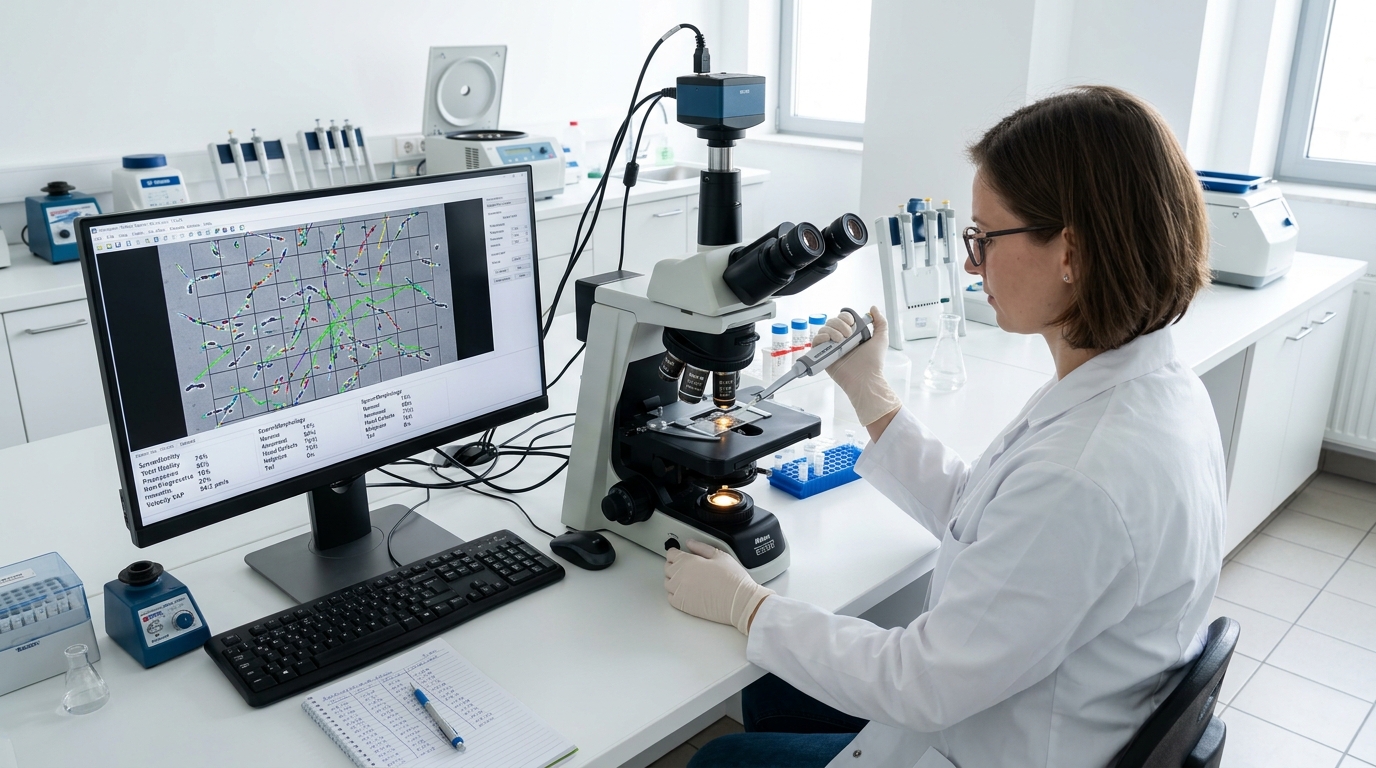
When a couple experiences delayed conception after 6 to 12 months of unprotected intercourse, clinical evaluation should always proceed simultaneously for both partners. In reproductive medicine, the standard basic seminogram remains the cornerstone of male reproductive health evaluation. Individuals and couples seeking clinical consultations for male and female fertility testing often find semen analysis terminology intimidating. Deconstructing the parameters evaluated in a certified andrology laboratory helps demystify the results and informs timely therapeutic interventions.
Pre-Analytical Preparation: The Rules That Ensure Valid Results
Semen parameters exhibit substantial natural physiological variability from week to week. A valid, reproducible semen analysis depends heavily on strict adherence to pre-analytical collection rules:
- Sexual Abstinence Period: The patient must abstain from ejaculation for a minimum of 2 days (48 hours) and a maximum of 7 days prior to collection. Abstinence under 48 hours results in falsely low sperm counts; abstinence exceeding 7 days increases dead spermatozoa, reduces motility, and elevates DNA fragmentation.
- Collection Method: The specimen must be produced entirely via masturbation into a sterile, toxic-free plastic container. Condoms (which contain spermicides) or withdrawal methods (coitus interruptus) must never be used.
- Thermal Control & Transport Time: If collected outside the clinic, the container must reach the laboratory within 30 to 60 minutes, kept close to the body (e.g., inside an inner coat pocket) to maintain body temperature (20°C–37°C). Extreme temperature shocks permanently immobilize sperm cells.
Macroscopic Parameters: Physical Evaluation
Before placing the sample under the phase-contrast microscope, the laboratory evaluates macroscopic and physical characteristics:
- Liquefaction Time: Normal semen coagulates immediately upon ejaculation into a gelatinous mass and liquefies at room temperature within 15 to 60 minutes under the enzymatic action of prostate-specific antigen (PSA). Failure to liquefy within 60 minutes indicates prostatic dysfunction or hyperviscosity.
- Viscosity: Following liquefaction, normal semen flows in discrete drops. Hyperviscosity (forming persistent elastic threads > 2 cm) entraps spermatozoa and impedes forward progressive motility.
- Ejaculate Volume: Normal volume ranges from 1.4 mL to 5.0 mL. Low volume (< 1.4 mL, hypospermia) suggests retrograde ejaculation, incomplete collection, or congenital bilateral absence of the vas deferens (CBAVD).
- pH Level: Normal semen is mildly alkaline (pH 7.2 to 8.0) to neutralize acidic vaginal secretions. An acidic pH (< 7.0) combined with low volume and azoospermia strongly indicates ejaculatory duct obstruction or seminal vesicle agenesis.
Microscopic Parameters: WHO 6th Edition Reference Thresholds
In 2021, the World Health Organization (WHO) released the 6th Edition of the Manual for the Examination and Processing of Human Semen, establishing modern lower reference limits (5th percentiles of fertile men):
| Semen Parameter | WHO 6th Edition Lower Reference Limit | Clinical Term for Subnormal Result | Significance to Conception |
|---|---|---|---|
| Sperm Concentration | ≥ 16 Million spermatozoa / mL | Oligozoospermia | Adequate density needed to navigate cervical mucus |
| Total Sperm Count | ≥ 39 Million per total ejaculate | Severe Oligozoospermia (< 5 M) | Absolute number of gametes available per cycle |
| Total Motility (PR + NP) | ≥ 42% motile sperm | Asthenozoospermia | Proportion of living, active spermatozoa |
| Progressive Motility (PR) | ≥ 30% linearly moving sperm | Asthenozoospermia | Ability to swim forward through Fallopian tubes |
| Strict Kruger Morphology | ≥ 4.0% normal oval forms | Teratozoospermia | Ability to bind and penetrate the oocyte zona pellucida |
| Sperm Vitality (Viability) | ≥ 54% live membrane-intact sperm | Necrozoospermia | Differentiates dead sperm from living immotile sperm |
| Round Cells / Leukocytes | < 1.0 Million peroxidase-positive / mL | Leukocytospermia | Indicator of genital tract infection or oxidative stress |
Understanding Diagnostic Classifications
Andrology reports summarize findings using precise clinical nomenclature. Multiple subnormal parameters often co-exist:
- Normozoospermia: All macroscopic and microscopic parameters meet or exceed WHO reference limits.
- Azoospermia: Complete absence of spermatozoa in the ejaculate after centrifugation. Requires differentiation between obstructive (anatomical blockage) and non-obstructive (testicular failure) etiologies via FSH, LH, and inhibin-B endocrine testing.
- Oligoasthenoteratozoospermia (OAT Syndrome): Subnormal sperm concentration, impaired forward motility, and abnormal head/midpiece/tail morphology occurring simultaneously—a common finding in varicoceles or hormonal imbalances.
- Leukocytospermia (Pyospermia): Presence of elevated white blood cells (> $10^6/mL$), indicating active prostatitis, epididymitis, or subclinical urogenital infection that generates excess Reactive Oxygen Species (ROS).
Advanced Functional Testing: Beyond the Standard Seminogram
When routine semen analysis appears borderline or normal despite prolonged unexplained infertility or recurrent pregnancy loss, advanced andrology testing may be indicated:
- Sperm DNA Fragmentation Index (DFI): Assessed via TUNEL or SCSA assays. Elevated DFI (> 25%–30%) indicates breaks in sperm genetic strands caused by oxidative stress, smoking, varicocele, or advanced paternal age, correlating with failed blastocyst development.
- Semen Culture and Multiplex PCR: Identifies occult microbial colonization by fastidious pathogens (e.g., Ureaplasma, Mycoplasma, or Chlamydia) that trigger sperm agglutination.
- Anti-Sperm Antibodies (ASA): Evaluates immunological auto-antibodies on the sperm surface via direct immunobead assay, often seen post-vasectomy reversal or testicular trauma.
Peer-Reviewed Clinical References
- World Health Organization. WHO laboratory manual for the examination and processing of human semen, 6th ed. Geneva: World Health Organization, 2021.
- Agarwal, A., et al. A unique view on male infertility around the globe. Reproductive Biology and Endocrinology, 2015; 13: 37.
- Schlegel, P. N., et al. Diagnosis and treatment of infertility in men: AUA/ASRM guideline. Journal of Urology, 2021; 205(1): 14-21.