
SHBG Fertility Testing Meaning: Sex Hormone-Binding Globulin, PCOS, Free Androgen Index & Ovulatory Reserve
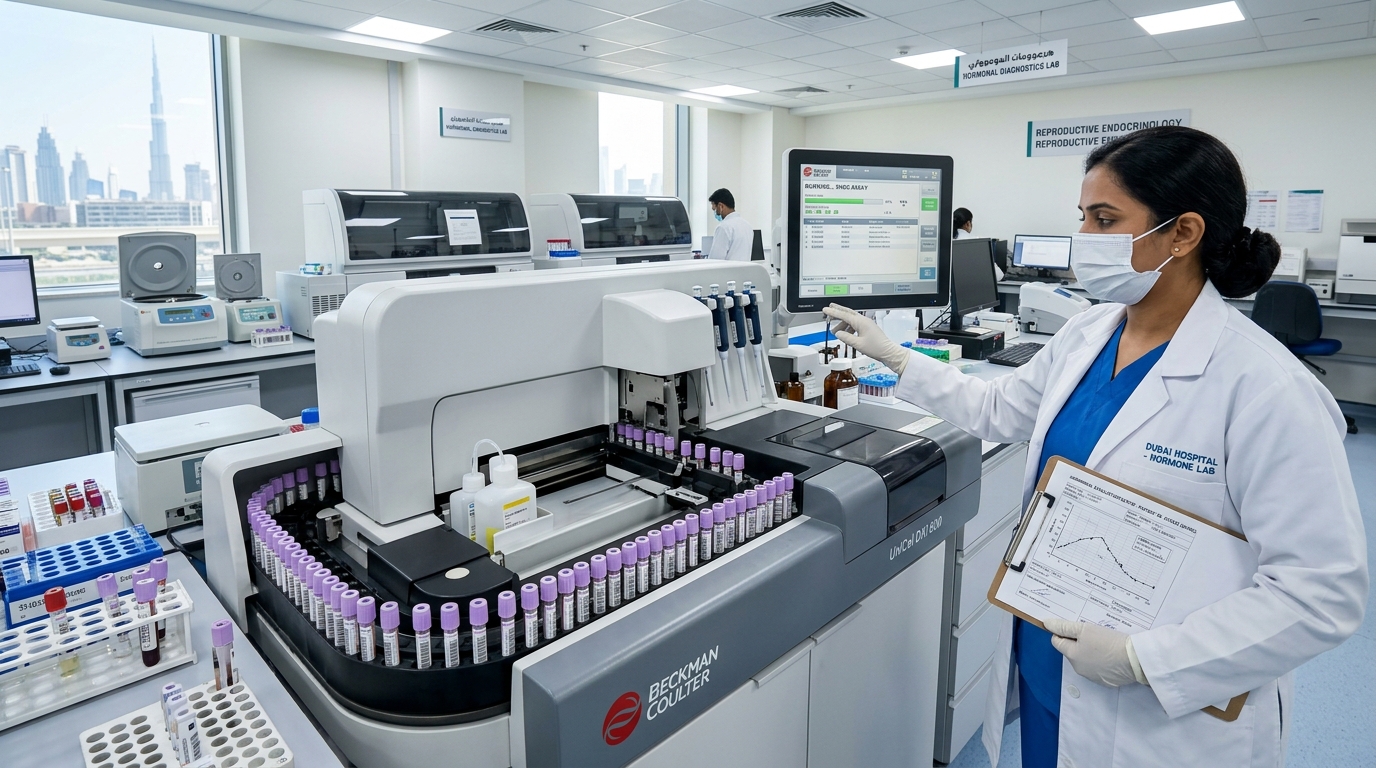
Throughout Dubai, Abu Dhabi, and the wider UAE, metabolic syndrome, insulin resistance, and Polycystic Ovary Syndrome (PCOS) represent major contributors to female subfertility. Evaluating total hormone concentrations without accounting for binding globulin dynamics frequently results in missed or delayed diagnoses. Ordering advanced specialized fertility and endocrine testing in UAE enables reproductive gynecologists and fertility specialists to compute the Free Androgen Index (FAI), identify subclinical hyperandrogenism, and design targeted ovulatory induction protocols.
Physiological Role: The Circulating Androgen Reservoir
Sex Hormone-Binding Globulin serves as a dynamic physiological buffer that controls steroid hormone bioavailability. The binding affinity of SHBG varies widely across sex steroids:
- Dihydrotestosterone (DHT): Highest binding affinity to SHBG.
- Testosterone: High affinity; approximately 60% to 70% of total circulating testosterone is tightly sequestered by SHBG in women and men.
- Estradiol (E2): Moderate affinity; roughly 20% to 40% of circulating estradiol is bound to SHBG, with the remainder bound to albumin or circulating free.
- Biological Buffering Function: SHBG prevents rapid metabolic clearance of sex steroids by the liver and kidneys while shielding peripheral tissues from excessive free hormone exposure.
SHBG in Female Fertility: The PCOS and Anovulation Link
In women of reproductive age, low serum SHBG is the central biochemical hallmark of Polycystic Ovary Syndrome (PCOS) and metabolic anovulation:
| Pathophysiological Step | Underlying Mechanism | Clinical Impact on Fertility |
|---|---|---|
| 1. Hyperinsulinemia | Insulin resistance triggers excess pancreatic insulin secretion | Insulin directly suppresses hepatic SHBG transcription in liver cells |
| 2. Plummeting SHBG Levels | Serum SHBG concentrations drop below normal reference ranges (<30 nmol/L) | Reduced binding capacity leads to dramatic surge in free bioavailable testosterone |
| 3. Free Androgen Excess | Unbound testosterone enters ovarian theca cells and hair follicles | Manifests clinically as hirsutism, cystic acne, and androgenic alopecia |
| 4. Follicular Arrest | High local androgens block dominant follicle selection and aromatase activity | Multiple small immature follicles arrest, causing chronic anovulation and infertility |
Calculating the Free Androgen Index (FAI)
Measuring total testosterone alone frequently misses hyperandrogenism because hepatic SHBG suppression lowers total testosterone levels. The Free Androgen Index (FAI) provides an accurate estimate of bioactive androgens:
FAI = [Total Testosterone (nmol/L) / SHBG (nmol/L)] × 100
Interpretation thresholds for adult premenopausal women include:
- Normal Female FAI: 0.8% to 5.0% (Indicates balanced androgen-to-binding protein ratio).
- Elevated Female FAI (>5.0% to 6.0%): Highly sensitive indicator of functional hyperandrogenism, strongly supporting Rotterdam consensus criteria for PCOS even when total testosterone appears within normal laboratory limits.
SHBG in Male Fertility: The Obesity & Hypogonadism Dilemma
In men, SHBG dynamics play an equally crucial, albeit reciprocal, diagnostic role:
| Clinical Condition in Men | SHBG Status | Total Testosterone | Free Bioavailable Testosterone | Reproductive Consequence |
|---|---|---|---|---|
| Obesity & Metabolic Syndrome | Markedly Decreased | Falsely Low | Often Normal | Prevents unnecessary, harmful exogenous testosterone therapy that halts sperm production |
| Aging / Andropause | Progressively Increased (1% to 2% per year) | Normal or Borderline | Severely Low | True bioavailable hypogonadism; impaired spermatogenesis, fatigue, erectile dysfunction |
| Hyperthyroidism (Graves’ Disease) | Markedly Elevated (Thyroid stimulation) | Falsely Elevated | Low or Normal | Suppressed intratesticular testosterone paracrine drive; abnormal semen parameters |
Factors Influencing Hepatic SHBG Production
Multiple physiological, metabolic, and pharmacological variables modulate liver synthesis of SHBG:
| Factors That LOWER SHBG | Factors That RAISE SHBG |
|---|---|
| Hyperinsulinemia & Insulin Resistance | High Estrogen (Pregnancy, Oral Contraceptives, HRT) |
| Visceral Obesity & High BMI | Hyperthyroidism (Elevated Free T3/T4) |
| Exogenous Androgens & Anabolic Steroids | Anorexia Nervosa, Caloric Restriction, Low BMI |
| Growth Hormone / Acromegaly | Aging in Men |
| Hypothyroidism | Hepatic Cirrhosis & Chronic Hepatitis |
Therapeutic Strategies to Optimize SHBG and Restore Fertility
Addressing abnormal SHBG levels focuses on correcting underlying metabolic and endocrine drivers:
- Targeted Insulin Sensitization: In women with PCOS, administration of Metformin and Inositol (Myo-inositol + D-chiro-inositol in a 40:1 physiological ratio) reduces circulating insulin levels, allowing hepatic SHBG synthesis to rebound and lowering bioactive androgens.
- Nutritional & Lifestyle Interventions: Low-glycemic Mediterranean diets, resistance training, and reducing visceral adiposity significantly raise SHBG in insulin-resistant patients, restoring spontaneous ovulatory cycles.
- Thyroid Hormone Optimization: Treating subclinical hypothyroidism with levothyroxine normalizes hepatic glycoprotein synthesis.
Diagnostic Protocol: When and How to Test SHBG in Clinical Practice
To ensure high analytical precision, reproductive endocrinologists and gynecologists adhere to specific pre-analytical parameters:
- Optimal Menstrual Cycle Timing: In regularly cycling women, blood samples should be collected during the early follicular phase (Days 2 to 5 of the menstrual cycle) alongside baseline FSH, LH, and Estradiol. In amenorrheic or oligomenorrheic patients, testing can be performed on any random day.
- Fasting Morning Specimen: Specimens should be obtained in the morning (between 8:00 AM and 10:00 AM) after an overnight fast of at least 8 to 10 hours. Postprandial insulin surges transiently influence circulating hormone dynamics.
- Comprehensive Androgen Co-Testing: SHBG should never be interpreted in isolation; it must be co-analyzed with Total Serum Testosterone, DHEA-Sulfate (DHEA-S), Androstenedione, and Fasting Insulin to calculate HOMA-IR and the Free Androgen Index (FAI).
SHBG as an Independent Metabolic and Cardiovascular Biomarker
Beyond its conventional reproductive mandate, clinical literature underscores that low circulating SHBG functions as a powerful independent surrogate marker of systemic metabolic distress:
- Predictor of Type 2 Diabetes: Large epidemiological trials have demonstrated that low circulating SHBG levels strongly predict future onset of type 2 diabetes mellitus in both premenopausal women and adult men, independent of body mass index (BMI).
- Metabolic Dysfunction-Associated Steatohepatitis (MASH / NAFLD): Because the liver is the sole site of SHBG transcription, excessive hepatic lipid accumulation suppresses the hepatocyte nuclear factor 4 alpha (HNF-4α) transcription factor, driving serum SHBG downward in patients with fatty liver disease.
- Cardiovascular Risk Stratification: In women with PCOS, low SHBG correlates with elevated high-sensitivity C-reactive protein (hs-CRP), pro-atherogenic lipid profiles (high triglycerides, low HDL), and premature subclinical carotid atherosclerosis.
Frequently Asked Questions (FAQ)
Does a high SHBG level cause female infertility?
Significantly elevated SHBG in women can bind excessive circulating estradiol and androgens, lowering free bioactive estrogen required for normal endometrial lining proliferation. However, low SHBG (associated with PCOS) is far more common in clinical fertility practice.
What is the normal reference range for SHBG in women?
In non-pregnant adult premenopausal women, normal serum SHBG typically ranges from 30 to 120 nmol/L. Values below 30 nmol/L strongly indicate hyperinsulinemic androgen excess.
Can birth control pills alter SHBG test results?
Yes. Combined oral contraceptive pills contain synthetic ethinyl estradiol, which strongly stimulates hepatic SHBG synthesis, often driving levels well above 150 nmol/L. For accurate fertility assessments, SHBG testing should be performed after discontinuing hormonal contraception for at least 2 to 3 normal menstrual cycles.
Scientific References & Authoritative Clinical Guidelines
- International Evidence-based Guideline for the Assessment and Management of Polycystic Ovary Syndrome (PCOS). Human Reproduction, 2023.
- Endocrine Society Clinical Practice Guideline. Evaluation of Androgen Disorders and Sex Hormone-Binding Globulin in Clinical Practice. JCEM, 2024.
- Dubai Health Authority (DHA). Standards for Reproductive Endocrinology and Infertility Clinical Diagnostic Panels. UAE Health Standards, 2024.