
Stool PCR vs Stool Culture: Gastrointestinal Multiplex Panels, Turnaround Speed, Clostridium difficile & UAE Laboratory Diagnostics
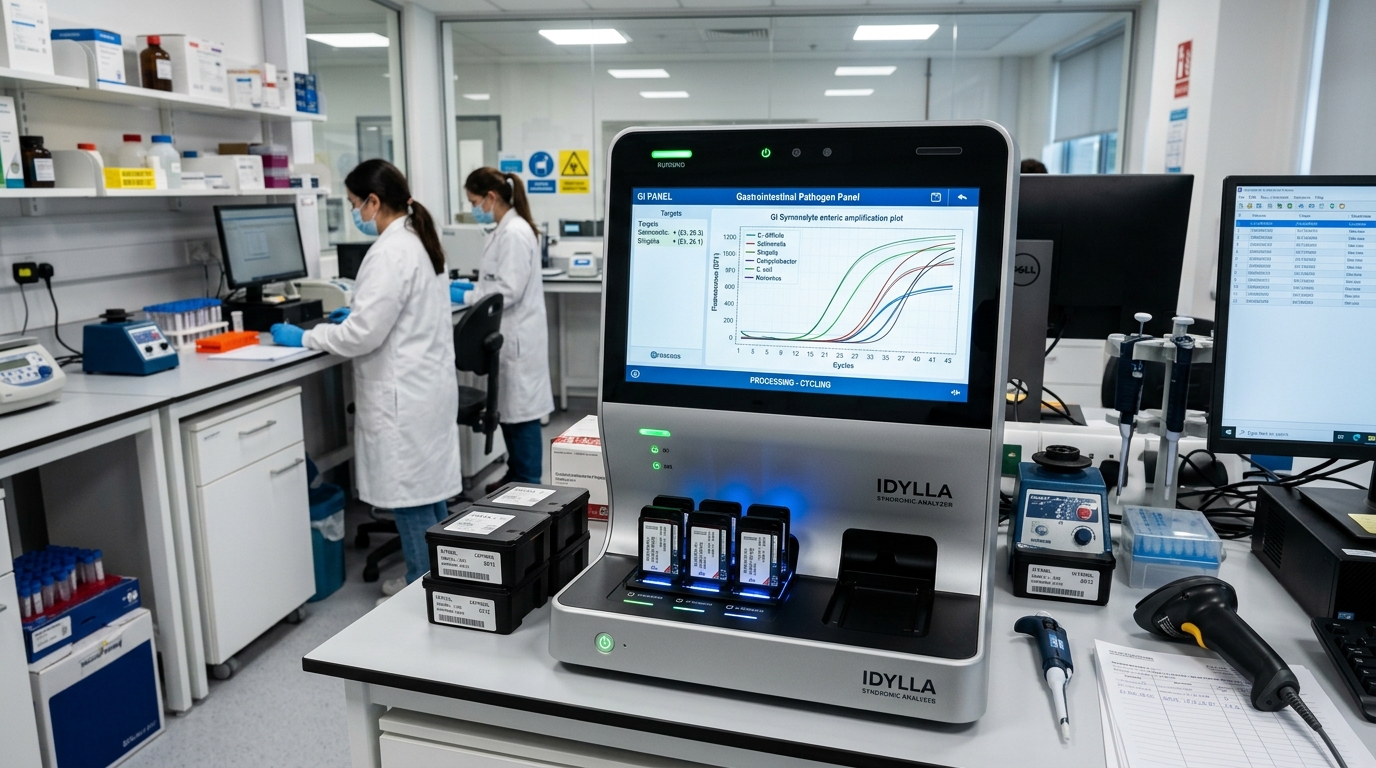
In tertiary hospitals, specialized digestive disease clinics, and laboratory networks across Dubai, Abu Dhabi, and the wider UAE, deploying molecular gastrointestinal panels transforms patient triage. Procuring certified professional multiplex PCR and laboratory diagnostic systems in Dubai guarantees healthcare institutions utilize assays compliant with international accreditation standards.
The Fundamental Technological Divergence
To evaluate these two testing modalities effectively, clinicians must contrast their underlying biological mechanisms:
- Traditional Stool Culture: Relies on the physical replication of viable living bacteria on differential and selective agar plates (Hektoen Enteric, MacConkey, Campy-blood). It isolates live organisms, allowing automated phenotypic Antimicrobial Susceptibility Testing (AST) measuring minimum inhibitory concentrations (MICs). However, it is restricted to culturable bacteria (Salmonella, Shigella, Campylobacter) and cannot detect viruses or protozoa.
- Multiplex Enteric Real-Time PCR: Amplifies target-specific microbial DNA or RNA sequences directly from stool without requiring viable organism replication. It detects bacteria, viruses, parasites, and toxigenic genes in a single closed automated cartridge within 60 to 75 minutes.
Head-to-Head Comparative Diagnostic Matrix
Clinical trial data compiled by the Infectious Diseases Society of America (IDSA) and the American Society for Microbiology (ASM) highlight key operational differences:
| Operational Parameter | Multiplex Gastrointestinal PCR Panel | Conventional Stool Bacterial Culture | Clinical Practice Takeaway |
|---|---|---|---|
| Turnaround Time (TAT) | 1 to 2 Hours | 48 to 72 Hours (or longer) | PCR enables immediate targeted therapy and cohorting before patient discharge from the ER. |
| Diagnostic Pathogen Yield | 35% – 55% Positive Detection | 3% – 8% Positive Detection | PCR increases pathogen identification by 4 to 8-fold compared to traditional culture. |
| Pathogen Spectrum Detected | Bacteria, Viruses (Norovirus, Rotavirus, Adenovirus), Parasites (Giardia, Cryptosporidium, E. histolytica) | Bacteria only (Salmonella, Shigella, Campylobacter; vibrio/Yersinia require special media) | Eliminates the need to order separate viral antigen tests and microscopic Ova & Parasite (O&P) exams. |
| Prior Antibiotic Vulnerability | Resilient: Detects microbial DNA even after antibiotics have killed living bacteria. | Severely Compromised: Even a single oral antibiotic dose sterilizes culture plates completely. | PCR successfully diagnoses patients who self-treated with antibiotics prior to clinic presentation. |
| Antimicrobial Susceptibility (AST) | Detects limited resistance genes (e.g., specific beta-lactamases); cannot provide phenotypic MICs. | Full Phenotypic AST: Tests susceptibility against broad antibiotic panels. | Culture remains essential for surveillance and public health tracking of drug-resistant strains. |
| Ability to Detect Co-Infections | High: Identifies multiple pathogens in 15% to 30% of positive specimens. | Extremely low: Seldom isolates more than one bacterial species simultaneously. | Forces the clinician to determine which detected pathogen is driving acute clinical disease. |
The Clostridium difficile Clinical Dilemma: Colonization vs Disease
The single greatest clinical challenge in multiplex stool PCR is the management of toxigenic Clostridioides difficile:
- DNA Detection vs Free Toxin: PCR detects the presence of the tcdA or tcdB toxin genes. However, up to 10% to 15% of hospitalized adults and 30% of infants are asymptomatic carriers of toxigenic C. difficile. A positive PCR test proves the bacterium is present, but does not prove that active vegetative toxin is being produced to cause pseudomembranous colitis.
- The Diagnostic Best Practice: Clinical guidelines mandate testing only unformed, watery liquid stools in patients with ≥ 3 unprovoked bowel movements in 24 hours. Many reference hospitals implement a two-step algorithm: PCR screen reflexed to an enzyme immunoassay (EIA) for free Toxin A/B to confirm genuine active disease before initiating oral Vancomycin or Fidaxomicin.
Antimicrobial Stewardship: Halting Inappropriate Antibiotics
In clinical practice, the greatest benefit of rapid multiplex PCR is rapidly confirming viral gastroenteritis (Norovirus, Sapovirus, Rotavirus):
In patients presenting with acute severe diarrhea, vomiting, and low-grade fever, physicians frequently prescribe empiric ciprofloxacin or azithromycin out of concern for bacterial sepsis. When the stool PCR reports Norovirus or Astrovirus within 1 hour, the physician can confidently withhold antibiotics, protecting the patient from antibiotic-associated adverse events and saving unnecessary pharmacy costs.
Diagnostic Stewardship & Interpretation of Polymicrobial PCR Detections
In contemporary molecular gastroenterology, clinicians must navigate the frequent phenomenon of multi-pathogen detection:
- The Multi-Pathogen Dilemma: In 15% to 30% of multiplex stool PCR panels, two or more organisms are identified simultaneously (for example, Enteropathogenic E. coli [EPEC] + Giardia lamblia + Norovirus). Because PCR detects microscopic nucleic acid fragments, the presence of an organism does not automatically prove it is the primary culprit of acute clinical disease.
- Clinical Attribution Algorithm: Clinicians must synthesize the laboratory result with the patient’s acute presentation: (1) Sudden-onset projectile vomiting and acute watery diarrhea in an otherwise healthy child points to Norovirus, with low-titer EPEC representing benign colonization. (2) Chronic foul-smelling diarrhea, bloating, and weight loss following wilderness travel points to Giardia. Antibiotics should never be shotgunned against every detected target.
- Hospital Bed Flow & Isolation Savings: Rapid molecular panels decompress hospital isolation wards. A rapid negative PCR for C. difficile and Norovirus allows infection prevention teams to safely transfer stable patients out of scarce negative-pressure or single contact rooms into general wards within 2 hours, saving hundreds of nursing hours and hospital bed-day costs.
Frequently Asked Questions (FAQ)
Does a stool PCR replace the need for stool culture entirely?
Not completely. While PCR is the superior first-line acute diagnostic tool, clinical microbiology laboratories still perform reflex stool cultures on positive bacterial PCR samples (especially Salmonella, Shigella, and Campylobacter) to generate phenotypic antibiotic susceptibility profiles and report isolates to public health epidemiological databases.
Can stool PCR detect food poisoning toxins like Staphylococcal enterotoxin or Bacillus cereus?
No. Standard commercial multiplex GI panels do not detect pre-formed foodborne bacterial enterotoxins (such as those produced by Staphylococcus aureus, Bacillus cereus, or Clostridium perfringens). Diagnosis of pre-formed toxin food poisoning remains clinical based on short incubation periods (2 to 6 hours).
Why must stool specimens for PCR be unformed?
Testing solid, formed stool violates laboratory accreditation standards because formed stool in an asymptomatic patient often reflects benign colonization or dead DNA shedding, resulting in clinical misdiagnosis and inappropriate medical intervention.
Authoritative Clinical References
- Infectious Diseases Society of America (IDSA) – Clinical Practice Guidelines for the Diagnosis and Management of Infectious Diarrhea
- Journal of Clinical Microbiology (ASM) – Multicenter Evaluation of Multiplex Gastrointestinal PCR Panels
- Clinical and Laboratory Standards Institute (CLSI) – M47: Laboratory Detection of Enteric Pathogens