
Trichomonas Vaginalis Testing Options: NAAT Molecular Assays vs Wet Mount vs Antigen Lateral Flow in Clinical Practice
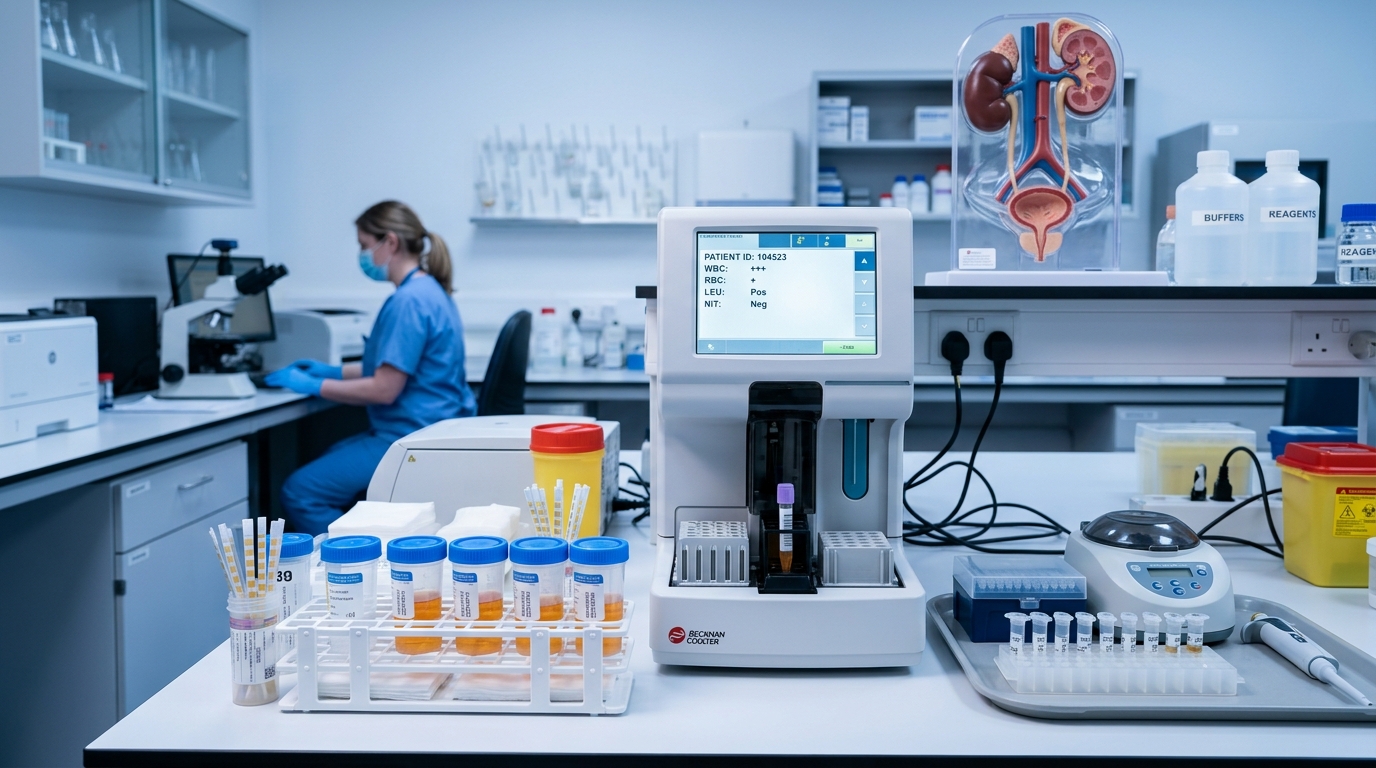
In modern sexual health clinics throughout Dubai, Abu Dhabi, and the UAE, moving beyond antiquated microscopic exams toward highly sensitive molecular panels represents the modern standard of care. Booking discreet comprehensive sexual health and STI testing packages in Dubai guarantees access to certified molecular assays with rapid, confidential reporting.
Diagnostic Modalities Head-to-Head: Sensitivity, Specificity & Turnaround
Clinicians evaluating patients with vaginitis, urethritis, or suspected STI exposures must weigh the analytical capabilities and pre-analytical limitations of each testing option:
| Diagnostic Modality | Analytical Sensitivity | Analytical Specificity | Turnaround Time | Major Clinical Strengths & Limitations |
|---|---|---|---|---|
| Saline Wet Mount Microscopy | 40% – 60% (Poor) | > 95% (High if motile) | 5 – 15 Minutes (Immediate) | Extremely low sensitivity; relies entirely on visualizing motile flagellates; sensitivity drops rapidly if not read within 10–20 minutes. Zero utility in men. |
| Point-of-Care Rapid Antigen (OSOM) | 85% – 90% (Good) | > 98% (High) | 10 – 15 Minutes (Rapid) | Immunochromatographic strip; detects T. vaginalis surface antigens from vaginal swabs; avoids microscopy errors; FDA-cleared for females only. |
| Molecular NAAT (Real-Time PCR / TMA) | 96% – 100% (Gold Standard) | 98% – 100% (Superior) | 1 – 24 Hours | CDC-endorsed gold standard; detects minimal protozoal DNA/RNA; validated for vaginal swabs, endocervical swabs, and male/female urine. |
| Microbial Culture (InPouch TV / Diamond’s) | 70% – 85% (Moderate) | > 99% (High) | 3 – 7 Days (Slow) | Historic gold standard; requires specialized selective media and daily microscopic incubation monitoring; largely superseded by NAAT. |
Why Wet Mount Microscopy Fails in Routine Practice
For more than half a century, the saline wet mount was the primary in-office method for evaluating vaginitis. A clinician places a drop of normal saline on a glass slide, suspends a vaginal discharge swab, covers it with a coverslip, and immediately views it under 40x light microscopy. Despite its speed and low cost, wet mount is profoundly flawed:
- Rapid Motility Loss: Trichomonas vaginalis is an obligate parasite that requires physiological body temperature and anaerobic microenvironments. Once removed from the human host, the protozoan rapidly loses its characteristic jerky motility within 10 to 15 minutes at room temperature, rounding up and becoming indistinguishable from polymorphonuclear leukocytes (WBCs).
- Catastrophic Missed Diagnosis Rate: With a real-world sensitivity hovering between 40% and 55%, wet mount microscopy misses approximately one out of every two active trichomoniasis infections. Clinicians who rely solely on negative wet mounts frequently discharge actively infected patients, perpetuating transmission.
- Inoperability in Male Patients: In men, trichomonads reside within the urethra and prostate where organism density is exceptionally low. Wet mount microscopy on male urethral swabs or urine sediment exhibits a clinical sensitivity under 30% and is officially contraindicated by the CDC as a solitary diagnostic test.
The Molecular NAAT Revolution: The Modern Gold Standard
The 2021 CDC Sexually Transmitted Infections Treatment Guidelines explicitly recommend Nucleic Acid Amplification Testing (NAAT) as the diagnostic standard for Trichomonas vaginalis in both symptomatic and asymptomatic patients:
- Superior Molecular Sensitivity: NAAT targets specific ribosomal RNA (rRNA) or genomic DNA sequences, detecting organisms down to a fraction of a single trophozoite per test reaction. NAAT detects 3 to 5 times more infections than wet mount microscopy.
- Specimen Versatility: NAAT is fully validated and FDA-cleared across a broad spectrum of clinical specimens: self-collected vaginal swabs (which patients can comfortably obtain in private clinic restrooms), clinician-collected endocervical swabs, liquid-based cytology (Pap test) collection vials, and first-void urine in both women and men.
- Syndromic Multiplex Testing: Modern molecular platforms co-amplify Trichomonas vaginalis alongside Chlamydia trachomatis, Neisseria gonorrhoeae, and Mycoplasma genitalium, providing comprehensive sexual health profiling from a single swab aliquot.
Point-of-Care Rapid Antigen Testing: Bridging the Clinic Gap
For outpatient clinics lacking on-site molecular thermal cyclers, rapid immunochromatographic antigen detection tests (such as the OSOM Trichomonas Rapid Test) offer an exceptional middle ground. Utilizing monoclonal antibodies against specific trichomonal surface antigens, the test requires a simple 1-minute specimen extraction and yields visible test and control bands within 10 minutes. With sensitivity surpassing 85% to 90%, it far outperforms wet mount microscopy and enables immediate, same-visit antimicrobial treatment.
Updated Clinical Management & Antimicrobial Protocols
Diagnostic identification of Trichomonas vaginalis requires immediate, evidence-based antimicrobial therapy. Historically, single-dose oral Metronidazole (2 grams) was widely prescribed. However, multicenter randomized clinical trials demonstrated that multi-dose Metronidazole is significantly superior:
- Preferred First-Line Regimen for Women: Oral Metronidazole 500 mg twice daily for 7 full days. The 7-day regimen achieves a microbiological cure rate of 89% to 92%, compared to only 78% for single 2 g dosing.
- Regimen for Men: Oral Metronidazole 2 grams as a single dose remains the standard initial regimen for male sexual partners, though 7-day therapy is indicated for treatment failures.
- Alternative First-Line Agent: Oral Tinidazole 2 grams as a single dose. Tinidazole exhibits longer half-life, better tissue penetration, and lower gastrointestinal side effects than metronidazole.
- Crucial Patient Counseling: Patients must strictly avoid alcohol consumption during metronidazole therapy and for at least 48 hours afterward (72 hours for tinidazole) to avert severe disulfiram-like reactions (nausea, abdominal cramps, tachycardia, flushing).
- Mandatory Partner Treatment: All sexual partners within the preceding 60 days must be concurrently treated, regardless of symptoms. Sexual intercourse must be strictly avoided until both partners have completed treatment and are symptom-free.
- Mandatory 3-Month Re-Testing: Due to exceptionally high re-infection rates (approaching 17% in sexually active populations), the CDC recommends re-testing all sexually active women with NAAT approximately 3 months post-treatment.
Frequently Asked Questions (FAQ)
Can Trichomonas vaginalis be treated with over-the-counter anti-yeast creams?
No. Trichomonas vaginalis is a protozoan parasite, not a fungal organism like Candida albicans. Over-the-counter antifungal creams or pessaries (such as clotrimazole or miconazole) have zero activity against trichomonads and will delay effective prescription antiparasitic therapy.
Is Trichomonas vaginalis considered a dangerous infection during pregnancy?
Yes. Untreated maternal trichomoniasis is significantly associated with premature rupture of membranes (PPROM), preterm delivery, and low birth infant weight. Pregnant women diagnosed with trichomoniasis should be treated with oral Metronidazole (500 mg twice daily for 7 days) at any gestational trimester, as metronidazole has been cleared as safe in pregnancy.
How does QuRapid facilitate confidential STI screening in the UAE?
QuRapid provides private, seamless access to state-of-the-art molecular NAAT panels covering Trichomonas vaginalis and other major STIs across Dubai and the UAE. With discrete appointments, certified clinical laboratory processing, and secure digital reporting, patients receive definitive answers with total confidentiality.
Authoritative Clinical References
- Centers for Disease Control and Prevention (CDC) – Trichomoniasis: 2021 STI Treatment Guidelines
- World Health Organization (WHO) – Global Guidelines for the Management of Sexually Transmitted Infections
- British Association for Sexual Health and HIV (BASHH) – United Kingdom National Guideline on the Management of Trichomonas vaginalis