
What Infections Are Included in a Full STD Panel: Comprehensive Pathogen Breakdown, NAAT Multiplex Panels & Dubai Screening Standards
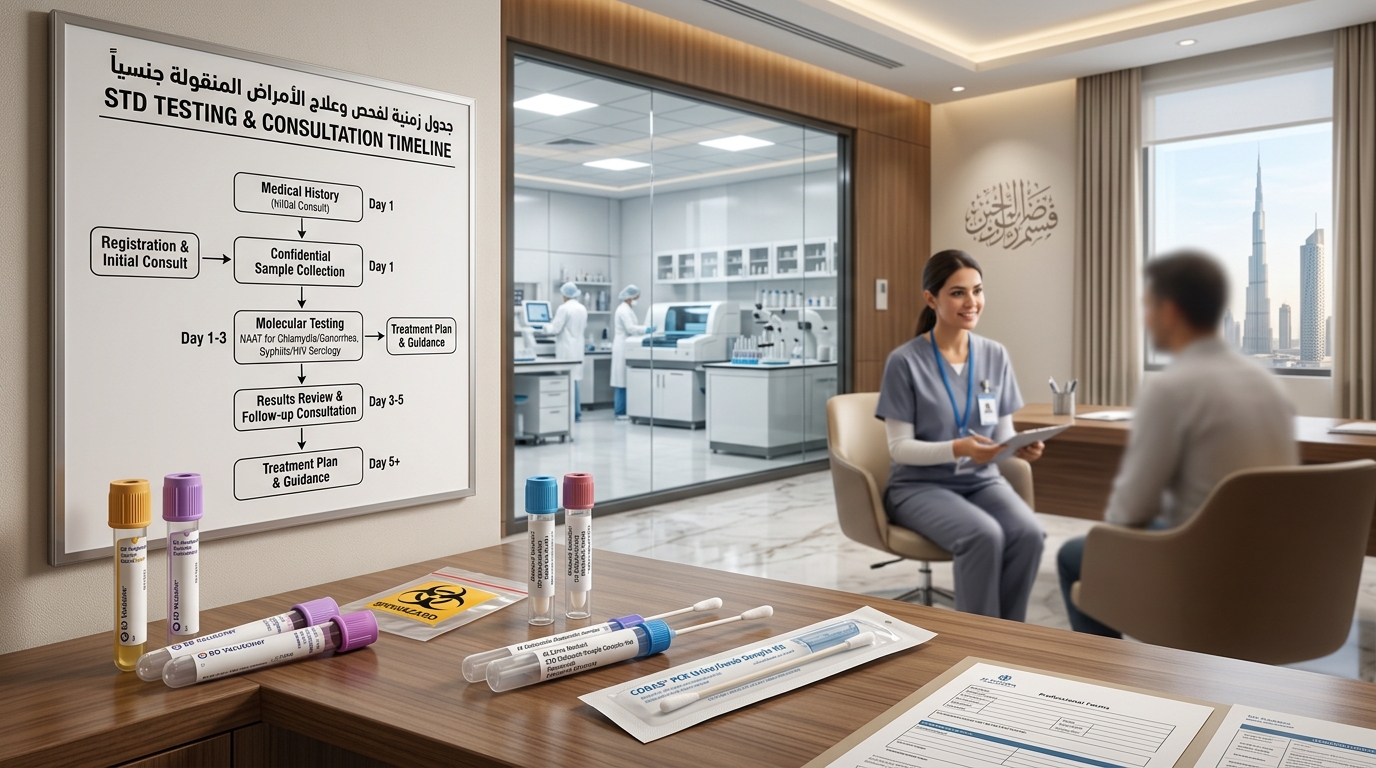
For individuals and couples seeking discrete, accredited sexual health evaluations in Dubai, timely multi-pathogen screening provides absolute peace of mind. Review our confidential comprehensive sexual health testing packages in Dubai featuring advanced real-time multiplex PCR and fourth-generation chemiluminescent serology under strict medical privacy and rapid turnaround.
Pathogen Hierarchy: Standard vs Comprehensive vs Extended Panels
When clinicians and patients discuss a “full STD panel,” diagnostic configurations typically range from essential 4-pathogen screens to exhaustive 12-pathogen molecular profiles. Understanding these tiers ensures proper test selection:
| Pathogen Category | Target Infectious Agent | Diagnostic Methodology | Optimal Window Period | Primary Clinical Significance |
|---|---|---|---|---|
| Viral Blood-Borne | HIV-1 & HIV-2 (p24 Antigen + Antibodies) | 4th Gen Chemiluminescent Immunoassay | 18 to 45 Days (Post-Exposure) | Early acute retroviral detection; immediate antiretroviral therapy (ART) initiation. |
| Spirochetal Blood-Borne | Treponema pallidum (Syphilis) | Reverse Sequence Treponemal IgG/IgM + RPR/VDRL | 14 to 90 Days | Prevents secondary systemic dissemination, neurosyphilis, and cardiovascular syphilis. |
| Bacterial Urogenital | Chlamydia trachomatis (Serovars D–K) | Multiplex Real-Time NAAT / PCR | 7 to 14 Days | Leading cause of non-gonococcal urethritis, cervicitis, PID, and tubal infertility. |
| Bacterial Urogenital | Neisseria gonorrhoeae | Multiplex Real-Time NAAT / PCR | 2 to 7 Days | Purulent urethritis, cervicitis, pelvic inflammatory disease, and antimicrobial resistance risk. |
| Protozoan Parasitic | Trichomonas vaginalis | Molecular NAAT / Rapid Antigen | 7 to 28 Days | Common flagellated parasitic vaginitis and urethritis; increases HIV acquisition risk. |
| Emerging Cell-Wall-Deficient | Mycoplasma genitalium | Multiplex NAAT + 23S rRNA Resistance Assay | 14 to 28 Days | Major cause of persistent urethritis, cervicitis, and macrolide-resistant PID. |
| Opportunistic Mollicutes | Ureaplasma urealyticum / parvum & M. hominis | Quantitative Real-Time PCR | 14 to 28 Days | Differentiates commensal colonization from pathological high-copy reproductive inflammation. |
| Viral Urogenital | Herpes Simplex Virus (HSV-1 & HSV-2) | Type-Specific PCR (Lesion) / Glycoprotein G Serology | 1 to 7 Days (Swab) / 6 to 12 Weeks (Blood) | Recurrent vesicular ulcerations, genital herpes management, and partner transmission risk. |
| Viral Hepatitis | Hepatitis B (HBsAg) & Hepatitis C (Anti-HCV) | Automated Serological Immunoassays | 4 to 12 Weeks | Chronic hepatic parenchymal inflammation, cirrhosis, and hepatocellular carcinoma prevention. |
Diagnostic Sample Requirements: Urine, Swabs, and Blood Serology
A true “full STD panel” cannot be performed from a single drop of blood or a simple urine cup alone; it requires precise specimen collection across distinct anatomical compartments:
- First-Void Urine (Men): For male urethral NAAT (detecting Chlamydia, Gonorrhea, Trichomonas, and Mycoplasma genitalium), patients must collect the first 20 to 30 mL of urine after holding their bladder for at least 1 to 2 hours. Mid-stream urine washes away the diagnostic bacterial load from the urethral epithelium, yielding false-negative results!
- Vaginal or Endocervical Swab (Women): In women, a self-collected or clinician-collected high-vaginal swab (HVS) or endocervical swab yields significantly higher diagnostic sensitivity (98–99%) for multiplex PCR than urine specimens (which achieve only 85–90% sensitivity in female patients).
- Extragenital Swabs (Pharyngeal and Rectal): Because Chlamydia and Gonorrhea colonize mucosal surfaces independently, patients engaging in oral or receptive anal intercourse require targeted extragenital swabs. Pharyngeal and rectal infections are asymptomatic in >85% of cases and are completely missed by standard urogenital urine screening!
- Venous Blood Draw (Serum / Plasma): Detection of HIV-1/2 p24 antigen and antibodies, Syphilis treponemal and non-treponemal titers, Hepatitis B surface antigen, Hepatitis C antibody, and HSV type-specific IgG antibodies requires 5 to 10 mL of clotted venous blood.
Understanding Diagnostic Window Periods
A critical source of diagnostic error in outpatient sexual health is testing too soon after an encounter. Every pathogen follows a biological timeline known as the window period:
Why Mycoplasma genitalium and Trichomonas Must Be Included
Historically, basic STI checks evaluated only Gonorrhea, Chlamydia, HIV, and Syphilis (“The Classic Four”). However, modern clinical guidelines from the CDC, BASHH, and IUSTI mandate the inclusion of Mycoplasma genitalium and Trichomonas vaginalis in comprehensive panels:
- Mycoplasma genitalium (MGen): Now recognized as the second most common cause of non-gonococcal urethritis in men and a direct driver of pelvic inflammatory disease (PID) and tubal scarring in women. Because MGen is cell-wall-deficient, it is completely impervious to penicillins and cephalosporins, and has developed alarming (>60–80%) resistance to Azithromycin in international metropolitan centers like Dubai. Multiplex NAAT panels must identify MGen and guide resistance-specific therapy (Doxycycline followed by Moxifloxacin).
- Trichomonas vaginalis: The most prevalent non-viral sexually transmitted pathogen worldwide. While easily treated with 5-nitroimidazoles (Metronidazole or Tinidazole), wet mount microscopy detects fewer than 50% of cases in women and is virtually useless in men. Real-time PCR panels provide >98% sensitivity, identifying occult asymptomatic reservoirs.
Asymptomatic Screening vs Symptomatic Diagnostic Workups
Clinical workflows must adapt based on whether the patient is presenting for routine preventive wellness screening or acute symptomatic management:
| Clinical Scenario | Recommended Testing Strategy | Specimen Requirements | Turnaround Time & Action Plan |
|---|---|---|---|
| Routine Wellness / New Partner | Comprehensive 10-Pathogen Panel (NAAT + Blood Serology) | First-void urine / vaginal swab + 1 SST blood tube | 24–48 hours; provides full baseline certification before discontinuing barrier methods. |
| Acute Dysuria / Purulent Urethritis (Men) | Multiplex Urethritis NAAT + Gram Stain / POCT Rapid Test | Urethral swab / first-void urine | Immediate POCT or 12h stat PCR; immediate empiric Ceftriaxone + Doxycycline coverage. |
| Vaginal Discharge / Suspected PID (Women) | Comprehensive Vaginitis & STI NAAT (MGen, Chlamydia, GC, Trichomonas, Candida, BV) | Endocervical / High-vaginal swab | Stat PCR; bimanual pelvic examination to assess cervical motion tenderness and adnexal fullness. |
| Post-Exposure Incident (<72 Hours) | Baseline Serology + Immediate HIV PEP Evaluation | Venous blood + Rapid HIV antibody test | Same-day stat initiation of 28-day 3-drug antiretroviral PEP regimen; repeat STI testing at 14 & 45 days. |
Confidentiality, Medical Privacy, and UAE Healthcare Protocols
In the United Arab Emirates, seeking comprehensive sexual health screening is fully confidential and integrated within world-class medical standards regulated by the Dubai Health Authority (DHA) and the Ministry of Health and Prevention (MOHAP). Licensed private clinics uphold rigorous patient confidentiality protocols. Timely diagnosis of treatable bacterial conditions prevents irreversible reproductive harm and protects long-term family planning goals.
Frequently Asked Questions (Clinical FAQ)
Does a routine full blood count (CBC) or annual executive checkup include an STD panel?
No. Standard executive health checkups and routine blood panels (such as Complete Blood Count, liver enzymes, lipid profiles, and kidney function) do not test for sexually transmitted infections. A full STD panel requires specific molecular PCR assays and dedicated serological antibody/antigen tests that must be ordered explicitly.
Can I get a full STD panel done if I have no symptoms at all?
Yes, absolutely. In fact, asymptomatic screening is the primary purpose of a full STD panel. The vast majority of Chlamydia, Mycoplasma, Trichomonas, early Syphilis, and HIV infections produce zero outward symptoms during their initial months, while remaining fully infectious to sexual partners and causing silent reproductive tissue damage.
How long after an encounter should I wait to take a full STD panel?
For bacterial infections (Chlamydia, Gonorrhea), testing 7 to 14 days post-exposure provides high diagnostic reliability. For blood-borne viruses (HIV 4th Gen and Syphilis), testing at 28 to 45 days is recommended for definitive negative clearance. If you have immediate symptoms or high-risk exposure within 72 hours, consult a physician immediately for PEP evaluation.
Authoritative Clinical References
- Centers for Disease Control and Prevention (CDC) — Sexually Transmitted Infections Treatment Guidelines
- World Health Organization (WHO) — Guidelines for the Management of Symptomatic Sexually Transmitted Infections
- British Association for Sexual Health and HIV (BASHH) — UK National Guidelines for STI Screening and Management