
When Can An HIV Test Detect Infection After Exposure?
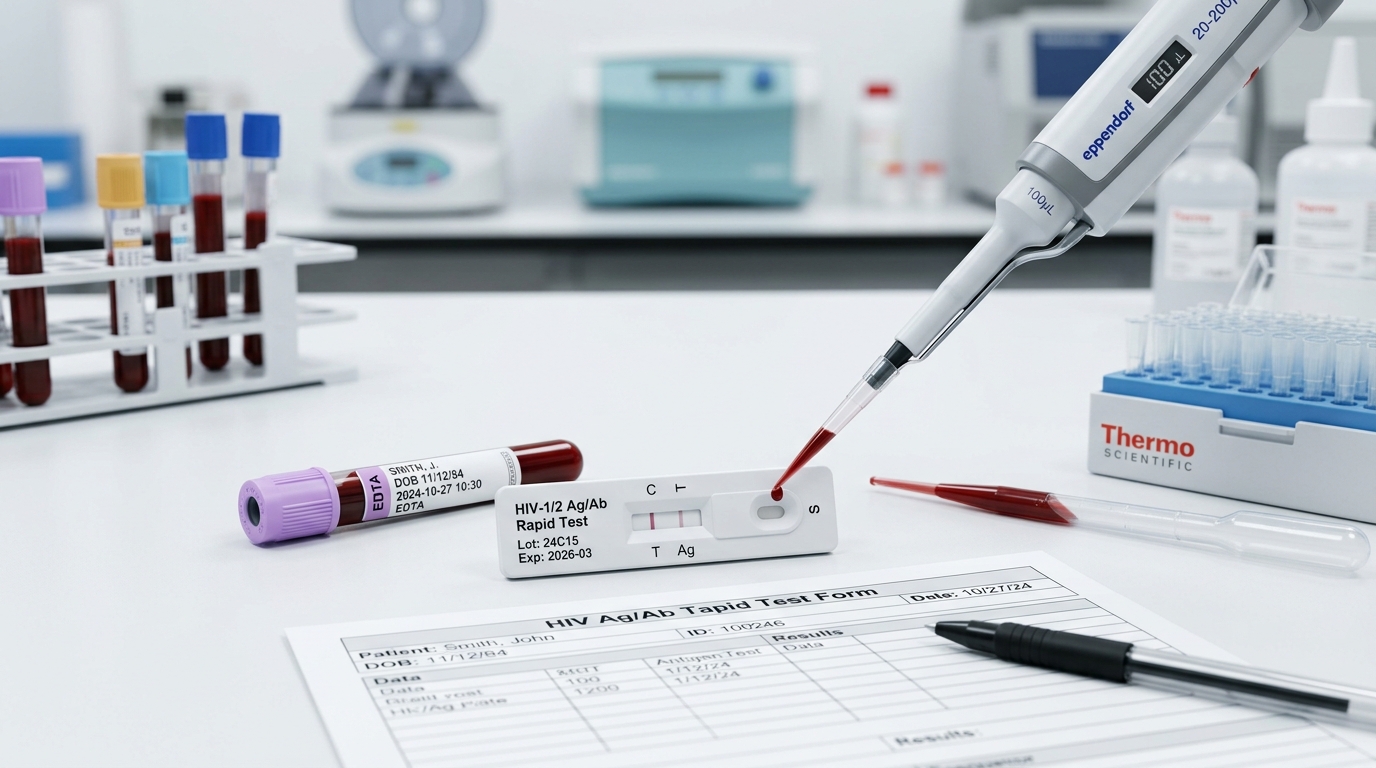
Following a potential exposure to Human Immunodeficiency Virus (HIV), individuals experience significant psychological distress and urgency. A frequent and critical question presented to clinical laboratories and sexual health specialists is: when can an HIV test detect infection after exposure with complete diagnostic certainty? Testing immediately within 24 to 48 hours post-exposure will almost invariably yield a negative result, regardless of true infection status, because the virus requires time to replicate and stimulate detectable biomarkers in systemic circulation. Residents and travelers seeking confidential, accredited STD testing options in Dubai must navigate the physiological timelines of viral kinetics to select the right test at the right moment.
Understanding the HIV Window Period: Biological Kinetics
The diagnostic window period refers to the time interval between initial exposure to HIV and the point at which an analytical laboratory test can consistently detect the virus or the host’s immunological response. During the initial eclipse phase—spanning approximately 7 to 10 days post-exposure—viral replication is localized to mucosal tissues and draining regional lymph nodes. During this phase, neither viral genetic material nor immunological proteins can be measured in peripheral venous blood.
As the virus disseminates systemically, biomarkers emerge in a predictable chronological sequence:
- HIV-1 Viral RNA (Day 10–14): Detectable via qualitative or quantitative Nucleic Acid Amplification Testing (NAAT / RT-PCR) as viral copies surge in plasma.
- Viral p24 Antigen (Day 14–20): A major structural capsid protein produced in large quantities during early acute replication before high-titer antibodies bind and neutralize it.
- Host Antibodies IgM & IgG (Day 21–45): The humoral immune response generates IgM antibodies first, followed by high-affinity IgG antibodies that persist for life.
Diagnostic Modalities and Their Specific Window Periods
Modern diagnostic virology classifies HIV tests into four primary generations and molecular methodologies, each characterized by distinct analytical limits of detection and window timelines.
| Test Generation / Methodology | Biomarkers Detected | Earliest Detection | Diagnostic Conclusiveness (99%+) | Primary Clinical Setting |
|---|---|---|---|---|
| HIV RNA PCR / NAAT | Viral genomic RNA | Day 7–10 post-exposure | Day 28–33 post-exposure | Early exposure, blood donor screening, indeterminate serology |
| 4th Generation Lab Assay (EIA/CLIA) | p24 Antigen + HIV-1/2 IgM & IgG | Day 14–18 post-exposure | Day 45 (6 weeks) post-exposure | Gold standard hospital & reference laboratory venous screening |
| 4th Generation Rapid Fingerstick | p24 Antigen + HIV-1/2 Antibodies | Day 18–21 post-exposure | Day 45–60 post-exposure | Point-of-care clinics, urgent care centers |
| 3rd Generation Rapid Antibody Test | HIV-1/2 IgM & IgG only | Day 21–28 post-exposure | Day 90 (12 weeks / 3 months) | Home test kits, field screening clinics |
4th Generation Combination Testing: The UAE Diagnostic Standard
In accordance with clinical guidelines from the Centers for Disease Control and Prevention (CDC), the World Health Organization (WHO), and UAE healthcare regulatory frameworks, the 4th-generation venous blood combination test (HIV Ag/Ab combo) is the first-line screening standard. By simultaneously assessing both free viral p24 antigen and host antibodies, this assay closes the diagnostic window by several weeks compared to legacy tests.
During the primary infection window (weeks 2 through 4), p24 antigen levels rise to several thousand picograms per milliliter, rendering the test highly reactive even before the patient has mounted an antibody response. By week 4 to week 6, as host antibodies develop and form immune complexes with p24 antigen, the antibody detection arm of the test takes over, providing lifelong diagnostic reactivity.
Acute Retroviral Syndrome: Signs That Require Immediate Testing
Approximately 50% to 80% of individuals infected with HIV develop an acute flu-like illness termed Acute Retroviral Syndrome (ARS) within 2 to 4 weeks following transmission. Recognizing these clinical features is vital because viral load in blood and genital secretions is extremely high during this phase, markedly increasing secondary transmission risk.
- Persistent high-grade fever, chills, and nocturnal diaphoresis (night sweats)
- Generalized, painless lymphadenopathy (swollen lymph nodes in the neck, axilla, or groin)
- Maculopapular cutaneous rash, predominantly on the trunk, chest, and face
- Severe pharyngitis, oral aphthous ulcers, or painful swallowing
- Profound fatigue, myalgia (muscle aches), and persistent arthralgia
If these symptoms arise following a known or suspected exposure, clinicians should order an HIV-1 RNA PCR test alongside a 4th-generation antigen/antibody panel. Relying exclusively on rapid antibody test strips in acute ARS frequently misses active infection.
Confirmatory Testing Algorithms and Indeterminate Results
Modern clinical laboratories follow a strict reflex algorithm for HIV testing. An initial reactive (“positive”) screening result is never reported as an established clinical diagnosis without confirmatory differentiation:
- Initial 4th Gen Screening: High-sensitivity chemiluminescent immunoassay (CLIA). If non-reactive, the result is reported as negative.
- Reflex Differentiation Immunoassay: If the initial screen is reactive, the laboratory automatically tests the specimen with an HIV-1 / HIV-2 antibody differentiation assay (such as Geenius™).
- Discordant Resolution via NAAT: If the initial screen was reactive but the differentiation assay is negative or indeterminate (a classic pattern during early acute infection where p24 is positive but antibodies are absent), an HIV-1 RNA NAAT test is performed immediately to detect viral genetic material.
Peer-Reviewed Clinical References
- Centers for Disease Control and Prevention (CDC). Laboratory Testing for the Diagnosis of HIV Infection: Updated Recommendations. MMWR Recommendations and Reports, 2018.
- World Health Organization (WHO). Consolidated Guidelines on HIV Testing Services. WHO Diagnostic Guidelines Series, 2021.
- Branson, B. M., et al. Interpretation of Current HIV Testing Algorithms. Journal of Clinical Virology, 2019; 118: 34-42.